
Please, Not Again
Posted: December 16, 2012 Filed under: Education | Tags: advocacy, education, higher education, horror, teaching, thinking, violence Leave a commentA terrible thing happened yesterday and many people are now dead because of it, including a horrifically large group of children. This is heartbreakingly awful and my thoughts are with the parents, the siblings, the families, the teachers and the survivors, because the stain of this dark day will be on the Newtown community for years to come.
I’m not going to get into any specific advocacy or politics here, it’s not why most people read me and it’s also not as if I’m an American, but, as an outsider, I am so saddened by the frequency of these events. I commented on my Facebook that the challenge here was not about which specific law or cultural aspect to manipulate, the key challenge was “how do we stop this from happening again”?
Some of you may find the following upsetting, because I’m going to talk about some things that upset me in an attempt to find a solid and lasting call to action. Please feel free to stop reading now.
There are twenty cupboards across Newtown that hold gifts, for one celebration or another, that are going to gather dust until the parents can steel themselves to bring down those cheery, carefully wrapped, thoughtfully selected gifts and sit there, staring at them, until they work out what the hell to do with them. Some of those gifts will sit there forever, foil wrapped markers of a life cut too short, too soon.
How do we stop this from happening again?
We will bury the dead and salute the heroes, admiring their bravery and, as an educational community, we will look at those teachers who stood before their classes and probably cry as we think that it could have been us. The final act of in loco parentis because the parent isn’t there to shield – and yet, to have bravery, we must have an event that is awful or unpleasant, so every act of bravery tells us that something bad is happening. Why are we so good at praising and ennobling our brave dead, and so bad at taking away the need for bravery?
How do we stop this from happening again?
The arguments have already started about what could have been done, in terms of specifics, but we have seen these arguments before and fact quickly surrenders to factional interest and grand standing, where time is wasted but little is achieved. Our children, your children, my students, deserve more than this. They deserve a school experience that is educational, exciting, challenging and safe. Safe. Safe. Safe. Safe. The expectation of an elementary school kid is that school is out soon and most families will get together and then next year I might be moving up and, hey, did Gracie just take my Oreo? The expectation is that tomorrow will come and that is as it should be.
How do we stop this from happening again?
I can drive safely my entire life and be killed by a truck driver running a red light because that’s how physics works. That’s why my compact, fuel efficient, city driving car has a highly rated safety shell and six airbags. I am preparing for the day that some accident occurs because I want my family to be safe. I am preparing for the day when someone, through thoughtlessness, accident or random malignity, tries to put their car through mine, because nothing I can do at that point will make much of a difference when that much metal and energy are involved. I don’t know how to do this with schools. I don’t know how to do this with Universities.
How do we stop this from happening again?
I am hollow, right now, and this is going to drain me for some time to come. I am trying to change a lot of things and I joke about taking on impossible projects because any progress is glorious defiance. Despite what many people think, I still sincerely believe that there has to be some common ground between arguing groups because nobody wants to see this happen again. I am, however, not an American so I have no business getting involved in US politics but, of course, such nightmares are not restricted to the US. As a global community, we appear to entering a time where Amok is becoming a semi-legitimatised, certainly well-publicised and semi-glorified, response to frustration and pressure. Amok is the killing of other people that you encounter in a frenzied attack that belies an otherwise calm demeanour with no history of violence. This was a Malay phenomenon as originally discussed, as a cultural tradition in reaction to loss of face, wealth, family – people reaching a point where this kind of insanity, often an indirect form of suicide, becomes honourable.
This phenomenon, recorded as early as the 18th Century, shows us how complex this all is and how important our societal and cultural structures can be. We have much better tools for enhancing the carnage of amok now, and I am not a fan of those tools, but we cannot focus just on these; we have to accept that we need to change the will as well as the way. I don’t how to start, but I’m hoping that one of you may do. So I leave you with the question that transcends politics, gun rights, educational systems and country boundaries.
How do we stop this from happening again?
Leading the Innovation Charge: Research and Teachers (NESTA Report on Digital Education)
Posted: December 14, 2012 Filed under: Education, Opinion | Tags: advocacy, authenticity, ci2012, collaboration, community, curriculum, Decoding Learning, design, digital education, education, educational problem, educational research, feedback, Generation Why, higher education, in the student's head, learning, NESTA, principles of design, reflection, resources, social constructivism, student perspective, teaching, teaching approaches, thinking, tools, universal principles of design, vygotsky Leave a commentI’m currently reading the NESTA report “Decoding Learning: The Proof, Promise and Potential of Digital Education” and the report talks about ways of learning with technology and sources of innovation. At the start, in scene setting, the two sources of innovation are identified as being either research efforts that were based on large amount of gathered evidence (research-led) and informal literature such as blogs and teacher networks (teacher-led) – which means, woohoo, if anyone does anything based on what I’ve written in here, it’s a teacher-led innovation. (I realise that there is argument for overlap in here but it appears that formal research publication denotes the division and it appears that there was no reason why a teacher-led initiative couldn’t be high quality if it was still evidence-based, even if there was no strict formal publication.)
Looking across the world, the report started with 210 cases that were either research- or teacher-led and narrowed this down to a representative sample of 150. What’s interesting, to me, is the split by country between research- and teacher-led projects. The US has 65 ‘innovations’, 28 teacher-led, 37 research-led. The UK has 64, 45 teacher-led, 19 research. Australia has 9, all of which are teacher-led. Outside of the UK and Australia, the most likely approach to educational innovation is through a research-based approach. It appears that our relationship to the UK educational system may be even closer than we thought in this respect. However, to look in more detail at these innovations, we have to look at the breakdown of that ways that we see students learning with technology. The learning themes in this document are:
- Learning from Experts
- Learning with Others
- Learning through Making
- Learning through Exploring
- Learning through Inquiry
- Learning through Practising
- Learning from Assessment
- Learning in and from Settings
Most of these are pretty self-explanatory (and highly constructivist, unsurprisingly) but they are based on the learners’ actions and include factors such as the resources employed and the structure – which gives a greater potential depth to the classification as you can’t just say you’re doing X, you have to support it with technological resources and learning design.
A very important point raised early on in the teacher-driven, research-driven dichotomy is that the requirement for large volumes of evidence, in the case of research publication, can have a tendency to make the research-led initiatives more risk averse, in that much more information has to be gathered before recommendations can be adopted or conclusions can be drawn. The teacher-led initiatives can highlight serious innovations that are worth trying, but may not yet have the evidence behind them to actually provide a convincing argument. What a dilemma! I can either have evidence for something that I probably already thought of or take a chance on something for which I have no evidence – and in the world of technology, where innovation often costs money, good luck getting a solid amount of cash with a good feeling about an innovation direction. I need to go and look further in the case of Australia, because I know a great number of excellent educational researchers here who are, as far as I know, proposing solid research-led innovations but they aren’t showing up on this particular radar. And, being cynical, if it’s not showing up on NESTA’s radar, it’s probably not showing up at the government level and, hearts and minds, we want the government to be aware that the research approaches (often University-driven) are visible, viable and valuable. (Another thing for the to-do list, apart from finding alliterative phrases starting with ‘x’.)
In looking at the themes, I find it interesting to think about how these themes are both guidelines of good practice and cautionary tales. When set up technology that enables us to Learn from Experts, which is one of the potential underlying principles of the MOOC, we have to make sure that we’re actually providing experts. There’s an interesting example of the statistics expert who tore about an on-line stats course and, while it was rapidly corrected, we have that slight worry that the power to set up a course in no way correlates with your ability to actually provide the course information. Of course, I’m not a trained teacher but my qualification in my academic discipline and prior industry experience does provide me with a level of expected expertise in an area. I’m not allowed to get out in front of students unless I reach a certain bar of qualification – but that is most certainly not always the case. Suddenly the technology innovation theme “Learning from Experts” becomes the source of a philosophical reflection on how we are doing this at all – do we even refer to experts in innovation, education or the discipline? If we want a combination of these, how does it work? As noted in the report, it’s not just access to the expert that learners need, it’s the supporting dialogue between them that assists in knowledge construction and learning. How can innovation in technology support this new dialogue in a way that works?
The future is not just about the provision of information; we solved that problem in the first instance with the book, refined it with the library and then did … something … with it when we developed Wikipedia (all joking aside, on-line resources have added immediacy and ubiquity to the information provision solution). The future is about successful learning, which involves the development of knowledge, and thus involves the arrangement, storage, organisation, retrieval, and development of information in order to support that newly constructed knowledge. There’s a lot of scope for the development of innovative technological tools in this space but, as the report clearly indicates through its themes, this involves thinking about how we learn, how we’re going to learn and how the tech can help us to achieve it.
There’s still a lot of research- and teacher-led innovation to come, which is great because we all love a challenge, but I’d like to finish by noting what is not one of the key themes from the NESTA report. There is no “Learning from watching dull videos of uninteresting material presented with the least effort possible, because that’s how it’s always been done” because this is, quite simply, not innovative. We already know how well that works and that’s why we have to innovate now. Viva the glorious fusion of cutting edge innovation and sufficient evidence to allow us to leap off the metaphorical cliff!

Oh good, it’s Monday.
(Photo by John Moore/Getty Images)
Educating Women: A Global Priority
Posted: December 13, 2012 Filed under: Education, Opinion | Tags: advocacy, blogging, community, education, empowering women, ethics, Generation Why, higher education, teaching, teaching approaches, women in education Leave a commentThis came through my Facebook feed and I wanted to share it with you (if you haven’t already seen it).
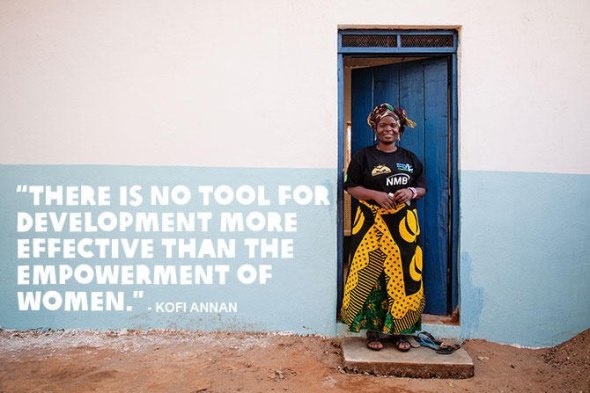
If you can read, write and perform arithmetic then you are in a far better position with a much greater chance of being able to control your own life and that’s why education is such an important tool if we are to empower everyone.
When you are educated, you do not need to depend upon anyone else to tell you what something means or how much of something you are entitled to.
When you are educated, you can ask the difficult questions that are needed to be asked, the first of which is often “Why am I treated this way because of the way that I was born?” And this is an important step towards empowerment.
The global educational initiative depends upon getting education everywhere and valuing education. The key to that, in many countries, is empower women and give them access to education.
Taught for a Result or Developing a Passion
Posted: December 13, 2012 Filed under: Education | Tags: advocacy, authenticity, blogging, Bloom, community, curriculum, design, education, educational problem, educational research, ethics, feedback, Generation Why, grand challenge, higher education, learning, measurement, MIKE, PIRLS, PISA, principles of design, reflection, research, resources, student perspective, teaching, teaching approaches, thinking, tools, universal principles of design, workload Leave a commentAccording to a story in the Australian national broadcaster, the ABC, website, Australian school children are now ranked 27th out of 48 countries in reading, according to the Progress in International Reading Literacy Study, and that a quarter of Australia’s year 4 students had failed to meet the minimum standard defined for reading at their age. As expected, the Australian government has said “something must be done” and the Australian Federal Opposition has said “you did the wrong thing”. Ho hum. Reading the document itself is fascinating because our fourth graders apparently struggle once we move into the area of interpretation and integration of ideas and information, but do quite well on simple inference. There is a lot of scope for thought about how we are teaching, given that we appear to have a reasonably Bloom-like breakdown on the data but I’ll leave that to the (other) professionals. Another international test, the Program for International School Assessment (PISA) which is applied to 15 year olds, is something that we rank relatively highly in, which measures reading, mathematics and science. (And, for the record, we’re top 10 on the PISA rankings after a Year 4 ranking of 27th. Either someone has gone dramatically wrong in the last 7 years of Australian Education, or Year 4 results on PIRLS doesn’t have as much influence as we might have expected on the PISA).We don’t yet have the results for this but we expect it out soon.

The PISA report front cover (C) OECD.
What is of greatest interest to me from the linked article on the ABC is the Oslo University professor, Svein Sjoberg, who points out the comparing educational systems around the globe is potentially too difficult to be meaningful – which is a refreshingly honest assessment in these performance-ridden and leaderboard-focused days. As he says:
“I think that is a trap. The PISA test does not address the curricular test or the syllabus that is set in each country.
Like all of these tests, PIRLS and PISA measure a student’s ability to perform on a particular test and, regrettably, we’re all pretty much aware, or should be by now, that using a test like this will give you the results that you built the test to give you. But one thing that really struck me from his analysis of the PISA was that the countries who perform better on the PISA Science ranking generally had a lower measure of interest in science. Professor Sjoberg noted that this might be because the students had been encouraged to become result-focused rather than encouraging them to develop a passion.
If Professor Sjoberg is right, then is not just a tragedy, it’s an educational catastrophe – we have now started optimising our students to do well in tests but be less likely to go and pursue the subjects in which they can get these ‘good’ marks. If this nasty little correlation holds, then will have an educational system that dominates in the performance of science in the classroom, but turns out fewer actual scientists – our assessment is no longer aligned to our desired outcomes. Of course, what it is important to remember is that the vast majority of these rankings are relative rather than absolute. We are not saying that one group is competent or incompetent, we are saying that one group can perform better or worse on a given test.
Like anything, to excel at a particular task, you need to focus on it, practise it, and (most likely) prioritise it above something else. What Professor Sjoberg’s analysis might indicate, and I realise that I am making some pretty wild conjecture on shaky evidence, is that certain schools have focused the effort on test taking, rather than actual science. (I know, I know, shock, horror) Science is not always going to fit into neat multiple choice questions or simple automatically marked answers to questions. Science is one of the areas where the viva comes into its own because we wish to explore someone’s answer to determine exactly how much they understand. The questions in PISA theoretically fall into roughly the same categories (MCQ, short answer) as the PIRLS so we would expect to see similar problems in dealing with these questions, if students were actually having a fundamental problem with the questions. But, despite this, the questions in PISA are never going to be capable of gauging the depth of scientific knowledge, the passion for science or the degree to which a student already thinks within the discipline. A bigger problem is the one which always dogs standardised testing of any sort, and that is the risk that answering the question correctly and getting the question right may actually be two different things.
Years ago, I looked at the examination for a large company’s offering in a certain area, I have no wish to get sued so I’m being deliberately vague, and it became rapidly apparent that on occasion there was a company answer that was not the same as the technically correct answer. The best way to prepare for the test was not to study the established base of the discipline but it was to read the corporate tracts and practise the skills on the approved training platforms, which often involved a non-trivial fee for training attendance. This was something that was tangential to my role and I was neither of a sufficiently impressionable age nor strongly bothered enough by it for it to affect me. Time was a factor and incorrect answers cost you marks – so I sat down and learned the ‘right way’ so that I could achieve the correct results in the right time and then go on to do the work using the actual knowledge in my head.
However, let us imagine someone who is 14 or 15 and, on doing the practice tests for ‘test X’ discovers that what is important is in hitting precisely the right answer in the shortest time – thinking about the problem in depth is not really on the table for a two-hour exam, unless it’s highly constrained and students are very well prepared. How does this hypothetical student retain respect for teachers who talk about what science is, the purity of mathematics, or the importance of scholarship, when the correct optimising behaviour is to rote-learn the right answers, or the safe and acceptable answers, and reproduce those on demand. (Looking at some of the tables in the PISA document, we see that the best performing nations in the top band of mathematical thinking are those with amazing educational systems – the desired range – and those who reputedly place great value in high power-distance classrooms with large volumes of memorisation and received wisdom – which is probably not the desired range.)
Professor Sjoberg makes an excellent point, which is that trying to work out what is in need of fixing, and what is good, about the Australian education system is not going to be solved by looking at single figure representations of our international rankings, especially when the rankings contradict each other on occasion! Not all countries are the same, pedagogically, in terms of their educational processes or their power distances, and adjacency of rank is no guarantee that the two educational systems are the same (Finland, next to Shanghai-China for instance). What is needed is reflection upon what we think constitutes a good education and then we provide meaningful local measures that allow us to work out how we are doing with our educational system. If we get the educational system right then, if we keep a bleary eye on the tests we use, we should then test well. Optimising for the tests takes the effort off the education and puts it all onto the implementation of the test – if that is the case, then no wonder people are less interested in a career of learning the right phrase for a short answer or the correct multiple-choice answer.
Successful Organisms Use Their Environment Well
Posted: December 12, 2012 Filed under: Education | Tags: ci2012, education, higher education, reflection, teaching, teaching approaches, thinking Leave a commentI saw a fascinating talk at Creative Innovations 2012 from Wade Davis, who has the coolest title in the world, National Geographic’s explorer-in-residence. Wade made the point that successful human civilisations use their environment optimally, rather than fighting it. He gave several examples but the one that stuck in my head was that on the Inuit, who use the cold of their environment as an additional advantage. Instead of using metal rails, their sleds ran on frozen fish – because the fish is a low-friction thing and, frozen, it’s hard enough to sled on. Get trapped somewhere and unable to get home? You can always eat your runners.
I am writing this in Australia at the start of Summer, where we regularly hit 100+ F (38+ C) and, because it’s going to be hot today and I don’t have any serious meetings, I’m wearing a short sleeved shirt and shorts because I’ll be out of the sun for most of the day and fewer clothes means less heat. This is sensible adaptation. However, what is not sensible is that, if I had serious meetings, not only would I be wearing at least long sleeved shirt and trousers, I might even be in a suit and tie. This is, quite frankly, dumb and not showing any adaptation of work processes to the local environment.
This is, however, not new as any studies of the British Empire in the tropics will show you. Once convention, and conformity to that convention, dominate over adaptation to the environment, you end up making bad decisions. Worse still, if you don’t take the environment into account, you might see perfectly reasonable adaptations as being rebellious and unconventional.
In Australia, the trade off is always how much clothing do I have to wear to balance fashion, sun screening, temperature requirements, business requirements and avoid being prosecuted for public nudity. If we don’t wear the right clothing, we put additional demand on our environmental masking technologies, such as air conditioning or public transport. If I dress in a way that I can’t walk to work then I’m now fighting my real environment because of my overlaid work environment.
How is this an educational issue? I think that this ties in with our overlaid assessment environments for our students. If we create an environment that doesn’t actually encourage the behaviours that we want, as natural extensions and relations, then we will start to get adaptive behaviour to the real triggers in the environment, which will appear to us as aberrant and rebellious behaviours.
We want our students to do all of the work because it contributes to their development of knowledge and their ability to apply their knowledge. However, by providing certain commonly used assessment types, for example,mass-produced assignments that don’t vary from year to year, I believe that we are risking the formation of an environment where the assignments are seen as barriers rather than achievements. Humans optimise to get around barriers and we are very good at finding the easiest way to do this. We have a cultural convention that students shouldn’t cheat or plagiarise and this is a perfectly reasonable convention. If we build an environment where we weaken the perceived sincerity of this convention, or we set up an environment that implicitly rewards this activity without a high probability of detecting it, then we have set up a conflict. We are asking students to be less optimal in the way that they are working in an environment, with unnatural constraints to keep them in place. With better design, we can create environments that are a better fit to our conventions and are more consistent and integrated – but this takes design. “Because I say so” is never as strong as “because it’s actually necessary”.
Humans adapt to their environment in order to succeed. This is why we dominate and it’s part of who we are. By thinking about this behaviour, I think that we can get a clearer view of why our students sometimes do what they do, even when they are acting at odds with what we’ve explicitly told them to do. I’m most certainly not saying that we can accept students not doing enough work to get the knowledge, or passing off other people’s work as their own, as that’s completely at odds with helping them to build their knowledge. But perhaps it’s worth looking at every assignment we set up to see if the optimised behaviour, in terms of effort, innovation, autonomy, mastery, purpose and enjoyment, in the assignment environment will actually be along the lines that we are after.
I realise that some people will think that I’m putting the blame for cheating on our shoulders and, no, I accept the active role students have and that some students will cheat no matter what we do. But some assignment environments and types are better than others at encouraging our students to work as we want them to, and I think it’s worth thinking of this as an environmental optimisation.
Core Values of Education and Why We Have To Oppose “Pranking”
Posted: December 11, 2012 Filed under: Education, Opinion | Tags: advocacy, authenticity, blogging, community, education, educational problem, ethics, feedback, Generation Why, higher education, in the student's head, learning, principles of design, reflection, resources, student perspective, teaching, teaching approaches, thinking, tools, workload 2 CommentsI’ve had a lot of time to think about education this year (roughly 400 hours at current reckoning) so it’s not surprising that I have some opinions on what constitutes the key values of education. Of course, as was noted at the Creative Innovations conference I went to, a corporate values statement is a wish list that doesn’t necessarily mean much so I’m going to talk about what I see when education is being performed well. After I’ve discussed these, I’m then going to briefly argue for why these values mean that stupid stunts (such as the Royal prank where some thoughtless DJs called up a hospital) should be actions that we identify as cruel and unnecessary interpretations of the term ‘entertainment’.
- Truth.
We start from the assumption that we only educate or train our students in what we, reasonably, assume to be the truth. We give the right answers when we know them and we admit it when we don’t. Where we have facts, we use them. When we are standing on opinion, we identify it. When we are telling a story, where the narrative matters more than the contents, we are careful to identify what we are doing and why we are doing it. We try not to deceive, even accidentally, and we do not make a practice of lying, even to spare someone’s feelings. In order to know the truth, we have to know our subject and we try to avoid blustering, derision and appealing to authority when we feel that we are being challenged.
There is no doubt that this can be hard in contentious and emerging areas but, as a primary value, it’s at the core of our educational system. Training someone to recite something that is not true, while still popular in many parts of the world, is indoctrination, not education.
- Respect.
We respect the students that we teach and, in doing this, we prepare them to respect us. We don’t assume that they are all the same, that they all learn at the same rate, that they have had all the preparation that they need for courses or our experiences, nor do assume that they can take anything that we feel inclined to fling at them. We respect them by treating them as people, as individuals, as vulnerable, emotional and potentially flawed humans. We evaluate their abilities before we test their mettle. We give them space to try again. We do all this because it then allows them, without hypocrisy or obligation, to treat us the same way. Respect of effort and of application does not demand perfection or obsession from either party.
- Fairness. We are objective in our assignment and assessment of work and generous in our interpretations when such generosity does not compromise truth or respect. We do not give false praise but we do all give all praise that is due, at the same time giving all of the notes for improvement. We strive to ensure that every student has the same high-quality and fair experience, regardless of who they are and what they do. When we define the rules, we stick to them, unless we have erred in their construction when, having fixed the rules, we then offer the best interpretation to every student. Our students acting in error or unfairly does not allow us to reciprocate in kind. The fairness of our system is not conditional upon a student being a perfect person and its strength lies in the fact that it is fair for all, regardless. What we say, we mean and what we mean, we say. A student’s results are ultimately the reflection of their own application to the course, relative to their opportunities to excel. Students are not unfairly punished because we have not bothered to work out if they are prepared for the course (which is very different from their own application of effort inside the course, which is ultimately their responsibility moderated by the unforeseen and vagaries of life), nor does the action of one student unduly influence the results of another, except where this is clearly identified and students have sufficient autonomy to control the outcome of this situation.
These stupid pranking stunts on the radio are usually considered acceptable because the person being pranked is contacted after the fact to ask if it can be broadcast. Frankly, I think this is bordering on coercive (because you risk being a bad sport if you don’t participate and I suspect that the radio stations don’t accept a simple first ‘no’) but some may disagree. (It’s worth noting that while the radio station tried to contact the nurses, they failed to get approval to broadcast.)
These pranks are, at heart, valueless lies, usually calculated to embarrass someone or expose them undertaking a given behaviour. They are neither truthful nor respectful. While this is often the high horse of pomposity (haven’t you got a sense of humour), it is important to realise that truly funny things can usually be enjoyed by everyone and that there is a world of difference between a joke that involves old friends and one that exploits strangers. The second situation just isn’t fair. The radio station is setting up a situation that is designed to elicit a response that everyone other than the victim will find amusing, because the victim is somehow funny or vulnerable. Basically, it’s unfair. You don’t get to laugh at or humiliate someone in a public forum just because you think it’s funny – didn’t we get over this in primary school? A lack of fairness often leads to situations that are coercive because we impose cultural norms, or peer-pressure, to force people to ‘go along with the joke’.
I had a student in my office recently, while another academic who happened to be my wife was helping me clear a backlog of paper, and before I discussed his final mark, I asked my wife if she would mind leaving the room. This was because there was no way I could ask the student if he minded discussing his mark with my wife in the room and not risk the situation being coercive. It’s a really simple thing to fix if you think about it. In order to respect the student’s privacy, I needed to be fair in the way that I controlled his ability to make decisions. Now I’m not worried that this student is easily coerced but that’s not my call to make – it’s not up to me to tell a student if they are going to be comfortable or not.
The Royal prank has clearly identified that that we can easily go down very dark and unexpected roads when we start to treat people as props, without sticking to the truth or respecting them enough to think about how they might feel about our actions, and that’s patently unfair. If these are our core values, and again many would disagree, then we have to stand up and object when we see them being mucked around with by our society. As educators, we have to draw a line and say that “just because you think it’s funny, doesn’t mean that you were right to do it” and we can do that and not be humourless or party-poopers. We do it because we want to allow people to still be funny, and have fun, muck around and have a joke with people that they know – because we’ve successfully trained them to know when they should stop, because we’ve correctly instilled the values of truth, respect and fairness.
“You Will Never Amount to Anything!”
Posted: December 10, 2012 Filed under: Education | Tags: advocacy, authenticity, blogging, community, curriculum, education, educational research, ethics, feedback, Generation Why, grand challenge, higher education, in the student's head, learning, led zeppelin, measurement, principal skinner, principles of design, reflection, resources, simpsons, student perspective, teaching, teaching approaches, thinking, tools, universal principles of design, work/life balance, workload Leave a commentI am currently reading “When Giants Walked the Earth: A Biography of Led Zeppelin” by Mick Wall. I won’t go into much of the detail of the book but the message presented around the four members of the group is that most of them did not have the best experiences in school and that, in at least two cases, the statements written on their reports by their teachers were profoundly dismissive. Now, it is of course entirely possible the that the Led Zep lads were, at time of leaving school, incapable of achieving anything – except that this is a total nonsense as it is quite obvious that they achieved a degree of musical and professional success that few contemplate, let alone reach.
You’ll often read this kind of line in celebrity biographies – that semi-mythical reforging of the self after having been judged and found wanting. (From a narrative perspective, it’s not all that surprising as it’s an easy way to increase the tension.) But one of the reasons that it pops up is that such a statement is so damning that it is not surprising that a successful person might want to wander back to the person who said it and say “Really?” But to claim that such a statement is a challenge (as famously mocked in the Simpsons where Principal Skinner says that these children have not future and is forced to mutter, with false bonhomie, ‘Prove me wrong, kids, prove me wrong.’) is confused at best, disingenuous and misdirecting at worst. If you want someone to achieve something, provide a clear description of the task, the means to achieve that task and then set about educating and training. No-one has ever learned brain surgery by someone yelling “Don’t open that skull” so pretending that an entire life’s worth of motivation can be achieved by telling something that they have no worth is piffle. Possibly even balderdash.

You! Prove me wrong!
The phrase “You Will Never Amount To Anything” is, in whatever form it is uttered, a truly useless sentiment. It barely has any meaning (isn’t just being alive being something and hence amounting to a small sort of anything?) but, of course, it is not stated in order to achieve an outcome other than to place the blame for the lack of engagement with a given system squarely at the feet of the accused. You have failed to take advantage of the educational opportunities that we have provided and this is such a terminal fault, that the remaining 90% of your life will be spent in a mobile block of amber, where you will be unable to affect any worthwhile interaction with the universe.
I note that, with some near misses, I have been spared this kind of statement but I do feel very strongly that it is really not anything that you can with any credibility or useful purpose. If you happen to be Death, the Grim Reaper, then you can stand at the end of someone’s life and say “Gosh, you didn’t do a great deal did you” (although, again, what does it mean to do anything anyway?) but saying it when someone is between the ages of 16 and 20? You might be able to depend upon the statistical reliability that, if rampant success in our society is only given to 1%, 99% of the time, everyone you say “You will not be a success” will accidentally fall into that category. It’s quite obvious that any number of the characteristics that are worthy of praise in school contribute nothing to the spectacular success enjoyed by some people, where these characteristics are “sitting quietly”, “wearing the correct uniform” or “not chewing gum”. These are excellent facets of compliance and will make for citizens who may be of great utility to the successful, but it’s hard to see many business leaders whose first piece of advice to desperate imitators is “always wear shiny shoes”.
If we are talking about perceived academic ability then we run into another problem, in that there is a great deal of difference between school and University, let along school and work. There is no doubt that the preparation offered by a good schooling system is invaluable. Reading, writing, general knowledge, science, mathematics, biology, the classics… all of these parts of our knowledge and our society can be introduced to students very usefully. But to say that your ability to focus on long division problems when you are 14 is actually going to be the grand limiting factor on your future contribution to the world? Nonsense.
Were you to look at my original degree, you might think “How on Earth did this man end up with a PhD? He appears to have no real grasp of study, or pathway through his learning.” and, at the time of the degree, you’d be right. But I thought about what had happened, learned from it, and decided to go back and study again in order to improve my level of knowledge and my academic record. I then went back and did this again. And again. Because I persevered, because I received good advice on how to improve and, most importantly, because a lot of people took the time to help me, I learned a great deal and I became a better student. I developed my knowledge. I learned how to learn and, because of that, I started to learn how to think about teaching, as well.
If you were to look at Nick Falkner at 14, you may have seen some potential but a worry lack of diligence and effort. At 16, you would have seen him blow an entire year of school exams because he didn’t pay attention. At 17 he made it into Uni, just, but it wasn’t until the wheels really started to fall off that he realised that being loquacious and friendly wasn’t enough. Scurrying out of Uni with a third-grade degree into a workforce that looked at the evidence of my learning drove home that improvements were to be made. Being unemployed for most of a year cemented it – I had set myself up for a difficult life and had squandered a lot of opportunities. And that is when serendipity intervened, because the man who has the office next to me now, and with whom I coffee almost every morning, suggested that I could come back and pursue a Masters degree to make up for the poor original degree, and that I would not have to pay for it upfront because it was available as a government deferred-payment option. (Thank you, again, Kevin!)
That simple piece of advice changed my life completely. Instead of not saying anything or being dismissive of a poor student, someone actually took the time to say “Well, here’s something you could do and here’s how you do it.” And now, nearly 20 years down the track, I have a PhD, a solid career in which I am respected as an educator and as a researcher and I get to inspire and help other students. There’s no guarantee that good advice will always lead to good outcomes (and we all know about the paving on the road to Hell) but it’s increasingly obvious to me that dismissive statements, unpleasant utterances and “cut you loose” curtness are far more likely to do nothing positive at all.
If the most that you can say to a student is “You’re never going to amount to anything”, it might be worth looking in a mirror to see exactly what you’ve amounted to yourself…
Brief Stats Update: Penultimate Word Count Notes
Posted: December 8, 2012 Filed under: Education | Tags: advocacy, authenticity, blogging, community, data visualisation, design, education, educational problem, educational research, higher education, student perspective, teaching, teaching approaches, thinking, tools, work/life balance, workload, writing Leave a commentI occasionally dump the blog and run it through some Python script deliciousness to find out how many words I’ve written. This is no measure of worth or quality, more a metric of my mania. As I noted in October, I was going to hit what I thought was my year target much earlier. Well, yes, it came and it went and, sure enough, I plowed through it. At time of writing, on published posts alone, we’re holding at around 1.2 posts/day, 834 words/post and a smidgen over 340,000 words, which puts me (in word count) just after Ayn Rand’s “The Fountainhead” (311,596) but well behind her opus “Atlas Shrugged” (561,996). In terms of Objectivism? Let’s just say that I won’t be putting any kind of animal into that particular fight at the moment.
Now, of course, I can plug in the numbers and see that this puts my final 2012 word count somewhere in the region of 362,000 words. I must admit, there is a part of me that sees that number and thinks “Well, we could make it an even 365,000 and that’s a neat 1000 words/day” but, of course, that’s dumb for several reasons:
- I have not checked in detail exactly how well my extraction software is grabbing the right bits of the text. There are hyperlinks and embellishments that appear to be taken care of, but we are probably only on the order of 95% accuracy here. Yes, I’ve inspected it and I haven’t noticed anything too bad, but there could be things slipping through. After all of this is over, I am going to drag it all together and analyse it properly but, let me be clear, just because I can give you a word count to 6 significant figures, doesn’t mean that it is accurate to 6 significant figures.
- Should I even be counting those sections of text that are quoted? I do like to put quotes in, sometimes from my own work, and this now means I’m either counting something that I didn’t write or I’m counting something that I did write twice!
- Should I be counting the stats posts themselves as they are, effectively, metacontent? This line item is almost above that again! This way madness lies!
- It was never about the numbers in the first place, it was about thinking about my job, my students, my community and learning and teaching. That goal will have been achieved whether I write one word/day from now on or ten thousand!
But, oh, the temptation to aim for that ridiculous and ultimately deceptive number. How silly but, of course, how human to look at the measurable goal rather than the inner achievement or intrinsic reward that I have gained from the thinking process, the writing, the refining of the text, the assembly of knowledge and the discussion.
Sometime after January the 1st, I will go back and set the record straight. I shall dump the blog and analyse it from here to breakfast time. I will release the data to interested (and apparently slightly odd) people if they wish. But, for now, this is not the meter that I should be watching because it is not measuring the progress that I am making, nor is it a good compass that I should follow.
Information and Education: Other Cultures, Other Views
Posted: December 8, 2012 Filed under: Education | Tags: advocacy, authenticity, blogging, community, education, higher education, in the student's head, Kaurna, student perspective, teaching, teaching approaches, thinking, tools, universal principles of design Leave a commentI’ve had the good fortune to be able to start finding out about how other cultures deal with information and education. This is important for several reasons. Firstly, it helps to remind me that the perception of the dominant monoculture is both primarily a perception and an accident of history, geography and timing. Secondly, it reminds me how easy it is to slip into the monocultural assumption. Finally, it helps me to prepare my students for a world that could be very different from this one.
I’m not a true relativist, I think that some cultural practices (including but not limited to formalised child abuse and female circumcision) are indefensible because they are far too great an imposition on the individual. So let me get that cultural bias onto the table to allow you to frame what I say next. Some ideas, especially when we start dealing with the value of wisdom, and the specific roles of the knowledge keepers in the dispensation and passage of that wisdom, fascinate me but I am still not sufficiently versed to be able to discuss it with any authority or detail. I can, however, discuss ideas with my students such as secret knowledge, without being a Mason, or gendered knowledge, without being of a practising culture, because to do so allows them to realise that there is more to the world than European-derived cultural norms. We don’t have to necessarily agree with all of these other ideas, especially where gender discrimination is preventing access to essential knowledge or limiting advancement, but it is important to understand that it exists.
The role of the knowledge keeper varies with culture and it can be quite confronting for my students to encounter a situation where a single person has the knowledge and may not be available all the time. At the recent Adelaide Computing Education Conventicle that I ran, two presenters from the University of South Australia presented work on integrating Australian Indigenous Culture into ICT project work and discussed the way that it changed the projects. The person needed is in hospital for treatment? Then you’ll have to wait until they get back because they are the person that you have to talk to. A friend has told me about this before in the context of geological information in the Australian Outback. You want to know about this section of the land? Well, you can’t ask the men about it, it’s not their land. If you want to ask the women, then you’re going to have to work out who can ask it and what can be told in a way that can be viewed from people outside (and men).
Just because we want to know something from a specific culture does not give us the right to demand it and getting this across to students is, I think, one of the most important steps in establishing a mutual respect between cultures and a way of avoiding misunderstandings in the future. It’s easy to start jumping up and down in that tiresome Western manner about this kind of information management but I think we can be pretty sure that the majority of the indigenous population of Australia would have quite a lot to say about having to conform to our cultural norms, so we should think pretty carefully before we start placing our rule sets over their knowledge.
Uncle Lewis O’Brien, Elder of the Kaurna people, noted once that it was common to welcome newcomers to your land, to show them around so that they could see how good the land was and how much care was being taken of it, but it was always done in the understanding that, one day, the visitor would go home. As he noted, wryly, perhaps his people should have been clearer on that last bit with the original white settlers. But we were here now.
Cultural issues are important to the people in that culture and working out how we can marry these requirements allows us to demonstrate our maturity as people and our level of comfort with our own beliefs. If, one day, somebody shows me something so amazing and truthful that I start believing in a new belief system or an entirely new way of living, then I hope that I would be able to cope with it and make sense of it. In New Zealand, Maori medical researchers are working through the cultural taboo of handling the dead in order to meet the educational requirements of working with tissue samples. If we can work with closing shops on Saturday or Sunday for Synagogue or Church (as we did for centuries), then we can have some thinking about incorporating the living beliefs of other cultures without dying of shock or making racist statements about ‘backwards cultures’. You go and thrive in the middle of Australia for a while and tell me how much knowledge it required to avoid dying of thirst on the third day.
I’m always worried when we start rejecting other cultures because monocultures are not strong, they’re weak. By definition, they are static and immutable – the rock, not the water. They’re prone to a single attack vector and, if they fail, they fail on the massive scale. I’m not talking just about our unnatural dependency on one banana or one wheat, I’m talking about real disasters that have occurred because of a lack of resistance to animal-borne diseases. The current thinking is that both North America and Australia were far more heavily populated than the original European explorers thought, but that earlier contact had introduced devastating levels of disease that almost wiped out the populations – making the subsequent colonisation and seizure of land easier. These were accidental resistance monocultures, caused by geographical isolation. Now we are connected and we have no excuse for this.
What my students have to understand is that the world of three hundred years ago was not the world of two hundred or one hundred years ago. Empires rise and fall. Cultures come and go. Today’s leader is tomorrow’s footnote. Learning how to work with other cultures and how to reduce the dependency on a single strand may be what changes the way that our history unfolds. I’m not naive enough to believe that we’re at the end of history (the end of conflict) but I think that we’re sufficiently well connected and well informed that we can tell our students that not everything different is wrong and scary, and that not everything familiar is right and just.
I wonder what they’ll be saying about us, in 2112?
Data Visualisation: Strong Messages Educate Better
Posted: December 7, 2012 Filed under: Education | Tags: advocacy, authenticity, data visualisation, design, education, higher education, principles of design, reflection, student perspective, teaching, teaching approaches, thinking, tools 1 CommentKnow what this is?

Rather pretty, isn’t it – but it has a definite direction, like someone has throw something from the right and it has hit the ground and scattered.
This image is from the Bomb Sight website, and shows all of the bombs that fell on London (and surrounds) from the 7th of October, 1940, to the 6th of June, 1941. The Bomb Sight team have been working from a variety of data sources to put together a reasonably reliable picture of the recorded bombs on London over that 242 day period. If you zoom in (and it starts zoomed in), you start to see how many sites took 2, 3, 4 or more bombs (10, 11, plus) over that time.
If I were to put together a number of bombs and a number of days and say “X bombs fell in London over Y days”, you could divide X by Y and say “Gosh.” Or I can show you a picture like the one above and tell you that each of those dots represents at least one bomb, possibly as many as 10 or so, and watch your jaw drop.
Seen this way, the Blitz becomes closer to those of us who were fortunate enough not to live through that terrible period. We realise any number of things, most of which is that close proximity to a force who wishes you ill is going to result in destruction and devastation of a level that we might not be able to get our heads around, unless we see it.
Seen this way, it’s a very strong message of what actually happened. It has more power. In a world of big numbers and enormous data, it’s important to remember how we can show things so that we tell their stories in the right way. Numbers can be ignored. Pictures tell better stories, as long as we are honest and truthful in the way that we use them.

 Nick Falkner