
Three more – for various definitions of three.
Posted: December 29, 2012 Filed under: Education, Opinion | Tags: authenticity, blogging, education, higher education, resources, thinking, tools Leave a commentI have three more posts to make to complete my ‘year of daily posts’ – and this one doesn’t count, you’ll either be pleased or saddened to hear. I’m still torn as to when and how these will be written. I prefer the spontaneity of making the post on the day but I am very tempted by the thought of sitting around tomorrow morning to put the remaining two (by then) in the bag.
I’ll be very interested to see how much I will post after this is over. I may take Gas station without pump’s approach and publish a similar or greater number of words in a less scheduled way or I may fall completely silent. Right now I have no idea at all, which is fun and a bit scary at the same time, like almost all interesting things.
I’ve seen my fair share of abandoned blogs – you know the ones “Here is where I will detail my travels through my PhD” and the last post was back in 2006, it was only the third post and it amounted to “my brain, it hurts”. But life gets in the way and these blogs are the same as the diaries, started on January 1st, that start with “Wow, here’s my yearly diary! Every day I’m going to write something positive!” and wind up, a week later, as drink coasters or propping up the wonky sofa in the study. Life gets in the way.
Death gets in the way, too. I was reading someone’s LiveJournal years ago when they were diagnosed with cancer and the journal continues until their (far too early) death, with the final reflections of that person’s life taking place in other LJs, visible as a permanent artefact. I reread that LiveJournal, from first to last, earlier this year, to remind myself of a person who I had only known through this mechanism and, even knowing what the ending was going to be, the post where she announces that the test results had come back, and that it was cancer, shocked and upset me, almost to the point of throwing up. This vibrant, excited person, deeply in love with someone and working through all of the bits and pieces that happens when you and the person you love are in different countries, no longer updates their LiveJournal but it is still there. I have too many of these dormant LiveJournals on my list now. Death gets in the way, too.
This whole year, the good, the bad, the thoughtful, the preachy, the plain dumb and ill-informed, will stay here until this data corpus fries or the company gets sold to someone who wants to charge money for access or some such, but while it does that, it will reach more people than any other form of small-scale self-publishing has every achieved up until now. And while I have made some mistakes, it’s wrong to remove them just because I was wrong, as long as I’ve corrected them or noted where they should be corrected to be right.
This has been a part of my life. I wonder what role it will have from January 1st, 2013?
When Does Failing Turn You Into a Failure?
Posted: December 17, 2012 Filed under: Education, Opinion | Tags: advocacy, authenticity, blogging, ci2012, community, conventicle, curriculum, design, education, educational research, ethics, feedback, Generation Why, grand challenge, higher education, icer2012, in the student's head, learning, principles of design, reflection, research, resources, student perspective, teaching, teaching approaches, thinking, tools, workload Leave a commentThe threat of failure is very different from the threat of being a failure. At the Creative Innovations conference I was just at, one of the strongest messages there was that we learn more from failure than we do from success, and that failure is inevitable if you are actually trying to be innovative. If you learn from your failures and your failure is the genuine result of something that didn’t work, rather than you sat around and watched it burn, then this is just something that happens, was the message from CI, and any other culture makes us overly-cautious and risk averse. As most of us know, however, we are more strongly encouraged to cover up our failures than to celebrate them – and we are frequently better off not trying in certain circumstances than failing.
At the recent Adelaide Conventicle, which I promise to write up very, very soon, Dr Raymond Lister presented an excellent talk on applying Neo-Piagetian concepts and framing to the challenges students face in learning programming. This is a great talk (which I’ve had the good fortune to see twice and it’s a mark of the work that I enjoyed it as much the second time) because it allows us to talk about failure to comprehend, or failure to put into practice, in terms of a lack of the underlying mechanism required to comprehend – at this point in the student’s development. As part of the steps of development, we would expect students to have these head-scratching moments where they are currently incapable of making any progress but, framing it within developmental stages, allows us to talk about moving students to the next stage, getting them out of this current failure mode and into something where they will achieve more. Once again, failure in this case is inevitable for most people until we and they manage to achieve the level of conceptual understanding where we can build and develop. More importantly, if we track how they fail, then we start to get an insight into which developmental stage they’re at.
One thing that struck me with Raymond’s talk, was that he starts off talking about “what ruined Raymond” and discussing the dire outcomes promised to him if he watched too much television, as it was to me for playing too many games, and it is to our children for whatever high tech diversion is the current ‘finger wagging’ harbinger of doom. In this case, ruination is quite clearly the threat of becoming a failure. However, this puts us in a strange position, because if failure is almost inevitable but highly valuable if managed properly and understood, what is it about being a failure that is so terrible? It’s like threatening someone that they’ll become too enthusiastic and unrestrained in their innovation!
I am, quelle surprise, playing with words here because to be a failure is to be classed as someone for whom success is no longer an option. If we were being precise, then we would class someone as a perpetual failure or, more simply, unsuccessful. This is, quite usually, the point at which it is acceptable to give up on someone – after all, goes the reasoning, we’re just pouring good money after bad, wasting our time, possibly even moving the deck chairs on the Titanic, and all those other expressions that allow us to draw that good old categorical line between us and others and put our failures into the “Hey, I was trying something new” basket and their failures into the “Well, he’s just so dumb he’d try something like that.” The only problem with this is that I’m really not sure that a lifetime of failure is a guaranteed predictor of future failure. Likely? Yeah, probably. So likely we can gamble someone’s life on it? No, I don’t believe so.
When I was failing courses in my first degree, it took me a surprisingly long time to work out how to fix it, most of which was down to the fact that (a) I had no idea how to study but (b) no-one around me was vaguely interested in the fact that I was failing. I was well on my way to becoming a perpetual failure, someone who had no chance of holding down a job let alone having a career, and it was a kind and fortuitous intervention that helped me. Now, with a degree of experience and knowledge, I can look back into my own patterns and see pretty much what was wrong with me – although, boy, would I have been a difficult cuss to work with. However, failing, which I have done since then and I will (no doubt) do again, has not appeared to have turned me into a failure. I have more failings than I care to count but my wife still loves me, my friends are happy to be seen with me and no-one sticks threats on my door at work so these are obviously in the manageable range. However, managing failure has been a challenging thing for me and I was pondering this recently – how people deal with being told that they’re wrong is very important to how they deal with failing to achieve something.
I’m reading a rather interesting, challenging and confronting, article on, and I cannot believe there’s a phrase for this, rage murders in American schools and workplaces, which claims that these horrifying acts are, effectively, failed revolts, which is with Mark Ames, the author of “Going Postal” (2005). Ames seems to believe that everything stems from Ronald Reagan (and I offer no opinion either way, I hasten to add) but he identifies repeated humiliation, bullying and inhumane conditions as taking ordinary people, who would not usually have committed such actions, and turning them into monstrous killing machines. Ames’ thesis is that this is not the rise of psychopathy but a rebellion against breaking spirit and the metaphorical enslavement of many of the working and middle class that leads to such a dire outcome. If the dominant fable of life is that success is all, failure is bad, and that you are entitled to success, then it should be, as Ames says in the article, exactly those people who are most invested in these cultural fables who would be the most likely to break when the lies become untenable. In the language that I used earlier, this is the most awful way to handle the failure of the fabric of your world – a cold and rational journey that looks like madness but is far worse for being a pre-meditated attempt to destroy the things that lied to you. However, this is only one type of person who commits these acts. The Monash University gunman, for example, was obviously delusional and, while he carried out a rational set of steps to eliminate his main rival, his thinking as to why this needed to happen makes very little sense. The truth is, as always, difficult and muddy and my first impression is that Ames may be oversimplifying in order to advance a relatively narrow and politicised view. But his language strikes me: the notion of the “repeated humiliation, bullying and inhumane conditions”, which appears to be a common language among the older, workplace-focused, and otherwise apparently sane humans who carry out such terrible acts.
One of the complaints made against the radio network at the heart of the recent Royal Hoax, 2DayFM, is that they are serial humiliators of human beings and show no regard for the general well-being of the people involved in their pranks – humiliation, inhumanity and bullying. Sound familiar? Here I am, as an educator, knowing that failure is going to happen for my students and working out how to bring them up into success and achievement when, on one hand, I have a possible set of triggers where beating down people leads to apparent madness, and at least part of our entertainment culture appears to delight in finding the lowest bar and crawling through the filth underneath it. Is telling someone that they’re a failure, and rubbing it in for public enjoyment, of any vague benefit to anyone or is it really, as I firmly believe, the best way to start someone down a genuinely dark path to ruination and resentment.
Returning to my point at the start of this (rather long) piece, I have met Raymond several times and he doesn’t appear even vaguely ruined to me, despite all of the radio, television and Neo-Piagetian contextual framing he employs. The message from Raymond and CI paints failure as something to be monitored and something that is often just a part of life – a stepping stone to future success – but this is most definitely not the message that generally comes down from our society and, for some people, it’s becoming increasingly obvious that their inability to handle the crushing burden of permanent classification as a failure is something that can have catastrophic results. I think we need to get better at genuinely accepting failure as part of trying, and to really, seriously, try to lose the classification of people as failures just because they haven’t yet succeeded at some arbitrary thing that we’ve defined to be important.
Leading the Innovation Charge: Research and Teachers (NESTA Report on Digital Education)
Posted: December 14, 2012 Filed under: Education, Opinion | Tags: advocacy, authenticity, ci2012, collaboration, community, curriculum, Decoding Learning, design, digital education, education, educational problem, educational research, feedback, Generation Why, higher education, in the student's head, learning, NESTA, principles of design, reflection, resources, social constructivism, student perspective, teaching, teaching approaches, thinking, tools, universal principles of design, vygotsky Leave a commentI’m currently reading the NESTA report “Decoding Learning: The Proof, Promise and Potential of Digital Education” and the report talks about ways of learning with technology and sources of innovation. At the start, in scene setting, the two sources of innovation are identified as being either research efforts that were based on large amount of gathered evidence (research-led) and informal literature such as blogs and teacher networks (teacher-led) – which means, woohoo, if anyone does anything based on what I’ve written in here, it’s a teacher-led innovation. (I realise that there is argument for overlap in here but it appears that formal research publication denotes the division and it appears that there was no reason why a teacher-led initiative couldn’t be high quality if it was still evidence-based, even if there was no strict formal publication.)
Looking across the world, the report started with 210 cases that were either research- or teacher-led and narrowed this down to a representative sample of 150. What’s interesting, to me, is the split by country between research- and teacher-led projects. The US has 65 ‘innovations’, 28 teacher-led, 37 research-led. The UK has 64, 45 teacher-led, 19 research. Australia has 9, all of which are teacher-led. Outside of the UK and Australia, the most likely approach to educational innovation is through a research-based approach. It appears that our relationship to the UK educational system may be even closer than we thought in this respect. However, to look in more detail at these innovations, we have to look at the breakdown of that ways that we see students learning with technology. The learning themes in this document are:
- Learning from Experts
- Learning with Others
- Learning through Making
- Learning through Exploring
- Learning through Inquiry
- Learning through Practising
- Learning from Assessment
- Learning in and from Settings
Most of these are pretty self-explanatory (and highly constructivist, unsurprisingly) but they are based on the learners’ actions and include factors such as the resources employed and the structure – which gives a greater potential depth to the classification as you can’t just say you’re doing X, you have to support it with technological resources and learning design.
A very important point raised early on in the teacher-driven, research-driven dichotomy is that the requirement for large volumes of evidence, in the case of research publication, can have a tendency to make the research-led initiatives more risk averse, in that much more information has to be gathered before recommendations can be adopted or conclusions can be drawn. The teacher-led initiatives can highlight serious innovations that are worth trying, but may not yet have the evidence behind them to actually provide a convincing argument. What a dilemma! I can either have evidence for something that I probably already thought of or take a chance on something for which I have no evidence – and in the world of technology, where innovation often costs money, good luck getting a solid amount of cash with a good feeling about an innovation direction. I need to go and look further in the case of Australia, because I know a great number of excellent educational researchers here who are, as far as I know, proposing solid research-led innovations but they aren’t showing up on this particular radar. And, being cynical, if it’s not showing up on NESTA’s radar, it’s probably not showing up at the government level and, hearts and minds, we want the government to be aware that the research approaches (often University-driven) are visible, viable and valuable. (Another thing for the to-do list, apart from finding alliterative phrases starting with ‘x’.)
In looking at the themes, I find it interesting to think about how these themes are both guidelines of good practice and cautionary tales. When set up technology that enables us to Learn from Experts, which is one of the potential underlying principles of the MOOC, we have to make sure that we’re actually providing experts. There’s an interesting example of the statistics expert who tore about an on-line stats course and, while it was rapidly corrected, we have that slight worry that the power to set up a course in no way correlates with your ability to actually provide the course information. Of course, I’m not a trained teacher but my qualification in my academic discipline and prior industry experience does provide me with a level of expected expertise in an area. I’m not allowed to get out in front of students unless I reach a certain bar of qualification – but that is most certainly not always the case. Suddenly the technology innovation theme “Learning from Experts” becomes the source of a philosophical reflection on how we are doing this at all – do we even refer to experts in innovation, education or the discipline? If we want a combination of these, how does it work? As noted in the report, it’s not just access to the expert that learners need, it’s the supporting dialogue between them that assists in knowledge construction and learning. How can innovation in technology support this new dialogue in a way that works?
The future is not just about the provision of information; we solved that problem in the first instance with the book, refined it with the library and then did … something … with it when we developed Wikipedia (all joking aside, on-line resources have added immediacy and ubiquity to the information provision solution). The future is about successful learning, which involves the development of knowledge, and thus involves the arrangement, storage, organisation, retrieval, and development of information in order to support that newly constructed knowledge. There’s a lot of scope for the development of innovative technological tools in this space but, as the report clearly indicates through its themes, this involves thinking about how we learn, how we’re going to learn and how the tech can help us to achieve it.
There’s still a lot of research- and teacher-led innovation to come, which is great because we all love a challenge, but I’d like to finish by noting what is not one of the key themes from the NESTA report. There is no “Learning from watching dull videos of uninteresting material presented with the least effort possible, because that’s how it’s always been done” because this is, quite simply, not innovative. We already know how well that works and that’s why we have to innovate now. Viva the glorious fusion of cutting edge innovation and sufficient evidence to allow us to leap off the metaphorical cliff!

Oh good, it’s Monday.
(Photo by John Moore/Getty Images)
Educating Women: A Global Priority
Posted: December 13, 2012 Filed under: Education, Opinion | Tags: advocacy, blogging, community, education, empowering women, ethics, Generation Why, higher education, teaching, teaching approaches, women in education Leave a commentThis came through my Facebook feed and I wanted to share it with you (if you haven’t already seen it).
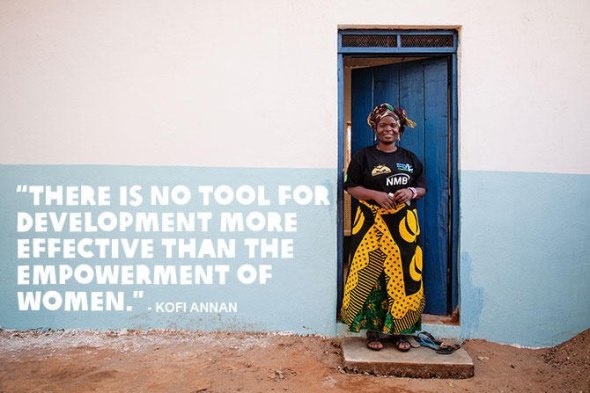
If you can read, write and perform arithmetic then you are in a far better position with a much greater chance of being able to control your own life and that’s why education is such an important tool if we are to empower everyone.
When you are educated, you do not need to depend upon anyone else to tell you what something means or how much of something you are entitled to.
When you are educated, you can ask the difficult questions that are needed to be asked, the first of which is often “Why am I treated this way because of the way that I was born?” And this is an important step towards empowerment.
The global educational initiative depends upon getting education everywhere and valuing education. The key to that, in many countries, is empower women and give them access to education.
Core Values of Education and Why We Have To Oppose “Pranking”
Posted: December 11, 2012 Filed under: Education, Opinion | Tags: advocacy, authenticity, blogging, community, education, educational problem, ethics, feedback, Generation Why, higher education, in the student's head, learning, principles of design, reflection, resources, student perspective, teaching, teaching approaches, thinking, tools, workload 2 CommentsI’ve had a lot of time to think about education this year (roughly 400 hours at current reckoning) so it’s not surprising that I have some opinions on what constitutes the key values of education. Of course, as was noted at the Creative Innovations conference I went to, a corporate values statement is a wish list that doesn’t necessarily mean much so I’m going to talk about what I see when education is being performed well. After I’ve discussed these, I’m then going to briefly argue for why these values mean that stupid stunts (such as the Royal prank where some thoughtless DJs called up a hospital) should be actions that we identify as cruel and unnecessary interpretations of the term ‘entertainment’.
- Truth.
We start from the assumption that we only educate or train our students in what we, reasonably, assume to be the truth. We give the right answers when we know them and we admit it when we don’t. Where we have facts, we use them. When we are standing on opinion, we identify it. When we are telling a story, where the narrative matters more than the contents, we are careful to identify what we are doing and why we are doing it. We try not to deceive, even accidentally, and we do not make a practice of lying, even to spare someone’s feelings. In order to know the truth, we have to know our subject and we try to avoid blustering, derision and appealing to authority when we feel that we are being challenged.
There is no doubt that this can be hard in contentious and emerging areas but, as a primary value, it’s at the core of our educational system. Training someone to recite something that is not true, while still popular in many parts of the world, is indoctrination, not education.
- Respect.
We respect the students that we teach and, in doing this, we prepare them to respect us. We don’t assume that they are all the same, that they all learn at the same rate, that they have had all the preparation that they need for courses or our experiences, nor do assume that they can take anything that we feel inclined to fling at them. We respect them by treating them as people, as individuals, as vulnerable, emotional and potentially flawed humans. We evaluate their abilities before we test their mettle. We give them space to try again. We do all this because it then allows them, without hypocrisy or obligation, to treat us the same way. Respect of effort and of application does not demand perfection or obsession from either party.
- Fairness. We are objective in our assignment and assessment of work and generous in our interpretations when such generosity does not compromise truth or respect. We do not give false praise but we do all give all praise that is due, at the same time giving all of the notes for improvement. We strive to ensure that every student has the same high-quality and fair experience, regardless of who they are and what they do. When we define the rules, we stick to them, unless we have erred in their construction when, having fixed the rules, we then offer the best interpretation to every student. Our students acting in error or unfairly does not allow us to reciprocate in kind. The fairness of our system is not conditional upon a student being a perfect person and its strength lies in the fact that it is fair for all, regardless. What we say, we mean and what we mean, we say. A student’s results are ultimately the reflection of their own application to the course, relative to their opportunities to excel. Students are not unfairly punished because we have not bothered to work out if they are prepared for the course (which is very different from their own application of effort inside the course, which is ultimately their responsibility moderated by the unforeseen and vagaries of life), nor does the action of one student unduly influence the results of another, except where this is clearly identified and students have sufficient autonomy to control the outcome of this situation.
These stupid pranking stunts on the radio are usually considered acceptable because the person being pranked is contacted after the fact to ask if it can be broadcast. Frankly, I think this is bordering on coercive (because you risk being a bad sport if you don’t participate and I suspect that the radio stations don’t accept a simple first ‘no’) but some may disagree. (It’s worth noting that while the radio station tried to contact the nurses, they failed to get approval to broadcast.)
These pranks are, at heart, valueless lies, usually calculated to embarrass someone or expose them undertaking a given behaviour. They are neither truthful nor respectful. While this is often the high horse of pomposity (haven’t you got a sense of humour), it is important to realise that truly funny things can usually be enjoyed by everyone and that there is a world of difference between a joke that involves old friends and one that exploits strangers. The second situation just isn’t fair. The radio station is setting up a situation that is designed to elicit a response that everyone other than the victim will find amusing, because the victim is somehow funny or vulnerable. Basically, it’s unfair. You don’t get to laugh at or humiliate someone in a public forum just because you think it’s funny – didn’t we get over this in primary school? A lack of fairness often leads to situations that are coercive because we impose cultural norms, or peer-pressure, to force people to ‘go along with the joke’.
I had a student in my office recently, while another academic who happened to be my wife was helping me clear a backlog of paper, and before I discussed his final mark, I asked my wife if she would mind leaving the room. This was because there was no way I could ask the student if he minded discussing his mark with my wife in the room and not risk the situation being coercive. It’s a really simple thing to fix if you think about it. In order to respect the student’s privacy, I needed to be fair in the way that I controlled his ability to make decisions. Now I’m not worried that this student is easily coerced but that’s not my call to make – it’s not up to me to tell a student if they are going to be comfortable or not.
The Royal prank has clearly identified that that we can easily go down very dark and unexpected roads when we start to treat people as props, without sticking to the truth or respecting them enough to think about how they might feel about our actions, and that’s patently unfair. If these are our core values, and again many would disagree, then we have to stand up and object when we see them being mucked around with by our society. As educators, we have to draw a line and say that “just because you think it’s funny, doesn’t mean that you were right to do it” and we can do that and not be humourless or party-poopers. We do it because we want to allow people to still be funny, and have fun, muck around and have a joke with people that they know – because we’ve successfully trained them to know when they should stop, because we’ve correctly instilled the values of truth, respect and fairness.
Game Design and Boredom: Learning From What I Like
Posted: November 25, 2012 Filed under: Education, Opinion | Tags: authenticity, blogging, collaboration, community, curriculum, data visualisation, design, education, games, Generation Why, higher education, in the student's head, learning, principles of design, reflection, resources, teaching, teaching approaches, thinking, tools, zombies 5 CommentsFor those of you poor deluded souls who are long term readers (or long term “receivers of e-mail that you file under the ‘read while anaesthetised’ folder”) you will remember that I talked about producing a zombie game some time ago and was crawling around the house to work out how fast you could travel as a legless zombie. Some of you (well, one of you – thanks, Mark) has even sent me appropriately English pictures to put into my London-based game. Yet, as you can see, there is not yet a game.
What happened?
The first thing I wanted to do was to go through the design process and work out if I could produce a playable game that worked well. Along the way, however, I’ve discovered a lot of about games because I have been thinking in far more detail about games and about why I like to play the games that I enjoy. To quote my previous post:
I play a number of board games but, before you think “Oh no, not Monopoly!”, these are along the lines of the German-style board games, games that place some emphasis on strategy, don’t depend too heavily on luck, may have collaborative elements (or an entirely collaborative theme), tend not to be straight war games and manage to keep all the players in the game until the end.
What I failed to mention, you might notice, is that I expect these games to be fun. As it turns out, the first design for the game actually managed to meet all of the above requirements and, yet, was not fun in any way at all. I realised that I had fallen into a trap that I am often prone to, which is that I was trying to impose a narrative over a set of events that could actually occur in any order or any way.
Ever prepared for a class, with lots of materials for one specific area, and then the class takes a sudden shift in direction (it turns out that the class haven’t assimilated a certain foundation concept) and all of that careful work has to be put away for later? Sometimes it doesn’t matter how much you prepare – life happens and your carefully planned activities get derailed. Even if you don’t get any content surprises, it doesn’t take much to upset the applecart (a fire alarm goes off, for example) and one of the signs of the good educator is the ability to adapt to continue to bring the important points to the learner, no matter what happens. Walking in with a fixed narrative of how the semester is going to roll out is unlikely to meet the requirements of all of your students and if something goes wrong, you’re stuffed (to use the delightful Australian vernacular, which seems oddly appropriate around Thanksgiving).
In my head, while putting my game together, I had thought of a set of exciting stories, rather than a possible set of goals, events and rules that could apply to any combination of players and situations. When people have the opportunity to explore, they become more engaged and they tend to own the experience more. This is what I loved about the game Deus Ex, the illusion of free will, and I felt that I constructed my own narrative in there, despite actually choosing from one of the three that was on offer on carefully hidden rails that you didn’t see until you’d played it through a few times.

Still my favourite computer game!
Apart from anything else, I had made the game design dull. There is nothing exciting about laying out hexagonal tiles to some algorithm, unless you are getting to pick the strategy, so my ‘random starting map’ was one of the first things to go. London has a number of areas and, by choosing a fixed board layout that increased or decreased based on player numbers, I got enough variation by randomising placement on a fixed map.
I love the game Arkham Horror but I don’t play it very often, despite owning all of the expansions. Why? The set-up and pack-up time take ages. Deck after deck of cards, some hundreds high, some 2-3, have to be placed out onto a steadily shrinking playing area and, on occasion, a player getting a certain reward will stop the game for 5-10 minutes as we desperately search for the appropriate sub-pack and specific card that they have earned. The game company that released Arkham has now released iPhone apps that allow you to monitor cards on your phone but, given that each expansion management app is an additional fee and that I have already paid money for the expansions themselves, this has actually added an additional layer of irritation. The game company recognises that their system is painful but now wish to charge me more money to reduce the problem! I realised that my ‘lay out the hexes’ for the game was boring set-up and a barrier to fun.
The other thing I had to realise is that nobody really cares about realism or, at least, there is only so much realism people need. I had originally allows for players to be soldiers, scientists, police, medical people, spies and administrators. Who really wants to be the player responsible for the budgetary allocation of a large covert government facility? Just because the administrator has narrative value doesn’t mean that the character will be fun to play! Similarly, why the separation between scientists and doctors? All that means is I have the unpleasant situation where the doctors can’t research the cure and the scientists can’t go into the field because they have no bandaging skill. If I’m writing a scenario as a novel or short story, I can control the level of engagement for each character because I’m writing the script. In a randomised series of events, no-one is quite sure who will be needed where and the cardinal rule of a game is that it should be fun. In fact, that final goal of keeping all players in the game until the end should be an explicit statement that all players are useful in the game until the end.
The games I like are varied but the games that I play have several characteristics in common. They do not take a long time to set-up or pack away. They allow every player to matter, up until the end. Whether working together or working against each other, everyone feels useful. There is now so much randomness that you can be destroyed by a bad roll but there is not so much predictability that you can coast after the second round. The games I really like to play are also forgiving. I am playing some strategy games at the moment and, for at least two of them, decisions made in the first two rounds will affect the entire game. I must say that I’m playing them to see if that is my lack of ability or a facet of the game. If it turns out to be the game, I’ll stop playing because I don’t need to have a game berating me for making a mistake 10 rounds previously. It’s not what I call fun.
I hope to have some more time to work on this over the summer but, as a design exercise, it has been really rewarding for me to think about. I understand myself more and I understand games more – and this means that I am enjoying the games that I do play more as well!
What Do You Mean… “Like”?
Posted: November 16, 2012 Filed under: Education, Opinion | Tags: blogging, education, feedback, games, higher education, teaching approaches, thinking, tools 9 CommentsI was alerted to a strange game the other day. Go to Mitt Romney’s Facebook page, note the number of ‘likes’ and then come back later to see if the number had gone up or down. As it turns out, the number of Facebookers who ‘like’ the former Presidential Candidate’s Facebook page is dropping at a noticeable but steady rate. My estimates are, if this drop is maintained and it is linear, it will be about 1666 days until there are zero people liking the page. (Estimates vary, but the current rate of loss is somewhere around 11 likes a minute. You can watch it here in real time.) I mention this not to add to Mr Romney’s woes, because he is already understandably not happy that he lost the election, although you may disagree with the reasoning in the linked article. I mention this because it identifies how nebulous our association is with the term and the concept of ‘like’.

If this is your closest friend, you might need to catch up on this thing that we call ‘Facebook’.
For those who have recently returned from 7 years of bonding with a volleyball in the Pacific, Facebook does not allow you to ‘dislike’ things, it only allows you to comment or hit the ‘like’ button (or hide the comment or post but that’s a separate thought). What does it mean then to not click the ‘like’ button or to comment? Thank you, Facebook, for presenting us with yet another false dichotomy and for giving us such a large example on Mr Romney’s page. Before the election, millions of people liked Mr Romney’s page which, one can only imaging, meant that they were showing him support and saying “Go, Mitt!” Now that, in a completely different way, the message “Go, Mitt” has been communicated, it appears that, at a time when an unsuccessful candidate would need the most support, the followers are leaving. Now, this is important because, as I understand it, to stop liking something you have to take the active step of clicking on something – it doesn’t just expire in a short timeframe. People are actively choosing to remove their liking of Mr Romney’s page.
Why?
Well, there’s a lot of speculation about this, including the notion that some of the initial surge of followers came from buying friends by bringing in other accounts that are used by non-people but this still doesn’t explain where the unlikes are coming from because, after all, a Justin Bieber Slashfic Spambot is nothing if not loyal in its mechanically allocated trust. What is probably happening here is that the social media front ends were being used explicitly as part of a campaign to see Mr Romney elected President and, understandably, the accounts are now seeing much less use and, fickle as the real Internet is, you’re only as good as your last post or as hot as your posting frequency. The staffer or group of staffers that were paid to do this have now lost their jobs and the account is heading towards the account graveyard. (The saddest thing about any competition like this is that someone, somewhere, who has been doing a good job may still lose their job because the public didn’t support their candidate. I try to remember that before I overly celebrate either victory or defeat, although I don’t always succeed.)
What concerns me are the people who liked this Facebook page, legitimately and as real people, and have now turned around and deliked it, because this can easily be seen as a punitive action. It has no real impact on Mr Romney in any sense but it does make him look increasingly unpopular and, really, it achieves absolutely nothing. What does ‘like’ mean in this context? I support you until you fail me? I support you because you might be President and I have some strange mental model that your Secretary of State will be picked randomly from your Facebook followers?
To me, honestly, a lot of this looks like spite. After all, what does it hurt to remain a liker of a dead page? It doesn’t, unless your aim is to send a message. However, I think that Mr Romney probably already knows that he didn’t get elected to the highest office his country can offer – but I’m sure that when he becomes aware of all of the people fleeing his page, it will really neatly reinforce how he could have improved his campaign.
Oh, wait, that’s my point! The vocabulary of like/delike (recall that there is no dislike option) is fundamentally useless because of its confused binary nature. Does no ‘like’ mean ‘dislike’,’meh’,’sort of like’,’maybe in a dark room’ or ‘I missed this’? Does ‘like’ mean ‘yay!’, ‘hugs!’, ‘i want to smell your hair’ or ‘*gritted teeth at your good fortune*’? Or does it just mean ‘like’? We have no idea unless someone comments and, given that we have the easy out of ‘like’, many people won’t comment because they have the deceptively communicative nature of the flawed channel of ‘like’!
Like most Universities, we have a survey that we run on students at the end of courses to find out how they felt about the course, what their experience was. Regrettably, a lot of the time, what you end up measuring was how much a student liked you. It’s on a 7 point Likert scale but, and many students don’t realise this, the middle point is not ‘non-committed to like/dislike’, it counts as ‘not like’. Hence if you get 7/7 from everyone for something and get one 4/7, you no longer have 100% broad agreement regarding that point. Because there is confusion about what this means (and there is a not applicable that is separate to the scale), students who don’t care about anything tend to write down the middle and end up counting as a vote against. Is this fair? Well, is that the question? Let me ask a different one – was it what the student intended? Maybe/maybe not. As it stands, the numbers themselves are not very much use as they tell you what people feel but not what they’re thinking. The comments that also come on the same form are far more informative than the numbers. Much as with Facebook, there is confusion over like/dislike, but the comments are always far more useful in making improvements and finding out what people really think.
I feel (to my own surprise) some empathy for Mr Romney at the moment because there are hundreds, if not thousands, of people a day sending him a message that is utterly and totally confusing, as well as being fundamentally hypocritical. Ok, yes, he might not care to know what every American thought he got wrong, the Internet can be challenging that way, but ‘deliking’ him is not actually achieving anything except covering your tracks.
What did any of these people, who have now left, actually mean by ‘like’?
Winding up 2012: Dear Students…
Posted: November 15, 2012 Filed under: Education, Opinion | Tags: advocacy, authenticity, blogging, community, education, ethics, higher education, identity, reflection, student perspective, thinking, work/life balance, workload Leave a commentDear Students,
After this week I will not see many of you until February of next year and, some of you, I may not see again because you’ll go on to do other things. This is the time of the year when I reflect upon what I have achieved in terms of contributing to the knowledge and skills of my students and how I can do it better. I have to start from the presumption that I can always improve upon what have I done but, even without that, accepting that every year will bring a different group, with different needs, forces me to think about the core of my teaching – as opposed to what actually came out in the teaching activities. What I always want to achieve is to help you develop yourselves. I can’t change you but I can help you change. If you know more, understand more or can do more at the end of the year, then I’m happy. If you go on to help other people, then I’m ecstatic!
Many people throughout your lives will tell you big, shiny success stories and expect you to take a certain path because there’s a big brass ring at the end. I have walked that path and have known success but, if we are being honest, success is not the same as happiness. Throughout the year we have discussed many things, scholarly and secular, but we have rarely had the time or the opportunity to talk about some of the most important things in life: the reasons why we do things and, ultimately, how it will make us feel. But you shouldn’t be listening to me because of who I am or how you think of me, I’m just another voice from our species and I have one of the many opinions. My friends will (I hope) tell you that I am mostly a good man, with some occasional moments of selfishness and stupidity. You should realise that almost everyone is like this. It would be impossible for us to live as we do, where we do, were this not so. The majority of people are good, most of the time, with occasional moments of stupidity. What that means, of course, is that we have a terrific amount of force to act against those who are always stupid or unpleasant – the silent majority is powerful.
Firstly, let me tell you how much I love our magnificent, terrible and bizarre species. We are terrible and beautiful. We are capable of acts of tremendous selflessness and kindness, yet sometimes we taint it with greed, selfishness and cruelty. We are driven by so many things and, the more I read, the more it becomes apparent that who we are, as individuals, is as much about the world around us, our families and friends, our education and our overall exposure to reality, as it is about ourselves. I can think of several points in my life where the intervention of other people has held me back from a terrible and destructive course, explicit examples of changing direction, but there are so many examples that speak of casual intervention: a smile on a day when I needed one, someone holding the door, being let into traffic after waiting forever.
To try and distill this species, into the “pull yourself up by your bootstrap” myths of Horatio Alger or to claim it is all emptiness and cynicism, is to sell us, and you, short. Fairy tales are conveniently small fictions, now separated from their original cautionary endings, that sell you a “happy ending” as a bill of goods, as if all you have to do is to kiss the frog, find the right name or have the right shoe size.
Nothing is that easy. If it is for you then, sadly, experience tells us that you will not really appreciate it that much. This is not a rationale for suffering but an observation of the bad behaviour that seems to come at certain levels of privilege. Be in no doubt, if you leave with a degree then you are privileged. This is not a matter of guilt or a burden, it’s just a fact. Some of you will never appreciate how lucky you were to go to University at a time of peace in a prosperous country because you do not quite realise how fortunate you were. You are no more or less entitled to be educated than the next person and it is pure accident that determines who enters school in a safe, highly educated, country, rather than trying to learn under gunfire in a cramped and broken classroom where you might be lucky to get to Year 6 before forced to go and work to keep your family alive. Some of you have made it through wars and fought your way to restart your education, surviving that and striving for more. Some of you represent minorities, first-in-family or face terrible ordeals that your peers will never quite understand. Many of you, facing no other impediment other than ignorance of a certain area, strive for more and to achieve a greater understanding. I salute all of you for your efforts, especially where you have reached out to help your peers. But why are you doing this?
We often fail to ask ourselves ‘why?’ “Why are you doing this degree?” “Why are you looking for this job?” “Why are you doing this?”
You will often be encouraged to believe that questions like “Am I happy?” or “Should I be doing this?” are somehow not appropriate questions – indicative of some sort of laziness when you should be seeking jobs and working harder, every single day. So, what are your plans? If your answer is “Get a job”, then which job are you looking for? If the answer to that is “a programming job”, then what kind of programming job? If you don’t know what you really want to do, then how will you know when you’ve found it? How can you search for something better? How will you say no to something that will make you miserable? What do you need to live and what do you need to make you happy? Can you combine them? Many of you will have dependents and you will have to take the work that is offered, when it is offered. If you do have some freedom of movement now then I encourage you to make the best use of it so that, when people do depend upon you, you can support them with little or no resentment. Remember that rarely do the people we support ask for our help for any other reason than they need help. I always have to remember that when a student asks me a ‘silly’ question. It’s not about me – they just need my help and probably don’t yet realise what the question sounds like.
What makes you happy? Can you make it a job? Are you happy now? Do you actually want this degree? Why? Most students start University with no clear plan or understanding of why they’re doing it. Now, most students then end up finishing and having some idea of what they’re doing – and a Uni degree is a great thing to have when we teach it properly – but leaving after 3-5 years with a degree and no idea of direction means that finding something that you want to do is going to be a crap shoot. This must be tempered by the realities of your life because this is no fairytale. You will give 5% of your time to some people and they will be so grateful in return that you will be embarrassed. You will try to give 200% to other people and they will only demand more. You will not necessarily know in advance which way this will go. Those of you have choice must remember that there are many, many more who don’t. Again, this is not about guilt but about perspective and valuing what you have, and what you can do.
I am, unashamedly, focused on actions taken for the good of us all: our community, our society and our home, which is far more than just a place for humans. I have spent time at a very low ebb over the years: depressed, deep in debt, terrible job or unemployed, living on almost no food for weeks, giving away my own books and CDs as gifts to not stand out at social gatherings, washing my clothes in the bathroom sinks at work to hide the fact that I couldn’t afford laundry powder or new clothes. I hope that none of this ever happens to you but you should be aware that this is happening, day after day, to people everywhere. Many of these people did not go to Uni, did not finish school, may not have basic literacy. How do you expect them to pull themselves up by their bootstraps when they have no boots and someone is standing on their toes (to quote Dr King).
I do not want to encourage you towards any movement, political, secular, religious or otherwise. It is none of my business what kind of “-ist” you become, if any, as long as you do so fairly, ethically and with respect and an appreciation of who you are and the people around you. I find myself constantly challenged to live up to my own beliefs and my ideals. Sometimes I do, sometimes I wish I had tried harder. That’s just how it is, for almost all of us.
My sincere wishes for a beautiful and happy future,
Nick.
A brief contemplation on a captured moment.
Posted: November 13, 2012 Filed under: Education, Opinion | Tags: advocacy, authenticity, blogging, community, education, ethics, higher education, reflection, student perspective, teaching approaches, thinking, universal principles of design Leave a commentYou will all have seen the picture of the man standing in front of the tanks near Tiananmen Square. (Those of you who haven’t are probably also not seeing this post. What a coincidence!) What you may not have seen is one of the shots prior to this moment, captured by Terril Jones, which shows the Unknown Rebel (Tank Man) standing patiently, well before the tanks reached him. If you look at the picture, you’ll see him on the vertical midline, just left of centre, with his trousers hitched awkwardly and holding two shopping bags. As far as we know, from this point on, he stops the column, walks in front of the tanks to stop them, climbs on, chats to some of the people on the tank, gets down, blocks them again and is then seized by two men and propelled into the crowd.

(C) Terril Jones. Low quality image used for reference.
This photograph is important. This clearly shows that this action was not spur of the moment – Tank Man didn’t rush out of the crowd – but it also shows the mundanity of the whole scene. Tanks are rolling in the street but, from what it looks like, this man is on his way back from the shops. The bags were never used against the tanks and they’re not exactly military issue. The most likely explanation is that this is someone who, walking back from the shops around lunchtime, possibly with lunch for his colleagues or food for his family, saw the people fleeing Tiananmen square, heard the tanks and suddenly realised that he was going to have to stand in front of them and stop them advancing.
I have had two moments in my life where I have realised that I am about to try and disarm someone with a knife. Both of them were terrifying as hell but both of them required action. Fortunately for me, both people had little idea what they were doing and I managed to avoid getting hurt, which means that (a) I was profoundly lucky and (b) do not recommend this course to anyone. However, sometimes, you just realise that something has to happen and that you are going to be the person who does it. But actions on this scale (taking on a stream of Type 59 Chinese tanks) defy standard human reaction and are almost completely incomprehensible.
Many theories have been advanced about Tank Man’s actions. Was he mentally unstable? Well, this is hardly the action we’d expect of a sane man, certainly. But he seems so unprepared and so determined at the same time. He hasn’t even put the bags down to adjust his trousers! My belief is that this man is completely sane, except that he is about to do something that, by any definition, is crazy. We can’t ask Tank Man because he has never shown up again. Anywhere.
Any number of us, when faced with a much less challenging situation, would have looked at the shopping bags and thought “well, I can’t stop, the food will get cold/ice cream will melt/meat will spoil” and conveniently decamped in the direction that the two foreground sprinters are indicating. And that is completely reasonable! I have said before that I can admire the actions of people and yet not even begin to comprehend how they can set themselves with such resolve in the face of terrible things.
We talk about ethics, we teach ethics and, all too often, we discover that while our students can write down the differences between Kantian Maxims and Benthamite Utilitarianism, they still cheat on tests or copy work because they haven’t actually learned how to act ethically. The Tank Man, for me, is an example of the resolute commitment to one’s beliefs that we are really hoping for in all of this ethical teaching. This picture confirms the premeditation that was required – can you imagine how much resolve it took to stand there as tens of tanks rumbled towards you? I’ve been in the Armoured Corps and tanks are big, scary and loud. If I wasn’t in one, I wouldn’t want to be near them because they could crush you like a bug and not even notice. What we see in the picture above is resolve, despite having bags in your hand and slightly baggy trousers. The mundane transformed into something far less ordinary.
The shot itself is also far from ordinary both by intention and by accident. Accidentally, I believe, the photographer has captured true opposites in the shot and given it a spectacular level of contrast. On the left hand side, you have a man who is prepared to stand in front of tanks and not move. On the right is a sign bearing the Chinese character for ‘Yield’.
Not something that the Unknown Rebel was planning to do that day.
And yet more on St John’s but, please note, let’s not isolate this to just one of Sydney’s colleges.
Posted: November 13, 2012 Filed under: Education, Opinion | Tags: advocacy, blogging, community, education, ethics, Generation Why, higher education, in the student's head, reflection, teaching approaches, thinking Leave a commentThe St John’s College saga drags on, with the news that almost all of the Council have now resigned (and, goodness, here is a similar piece in The Australian). This follows the ‘requested’ resignation of the six sitting priests by Cardinal George Pell, the Roman Catholic Archbishop of Sydney. What is worth noting is that one member has remained (not the chair) and I’m slightly puzzled as to why: one can only hope it’s because they’ve been on a cruise and not yet read their e-mail! The Council itself will need to be complete reconstituted, and may change dramatically if the governing Act is altered, so remaining as the ‘last person standing’ doesn’t make much sense to me. (I admit my ignorance here as to the formal benefits and perquisites of Council membership so any who can inform me, please do!) I find the retiring chair’s comments interesting, for other reasons. Former chairman Christine Liddy has recognised that the Council no longer has quorum and also notes that the council ‘condemned the recent behaviour of “a minority of students” and supported any steps Cardinal Pell might take to address management of the college.
Well, that’s nice. The writing is on the wall so let’s all agree that the typeface is pleasing and that this is the shade that we wanted. What next, Ms Liddy, do you think that, after chairing this council over some of the most unseemly behaviour at a college seen for some time, including a near death due to intimidation, that perhaps some other actions are required?
She said the 1857 Act which governs the college was inadequate for a university college in the 21st century. (From the linked article from the ABC)
Now, my searching has turned up that Ms Liddy was a recent appointment to chair, as noted in a March document, so please allow me to genuinely generous in my comments that this may all revolve around particular poor timing for Ms Liddy’s commitment to modernising St John’s and that, had a group of students not decided that their 2012 theatrical production was to be a role-played 3D experimental version of “Lord of the Flies”, we would have seen requests for the government to consider revising the Act anyway. She is, of course, completely correct in that from almost any angle, the Acts that define the colleges do not address the realities of the late 20th Century, let alone the 21st.
Now, let us not forget that there are multiple colleges of this sort associated with the University of Sydney. A friend pointed out that we have been down similar paths before, with bad behaviour and loutish antics at the Presbyterian St Andrew’s College in the early 90s. One of the principals at the time, Dr Peter Cameron, tried very hard to modernise the culture, but as his book “Finishing School for Blokes: College Life Exposed” recorded, he had entered an atmosphere that was, to the vast majority, focused on activities that stagger the reader with their mindlessness and unpleasantness. Dr Cameron was, of course, famously convicted as a heretic in 1993 for having the audacity to preach that he supported the ordination of women and opposed the Church’s hardline on homosexuality. Fortunately, by the time that his colleagues had assembled the pyre, he had sensibly resigned his position and returned to Scotland, to join the Episcopalians, who appeared to be more agreeable.
And, yes, that was a heresy charge in 1993. In case you thought I got the year or the charge wrong. (You can read the sermon in Dr Cameron’s own, delightful, words at a piece here. He’s a far better writer than I am so please do take the time to read the sermon, whatever your religious leanings!)
Now, St Andrew’s, at least, has modified its Act (in 1998) to make the Vice-Chancellor of the University of Sydney a Visitor, and hence allowing the University some voice and influence, but the unchanged Acts, designed to mandate separation from state influence in religion, now appear to be as archaic as they are. The freedom to practise Christianity will not be threatened by making the colleges more accountable to their University, but changing the Acts will start to address the poisonous and privileged atmosphere that surrounds these institutions.
It’s easy to label this as prudishness or, even, jealousy in that this appears to be about kids ‘having a good time’. However, and let me very clear, the good time stops the moment that you start to make someone else have a bad time. It appears, from the outside and from what leaks out, that a large number of the good times are purely had by inflicting a bad time on someone else. This all looks like a sad tale about older people, having been through a system, wanting to see it perpetuated and gazing through rose-colored glasses at a standard of behaviour that is repellant, unnecessary and, when regarded with any degree of criticality, fundamentally wrong.
I am very pleased to see that the Council has resigned, not least because it now means that the Rector who has been advocating for change (and who has been stymied consistently) will not have to step down in the face of a mysteriously large group of complaints from students that all materialised in the last month or two. (This does not, of course, mean that he may not have valid complaints to face in future but, to be frank, his accusers have largely undermined themselves through their actions.) I am very pleased to see that the Premier of New South Wales, the Vice-Chancellor of the University of Sydney and Cardinal Pell have all stepped in to try and clean this mess up.
But.
As someone else commented on a previous post, wouldn’t it have been better if it had not come to this? Does it really take the near death of a girl to point out that gangs of roaming youths intimidating others, defecating in public, burning furniture and running riot is somehow not something that we associate with a University? One of my students commented that I must have been really angry when I last posted about the “letting their hair down” comment and, yes, I was furious. I don’t want anyone, anywhere, exposed to this kind of intimidatory and vindictive violence, and I most certainly then don’t want it whitewashed away with linguistic niceties so that, once again, the offenders walk way snickering and the victims/whistleblowers are left standing there, feeling like idiots.
We can only keep watching and wait to see what happens and hope that we can achieving something lasting in terms of protecting all of our students.

 Nick Falkner