
Assessment is (often) neither good nor true.
Posted: January 9, 2016 Filed under: Education, Opinion | Tags: advocacy, aesthetics, beauty, community, design, education, ethics, higher education, in the student's head, kohn, principles of design, rapaport, reflection, student perspective, teaching, teaching approaches, thinking, tools, universal principles of design, work/life balance, workload 3 CommentsIf you’ve been reading my blog over the past years, you’ll know that I have a lot of time for thinking about assessment systems that encourage and develop students, with an emphasis on intrinsic motivation. I’m strongly influenced by the work of Alfie Kohn, unsurprisingly given I’ve already shown my hand on Focault! But there are many other writers who are… reassessing assessment: why we do it, why we think we are doing it, how we do it, what actually happens and what we achieve.

In my framing, I want assessment to be as all other aspects of education: aesthetically satisfying, leading to good outcomes and being clear and what it is and what it is not. Beautiful. Good. True. There are some better and worse assessment approaches out there and there are many papers discussing this. One of these that I have found really useful is Rapaport’s paper on a simplified assessment process for consistent, fair and efficient grading. Although I disagree with some aspects, I consider it to be both good, as it is designed to clearly address a certain problem to achieve good outcomes, and it is true, because it is very honest about providing guidance to the student as to how well they have met the challenge. It is also highly illustrative and honest in representing the struggle of the author in dealing with the collision of novel and traditional assessment systems. However, further discussion of Rapaport is for the near future. Let me start by demonstrating how broken things often are in assessment, by taking you through a hypothetical situation.
Thought Experiment 1
Two students, A and B, are taking the same course. There are a number of assignments in the course and two exams. A and B, by sheer luck, end up doing no overlapping work. They complete different assignments to each other, half each and achieve the same (cumulative bare pass overall) marks. They then manage to score bare pass marks in both exams, but one answers only the even questions and only answers the odd. (And, yes, there are an even number of questions.) Because of the way the assessment was constructed, they have managed to avoid any common answers in the same area of course knowledge. Yet, both end up scoring 50%, a passing grade in the Australian system.
Which of these students has the correct half of the knowledge?
I had planned to build up to Rapaport but, if you’re reading the blog comments, he’s already been mentioned so I’ll summarise his 2011 paper before I get to my main point. In 2011, William J. Rapaport, SUNY Buffalo, published a paper entitled “A Triage Theory of Grading: The Good, The Bad and the Middling.” in Teaching Philosophy. This paper summarised a number of thoughtful and important authors, among them Perry, Wolff, and Kohn. Rapaport starts by asking why we grade, moving through Wolff’s taxonomic classification of assessment into criticism, evaluation, and ranking. Students are trained, by our world and our education systems to treat grades as a measure of progress and, in many ways, a proxy for knowledge. But this brings us into conflict with Perry’s developmental stages, where students start with a deep need for authority and the safety of a single right answer. It is only when students are capable of understanding that there are, in many cases, multiple right answers that we can expect them to understand that grades can have multiple meanings. As Rapaport notes, grades are inherently dual: a representative symbol attached to a quality measure and then, in his words, “ethical and aesthetic values are attached” (emphasis mine.) In other words, a B is a measure of progress (not quite there) that also has a value of being … second-tier if an A is our measure of excellence. A is not A, as it must be contextualised. Sorry, Ayn.
When we start to examine why we are grading, Kohn tells us that the carrot and stick is never as effective as the motivation that someone has intrinsically. So we look to Wolff: are we critiquing for feedback, are we evaluating learning, or are we providing handy value measures for sorting our product for some consumer or market? Returning to my thought experiment above, we cannot provide feedback on assignments that students don’t do, our evaluation of learning says that both students are acceptable for complementary knowledge, and our students cannot be discerned from their graded rank, despite the fact that they have nothing in common!
Yes, it’s an artificial example but, without attention to the design of our courses and in particular the design of our assessment, it is entirely possible to achieve this result to some degree. This is where I wish to refer to Rapaport as an example of thoughtful design, with a clear assessment goal in mind. To step away from measures that provide an (effectively) arbitrary distinction, Rapaport proposes a tiered system for grading that simplifies the overall system with an emphasis on identifying whether a piece of assessment work is demonstrating clear knowledge, a partial solution, an incorrect solution or no work at all.
This, for me, is an example of assessment that is pretty close to true. The difference between a 74 and a 75 is, in most cases, not very defensible (after Haladyna) unless you are applying some kind of ‘quality gate’ that really reduces a percentile scale to, at most, 13 different outcomes. Rapaport’s argument is that we can reduce this further and this will reduce grade clawing, identify clear levels of achieve and reduce marking load on the assessor. That last point is important. A system that buries the marker under load is not sustainable. It cannot be beautiful.
There are issues in taking this approach and turning it back into the grades that our institutions generally require. Rapaport is very open about the difficulties that he has turning his triage system into an acceptable letter grade and it’s worth reading the paper to see that discussion alone, because it quite clearly shows what
Rapaport’s scheme clearly defines which of Wolff’s criteria he wishes his assessment to achieve. The scheme, for individual assessments, is no good for ranking (although we can fashion a ranking from it) but it is good to identify weak areas of knowledge (as transmitted or received) for evaluation of progress and also for providing elementary critique. It says what it is and it pretty much does it. It sets out to achieve a clear goal.
The paper ends with a summary of the key points of Haladyna’s 1999 book “A Complete Guide to Student Grading”, which brings all of this together.
Haladyna says that “Before we assign a grade to any students, we need:
- an idea about what a grade means,
- an understanding of the purposes of grading,
- a set of personal beliefs and proven principles that we will use in teaching
and grading,
- a set of criteria on which the grade is based, and, finally,
- a grading method,which is a set of procedures that we consistently follow
in arriving at each student’s grade. (Haladyna 1999: ix)
There is no doubt that Rapaport’s scheme meets all of these criteria and, yet, for me, we have not yet gone far enough in search of the most beautiful, most good and most true extent that we can take this idea. Is point 3, which could be summarised as aesthetics not enough for me? Apparently not.
Tomorrow I will return to Rapaport to discuss those aspects I disagree with and, later on, discuss both an even more trimmed-down model and some more controversial aspects.
Beauty Attack I: Assessment
Posted: January 8, 2016 Filed under: Education, Opinion | Tags: aesthetics, beauty, design, discipline, education, educational research, ethics, foucault, higher education, in the student's head, principles of design, punishment, reflection, resources, teaching, teaching approaches 3 CommentsFor the next week, I’m going to be applying an aesthetic lens to assessment and, because I’m in Computer Science, I’ll be focusing on the assessment of Computer Science knowledge and practice.
How do we know if our students know something? In reality, the best way is to turn them loose, come back in 25 years and ask the people in their lives, their clients, their beneficiaries and (of course) their victims, the same question: “Did the student demonstrate knowledge of area X?”
This is not available to us as an option because my Dean, if not my Head of School, would probably peer at me curiously if I were to suggest that all measurement of my efficacy be moved a generation from now. Thus, I am forced to retreat to the conventions and traditions of assessment: it is now up to the student to demonstrate to me, within a fixed timeframe, that he or she has taken a firm grip of the knowledge.
We know that students who are prepared to learn and who are motivated to learn will probably learn, often regardless of what we do. We don’t have to read Vallerand et al to be convinced that self-motivated students will perform, as we can see it every day. (But it is an enjoyable paper to read!) Yet we measure these students in the same assessment frames as students who do not have the same advantages and, thus, may not yet have the luxury or capacity of self-motivation: students from disadvantaged backgrounds, students who are first-in-family and students who wouldn’t know auto-didacticism if it were to dance in front of them.
How, then, do we fairly determine what it means to pass, what it means to fail and, even more subtly, what it means to pass or fail well? I hesitate to invoke Foucault, especially when I speak of “Discipline and Punish” in an educational setting, but he is unavoidable when we gaze upon a system that is dedicated to awarding ranks, graduated in terms of punishment and reward. It is strange, really, that were many patients to die under the hand of a surgeon for a simple surgery, we would ask for an inquest, but many students failing under the same professor in a first-year course is merely an indicator of “bad students”. So many of our mechanisms tell us that students are failing but often too late to be helpful and not in a way that encourages improvement. This is punishment. And it is not good enough.
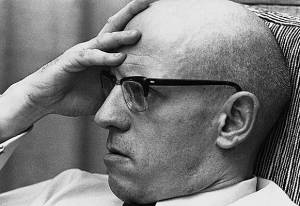
Foucault: thinking about something very complicated, apparently.
Our assessment mechanisms are not beautiful. They are barely functional. They exist to provide a rough measure to separate pass from fail, with a variety of other distinctions that owe more to previous experience and privilege in many cases than any higher pedagogical approach.
Over the next week, I shall conduct an attack upon the assessment mechanisms that are currently used in my field, including my own, in the hope of arriving at a mechanism of design, practice and validation that is pedagogically pleasing (the aesthetic argument again) and will lead to outcomes that are both good and true.
Getting it wrong
Posted: January 7, 2016 Filed under: Education, Opinion | Tags: advocacy, authenticity, design, education, educational problem, educational research, higher education, john c. dewey, learning, pragmatism, principles of design, reflection, teaching, teaching approaches, thinking, tools, william james Leave a commentIt’s fine to write all sorts of wonderful statements about theory and design and we can achieve a lot in thinking about such things. But, let’s be honest, we face massive challenges in the 21st Century and improved thinking and practice in education is one of the most important contributions we can make to future generations. Thus, if we want to change the world based upon our thinking, then all of our discussions have no use if we can’t develop something that’s going to achieve our goals. Dewey’s work provide an experimental, even instrumental, approach to the American philosophical school of pragmatism. To briefly explain this term in the specific meaning, I turn to William James, American psychologist and philosopher.
Pragmatism asks its usual question. “Grant an idea or belief to be true,” it says, “what concrete difference will its being true make in anyone’s actual life? How will the truth be realized? What experiences will be different from those which would obtain if the belief were false? What, in short, is the truth’s cash-value in experiential terms?”
William James, Pragmatism (1907)
(James is far too complex to summarise with one paragraph and I am using only one of his ideas to illustrate my point. Even James’ scholars disagree on how to interpret many of his writings. It’s worth reading him and Hegel at the same time as they square off across the ring quite well.)

Portrait of William James by John La Farge, circa 1859
What will be different? How will we recognise or measure it? What do we gain by knowing if we are right or wrong? This is why all good education researchers depend so heavily on testing their hypotheses in the space where they will make an impact and there is usually an obligation to look at how things are working before and after any intervention. This places further obligation upon us to evaluate what has occurred and then, if our goals haven’t been achieved, change our approach further. It’s a simple breakdown of roles but I often think as educational work in three heavily overlapping areas: practice, scholarship and research. Practice should be applying techniques that achieve our goals, scholarship involves the investigation, dissemination and comparison of these techniques, and research builds on scholarship to evaluate practice in ways that will validate and develop new techniques – or invalidate formerly accepted ones as knowledge improves. This leads me to my point: evaluating your own efforts to work out how to do better next time.
There are designers, architects, makers and engineers who are committed to the practice of impact design, where (and this is one definition):
“Impact design is rooted in the core belief that design can be used to create positive social, environmental and economic change, and focuses on actively measuring impact to inform and direct the design process.” Impact Design Hub, About.
Thus, evaluation of what works is essential for these practitioners. The same website recently shared some designers talking about things that went wrong and what they learned from the process.
If you read that link, you’ll see all sorts of lessons: don’t hand innovative control to someone who’s scared of risk, don’t ignore your community, don’t apply your cultural values to others unless you really know what you’re doing, and don’t forget the importance of communication.
Writing some pretty words every day is not going to achieve my goal and I need to be reminded of the risks that I face in trying to achieve something large – one of which is not actually working towards my own goals in a useful manner! One of the biggest risks is confusing writing a blog with actual work, unless I use this medium to do something. Over the coming weeks, I hope to show you what I am doing as I move towards my very ambitious goal of “beautiful education”. I hope you find the linked article as useful as I did.
Dewey’s Pedagogic Creed
Posted: January 6, 2016 Filed under: Education, Opinion | Tags: aesthetics, authenticity, beauty, design, dewey, education, educational problem, educational research, ethics, higher education, in the student's head, john c. dewey, learning, pragmatism, reflection, teaching, thinking Leave a commentAs I’ve noted, the space I’m in is not new, although some of the places I hope to go with it are, and we have records of approaches to education that I think fit well into an aesthetic framing.
As a reminder, I’m moving beyond ‘sensually pleasing’ in the usual sense and extending this to the wider definition of aesthetics: characteristics that define an approach or movement. However, we can still see a Cubist working as both traditionally aesthetically pleasing and also beautiful because of its adherence to the Cubist aesthetic. To draw on this, where many art viewers find a large distance between them and an art work, it is often attributable to a conflict over how beauty is defined in this context. As Hegel noted, beauty is not objective, it is our perspective and our understanding of its effect upon us (after Kant) that contributes greatly to the experience.

John C. Dewey. Psychologist, philosopher, educator, activist and social critic. Also, inspiration.
Dewey’s Pedagogic Creed was published in 1897 and he sought to share his beliefs on what education was, what schools were, what he considered the essential subject-matter of education, the methods employed, and the essential role of the school in social progress. I use the word ‘beliefs’ deliberately as this is what Dewey published: line after line of “I believe…” (As a note, this is what a creed is, or should be, as a set of beliefs or aims to guide action. The word ‘creed’ comes to us from the Latin credo, which means “I believe”.) Dewey is not, for the most part, making a religious statement in his Creed although his personal faith is expressed in a single line at the end.
To my reading, and you know that I seek characteristics that I can use to form some sort of object to guide me in defining beautiful education, many of Dewey’s points easily transfer to characteristics of beauty. For example, here are three lines from the work:
- “I believe that education thus conceived marks the most perfect and intimate union of science and art conceivable in human experience.“
- “I believe that with the growth of psychological science, giving added insight into individual structure and laws of growth; and with growth of social science, adding to our knowledge of the right organization of individuals, all scientific resources can be utilized for the purposes of education.“
- “ I believe that under existing conditions far too much of the stimulus and control proceeds from the teacher, because of neglect of the idea of the school as a form of social life.“
Dewey was very open about what he thought the role of school was, he saw it as the “fundamental method of social progress and reform“. I believe that he saw education, when carried out correctly, as being a thing that was beautiful, good and true and his displeasure with what he encountered in the schools and colleges of the late 19th/early 20th Century is manifest in his writings. He writes in reaction to an ugly, unfair, industrialised and mechanistic system and he wants something that conforms to his aesthetics. From the three lines above, he seeks education that is grounded in the arts and science, he wants to use technology in a positive way and he wants schools to be a vibrant and social community.
And this is exactly what the evidence tells us works. The fact that Dewey arrived at this through a focus on equity, opportunity, his work in psychology and his own observations is a testament to his vision. Dewey was rebelling against the things he could see were making children hate education.
I believe that next to deadness and dullness, formalism and routine, our education is threatened with no greater evil than sentimentalism.
John Dewey, School Journal vol. 54 (January 1897), pp. 77-80
Here, sentimentalism is where we try to evoke emotions without associating them with an appropriate action: Dewey seeks authenticity and a genuine expression. But look at the rest of that list: dead, dull, formal and routine. Dewey would go on to talk about schools as if they were prisons and over a hundred years later, we continue to line students up into ranks and bore them.
I have a lot of work to do as I study Dewey and his writings again with my aesthetic lens in place but, while I do so, it might be worth reading the creed. Some things are dated. Some ideas have been improved upon with more research, including his own and we will return to these issues. But I find it hard to argue with this:
I believe that the community’s duty to education is, therefore, its paramount moral duty. By law and punishment, by social agitation and discussion, society can regulate and form itself in a more or less haphazard and chance way. But through education society can formulate its own purposes, can organize its own means and resources, and thus shape itself with definiteness and economy in the direction in which it wishes to move.
ibid.
Maximise beauty or minimise …?
Posted: January 4, 2016 Filed under: Education, Opinion | Tags: advocacy, authenticity, beauty, charlie brown, education, educational research, ethics, higher education, in the student's head, peanuts, peppermint patty, principles of design, reflection, teaching, teaching approaches 3 CommentsThere is a Peanuts comic from April 16, 1972 where Peppermint Patty asks Charlie Brown what he thinks the secret of living is. Charlie Brown’s answer is “A convertible and a lake.” His reasoning is simple. When it’s sunny you can drive around in the convertible and be happy. When it’s raining you can think “oh well, the rain will fill up my lake.” Peppermint Patty asks Snoopy the same question and, committed sensualist that he is, he kisses her on the nose.

This is the Amphicar. In the 21st century, no philosophical construct will avoid being reified.
Charlie Brown, a character written to be constantly ground down by the world around him, is not seeking to maximise his happiness, he is seeking to minimise his unhappiness. Given his life, this is an understandable philosophy.
But what of beauty and, in this context, beauty in education? I’ve already introduced the term ‘ugly’ as the opposite of beauty but it’s hard for me to wrap my head around the notion of ‘minimising ugliness’; ugly is such a strong term. It’s also hard to argue that any education, when it covers any aspects to which we would apply that label, is ever totally ugly. Perhaps, in the educational framing, the absence of beauty is plainness. We end up with things that are ordinary, rather than extraordinary. I think that there is more than enough range between beauty and plainness for us to have a discussion on the movement between those states.
Is it enough for us to accept educational thinking that is acceptably plain? Is that a successful strategy? Many valid concerns about learning at scale focus on the innate homogeneity and lack of personalisation inherent in such an approach: plainness is the enemy. Yet there are many traditional and face-to-face approaches where plainness stares us in the face. Banality in education is, when identified, always rejected, yet it so often slips by without identification. We know that there is a hole in our slippers, yet we only seem to notice when that hole directly affects us or someone else points it out.
My thesis here is that a framing of beauty should lead us to a strategy of maximising beauty, rather than minimising plainness, as it is only in that pursuit that we model that key stage of falling in love with knowledge that we wish our students to emulate. If we say “meh is ok”, then that is what we will receive in return. We model, they follow as part of their learning. That’s what we’re trying to make happen, isn’t it?
What would Charlie Brown’s self-protective philosophy look like in a positive framing, maximising his joy rather than managing his grief? I’m not sure but I think it would look a lot like a dancing beagle who kisses people on the nose. We may need more than this for a sound foundation to reframe education!
Exploring beauty and aesthetics
Posted: January 3, 2016 Filed under: Education, Opinion | Tags: aesthetics, beauty, education, educational problem, educational research, hegel, higher education, Kant, learning, reflection, suits, teaching, teaching approaches, The Grasshopper, thinking, tools, wittgenstein Leave a comment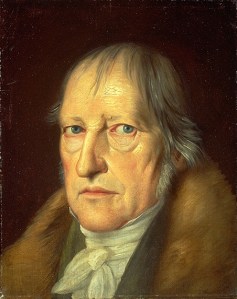
“Nothing great in the world has ever been accomplished without passion.” Hegel
- the ability to state the goal of any educational activity as separate from the activity,
- the awareness of evidence-based practice and its use in everyday teaching, and
- a willingness to accept that it is correct goal setting and using techniques that work, and can be shown to work, that will lead to better outcomes.
Beauty from the ages
Posted: January 2, 2016 Filed under: Education, Opinion | Tags: aesthetics, authority, beauty, education, educational research, ethics, higher education, quintilian, reflection, teaching, thinking 1 Comment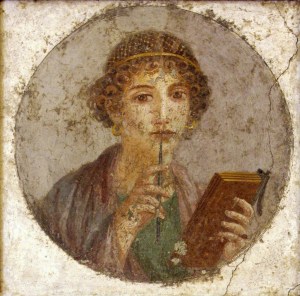
Captured from Pompeii. The elusive moment of thought before writing.
In focusing on beauty, I spoke about moving away from authority and I then, rather swiftly, mentioned a lot of importantly famous dead people who had said a lot of (what could be interpreted as) portentous things. Wait – am I making an argument to authority to support me as an authority? Let me explain and, at the same time, discuss why I can refer to some aspects of an ancient writer, while neatly skirting some of (usually) his less progressive ideas.
When we look in details at the writings on Quintilian, he is so heavily focused in his time that the thought of a tutor who wasn’t male is incomprehensible. Marcus Aurelius is very, forgive me, old-fashioned in some of his thinking on a number of issues. For both of these authors, progressive and visionary thinking is interspersed with older ideas. How do I separate one from another, especially where we are trying to step away from the sheer weight of authority?
The issue, for me, is what do we keep seeing in the literature over the years. What I am trying to point out are those sentiments that are repeated as things we could fix in education, whatever the context or experience of the writer. When we see the same problem repeated over time, we can start to believe that there is a problem that has not yet been addressed. Or, even, one that has not been perceived to have been fixed.
We don’t have to step back to the time before universal suffrage to agree with Quintillian on the potential of people. We can see this theme repeated: Rousseau, Hegel, Dewey and so on. This is a significant change of perspective. Instead of listening to one opinion, we listen for echoes and repetition where it indicates ongoing problems.
Much as we attach more weight to events that reach statistical validity through repetition and predictability, we can move beyond the sayings of famous people and identify the similarities of the saying.
By thinking this way, and by looking across thousands of years of human thought, we can consistently extract important lessons from the ages while winnowing out the temporally contextual chaff that we have left behind. We can identify aesthetics. We can seek beauty.
A Year of Beauty
Posted: January 1, 2016 Filed under: Education, Opinion | Tags: advocacy, authenticity, beauty, blogging, design, education, educational problem, educational research, good, higher education, plato, principles of design, reflection, socrates, teaching, teaching approaches, thinking, truth, vygotsky, workload 5 Comments
Plato: Unifying key cosmic values of Greek culture to a useful conceptual trinity.
Ever since education became something we discussed, teachers and learners alike have had strong opinions regarding the quality of education and how it can be improved. What is surprising, as you look at these discussions over time, is how often we seem to come back to the same ideas. We read Dewey and we hear echoes of Rousseau. So many echoes and so much careful thought, found as we built new modern frames with Vygotsky, Piaget, Montessori, Papert and so many more. But little of this should really be a surprise because we can go back to the writings of Marcus Fabius Quintilianus (Quinitilian) and his twelve books of The Orator’s Education and we find discussion of small class sizes, constructive student-focused discussions, and that more people were capable of thought and far-reaching intellectual pursuits than was popularly believed.
“… as birds are born for flying, horses for speed, beasts of prey for ferocity, so are [humans] for mental activity and resourcefulness.” Quintilian, Book I, page 65.
I used to say that it was stunning how contemporary education seems to be slow in moving in directions first suggested by Dewey a hundred years ago, then I discovered that Rousseau had said it 150 years before that. Now I find that Quntilian wrote things such as this nearly 2,000 years ago. And Marcus Aurelius, among other stoics, made much of approaches to thinking that, somehow, were put to one side as we industrialised education much as we had industrialised everything else.
This year I have accepted that we have had 2,000 years of thinking (and as much evidence when we are bold enough to experiment) and yet we just have not seen enough change. Dewey’s critique of the University is still valid. Rousseau’s lament on attaining true mastery of knowledge stands. Quintilian’s distrust of mere imitation would not be quieted when looking at much of repetitive modern examination practice.
What stops us from changing? We have more than enough evidence of discussion and thought, from some of the greatest philosophers we have seen. When we start looking at education, in varying forms, we wander across Plato, Hypatia, Hegel, Kant, Nietzsche, in addition to all of those I have already mentioned. But evidence, as it stands, does not appear to be enough, especially in the face of personal perception of achievement, contribution and outcomes, whether supported by facts or not.
Evidence of uncertainty is not enough. Evidence of the lack of efficacy of techniques, now that we can and do measure them, is not enough. Evidence that students fail who then, under other tutors or approaches, mysteriously flourish elsewhere, is not enough.
Authority, by itself, is not enough. We can be told to do more or to do things differently but the research we have suggests that an externally applied control mechanism just doesn’t work very well for areas where thinking is required. And thinking is, most definitely, required for education.
I have already commented elsewhere on Mark Guzdial’s post that attracted so much attention and, yet, all he was saying was what we have seen repeated throughout history and is now supported in this ‘gilt age’ of measurement of efficacy. It still took local authority to stop people piling onto him (even under the rather shabby cloak of ‘scientific enquiry’ that masks so much negative activity). Mark is repeating the words of educators throughout the ages who have stepped back and asked “Is what we are doing the best thing we could be doing?” It is human to say “But, if I know that this is the evidence, why am I acting as if it were not true?” But it is quite clear that this is still challenging and, amazingly, heretical to an extent, despite these (apparently controversial) ideas pre-dating most of what we know as the trappings and establishments of education. Here is our evidence that evidence is not enough. This experience is the authority that, while authority can halt a debate, authority cannot force people to alter such a deeply complex and cognitive practice in a useful manner. Nobody is necessarily agreeing with Mark, they’re just no longer arguing. That’s not helpful.
So, where to from here?
We should not throw out everything old simply because it is old, as that is meaningless without evidence to do so and it is wrong as autocratically rejecting everything new because it is new.
The challenge is to find a way of explaining how things could change without forcing conflict between evidence and personal experience and without having to resort to an argument by authority, whether moral or experiential. And this is a massive challenge.
This year, I looked back to find other ways forward. I looked back to the three values of Ancient Greece, brought together as a trinity through Socrates and Plato.
These three values are: beauty, goodness and truth. Here, truth means seeing things as they are (non-concealment). Goodness denotes the excellence of something and often refers to a purpose of meaning for existence, in the sense of a good life. Beauty? Beauty is an aesthetic delight; pleasing to those senses that value certain criteria. It does not merely mean pretty, as we can have many ways that something is aesthetically pleasing. For Dewey, equality of access was an essential criterion of education; education could only be beautiful to Dewey if it was free and easily available. For Plato, the revelation of knowledge was good and beauty could arose a love for this knowledge that would lead to such a good. By revealing good, reality, to our selves and our world, we are ultimately seeking truth: seeing the world as it really is.
In the Platonic ideal, a beautiful education leads us to fall in love with learning and gives us momentum to strive for good, which will lead us to truth. Is there any better expression of what we all would really want to see in our classrooms?
I can speak of efficiencies of education, of retention rates and average grades. Or I can ask you if something is beautiful. We may not all agree on details of constructivist theory but if we can discuss those characteristics that we can maximise to lead towards a beautiful outcome, aesthetics, perhaps we can understand where we differ and, even more optimistically, move towards agreement. Towards beautiful educational practice. Towards a system and methodology that makes our students as excited about learning as we are about teaching. Let me illustrate.
A teacher stands in front of a class, delivering the same lecture that has been delivered for the last ten years. From the same book. The classroom is half-empty. There’s an assignment due tomorrow morning. Same assignment as the last three years. The teacher knows roughly how many people will ask for an extension an hour beforehand, how many will hand up and how many will cheat.
I can talk about evidence, about pedagogy, about political and class theory, about all forms of authority, or I can ask you, in the privacy of your head, to think about these questions.
- Is this beautiful? Which of the aesthetics of education are really being satisfied here?
- Is it good? Is this going to lead to the outcomes that you want for all of the students in the class?
- Is it true? Is this really the way that your students will be applying this knowledge, developing it, exploring it and taking it further, to hand on to other people?
- And now, having thought about yourself, what do you think your students would say? Would they think this was beautiful, once you explained what you meant?
Over the coming year, I will be writing a lot more on this. I know that this idea is not unique (Dewey wrote on this, to an extent, and, more recently, several books in the dramatic arts have taken up the case of beauty and education) but it is one that we do not often address in science and engineering.
My challenge, for 2016, is to try to provide a year of beautiful education. Succeed or fail, I will document it here.
Making a Statement
Posted: October 11, 2015 Filed under: Education, Opinion | Tags: advocacy, authenticity, blogging, education, higher education, reflection, thinking Leave a commentThe Internet is full of posts and comments that reflect an overwhelming desire to judge people and tell them that they are wrong, twinned with intellectual cowardice. We see people saying “Oh, that’s wrong” without ever having the courage to put up anything that says “This is what I believe. This is my statement. This is my truth.”
You cannot achieve your potential when all you do is react. The echo is not the statement.
This has inspired me to clearly state what I believe about what I do. I regularly make comment on what I believe we should be doing in education so, to be consistent and to remove all uncertainty about my intentions, the next post on this blog is my educator’s statement. A statement of what I believe you need to know to understand my work, derived from the concept of the artist’s statement.
Put up your own. Share your truth. Be brave.
Musings of an Amateur Mythographer I: Islands of Certainty in a Sea of Confusion
Posted: June 23, 2015 Filed under: Education, Opinion | Tags: advocacy, authenticity, blogging, Claude Lévi-Strauss, design, education, educational problem, educational research, evidence, higher education, Karl Popper, Lévi-Strauss, learning, moocs, myth, mythographer, reflection, resources, scientific thinking, teaching, teaching approaches, thinking, tools Leave a comment
If that’s the sea of confusion, I’ll be floating in it for a while. (Wikipedia – Mokoli’i)
I’ve been doing a lot of reading recently on the classification of knowledge, the development of scientific thinking, the ways different cultures approach learning, and the relationship between myths and science. Now, some of you are probably wondering why I can’t watch “Agents of S.H.I.E.L.D.” like a normal person but others of you have already started to shift uneasily because I’ve talked about a relationship between myths and science, as if we do not consider science to be the natural successor to preceding myths. Well, let me go further. I’m about to start drawing on thinking on myths and science and even how the myths that teach us about the importance of evidence, the foundation of science, but for their own purposes.
Why?
Because much of what we face as opposition in educational research are pre-existing stereotypes and misconceptions that people employ, where there’s a lack of (and sometimes in the face of) evidence. Yet this collection of beliefs is powerful because it prevents people from adopting verified and validated approaches to learning and teaching. What can we call these? Are these myths? What do I even mean by that term?
It’s important to realise that the use of the term myth has evolved from earlier, rather condescending, classifications of any culture’s pre-scientific thinking as being dismissively primitive and unworthy of contemporary thought. This is a rich topic by itself but let me refer to Claude Lévi-Strauss and his identification of myth as being a form of thinking and classification, rather than simple story-telling, and thus proto-scientific, rather than anti-scientific. I note that I have done the study of mythology a grave disservice with such an abbreviated telling. Further reading here to understand precisely what Lévi-Strauss was refuting could involve Tylor, Malinowski, and Lévy-Bruhl. This includes rejecting a knee-jerk classification of a less scientifically advanced people as being emotional and practical, rather than (even being capable of) being intellectual. By moving myth forms to an intellectual footing, Lévi-Strauss allows a non-pejorative assessment of the potential value of myth forms.
In many situations, we consider myth and folklore as the same thing, from a Western post-Enlightenment viewpoint, only accepting those elements that we can validate. Thus, we choose not to believe that Olympus holds the Greek Pantheon as we cannot locate the Gods reliably, but the pre-scientific chewing of willow bark to relieve pain was validated once we constructed aspirin (and willow bark tea). It’s worth noting that the early location of willow bark as part of its scientific ‘discovery’ was inspired by an (effectively random) approach called the doctrine of signatures, which assumed that the cause and the cure of diseases would be located near each other. The folkloric doctrine of signatures led the explorers to a plant that tasted like another one but had a different use.
Myth, folklore and science, dancing uneasily together. Does this mean that what we choose to call myth now may or may not be myth in the future? We know that when to use it, to recommend it, in our endorsed and academic context is usually to require it to become science. But what is science?
Karl Popper’s (heavily summarised) view is that we have a set of hypotheses that we test to destruction and this is the foundation of our contemporary view of science. If the evidence we have doesn’t fit the hypothesis then we must reject the hypothesis. When we have enough evidence, and enough hypotheses, we have a supported theory. However, this has a natural knock-on effect in that we cannot actually prove anything, we just have enough evidence to support the hypothesis. Kuhn (again, heavily summarised) has a model of “normal science” where there is a large amount of science as in Popper’s model, incrementing a body of existing work, but there are times when this continuity gives way to a revolutionary change. At these times, we see an accumulation of contradictory evidence that illustrates that it’s time to think very differently about the world. Ultimately, we discover the need for a new coherency, where we need new exemplars to make the world make sense. (And, yes, there’s still a lot of controversy over this.)
Let me attempt to bring this all together, finally. We, as humans, live in a world full of information and some of it, even in our post-scientific world, we incorporate into our lives without evidence and some we need evidence to accept. Do you want some evidence that we live our lives without, or even in spite of, evidence? The median length for a marriage in the United States is 11 years and 40-50% of marriages will end in divorce yet many still swear ‘until death do us part’ or ‘all of my days’. But the myth of ‘marriage forever’ is still powerful. People have children, move, buy houses and totally change their lives based on this myth. The actions that people take here will have a significant impact on the world around them and yet it seems at odd with the evidence. (Such examples are not uncommon and, in a post-scientific revolution world, must force us to consider earlier suggestions that myth-based societies move seamlessly to a science-based intellectual utopia. This is why Lévi-Strauss is interesting to read. Our evidence is that our evidence is not sufficient evidence, so we must seek to better understand ourselves.) Even those components of our shared history and knowledge that are constructed to be based on faith, such as religion, understand how important evidence is to us. Let me give an example.
In the fourth book of the New Testament of the Christian Bible, the Gospel of John, we find the story of the Resurrection of Lazarus. Lazarus is sick and Jesus Christ waits until he dies to go to where he is buried and raise him. Jesus deliberately delays because the glory to the Christian God will be far greater and more will believe, if Lazarus is raised from the dead, rather than just healed from illness. Ultimately, and I do not speak for any religious figure or God here, anyone can get better from an illness but to be raised from the dead (currently) requires a miracle. Evidence, even in a book written for the faithful and to build faith, is important to humans.
We also know that there is a very large amount of knowledge that is accepted as being supported by evidence but the evidence is really anecdotal, based on bias and stereotype, and can even be distorted through repetition. This is the sea of confusion that we all live in. The scientific method (Popper) is one way that we can try to find firm ground to stand on but, if Kuhn is to be believed, there is the risk that one day we stand on the islands and realise that the truth was the sea all along. Even with Popper, we risk standing on solid ground that turns out to be meringue. How many of these changes can one human endure and still be malleable and welcoming in the face of further change?
Our problem with myth is when it forces us to reject something that we can demonstrate to be both valuable and scientifically valid because, right now, the world that we live in is constructed on scientific foundations and coherence is maintained by adding to those foundations. Personally, I don’t believe that myth and science have to be at odds (many disagree with me, including Richard Dawkins of course), and that this is an acceptable view as they are already co-existing in ways that actively shape society, for both good and ill.
Recently I made a comment on MOOCs that contradicted something someone said and I was (quite rightly) asked to provide evidence to support my assertions. That is the post before this one and what you will notice is that I do not have a great deal of what we would usually call evidence: no double-blind tests, no large-n trials with well-formed datasets. I had some early evidence of benefit, mostly qualitative and relatively soft, but, and this is important to me, what I didn’t have was evidence of harm. There are many myths around MOOCs and education in general. Some of them fall into the realm of harmful myths, those that cause people to reject good approaches to adhere to old and destructive practices. Some of them are harmful because they cause us to reject approaches that might work because we cannot find the evidence we need.
I am unsurprised that so many people adhere to folk pedagogy, given the vast amounts of information out there and the natural resistance to rejecting something that you think works, especially when someone sails in and tells you’ve been wrong for years. The fact that we are still discussing the nature of myth and science gives insight into how complicated this issue is.
I think that the path I’m on could most reasonably be called that of the mythographer, but the cataloguing of the edges of myth and the intersections of science is not in order to condemn one or the other but to find out what the truth is to the best of our knowledge. I think that understanding why people believe what they believe allows us to understand what they will need in order to believe something that is actually, well, true. There are many articles written on this, on the difficulty of replacing one piece of learning with another and the dangers of repetition in reinforcing previously-held beliefs, but there is hope in that we can construct new elements to replace old information if we are careful and we understand how people think.
We need to understand the delicate relationships between myth, folklore and science, our history as separate and joined peoples, if only to understand when we have achieved new forms of knowing. But we also need to be more upfront about when we believe we have moved on, including actively identifying areas that we have labelled as “in need of much more evidence” (such as learning styles, for example) to assist people in doing valuable work if they wish to pursue research.
I’ll go further. If we have areas where we cannot easily gain evidence, yet we have competing myths in that space, what should we do? How do we choose the best approach to achieve the most effective educational outcomes? I’ll let everyone argue in the comments for a while and then write that as the next piece.


