
Lifting Weights: An Analogy for Learning That I Like
Posted: October 27, 2026 Filed under: Education, Opinion | Tags: education, generative AI, higher education, teaching approaches, thinking Leave a comment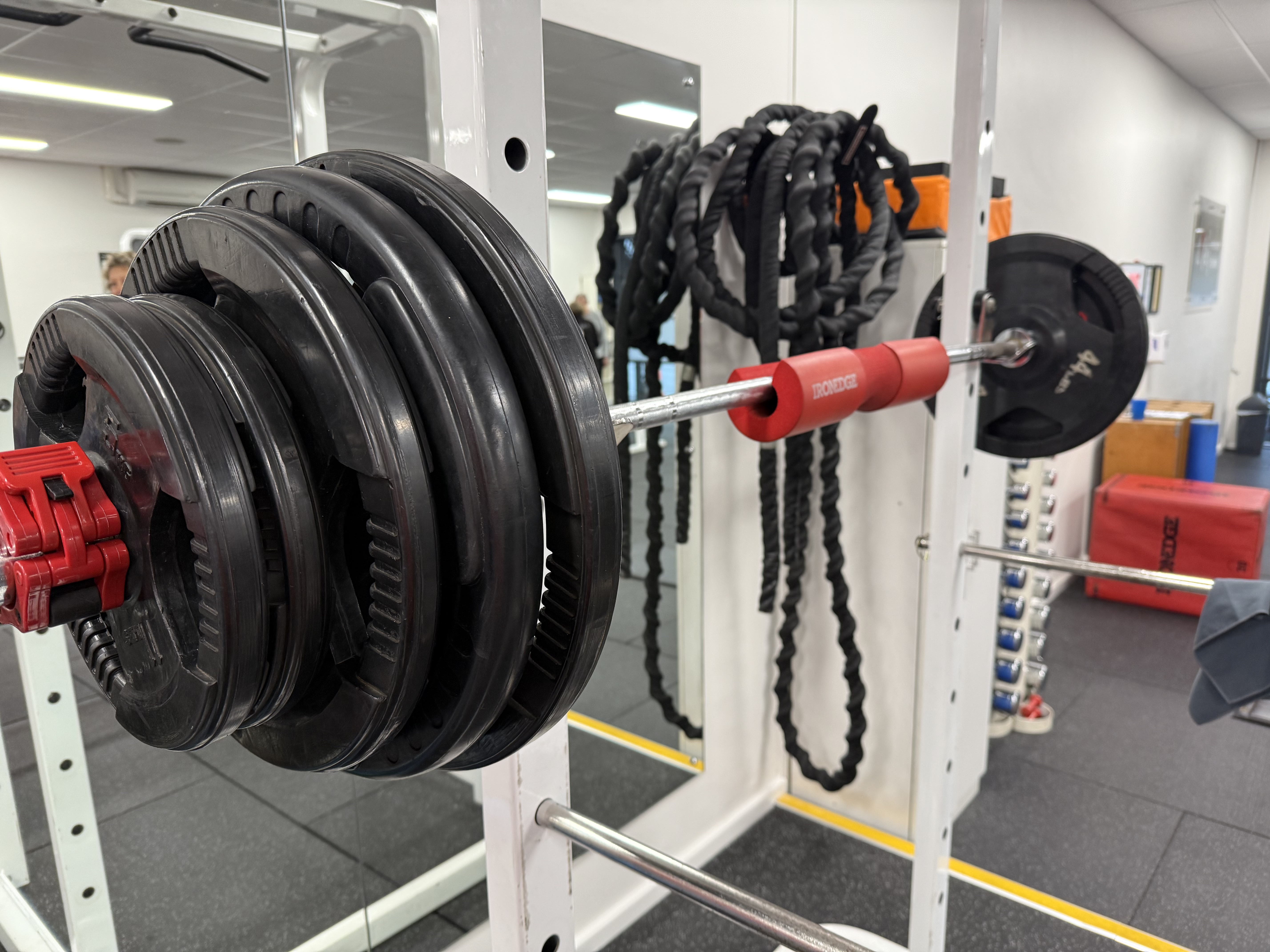
If you’ve ever spent time in a gym, you’ve probably seen people (or been one of them) lifting weights. There are many reasons why humans lift weights in gyms, most of which stem from the fact that modern life has removed many of the weight-bearing activities that we used to undertake and weight lifting can build muscle and strength, both of which are often useful.
The picture for today’s post is of some weights, roughly 140kg, arranged for a human to lift them. But, let’s be honest, this is probably the least efficient and dumbest way to lift this much weight. Even the smallest electric forklift can easily lift this much weight, probably up to ten times this, so why is someone in a gym wasting time with this pointless task? The answer, of course, is that the goal of this activity is not to ensure that these weights are lifted. The goal of weight training is to build technique, muscle, and stamina in the individual and the lifting of these weights is the mechanism that we use to achieve this.
Very few people could start with a very heavy weight and just swing it around – in fact, many people would hurt themselves if they did so, because their body has not been trained or developed to do it. Weight training takes practice, seeking steady improvement, utilising well-crafted sessions of activity, controlled addition of weight, and the careful use of rest periods, to ensure that muscles are growing as we want and that we’re not overstraining the body. Weight training is an ergodic activity, it takes effort over time to get better at it. Yes, I could go and get the forklift, but that wouldn’t actually help me as a person to build up the things that weight training should improve.
I regret that I can’t remember where I first saw weight lifting used as an analogy for learning, or I’d credit the person, but I’m definitely not claiming it as mine – I just like it. I keep circling back to this as because learning is also an ergodic activity. At school and university, we assign tasks to students that have some sort of outcome but we are very rarely really interested in the outcome itself, we care about the application of effort over time into the process that will create the outcome – just like weightlifting. The point is not for the student to give us a computer program (say), the point is for the student to apply their knowledge and skill to interpret what we want and then take the time and effort to go through the process of building the computer program. That way, they start to get “stronger” at writing computer programs and, if we design things well in the learning environment, we hope that they will keep building those coding muscles until they can reach a professional level of competency (or at least the entry level to that).
This is one of the problems with students offloading their coding to a prompt-driven Generative AI approach- they’ve brought in a forklift to lift the weight. I mean, yes, the weight has technically been lifted but that’s not the point of the exercise. We’re already seeing evidence that it’s very hard to transfer useful knowledge from prompt-driven approaches, where students do amazingly well in the exercises and then utterly tank the exam because they never actually knew how to do something.
I won’t bore you all with my usual mutterings about how cognitive load theory explains all of this, and is not a bad approximation to weight training in many ways, but none of the shortcomings in GenAI-“assisted” learning are much surprise when you think about whether any real effort is going into the activity and if it’s actually a way of learning that we can make good use of.
Some people will only ever need the forklift and that’s not a problem; why go to all the trouble, if you don’t actually want to develop that part of yourself and don’t need to? But, for those who really wanted to develop the capability? Maybe leave the forklift until you’ve trained yourself first.


