
This Is Your Captain Speaking: Turn Off Your Gadgets
Posted: September 22, 2012 Filed under: Education | Tags: advocacy, authenticity, blogging, community, curriculum, design, education, educational problem, educational research, ethics, Generation Why, higher education, in the student's head, reflection, student perspective, teaching, teaching approaches, thinking, tools 1 Comment“Ladies and gentlemen, boys and girls,
This is your Captain speaking. Shortly,I’m going to push on a set of levers that will allow fuel to pour into the steel cylinders affixed to the side of the plane and, in the presence of well-engineered flame, create a series of small and controlled explosions that will allow us to lift roughly 400 tonnes of metal and flesh into the air and propel you towards your destination.
As part of this, when the plane heads down the runway, we will pass a threshold known as V1. Do you know what V1 means? V1 is the takeoff decision speed and is the speed at which we will try and take off, even if one engine fails. Basically, V1 is the speed at which we are travelling so fast that we are safest in the air – we are beyond the realm of air brakes or the rather amusingly useless brakes on the wheels. You know that mechanical brakes can evaporate on trucks when they’re going too fast, right? Think an even faster “pfft, bloooo” for planes.
Having gone through V1, we will reach V2. That is the speed at which, having committed to take-off, we will attempt to rotate the nose up and we will safely be able to take off, even if one engine is down. You know this speed. We trundle down the runway and you might miss V1 but the moment we rotate the nose up, that’s V2.
If I can’t easily find out when either of these speeds are, we’re stuffed. I need the read-outs in front of me to give me a reliable idea of these speeds or my co-pilots and I will be working on guesswork and you, seriously, do not want that.
There are two points when you are seriously vulnerable in an aircraft: takeoff and landing. During both of these moments, our proximity to the ground and reduced speed combine to form a major liability: any misjudgement at this point can lead to catastrophe because we have not got any time to recover from disaster. This, of course, is why we ask you to turn off every single possible source of interference to out aircraft systems, which includes phones, iPods, iPads, MP3 players, Kindles, Kobo readers, whatever. We want to have the best chance possible to let the plane tell us everything that it can.
Some of you don’t turn the gadgets off and, as your Captain, let me berate both you and the people who educated you. You, because you ignored the legal requirement to comply with my instructions and your teachers, because they failed to adequately instruct you in the importance of cause and effect, personal responsibility, and anecdotal evidence.
If you, as a person, opt to leave your gear on despite being asked not to, you are saying to the roughly 500 other passengers that your need to read a book in an electronic form, or watch a movie, trumps their fundamental right to personal safety. Now, we’re not 100% sure that this will cause a problem but, as we’re also not sure that it won’t interfere with our systems and we do need to know lots of stuff about the aeroplane at these critical times, we ask you to switch this gear off. Will it cause an accident? Probably not. Is it safe? We don’t know. Right now, you’re not demonstrating an adequate knowledge of cause and effect or personal responsibility.
Oh, so your Uncle Willie left his mobile on and nothing happened? Great! Fantastic! Was it this type of plane? Same avionics? Was there unforeseen confusion in the flight deck that no-one mentioned (Probably not but you don’t know.) Hey, I hear Uncle Willie drove through an intersection once against the red lights at 100 mph – why don’t you try that? Anecdotal evidence, especially one exceptional case, proves nothing.
Actions have repercussions but this doesn’t mean that there will always be a 1:1 match-up between them. If mobile phones always crashed planes, we’d search you and confiscate them. It’s the possible and unlikely interaction of plane and gadget that we’re worried about and this is why we sincerely hope that your teachers have managed to get this idea through to you, along with the fact that rationalisation doesn’t equal reason and one contrary exemplar does not state a uniform case.
Let me remind you that we will shortly be flying in a 400 tonne piece of metal that hurtles through the sky at 650 mph on top of 2-4 engines of burning flame.
Do you actually want to make it harder for me to control this?
Think about the possible impact of your actions, comply with crew directions and, for a few minutes at the start and end of the flight, do what I ask you to do and turn off your gadgets. It might not do anything, but it might give you a chance to be irritated by a similar announcement on a subsequent flight.
Thank you for your attention.”
The Philosophical Angle
Posted: September 21, 2012 Filed under: Education | Tags: advocacy, community, curriculum, education, educational problem, educational research, ethics, feedback, Generation Why, higher education, identity, in the student's head, learning, philosophy, reflection, resources, seneca, socrates, stoicism, student perspective, teaching, teaching approaches, thinking, universal principles of design Leave a commentSocrates drank hemlock after being found guilty of corrupting the minds of the youth of Athens, and impiety. Seneca submitted to the whims of Nero when the Emperor, inevitably, required that his old tutor die. Seneca’s stoicism was truly tested in this, given that he slashed his veins, took poison, jumped in a warm bath and finally had to be steamed to death before Nero’s edict that he kill himself was finally enacted. I, fortunately, expect no such demonstrations of stoic fortitude from my students but, if we are to think about their behaviour and development as self-regulating beings, then I think that a discussion of their personal philosophy becomes unavoidable. We have talked about the development state, their response to authority, their thoughts on their own thinking, but what of their philosophy?
If you are in a hurry and jump in your car, every red light between you and your destination risks becoming a personal affront, an enraging event that defies your expectation of an ‘all-green’ ride into town. There is no reason why you should expect such favours from the Universe, whatever your belief system, but the fact that this is infuriating to you remains. In the case of the unexpected traffic light, which sounds like the worst Sherlock Holmes story ever, the worst outcome is that you will be late, which may have a variety of repercussions. In preparing assignment work, however, a student may end up failing with far more dire and predictable results.
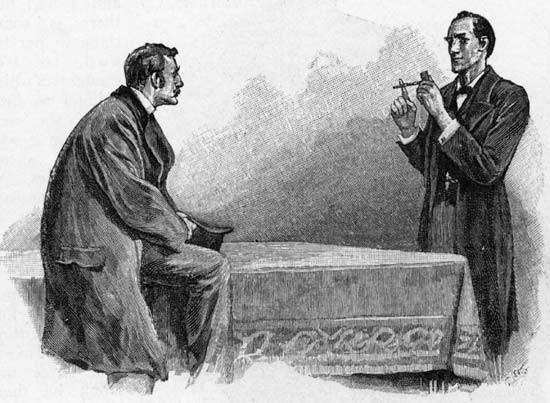
“Watson, I shall now relate the entire affair through Morse tapped pipe code and interpretative dance.”
While stoicism attracts criticism, understandably, because it doesn’t always consider the fundamentally human nature of humans, being prepared for the unforeseen is a vital part of any planning process. Self-regulation is not about drawing up a time table that allows you to fit in everything that you know about, it is about being able to handle your life and your work when things go wrong. Much as a car doesn’t need to be steered when it is going in a straight line and meeting our requirements, it is how we change direction when we know the road and when a kangaroo jumps out that are the true tests of our ability to manage our resources and ourselves.
Planning is not everything, as anyone who has read Helmuth von Moltke the Elder or von Clausewitz will know: “no plan survives contact with the enemy”. In this case, however, the enemy is not just those events that seek to confound us, it can be us as well! You can have the best plan in the world that relies upon you starting on Day X, and yet you don’t. You may have excellent reasons for this but, the fact remains, you have now introduced problems into your own process. You have met the enemy and it is you. This illustrates the critical importance of ensuring that we have an accurate assessment of our own philosophies – and we do have to be very honest.
There is no point in a student building an elaborate time management plan that relies upon them changing the habits of a lifetime in a week. But this puts the onus upon us as well: there is no point in us fabricating a set of expectations that a student cannot meet because they do not yet have a mature philosophy for understanding what is required. We don’t give up (of course!) but we must now think about how we can scaffold and encourage such change in a manageable way. I find reflection very handy, as I’ve said before, as watching students write things like “I planned for this but then I didn’t do it! WHY?” allows me to step in and discuss this at the point that the student realises that they have a problem.
I am not saying that a student who has a philosophy of “Maybe one day I will pass by accident” should be encouraged to maintain such lassitude, but we must be honest and realise that demanding that their timeliness and process maturity spring fully-formed from their foreheads is an act of conjuring reserved only for certain Greek Gods. (Even Caligula couldn’t manage it and he had far greater claim to this than most.) I like to think of this in terms of similarity of action. If anything I do is akin to walking up to someone and yelling “You should hand in on time, do better!” then I had better re-think my strategy.
The development of a personal philosophy, especially when you may not have ever been exposed to some of the great exemplars, is a fundamentally difficult task. You first need to understand that such a concept exists, then gain the vocabulary for discussing it, then interpret your current approach and see the value of change. Once you have performed all of those tasks, then we can start talking about getting from A to B. If you don’t know what I’m talking about or can’t understand why it’s important, or even discuss core concepts, then I’m yelling at you in the corridor and you’ll nod, compliantly, until I go away. Chances of you taking positive steps in the direction that I want? Very low. Probably, nil. And if it does happen, either it’s accidental or you didn’t actually need my help.
I try to be stoic but I must be honest and say that if Nero sentenced me to death, I’d nod, say “I expected that”, then put on some fast saxophone music and leg it up over the seven hills and far away. I don’t think I’d ever actually expect true stoicism from most of my students. but a simple incorporation of the fact that not everything works out as you think it will would be a definite improvement over the current everything will work out in my favour expectation that seems to be the hallmark of the more frequently disappointed and distressed among them. The trick is that I first have to make them realise that this is something that, with thought, they can not only fix but use to make a genuine, long-lasting and overwhelmingly positive change in their lives.
Surely, I can’t believe that I would have thought…
Posted: September 20, 2012 Filed under: Education | Tags: authenticity, collaboration, curriculum, education, educational problem, educational research, feedback, Generation Why, higher education, in the student's head, student perspective, teaching, teaching approaches, universal principles of design Leave a commentAnyone with students has become used to what I shall (extremely loosely) refer to as the argument of lazy denial, where a student uses one of the following in a sentence, when discussing a technical issue:
- Surely…
- I can’t believe…
- I would have thought…
Now, used rhetorically, where you place a deliberately short-term doubt in someone’s mind and then follow it up with the facts, there is no real problem with most of these. My problem is when a student uses this in order to dismiss an idea, based on an isolated opinion or a very limited understanding of the issues. As I joked recently on someone’s Facebook, I’ve told my students that starting any technical discussion question with “Surely…” is an indication that further research has to take place.
Yes, yes, I’m making a point and enough of my students know about it to occasionally rib me with its deliberate usage but this just emphasises that they’re thinking about things. It’s very easy to infer a comfortable denial to a situation based on limited experience. This could be covered as being a hasty generalisation, jumping to conclusions, appeal to incredulity or wishful thinking, but it’s really an excuse to express disbelief without having to provide any evidence other than “Nahhhh.” And, ultimately, because very little work is being done here, I’m just going to call it lazy denial.
My intention is not, of course, to stop people speaking naturally but it’s to help my students think about framing an argument, which requires knowing enough about the area to be able to construct, and respond to, an argument. Research usually consists of knowing enough to know what you don’t know, which can usually be explained far more succinctly than saying “Surely, someone would have carried out action <x>”. There are legitimate ways to express this sentiment, after you’ve done the reading. “I’ve looked through all of the literature I can find and it appears that no-one appears to have tried <x>.”
(Regrettably, as in all things scientific, not finding something doesn’t prove its non-existence. As exhaustive literature searches are becoming harder and harder with the growth of the data corpus, we have to be very circumspect about how we make statements such as “no-one has done this” because it is more than a little embarrassing when someone stands up at the end of your talk and says “Urm, we did”.)
Once we’ve gone looking and discussed the area, we’re all looking at the same problem in the same way. Rather than making sweeping statements that are, to be honest, often a little condescending because you’re speaking as if your opinion is so blindingly obvious that it must have been tried, we can really appreciate the discovery of a hole in the recorded knowledge: a place where we can make a contribution.
This is not to say that everything is this formal and there have been many fine semi-research discussions carried out that have used these terms but, when we’re sitting around trying to work towards a solution or my students are trying to work out their research direction, this starts to become important.
I suppose this reveals more about me than it does about my students…
A Puzzling Thought
Posted: September 19, 2012 Filed under: Education | Tags: advocacy, authenticity, card shouting, collaboration, curriculum, design, education, educational problem, educational research, ethics, feedback, higher education, in the student's head, measurement, principles of design, reflection, resources, student perspective, teaching, teaching approaches, thinking 4 CommentsToday I presented one of my favourite puzzles, the Monty Hall problem, to a group of Year 10 high school students. Probability is a very challenging area to teach because we humans seem to be so very, very bad at grasping it intuitively. I’ve written before about Card Shouting, where we appear to train cards to give us better results by yelling at them, and it becomes all too clear that many people have instinctive models of how the world work that are neither robust nor transferable. This wouldn’t be a problem except that:
- it makes it harder to understand science,
- the real models become hard to believe because they’re counter-intuttitve, and
- casinos make a lot of money out of people who don’t understand probability.
Monty Hall is simple. There are three doors and behind one is a great prize. You pick a door but it doesn’t get opened. The host, who knows where the prize is, opens one of the doors that you didn’t pick but the door that he/she opens is always going to be empty. So the host, in full knowledge, opens a known empty door, but it has to be one that you didn’t pick. You then have a choice to switch to the door that you didn’t pick and that hasn’t been opened, or you can stay with your original pick.

Based on a game show, Monty Hall was the name of the presenter.
Now let’s fast forward to the fact that you should always switch because you have a 2/3 chance of getting the prize if you do (no, not 50/50) so switching is the winning strategy. Going into today, what I expected was:
- Initially, most students would want to stay with their original choice, having decided that there was no benefit to switching or that it was a 50/50 deal so it didn’t make any sense.
- At least one student would actively reject the idea.
- With discussion and demonstration, I could get students thinking about this problem in the right way.
The correct mental framework for Monty Hall is essential. What are the chances, with 1 prize behind 3 doors, that you picked the right door initially. It’s 1/3, right? So the chances that you didn’t pick the correct door is 2/3. Now, if you just swapped randomly, there’d be no advantage but this is where you have to understand the problem. There are 2 doors that you didn’t pick and, by elimination, these 2 doors contain the prize 2/3 of the time. The host knows where the prize is so the host will never open a door and show you the prize, the host just removes a worthless door. Now you have two sets of doors – the one you picked (correct 1/3 of the time) and the remaining door from the unpicked pair (correct 2/3 of the time). So, given that there’s only one remaining door to pick in the unpicked pair, by switching you increase your chances of winning from 1/3 to 2/3.
Don’t believe me? Here’s an on-line simulator that you can run (Ignore what it says about Internet Explorer, it tends to run on most things.)
Still don’t believe me? Here’s some Processing code that you can run locally and see the rates converge to the expected results of 1/3 for staying and 2/3 for switching.
This is a challenging and counter-intuitive result, until you actually understand what’s happening, and this clearly illustrates one of those situations where you can ask students to plug numbers into equations for probability but, when you actually ask them to reason mathematically, you suddenly discover that they don’t have the correct mental models to explain what is going on. So how did I approach it?
Well, I used Peer Instruction techniques to get the class to think about the problem and then vote on it. As expected, about 60% of the class were stayers. Then I asked them to discuss this with a switcher and to try and convince each other of the rightness of their actions. Then I asked them to vote again.
No significant change. Dang.
So I wheeled out the on-line simulator to demonstrate it working and to ensure that everyone really understood the problem. Then I showed the Processing simulation showing the numbers converging as expected. Then I pulled out the big guns: the 100 door example. In this case, you select from 100 doors and Monty eliminates 98 (empty) doors that you didn’t choose.
Suddenly, when faced with the 100 doors, many students became switchers. (Not surprising.) I then pointed out that the two problems (3 doors and 100 doors) had reduced to the same problem, except that the remaining doors were the only door left standing from 2 and 99 doors respectively. And, suddenly, on the repeated vote, everyone’s a switcher. (I then ran the code on the 100 door example and had to apologise because the 99% ‘switch’ trace is so close to the top that it’s hard to see.)
Why didn’t the discussion phase change people’s minds? I think it’s because of the group itself, a junior group with very little vocabulary of probability. it would have been hard for the to articulate the reasons for change beyond much ‘gut feeling’ despite the obvious mathematical ability present. So, expecting this, I confirmed that they were understanding the correct problem by showing demonstration and extended simulation, which provided conflicting evidence to their previously held belief. Getting people to think about the 100 door model, which is a quite deliberate manipulation of the fact that 1/100 vs 99/100 is a far more convincing decision factor than 1/3 vs 2/3, allowed them to identify a situation where switching makes sense, validating what I presented in the demonstrations.
In these cases, I like to mull for a while to work out what I have and haven’t learned from this. I believe that the students had a lot of fun in the puzzle section and that most of them got what happened in Monty Hall, but I’d really like to come back to them in a year or two and see what they actually took away from today’s example.
More on Computer Science Education as a fundamentally challenging topic.
Posted: September 18, 2012 Filed under: Education | Tags: advocacy, authenticity, blogging, community, curriculum, education, educational problem, educational research, ethics, feedback, higher education, reflection, teaching, teaching approaches, thinking, threshold concepts, universal principles of design, vygotsky, workload Leave a comment“Homo sum, humani a me nihil alienum puto (I am a [human], nothing human is foreign to me)” , Terence, 163BC
While this is a majestic sentiment, we are constantly confronted by how many foreign ideas and concepts there are in our lives. In the educational field, Meyer and Land have identified threshold concepts as a set of concepts that are transformative once understood but troublesome and alien before they are comprehended. The existence of these, often counter-intuitive, concepts give the lie to Terence’s quote as it appears that certain concepts will be extremely foreign and hard to communicate or comprehend until we understand them. (I’ve discussed this before in my write-up of the ICER Keynote.)

“Terry” to his friends.
Reading across the fields of education, educational psychology and Computer Science education research, it rapidly becomes apparent that some ideas have been described repeatedly over decades, but have gained little traction. Dewey’s disgust at the prison-like school classroom was recorded in 1938, yet you can walk onto any campus in the world and find the same “cells”, arrayed in ranks. The lecture is still the dominant communication form in many institutions, despite research support for the far greater efficacy of different approaches. For example, the benefits of social constructivism, including the zone of proximal development, are well known and extensively studied, yet even where group work is employed, it is not necessarily designed or facilitated to provide the most effective outcomes. The majority of course design and implementation shows little influence of any of the research conducted in the last 20 years, let alone the cognitive development stages of Piaget, the reliance upon authority found in Perry or even the existence of threshold concepts themselves. Why?
From a personal perspective, I was almost completely ignorant of the theoretical underpinnings of educational practice until very recently and I still rate myself as a rank novice in the area. I write here to be informed, not to be seen as an expert, and I learn from thinking and writing about what I’m doing. I am also now heavily involved in a research group that focuses on this so I have the peer support and time to start learning in the fascinating area of Computer Science Education. Many people, however, do not, and it is easy to see why one would not confront or even question the orthodoxy when one is unaware of any other truth.
Of course, as we all know, it is far harder to see that anything needs fixing when, instead of considering that our approach may be wrong, we identify our students as the weak link in the chain. It’s easy to do and, because we are often not scrupulously scientific in our recollection of events (because we are human), our anecdotal evidence dominates our experience. “Good” students pass, “bad” students fail. If we then define a bad student as “someone who fails”, we have a neat (if circular) definition that shields us from any thoughts on changing what we do.
When I found out how much I had to learn, I initially felt very guilty about some of the crimes that I had perpetrated against my students in my ignorance. I had bribed them with marks, punished them for minor transgressions with no real basis, talked at them for 50 minutes and assumed that any who did not recall my words just weren’t paying attention. At the same time, I carried out my own tasks with no bribery, negotiated my own deadlines and conditions, and checked my mail whenever possible in any meetings in which I felt bored. The realisation that, even through ignorance and human frailty, you have let your students down is not a good feeling, especially when you realise that you have been a hypocrite.
I lament the active procrastinator, who does everything except the right work and thus fails anyway with a confused look on their face, and I feel a great sympathy for the caring educator who, through lack of exposure or training, has no idea that what they are doing is not the best thing for their students. This is especially true when the educators have been heavily acculturated by their elders and superiors, at a vulnerable developmental time, and now not only have to question their orthodoxy, they must challenge their mentors and friends.
Scholarship in Computer Science learning and teaching illuminates one’s teaching practice. Discovering tools, theories and methodologies that can explain the actions of our students is of great importance to the lecturer and transforms the way that one thinks about learning and teaching. But transformative and highly illuminative mechanisms often come at a substantial cost in terms of the learning curve and we believe that this explains why there is a great deal of resistance from those members of the community who have not yet embraced the scholarship of learning and teaching. Combine this with a culture where you may be telling esteemed and valued colleagues that they have been practising poorly for decades and the resistance becomes even more understandable. We must address the fact that resistance to acceptance in the field may stem from effects that we would carefully address in our students (their ongoing problems with threshold concepts) but that we expect our colleagues to just accept these alien, challenging and unsettling ideas merely because we are right.
The burden of proof does not, I believe, lie with us. We have 70 years of studies in education and over 100 years of study in work practices to establish the rightness of our view. However, I wonder how we can approach our colleagues who continue to question these strange, counter-inutitive and frightening new ideas and help them to understand and eventually adopt these new concepts?
Howdy, Partner
Posted: September 17, 2012 Filed under: Education | Tags: advocacy, authenticity, collaboration, community, curriculum, design, education, educational problem, educational research, ethics, feedback, Generation Why, higher education, in the student's head, measurement, principles of design, student perspective, teaching, teaching approaches, thinking, time banking Leave a comment
I am giving a talk on Friday about the partnership relationship between teacher and student and, in my opinion, why we often accidentally attack this through a less-than-optimal approach to assessment and deadlines. I’ve spoken before about how an arbitrary deadline that is convenient for administrative reasons is effectively pedagogically and ethically indefensible. For all that we disparage our students, if we do, for focusing on marks and sometimes resorting to cheating rather than focusing on educational goals, we leave ourselves open to valid accusations of hypocrisy if we have the same ‘ends justify the means’ approach to setting deadlines.
Consistency and authenticity are vital if we are going to build solid relationships, but let me go further. We’re not just building a relationship, we’re building an expectation of continuity over time. If students know that their interests are being considered, that what we are teaching is necessary and that we will always try to deal with them fairly, they are far more likely to invest the effort that we wish them to invest and develop the knowledge. More importantly, a good relationship is resilient, in that the occasional hiccup doesn’t destroy the whole thing. If we have been consistent and fair, and forces beyond our control affect something that we’ve tried to do, my experience is that students tolerate it quite well. If, however, you have been arbitrary, unprepared, inconsistent and indifferent, then you will (fairly or not) be blamed for anything else that goes wrong.
We cannot apply one rule to ourselves and a different one to our students and expect them to take us seriously. If you accept no work if it’s over 1 second late and keep showing up to lectures late and unprepared, then your students have every right to roll their eyes and not take you seriously. This doesn’t excuse them if they cheat, however, but you have certainly not laid the groundwork for a solid partnership. Why partnership? Because the students in higher education should graduate as your professional peers, even if they are not yet your peers in academia. I do not teach in the school system and I do not have to deal with developmental stages of the child (although I’m up to my armpits in neo-Piagetian development in the knowledge areas, of course).
We return to the scaffolding argument again. Much as I should be able to remove the supports for their coding and writing development over their degree, I should also be able to remove the supports for their professional skills, team-based activities and deadlines because, in a few short months, they will be out in the work force and they will need these skills! If I take a strictly hierarchical approach where a student is innately subordinate to me, I do not prepare them for a number of their work experiences and I risk limiting their development. If I combine my expertise and my oversight requirements with a notion of partnership, then I can work with the student for some things and prepare the student for a realistic workplace. Yes, there are rules and genuine deadlines but the majority experience in the professional workplace relies upon autonomy and self-regulation, if we are to get useful and creative output from these new graduates.
If I demand compliance, I may achieve it, but we are more than well aware that extrinsic motivating factors stifle creativity and it is only at those jobs where almost no cognitive function is required that the carrot and the stick show any impact. Partnership requires me to explain what I want and why I need it – why it’s useful. This, in turn, requires me to actually know this and to have designed a course where I can give a genuine answer that illustrates these points!
“Because I said so,” is the last resort of the tired parent and it shouldn’t be the backbone of an entire deadline methodology. Yes, there are deadlines and they are important but this does not mean that every single requirement falls into the same category or should be treated in the same way. By being honest about this, by allowing for exchange at the peer-level where possible and appropriate, and by trying to be consistent about the application of necessary rules to both parties, rather than applying them arbitrarily, we actually are making our students work harder but for a more personal benefit. It is easy to react to blind authority and be resentful, to excuse bad behaviour because you’re attending a ‘bad course’. It is much harder for the student to come up with comfortable false rationalisations when they have a more equal say, when they are informed in advance as to what is and what is not important, and when the deadlines are set by necessity rather than fiat.
I think a lot of people miss one of the key aspects of fixing assessment: we’re not trying to give students an easier ride, we’re trying to get them to do better work. Better work usually requires more effort but this additional effort is now directed along the lines that should develop better knowledge. Partnership is not some way for students to negotiate their way out of submissions, it’s a way that, among other things, allows me to get students to recognise how much work they actually have to do in order to achieve useful things.
If I can’t answer the question “Why do my students have to do this?” when I ask it of myself, I should immediately revisit the activity and learning design to fix things so that I either have an answer or I have a brand new piece of work for them to do.
De Profundis – or de-profounding?
Posted: September 16, 2012 Filed under: Education | Tags: advocacy, authenticity, collaboration, community, curriculum, design, education, educational problem, ethics, feedback, Generation Why, higher education, in the student's head, oscar wilde, principles of design, reflection, resources, student perspective, teaching, teaching approaches, thinking Leave a comment“It is common to assume that we are dealing with a highly intelligent book when we cease to understand it.” (de Botton, The Consolations of Philosophy, p157)
The notion of a lack of comprehension being a fundamental and innate fault of the reader, rather than the writer, is a mistake made, in many different and yet equally irritating ways, throughout the higher educational sector. A high pass rate may be seen as indicative of an easy course or a weak marker. A high failure rate may be attributed to the innate difficulty of the work or the inferior stuff of which the students are made. As I have written before, under such a presumption, I could fail all of my students and strut around, the smartest man in my University, for none have been able to understand the depths and subtlety of my area of knowledge.
Yet, if the real reason is that I have brought my students to a point where their abilities fail them and, either through ignorance or design, I do not strive to address this honestly and openly, then it doesn’t matter how many of them ultimately pass – I will be the biggest failure in the class. I know a great number of very interesting and intelligent educators but, were you to ask me if any of them could teach, I would have to answer that I did not know, unless I had actually seen them do so. For all of our pressure on students to contain the innate ability to persevere, to understand our discipline or to be (sorry, Ray) natural programmers, the notion that teaching itself might not be something that everyone is capable of is sometimes regarded as a great heresy. (The notion or insistence that developing as a teacher may require scholarship and, help us all, practise, is apostasy – our heresy leading us into exile.) Teaching revolves around imparting knowledge efficiently and effectively so that students may learn. The cornerstone of this activity is successful and continuing communication. Wisdom may be wisdom but it rapidly becomes hard to locate or learn from when it is swaddled in enough unnecessary baggage.
I have been, mostly thanks to the re-issue of cheap Penguins, undertaking a great deal of reading recently and I have revisited Marcus Aurelius, Seneca, de Botton and Wilde. The books that are the most influential upon me remain those books that, while profound, maintain their accessibility. Let me illustrate this with an example. For those who do not know what De Profundis means, it is a biblical reference to Psalm 130, appropriated by the ever humble Oscar Wilde as the title of his autobiographical letter to his former lover, from the prison in which he was housed because of that love.
But what it means is “From the depths”. In the original psalm, the first line is:
De profundis clamavi ad te, Domine;
From the depths, I have cried out to you, O Lord;
And in this reading, we see the measure of Wilde’s despair. Having been sentenced to hard labour, and having had his ability to write confiscated, his ability to read curtailed, and his reputation in tatters, he cries out from the depths to his Bosie, Lord Douglas.
De profundis [clamavi ad te, Bosie;]
If you have the context for this, then this immediately prepares you for the letter but, as it is, the number of people who are reading Wilde is shrinking, let alone the number of people who are reading a Latin Bible. Does this title still assist in the framing of the work, through its heavy dependence upon the anguish captured in Psalm 130, or is it time to retitle it “From the depths, I have cried out to you!” to capture both the translation and the sense. The message, the emotion and the hard-earned wisdom contained in the letter are still valuable but are we hurting the ability of people to discover and enjoy it by continuing to use a form of expression that may harm understanding?

Les Très Riches Heures du duc de Berry, Folio 70r – De Profundis the Musée Condé, Chantilly. (Another form of expression of this Psalm.)
Now, don’t worry, I’m not planning to rewrite Wilde but this raises a point in terms of the occasionally unhappy union of the language of profundity and the wisdom that it seeks to impart. You will note the irony that I am using a heavily structured, formal English, to write this and that there is very little use of slang here. This is deliberate because I am trying to be precise while still being evocative and, at the same time, illustrating that accurate use of more ornate language can obscure one’s point. (Let me rephrase that. The unnecessary use of long words and complex grammar gets in the way of understanding.)
When Her Majesty the Queen told the Commonwealth of her terrible year, her words were:
“1992 is not a year on which I shall look back with undiluted pleasure. In the words of one of my more sympathetic correspondents, it has turned out to be an Annus Horribilis.”
and I have difficulty thinking of a more complicated way of saying “1992 was a bad year” than to combine a complicated grammatical construction with a Latin term that is not going to be on the lips of the people who are listening to the speech. Let me try: “Looking back on 1992, it has been, in the words of one of my friends, a terrible year.” Same content. Same level of imparted knowledge. Much less getting in the way. (The professional tip here is to never use the letters “a”, “n”, “s” and “u” in one short word unless you are absolutely sure of your audience. “What did she say about… nahhh” is not the response you want from your loyal subjects.) [And there goes the Knighthood.]
I love language. I love reading. I am very lucky that, having had a very broad and classically based education, I can read just about anything and not be intimidated or confused by the language forms – providing that the author is writing in one of the languages that I read, of course! To assume that everyone is like me or, worse, to judge people on their ability because they find long and unfamiliar words confusing, or have never had the opportunity to use these skills before, is to leap towards the same problem outlined in the quote at the top. If we seek to label people unintelligent when they have not yet been exposed to something that is familiar to us, then this is just as bad as lauding someone’s intelligence because you don’t understand what they’re talking about.
If my students need to know something then I have to either ensure that they already do so, by clearly stating my need and being aware of the educational preparation in my locale, or I have to teach it to them in forms that they can understand and that will allow them to succeed. I may love language, classical works and big words, but I am paid to teach the students of 2012 to become the graduates, achievers and academics of the future. I have to understand, respect and incorporate their context, while also meeting the pedagogical and knowledge requirements of the courses that I teach.
No-one said it was going to be easy!
ICER 2012 Day 2 Research Session 3
Posted: September 15, 2012 Filed under: Education | Tags: collaboration, community, education, educational problem, educational research, feedback, higher education, icer, icer 2012, icer2012, in the student's head, shotgun debugging, teaching, teaching approaches, tools, universal principles of design Leave a commentThe session kicked off with “The Abstraction Transition Taxonomy: Developing Desired Learning Outcomes through the Lens of Situated Cognition”, (Quintin Cutts (presenting), Sarah Esper, Marlena Fecho, Stephen Foster and Beth Simon) and the initial question: “Do our learning outcomes for programming classes match what we actually do as computational thinkers and programmers?” To answer this question, we looked Eric Mazur’s Peer Instruction, an analysis of PU questions as applied to a CS principles pilot course, and then applied the Abstraction Transition Taxonomy (ATT) to published exams, with a wrap of observations and ‘where to from here’.
Physicists have, some time ago, noticed that their students can plug numbers into equations (turn the handle, so to speak) but couldn’t necessarily demonstrate that they understood things: they couldn’t demonstrate that that they thought as physicists should. (The Force Concept Inventory was mentioned here and, if you’re not familiar, it’s a very interesting thing to look up.) To try and get students who thought as physicists, Mazur developed Peer Instruction (PI), which had pre-class prep work, in-class questions, followed by voting, discussion and re-voting, with an instructor leading class-wide discussion. These activities prime the students to engage with the correct explanations – that is, the way that physicists think about and explain problems.
Looking at Computer Science, many CS people use the delivery of a working program as a measure of the correct understanding and appropriate use of programming techniques.
Given that generating a program is no guarantee of understanding, which is sad but true given the existence of the internet, other students and books. We could try and force a situation where students are isolated from these support factors but this then leads us back to permutation programming, voodoo code and shotgun debugging unless the students actually understand the task and how to solve it using our tools. In other words, unless they think as Computer Scientists.
UCSD had a CS Principles Pilot course that used programming to foster computational thinking that was aimed at acculturation into the CS ‘way’ rather than trying to create programmers. The full PI implementation asked students to reason about their programs, through exploratory homework and a PI classroom, with some limited time traditional labs as well. While this showed a very positive response, the fear was that this may have been an effect of the lecturers themselves so analysis was required!
By analysing the PI questions, a taxonomy was developed that identified abstraction levels and the programming concepts within them. The abstraction levels were “English”, “Computer Science Speak” and “Code”. The taxonomy was extended with the transitions between these levels (turning an English question into code for example is a 1-3 transition, if English is abstraction level 1 and Code 3. Similarly, explain this code in English is 3-1). Finally, they considered mechanism (how does something work) and rationale (why did we do it this way)?
Analysing the assignment and assessment questions to determine what was being asked, in terms of abstraction level and transitions, and whether it was mechanism or rationale, revealed that 21% of the in-class multiple choice questions were ‘Why?’ questions but there actually very few ‘Why?’ questions in the exam. Unsurprisingly, almost every question asked in the PI framework is a ‘Why?’ question, so there should be room for improvement in the corresponding examinations. PI emphasises the culture of the discipline through the ‘Why?’ framing because it requires acculturation and contextualisation to get yourself into the mental space where a Rationale becomes logical.
The next paper “Subgoal-Labeled Instructional Material Improves Performance and Transfer in Learning to Develop Mobile Applications”, Lauren Margulieux, Mark Guzdial and Richard Catrambone, dealt with mental models and how the cognitive representation of an action will affect both the problem state and how well we make predictions. Students have so much to think about – how do they choose?
The problem with just waiting for a student to figure it out is high cognitive load, which I’ve referred to before as helmet fire. If students become overwhelmed they learn nothing, so we can explicitly tell students and/or provide worked examples. If we clearly label the subgoals in a worked example, students remember the subgoals and the transition from one to another. The example given here was an Android App Inventor worked example, one example of which had no labels, the other of which had subgoal labels added as overlay callouts to the movie as the only alteration. The subgoal points were identified by task analysis – so this was a very precise attempt to get students to identify the important steps required to understand and complete the task.
(As an aside, I found this discussion very useful. It’s a bit like telling a student that they need comments and so every line has things like “x=3; //x is set to 3” whereas this structured and deliberate approach to subgoal definition shows students the key steps.)
In the first experiment that was run, the students with the subgoals (and recall that this was the ONLY difference in the material) had attempted more, achieved more and done it in less time. A week later, they still got things right more often. In the second experiment, a talk-aloud experiment, the students with the subgoals discussed the subgoals more, tried random solution strategies less and wasted less effort than the other group. This is an interesting point. App Inventor allows you to manipulate blocks of code and the subgoal group were less likely to drag out a useless block to solve the problem. The question, of course, is why. Was it the video? Was it the written aspects? Was it both?
Students appear to be remembering and using the subgoals and, as was presented, if performance is improving, perhaps the exact detail of why it’s happening is something that we wish to pursue but, in the short term, we can still use the approach. However, we do have to be careful with how many labels we use as overloading visual cues can lead to confusion, thwarting any benefit.
The final paper in the session was “Using collaboration to overcome disparities in Java experience”, Colleen Lewis (presenting), Nathaniel Titterton and Michael Clancy. This presented the transformation of a a standard 3 Lecture, 2 hours of lab and 1 discussion hour course into a 1 x 1 hour lecture with 2 x 3 hour labs, with the labs now holding the core of the pedagogy. Students are provided feedback through targeted tutoring, using on-line multiple choices for the students to give feedback and assist the TAs. Pair programming gives you someone to talk to before you talk to the TA but the TA can monitor the MCQ space and see if everyone is having a problem with a particular problem.
This was addressing a problem in a dual speed entry course, where some students had AP CS and some didn’t, therefore the second year course was either a review for those students who had Java (from AP CS) or was brand new. Collaboration and targeted support was aimed at reducing the differences between the cohorts and eliminate disadvantage.
Now, the paper has a lot of detail on the different cohorts, by intake, by gender, by retention pattern, but the upshot is that the introduction of the new program reduced the differences between those students who did and did not have previous Java experience. In other words, whether you started at UCB in CS 1 (with no AP CS) or CS 1.5 (with AP CS), the gap between your cohorts shrank – which is an excellent result. Once this high level of collaboration was introduced, the only factor that retained any significant difference was the first exam, but this effect disappeared throughout the course as students received more exposure to collaboration.
I strongly recommend reading all three of these papers!
Our Influence: Prejudice As Predictor
Posted: September 14, 2012 Filed under: Education | Tags: advocacy, authenticity, community, education, educational problem, educational research, higher education, in the student's head, learning, measurement, principles of design, reflection, student perspective, teaching, teaching approaches, thinking Leave a comment
If you want to see Raymond Lister get upset, tell him that students fall into two categories: those who can program and those who can’t. If you’ve been reading much (anything) of what I’ve been writing recently, you’ll realise that I’ve been talking about things like cognitive development, self-regulation, dependence on authority, all of which have one thing in common in that students can be at different stages when they reach us. There is no guarantee that students will be self-reliant, cognitively mature and completely capable of making reasoned decisions at the most independent level.
There was a question raised several times during the conference and it’s the antithesis of the infamous “double hump conjecture”, that students divide into two groups naturally and irrevocably because of some innate characteristic. The question is “Do our students demonstrate their proficiency because of what we do or in spite of what we do?” If the innate characteristic conjecture is correct, and this is a frequently raised folk pedagogy, then our role has no real bearing on whether a student will learn to program or not.
If we accept that students come to us at different stages in their development, and that these development stages will completely influence their ability to learn and form mental models, then the innate characteristic hypothesis withers and dies almost immediately. A student who does not have their abilities ready to display can no more demonstrate their ability to program than a three-year old child can write Shakespeare – they are not yet ready to be able to learn, assemble, reassemble or demonstrate the requisite concepts and related skills.
However, a prejudicial perspective that students who cannot demonstrate the requisite ability are innately and permanently lacking that skill will, unpleasantly, viciously and unnecessarily, cause that particular future to lock in. Of course a derisive attitude to these ‘stupid’ or ‘slow’ students will make them withdraw or undermine their confidence! As I will note from the conference, confidence and support have a crucial impact on students. Undermining a student’s confidence is worse than not teaching them at all. Walking in with the mental model that separates the world into programmers and non-programmers forces that model into being.
Since I’ve entered the area of educational research, I’ve been exposed to things that I can separate into the following categories:
- Fascinating knowledge and new views of the world, based on solid research and valid experience.
- Nonsense
- Damned nonsense
- Rank stupidity
Where most of the latter come from other educators who react, our of fear or ignorance, to the lessons from educational research with disbelief, derision and resentment. “I don’t care what you say, or what that paper says, you’re wrong” says the voice of “experience”.
There is no doubt that genuine and thoughtful experience is, has been, and will always be a strong and necessary sibling to the educational and psychological theory that is the foundation of educational research. However, shallow experience can often be built up into something that it is not, when it is combined with fallacious thinking, cherry picking, confirmation bias and any other permutation of fear, resentment and inertia. The influence of folk pedagogies, lessons claimed from tea room mutterings and the projection of a comfortable non-reality that mysteriously never requires the proponent to ever expend any additional effort or change what they do, is a malign shadow over the illumination of good learning and teaching practice.
The best educators explain their successes with solid theory, strive to find a solution to the problems that lead to failure, and listen to all sources in order to construct a better practice and experience for their students. I hope, one day, to achieve this level- but I do know that doubting everything new is not the path forward for me.
I am pleased to say that the knowledge and joy of this (to me) new field far outstrips most of the other things that I have seen but I cannot stress any more how important it is that we choose our perspectives carefully. We, as educators, have disproportionally high influence: large shadows and big feet. Reading further into this discipline illustrates that we must very carefully consider the way that we think, the way that our students think and the capability that we actually have in the students for reasoning and knowledge accumulation before we make any rash or prejudicial statements about the innate capabilities of that most mythical of entities: the standard student.
A side post on MOOCs: angrymath Hates Statistics 101
Posted: September 11, 2012 Filed under: Education | Tags: blogging, community, education, educational problem, feedback, higher education, moocs, teaching approaches, udacity Leave a commentA friend just forwarded me a rather scathing critique of one of the Udacity courses. The rather aptly named angrymath has published Udacity Statistics 101. To forewarn you, this is one of the leading quotes:
In brief, here is my overall assessment: the course is amazingly, shockingly awful.
As one of the commenters put it, hopefully the problems are growing pains and iteration towards perfection will continue. I haven’t seen the course in question so can’t comment, merely present.

 Nick Falkner