
Choosing a direction
Posted: January 5, 2016 Filed under: Education, Opinion | Tags: beauty, education, higher education, learning, philosophy, teaching, thinking 1 CommentA comment on yesterday’s post noted that minimising ugliness is a highly desirable approach to take for many students, given how ugly their worlds are with poverty, violence, bullying. I completely agree that these things should be minimised but this is a commitment that we should be making as a society, not leaving to education. Yes, education is the best way to reduce these problems but that requires effective education and, for that, I return to my point that a standard of acceptable plainness is just not enough when we plan and design education. It’s not enough that our teaching be tolerable, it should be amazing, precisely because of the potential benefits to our society.
If, in education, we only seek a minimum bar then the chances of us achieving more than that are reduced and we probably won’t have a good measure of “better” should it occur. We can’t take intentional actions to change something that we’re not measuring.
Many of the ugliest problems in society have arisen from short-sighted thinking, fixes that are the definition of plain instead of beautiful or inspiring, and from not having a committed vision to aim for better. That’s why I’m so heavily focused on beauty and aesthetics in education, to provide a basis for vision that is manageable sized yet sufficiently powerful.
I won’t (I can’t) address every equity issue, every unfair thing, or every terrible aspect of modern educational practice in these pieces. But I hope to motivate, over time, why this rather philosophical approach is a good basis for visionary improvements to education.

Maximise beauty or minimise …?
Posted: January 4, 2016 Filed under: Education, Opinion | Tags: advocacy, authenticity, beauty, charlie brown, education, educational research, ethics, higher education, in the student's head, peanuts, peppermint patty, principles of design, reflection, teaching, teaching approaches 3 CommentsThere is a Peanuts comic from April 16, 1972 where Peppermint Patty asks Charlie Brown what he thinks the secret of living is. Charlie Brown’s answer is “A convertible and a lake.” His reasoning is simple. When it’s sunny you can drive around in the convertible and be happy. When it’s raining you can think “oh well, the rain will fill up my lake.” Peppermint Patty asks Snoopy the same question and, committed sensualist that he is, he kisses her on the nose.

This is the Amphicar. In the 21st century, no philosophical construct will avoid being reified.
Charlie Brown, a character written to be constantly ground down by the world around him, is not seeking to maximise his happiness, he is seeking to minimise his unhappiness. Given his life, this is an understandable philosophy.
But what of beauty and, in this context, beauty in education? I’ve already introduced the term ‘ugly’ as the opposite of beauty but it’s hard for me to wrap my head around the notion of ‘minimising ugliness’; ugly is such a strong term. It’s also hard to argue that any education, when it covers any aspects to which we would apply that label, is ever totally ugly. Perhaps, in the educational framing, the absence of beauty is plainness. We end up with things that are ordinary, rather than extraordinary. I think that there is more than enough range between beauty and plainness for us to have a discussion on the movement between those states.
Is it enough for us to accept educational thinking that is acceptably plain? Is that a successful strategy? Many valid concerns about learning at scale focus on the innate homogeneity and lack of personalisation inherent in such an approach: plainness is the enemy. Yet there are many traditional and face-to-face approaches where plainness stares us in the face. Banality in education is, when identified, always rejected, yet it so often slips by without identification. We know that there is a hole in our slippers, yet we only seem to notice when that hole directly affects us or someone else points it out.
My thesis here is that a framing of beauty should lead us to a strategy of maximising beauty, rather than minimising plainness, as it is only in that pursuit that we model that key stage of falling in love with knowledge that we wish our students to emulate. If we say “meh is ok”, then that is what we will receive in return. We model, they follow as part of their learning. That’s what we’re trying to make happen, isn’t it?
What would Charlie Brown’s self-protective philosophy look like in a positive framing, maximising his joy rather than managing his grief? I’m not sure but I think it would look a lot like a dancing beagle who kisses people on the nose. We may need more than this for a sound foundation to reframe education!
Exploring beauty and aesthetics
Posted: January 3, 2016 Filed under: Education, Opinion | Tags: aesthetics, beauty, education, educational problem, educational research, hegel, higher education, Kant, learning, reflection, suits, teaching, teaching approaches, The Grasshopper, thinking, tools, wittgenstein Leave a comment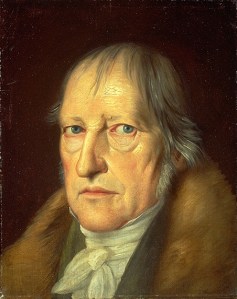
“Nothing great in the world has ever been accomplished without passion.” Hegel
- the ability to state the goal of any educational activity as separate from the activity,
- the awareness of evidence-based practice and its use in everyday teaching, and
- a willingness to accept that it is correct goal setting and using techniques that work, and can be shown to work, that will lead to better outcomes.
Beauty from the ages
Posted: January 2, 2016 Filed under: Education, Opinion | Tags: aesthetics, authority, beauty, education, educational research, ethics, higher education, quintilian, reflection, teaching, thinking 1 Comment
Captured from Pompeii. The elusive moment of thought before writing.
In focusing on beauty, I spoke about moving away from authority and I then, rather swiftly, mentioned a lot of importantly famous dead people who had said a lot of (what could be interpreted as) portentous things. Wait – am I making an argument to authority to support me as an authority? Let me explain and, at the same time, discuss why I can refer to some aspects of an ancient writer, while neatly skirting some of (usually) his less progressive ideas.
When we look in details at the writings on Quintilian, he is so heavily focused in his time that the thought of a tutor who wasn’t male is incomprehensible. Marcus Aurelius is very, forgive me, old-fashioned in some of his thinking on a number of issues. For both of these authors, progressive and visionary thinking is interspersed with older ideas. How do I separate one from another, especially where we are trying to step away from the sheer weight of authority?
The issue, for me, is what do we keep seeing in the literature over the years. What I am trying to point out are those sentiments that are repeated as things we could fix in education, whatever the context or experience of the writer. When we see the same problem repeated over time, we can start to believe that there is a problem that has not yet been addressed. Or, even, one that has not been perceived to have been fixed.
We don’t have to step back to the time before universal suffrage to agree with Quintillian on the potential of people. We can see this theme repeated: Rousseau, Hegel, Dewey and so on. This is a significant change of perspective. Instead of listening to one opinion, we listen for echoes and repetition where it indicates ongoing problems.
Much as we attach more weight to events that reach statistical validity through repetition and predictability, we can move beyond the sayings of famous people and identify the similarities of the saying.
By thinking this way, and by looking across thousands of years of human thought, we can consistently extract important lessons from the ages while winnowing out the temporally contextual chaff that we have left behind. We can identify aesthetics. We can seek beauty.
A Year of Beauty
Posted: January 1, 2016 Filed under: Education, Opinion | Tags: advocacy, authenticity, beauty, blogging, design, education, educational problem, educational research, good, higher education, plato, principles of design, reflection, socrates, teaching, teaching approaches, thinking, truth, vygotsky, workload 5 Comments
Plato: Unifying key cosmic values of Greek culture to a useful conceptual trinity.
Ever since education became something we discussed, teachers and learners alike have had strong opinions regarding the quality of education and how it can be improved. What is surprising, as you look at these discussions over time, is how often we seem to come back to the same ideas. We read Dewey and we hear echoes of Rousseau. So many echoes and so much careful thought, found as we built new modern frames with Vygotsky, Piaget, Montessori, Papert and so many more. But little of this should really be a surprise because we can go back to the writings of Marcus Fabius Quintilianus (Quinitilian) and his twelve books of The Orator’s Education and we find discussion of small class sizes, constructive student-focused discussions, and that more people were capable of thought and far-reaching intellectual pursuits than was popularly believed.
“… as birds are born for flying, horses for speed, beasts of prey for ferocity, so are [humans] for mental activity and resourcefulness.” Quintilian, Book I, page 65.
I used to say that it was stunning how contemporary education seems to be slow in moving in directions first suggested by Dewey a hundred years ago, then I discovered that Rousseau had said it 150 years before that. Now I find that Quntilian wrote things such as this nearly 2,000 years ago. And Marcus Aurelius, among other stoics, made much of approaches to thinking that, somehow, were put to one side as we industrialised education much as we had industrialised everything else.
This year I have accepted that we have had 2,000 years of thinking (and as much evidence when we are bold enough to experiment) and yet we just have not seen enough change. Dewey’s critique of the University is still valid. Rousseau’s lament on attaining true mastery of knowledge stands. Quintilian’s distrust of mere imitation would not be quieted when looking at much of repetitive modern examination practice.
What stops us from changing? We have more than enough evidence of discussion and thought, from some of the greatest philosophers we have seen. When we start looking at education, in varying forms, we wander across Plato, Hypatia, Hegel, Kant, Nietzsche, in addition to all of those I have already mentioned. But evidence, as it stands, does not appear to be enough, especially in the face of personal perception of achievement, contribution and outcomes, whether supported by facts or not.
Evidence of uncertainty is not enough. Evidence of the lack of efficacy of techniques, now that we can and do measure them, is not enough. Evidence that students fail who then, under other tutors or approaches, mysteriously flourish elsewhere, is not enough.
Authority, by itself, is not enough. We can be told to do more or to do things differently but the research we have suggests that an externally applied control mechanism just doesn’t work very well for areas where thinking is required. And thinking is, most definitely, required for education.
I have already commented elsewhere on Mark Guzdial’s post that attracted so much attention and, yet, all he was saying was what we have seen repeated throughout history and is now supported in this ‘gilt age’ of measurement of efficacy. It still took local authority to stop people piling onto him (even under the rather shabby cloak of ‘scientific enquiry’ that masks so much negative activity). Mark is repeating the words of educators throughout the ages who have stepped back and asked “Is what we are doing the best thing we could be doing?” It is human to say “But, if I know that this is the evidence, why am I acting as if it were not true?” But it is quite clear that this is still challenging and, amazingly, heretical to an extent, despite these (apparently controversial) ideas pre-dating most of what we know as the trappings and establishments of education. Here is our evidence that evidence is not enough. This experience is the authority that, while authority can halt a debate, authority cannot force people to alter such a deeply complex and cognitive practice in a useful manner. Nobody is necessarily agreeing with Mark, they’re just no longer arguing. That’s not helpful.
So, where to from here?
We should not throw out everything old simply because it is old, as that is meaningless without evidence to do so and it is wrong as autocratically rejecting everything new because it is new.
The challenge is to find a way of explaining how things could change without forcing conflict between evidence and personal experience and without having to resort to an argument by authority, whether moral or experiential. And this is a massive challenge.
This year, I looked back to find other ways forward. I looked back to the three values of Ancient Greece, brought together as a trinity through Socrates and Plato.
These three values are: beauty, goodness and truth. Here, truth means seeing things as they are (non-concealment). Goodness denotes the excellence of something and often refers to a purpose of meaning for existence, in the sense of a good life. Beauty? Beauty is an aesthetic delight; pleasing to those senses that value certain criteria. It does not merely mean pretty, as we can have many ways that something is aesthetically pleasing. For Dewey, equality of access was an essential criterion of education; education could only be beautiful to Dewey if it was free and easily available. For Plato, the revelation of knowledge was good and beauty could arose a love for this knowledge that would lead to such a good. By revealing good, reality, to our selves and our world, we are ultimately seeking truth: seeing the world as it really is.
In the Platonic ideal, a beautiful education leads us to fall in love with learning and gives us momentum to strive for good, which will lead us to truth. Is there any better expression of what we all would really want to see in our classrooms?
I can speak of efficiencies of education, of retention rates and average grades. Or I can ask you if something is beautiful. We may not all agree on details of constructivist theory but if we can discuss those characteristics that we can maximise to lead towards a beautiful outcome, aesthetics, perhaps we can understand where we differ and, even more optimistically, move towards agreement. Towards beautiful educational practice. Towards a system and methodology that makes our students as excited about learning as we are about teaching. Let me illustrate.
A teacher stands in front of a class, delivering the same lecture that has been delivered for the last ten years. From the same book. The classroom is half-empty. There’s an assignment due tomorrow morning. Same assignment as the last three years. The teacher knows roughly how many people will ask for an extension an hour beforehand, how many will hand up and how many will cheat.
I can talk about evidence, about pedagogy, about political and class theory, about all forms of authority, or I can ask you, in the privacy of your head, to think about these questions.
- Is this beautiful? Which of the aesthetics of education are really being satisfied here?
- Is it good? Is this going to lead to the outcomes that you want for all of the students in the class?
- Is it true? Is this really the way that your students will be applying this knowledge, developing it, exploring it and taking it further, to hand on to other people?
- And now, having thought about yourself, what do you think your students would say? Would they think this was beautiful, once you explained what you meant?
Over the coming year, I will be writing a lot more on this. I know that this idea is not unique (Dewey wrote on this, to an extent, and, more recently, several books in the dramatic arts have taken up the case of beauty and education) but it is one that we do not often address in science and engineering.
My challenge, for 2016, is to try to provide a year of beautiful education. Succeed or fail, I will document it here.
A New Year in Blogging
Posted: January 1, 2016 Filed under: Education Leave a commentI’ll be blogging a lot more this year but I think it’s probably a good idea to cover some quick ground rules on comments. I am always ready to discuss issues, and there is strong evidence in this very blog that I can handle being wrong and recognise it, but when the comments veer into spaces from which discussion is impossible, it’s of no use to anyone.
A lot of people confuse their right to state their opinion with some necessity for their opinion to be recognised as fact. Opinion is both subjective and is defined as being different from certainty. I share opinion here a lot and it’s possible that we’re going to differ (of course we will) but this doesn’t actually mean one of us has to give ground. But, in the same way as opinions aren’t facts, some opinions are not as strong as others. Some opinions can be shown to be wrong if they are made in a space where they are based on false premises or can be disproven. One hundred years ago, “the moon is made of green cheese” was just an unlikely opinion. Today, it’s so incredibly unlikely as to not be considered a valid opinion at all. Evidence, to any degree, combines with subjectivity and perception and changes the way we view the world. (Perry’s work on advancing beyond Dualism is fascinating here.)
As I have done on one other post from a couple of years ago, if the comment thread becomes useless, I’ll delete it, summarise it (insults to me and all) but lock it off. Disagree with me, please, where I’m wrong, vague or we’re in the realm of opinion, but don’t expect me to let you define the terms of discourse in a way that makes discussion impossible. It’s not helpful. It’s not a sensible use of anyone’s time.
Hey, even if you’re just writing in to tell me how stupid I’m being and why I’m a terrible teacher (the thrust of the last insults), at least base it in fact rather than making impossible demands to support your argument that, well, don’t. If you can show me how I’m being awful, I’ll probably try to change. Read through the previous posts in this blog and I hope you see as much striving to improve and recognition of my own limitations as pompous pontification. What constructive advice can you give me?
Seriously un-constructive people will be ignored and marked as spam. I’ve done it twice in many years of blogging and I really hope I never have to do it again. Let’s hope for fascinating discussion and scintillating discourse!
Ok. Ground rules down, let’s hope I don’t need to use them! Play nice, talk lots, have fun, be awesome. Another year in blogging commences.
Learning Analytics: Far away, so close.
Posted: November 5, 2015 Filed under: Education, Opinion | Tags: blogging, community, data, data analytics, education, educational problem, educational research, focus, higher education, learning, learning analytics, measurement, resources, support, teaching, teaching approaches, thinking, universal principles of design 2 CommentsI’ve been thinking about learning analytics and, while some Unis have managed to solve parts of the problem, I think that we need to confront the complexity of the problem, to explain why it’s so challenging. I break it into five key problems.
- Data. We don’t currently collect enough of it to analyse, what we do collect is of questionable value and isn’t clearly tied to mechanisms, and we have not confronted the spectre of what we do with this data when we get it.
- Mechanisms linking learning and what is produced. The mechanisms are complex. Students could be failing for any number of reasons, not the least of which is crap staff. Trying to work out what has happened by looking at outputs is unlikely to help.
- Focus. Generally, we measure things to evaluate people. This means that students do tests to get marked and, even where we mix this up with formative work, they tend to focus on the things that get them marks. That’s because it’s how we’ve trained them. This focus warps measurement into an enforcement and judgment mechanism, rather than a supportive and constructive mechanism.
- Community. We often mandate or apply analytics as an extension of the evaluation focus above. This means that we don’t have a community who are supported by analytics, we have a community of evaluators and the evaluated. This is what we would usually label as a Panopticon, because of the asymmetrical application of this kind of visibility. And it’s not a great environment for education. Without a strong community, why should staff go to the extra effort to produce the things required to generate more data if they can’t see a need for it? This is a terribly destructive loop as it requires learning analytics to work and be seen as effective before you have the data to make learning analytics work!
- Support. When we actually have the data, understand the mechanism, have the right focus and are linked in to the community, we still need the money, time and other resources to provide remediation, to encourage development, to pay for the technology, to send people to places where they can learn. For students and staff. We just don’t have that.
I think almost all Unis are suffering from the same problems. This is a terribly complex problem and it cannot be solved by technology alone.
It’s certainly not as easy as driving car. You know that you make the car go faster by pushing on one pedal and you make it go slower by pushing on another. You look at your speedometer. This measures how often your wheels are rotating and, by simple arithmetic, gives you your speed across the road. Now you can work out the speed you want to travel at, taking into account signs, conditions and things like that. Simple. But this simple, everyday, action and its outcomes are the result of many, many technological, social and personal systems interacting.
The speedometer in the car is giving you continuously available, and reasonably reliable, data on your performance. You know how to influence that performance through the use of simple and direct controls (mechanism). There exists a culture of driver training, road signage and engineering, and car design that provides you with information that ties your personal performance to external achievement (These are all part of support, focus and community). Finally, there are extrinsic mechanisms that function as checks and balances but, importantly, they are not directly tied to what you are doing in the car, although there are strong causative connections to certain outcomes (And we can see elements of support and community in this as we all want to drive on safe roads, hence state support for this is essential).
We are nowhere near the car scenario with learning analytics right now. We have some measurements of learning in the classroom because we grade assignments and mark exams. But these are not continuous feedback, to be consulted wherever possible, and the mechanisms to cause positive change in these are not necessarily clear and direct. I would argue that most of what we currently do is much closer to police enforcement of speed. We ask students to drive a track and, periodically, we check to see if they’re doing the correct speed. We then, often irrevocably from a grading sense, assign a mark to how well they are driving the track and settle back to measure them again later.
Learning analytics faces huge problems before it reaches this stage. We need vast quantities of data that we are not currently generating. Many University courses lack opportunities to demonstrate prowess early on. Many courses offer only two or three measurements of performance to determine the final grade. This trying to guess our speed when the speedo only lights up every three to four weeks after we have pressed a combination of pedals.
The mechanisms for improvement and performance control in University education are not just murky, they’re opaque. If we identify a problem, what happens? In the case of detecting that we are speeding, most of us will slow down. If the police detect you are speeding, they may stop you or (more likely) issue you a fine and eventually you’ll use up your licence and have to stop driving. We just give people low marks or fail them. But, combine this with mechanism issues, and suddenly we need to ask if we’re even ready to try to take action if we had the analytics.
Let’s say we get all the data and it’s reliable and pedagogically sensible. We work out how to link things together. We build community support and we focus it correctly. You run analytics over your data. After some digging, you discover that 70% of your teaching staff simply don’t know how to do their jobs. And, as far as you can see, have been performing at this standard for 20 years.
What do you do?
Until we are ready to listen to what analytics tell us, until we have had the discussion of how we deal with students (and staff) who may wish to opt out, and until we have looked at this as the monstrous, resource-hungry, incredibly complex problem that it is, we really have to ask if we’re ready to take learning analytics seriously. And, given how much money can be spent on this, it’s probably better to work out if we’re going to listen before we invest money into a solution that won’t work because it cannot work.
Why writing 50,000 words doesn’t matter as much as writing one.
Posted: October 26, 2015 Filed under: Education, Opinion | Tags: blogging, community, education, educational research, goals, higher education, NaNoWriMo, thinking, tools, workload, writing 3 CommentsHave you heard of NaNoWriMo? National Novel Writing Month has been around since 1999 and is now far more widespread than national boundaries and has become relatively large, with 325,142 participants on six continents in 2014. The idea is simple: over the 30 days of November, you write 50,000 words that are (notionally) all directed towards a fictional novel.
I’ve taken part twice in the past and produced two … rapidly written works of fiction. I have never claimed to be a good writer, I’m certainly not a published writer, but I can put a number of words down on the page in a day. They even make sense, most of the time, and I’ve ended up with stories that real people have actually read and enjoyed!
I like NaNoWriMo. I like it as a concept, because it demystifies the concept of writing that many words by saying “Hey! Don’t get caught up on perfect prose, just start by writing.” I like the community because, despite the large number of people who show up and have no intention of doing it, there are enough like minds to give you support when you need it. I like it personally, as it’s a great way to get down a long draft of a work, even if you don’t do anything else with it. It’s a bit of external structure (and scaffolding) for those of us who aren’t professional authors.
Being me, of course, I’m all about seeing if we can get people doing something that they didn’t think possible, so I look at NaNoWriMo as a success for anyone who writes one more word than they otherwise would have in November. Sure, getting down a whole novel would be awesome but any steps forward are good steps.
We could talk a lot about how this kind of constrained activity can work in a creative setting but, if you know my work, you’ll have a fairly good idea that I think that everyone taking part should have “enjoyment” as their primary goal, with a possible outcome of their first long-form work as a happy side-effect. 50K shouldn’t be a burden but a guide. 1,700 words a day can be more manageable than many people think and, at the end of November, you may have done something you never thought possible.
Whatever happens, you’ll be thinking creatively and that, in my book, is always awesome. “Almighty creativity”, as the late Bob Ross might say.
I’ll be doing NaNo again this year and, if you’re thinking about it, check out the web site or my shortish guide to speed writing (AntifreezePub) that I’ve written based on my own experiences over the years. As always, if you think there should be a better speed writing guide, feel free to write it/find it and link to it in the comments!
I decided to have an outrageous book cover to inspire me and get me into the right mood. (Currently a working copy with placeholder artwork, as I have no idea what will make it into the final draft.)

Almost all of us benefit from writing practice and this is an interesting way to get a lot of practice in a short time. If you do it, have fun, and feel free to buddy up with me under the username jnick.
Nice one, Deloitte
Posted: October 12, 2015 Filed under: Education | Tags: advocacy, community, education, educational research, equality, equity, higher education, resources, thinking 3 CommentsGiven how much research there is to tell us that intrinsic bias is having a terrifying effect on hiring decisions and opportunity, it’s great to have some good news to report when a company decides to address the issue.
Deloitte U.K are going to start using a school-blind approach in its hiring process (WaPo link), which will potentially benefit thousands of school- and college-leavers who would have been perceived to come from “less suitable” educational pedigrees. They are also planning to work out how students performed relative to their peers in a given school, rather than against broad district or national levels. Deloitte are now part of a growing group of companies who have moved beyond “Am I getting the best people” to understanding that their biassed perception of best may be preventing them from seeing some candidates at all. They could be picking their “best” from a much broader range of better, if only they’d address those biases.
This is certainly not going to end bias overnight (there are so many other issues to address) but it’s a great start.
Educator’s Statement: Nick Falkner
Posted: October 11, 2015 Filed under: Education, Opinion | Tags: advocacy, authenticity, blogging, community, education, educational problem, ethics, higher education, learning, teaching, thinking Leave a commentAn artist’s educator’s statement (or artist educator statement) is an artist’s educator’s written description of their work. The brief verbal representation is for, and in support of, his or her own work to give the viewer the student/a peer/an observer/questioning parents/unconvinced politicians/citizens/history understanding. As such it aims to inform, connect with artistic/scientific/educational/societal/intellectual/political contexts, and present the basis for the work; it is therefore didactic, descriptive, or reflective in nature. (Wikipedia + Nick Falkner)
Fear thrives in conditions of ignorance and deprivation. Ignorance is defeated by knowledge. Deprivation is defeated by fairness, equality and equity.
Education shares knowledge and provides the basis for more knowledge. Education attacks ignorance, fights fear, champions equality and saves the world.
If I am always learning then I can model learning for my students and adapt my practice to reflect changes in education as my knowledge increases. Who are my students? What do they need to know? How can I teach them? When will I know if they have the knowledge that they need? What do I need to do today, tomorrow and the day after that?
I have made mistakes but I will try not to make the same mistakes again. The essence of education is that we pass on what we have learned and keep developing knowledge so that we do not have to make the same mistakes again.
That is why I am an educator.

 Nick Falkner