
Our Obligations: Moral and Legal?
Posted: September 28, 2012 Filed under: Education | Tags: advocacy, authenticity, blogging, community, education, educational research, ethics, feedback, higher education, in the student's head, learning, principles of design, reflection, resources, student perspective, teaching, teaching approaches, thinking, tools, universal principles of design Leave a commentMark Guzdial raises an interesting point over at a BLOG@CACM article, namely that, if we don’t keep up to to date with contemporary practice in learning and teaching, can be considered unprofessional or even negligent or unethical? If we were surgeons who had not bothered to stay up to date then our patients, and certifying bodies, would be rightly upset. If we are teachers – then what?
The other issue Mark discusses is that of the legal requirement. The US has Title IX, which should extend the same participation rights to all genders for any education program or activity that attracts federal funding. If we do not construct activities that are inclusive (or we design activities that, by their nature, are exclusive) would we be liable under US law?
Mark’s final question is: If we know a better way to teach computing, are we professionally (and even legally) required to use it?
That is a spectacularly good question and, of course, it has no easy answer. Let me extend the idea of the surgeon by building on the doctors’ credo: primum non nocere (first, do no harm). Ultimately, it requires us to consider that all of our actions have outcomes and, in the case of medical intervention, we should be sure that we must always consider the harm that will be caused by this intervention.
Let us consider that there are two approaches that we could take in our pursuit of knowledge of learning and teaching: that of true scholarship of learning and teaching, and that of ignorance of new techniques of learning and teaching. (We’ll leave enthusiasm and ability to the side for the time being.) While this is falsely dichotomous, we can fix this by defining scholarship as starting at ‘knowing that other techniques exist and change might not kill you’, with everything else below that as ‘ignorance of new techniques’.
Now let us consider the impact of both of these bases, in terms of enthusiasm. If someone has any energy at all, then they will be able to apply techniques in the classroom. If they are more energetic then they will apply with more vigour and any effect will be amplified. If these are useful and evidentially supported techniques, then we would expect benefit. If these are folk pedagogies or traditions that have long been discredited then any vigour will be applied to an innately useless or destructive technique. In the case of an inert teacher, neither matters. It is obvious then that the minimum harm is to employ techniques that will reward vigour with sound outcomes: so we must either use validated techniques or explore new techniques that will work.
Now let us look at ability. If a teacher is ‘gifted’ (or profoundly experienced) then he or she will be more likely to carry the class, pretty much regardless. However, what if a teacher is not so much of a star? Then, in this case, we start to become dependent once again upon the strength of the underlying technique or pedagogy. Otherwise, we risk harming our students by applying bad technique because of insufficient ability to correct it. Again, do no harm requires us to provide techniques that will survive the average or worse-than-average teacher, which requires a consideration of load, development level, reliance upon authority and so on – for student and teacher.
I believe that this argues that, yes, we are professionally bound to confirm our techniques and approaches and, if a better approach is available, evaluate it and adopt it. To do anything else risks doing harm and we cannot do this and remain professional. We are intervening with our students all the time – if we didn’t feel that our approach had worth or would change lives then we wouldn’t be doing it. If intervention and guidance are at our core then we must adopt something like the first, do no harm maxim because it gives us a clear signpost on decisions that could affect a student for life.
One of the greatest problems we face is potentially those people who are highly enthused and deeply undereducated in key areas of modern developments of teaching. As Kurt von Hammerstein-Equord would have said:
One must beware of anyone who is [undereducated] and [very enthusiastic] — [s/he] must not be entrusted with any responsibility because [s/he] will always cause only mischief.
If your best volunteer is also your worst nightmare, how do you resolve this when doing so requires you to say “This is right but you are wrong.” Can you do so without causing enormous problems that may swamp the benefit of doing so?
What about the legal issues? Do we risk heading into the murky world of compliance if we add a legal layer – will an ethical argument be enough?
What do you think about it?
Let Me Eat Some Humble Pie First.
Posted: September 27, 2012 Filed under: Education | Tags: advocacy, authenticity, blogging, community, education, educational research, ethics, higher education, reflection, teaching, teaching approaches, thinking 1 CommentI’m, once again, sitting in an airport lounge and about to fly to Melbourne to discuss a challenging transition project. I have a very strange job in some ways. If you ask me what I am doing today it can vary from ‘teaching’ to ‘research’ (which says everything and nothing) or ‘flying to a meeting to look at something interesting’, because higher education is a damn funny beast in many ways.
Two days ago, however, what I was doing was “making an ass of myself”. Fortunately, the impact of this was that I ended up looking over-reactive and foolish, rather than any real damage, but this is something that I want to share with all of you because I am constantly aware of the aura of competence that we ascribe to the people in our societies who can communicate well. I regularly state (and it’s on my about page) that I expose my thinking processes in order to educate but there is something more than this, in that dissecting my own activities and reactions allows me to learn from myself.
I have read a great deal of literature on trying to bring change to areas that are steeped in tradition and burdened by history and, if you ask me, I can tell you that trying to force people to change won’t work. The best way to enact change is to provide an environment in which change can occur, providing pathways and good examples and by not wasting your time and effort bashing away at the unchanging stone faces of the looming statuary. The problem is, when you believe that you’re doing the right thing, that you get caught up in your own rhetoric. Worse, if you’ve been fighting these battles for years, you build up two highly destructive emotions: frustration, which then can lead to anger.
Two days ago, I let accumulated frustration out and I snapped at someone when, to be honest, I should have basically ignored it or, more positively, interpreted it generously and then guided the discussion towards the more generous interpretation. Instead of doing this, where I could have been positive, I took a negative stance and, boy, did I look like a schmuck when the dust settled.
And rightly so! I was a schmuck! The important thing now is for me to remember that my role is not to assume some level of authoritarian control over everything – I am not the evidence or the work of experts, I am a conduit that can help other people become more educated about these things. I tried to take control of something that not only could I not control but that it was not my job to control. Let’s call this a failure of humility – a hubris issue – and I shall make a delightful pie from it.

That’s “Pahh” for some of you.
The night of the aftermath and yesterday were very, very difficult for me because I had to review where I had gone wrong, how I could have handled it and what it meant for me in terms of ongoing relationships with people. I spent a lot of time in e-mail looking at constructive ways forward, with a lot of discussion and thought, and I believe that all the good avenues of dialog are open and, once again I’m still a schmuck, but no long term damage is done.
In the end, however, I have to apply the same spirit to myself that I apply to my students. I have to determine why I acted as I did (and, ultimately, it was over-protectiveness combined with fatigue). I have to work out how I could have done it better. I have to explain, in detail, to myself how I can change it and put steps in place to make sure that I change it. Then I move forward, with a new perspective and (I hope) a better way of dealing with things.
I am concerned with some of the information that has surfaced during this issue, as I am now worried that I am seriously out of step with some of my colleagues – a lot of what I’m trying to do revolves around how much mental adjustment someone can make and it is now obvious that there are far fewer usable foundations in some areas than I had hoped. This does not mean that I should become strident, shrill and militant because it won’t work. It does mean that I have some rethinking to do, a time to regroup and consider how I can go forward with the same message (educational research is useful, scientific and essential for our future) in a way that works for an even wider range of people.
Yes, if I had a time machine, I’d probably try and go back to not initiate the problems of two days ago. I prefer not to look like a raving idiot. But it’s not the end of the world and, as long as I’m learning from it, it’s a valuable reminder of how much more I have to learn, how much thinking is required to make good change happen and the fact that sometimes we all make mistakes.
The Complex Roles Of Universities In The Period Of Globalization – Altbach – Part 3
Posted: September 25, 2012 Filed under: Education | Tags: advocacy, authenticity, blogging, community, design, education, educational problem, educational research, ethics, Generation Why, higher education, principles of design, reflection, resources, teaching, teaching approaches, thinking, tools, work/life balance, workload Leave a commentTo finish this triptych, I’d like to look at Altbach’s assessment of contemporary issues. Private education providers are one of the most obvious recent developments and, with the erosion of the public good motivator, this is no real surprise. It’s less of a surprise when you affix the word “Profit-making” in front of the words ‘education provider’. Given that there is growing demand for education and also given that we are blurring the lines between the institutions, it becomes easy to see why a new market has exploded for people who wish to provide education, or something like it, at a reasonable fee with a possibility of making lots and lots of money. This, however, has an impact on the public sector because it reduces the students who may have come to us for a variety of reasons, especially when the private institutions are targeting the more wealthy in some way. Suddenly, we find ourselves having to justify which kinds of knowledge we are teaching in the public sector because the type of knowledge, and the jobs it leads to, become an issue when you are competing for students inside certain professional areas. Faculties of Arts across the world are very much feeling themselves caught in this pinch. It is hard to imagine many older Universities making such a bald statement such as “There is no need for History or English Scholars”, yet by pumping resources into their professional and technical streams they are saying it through their resource distribution. If something does not provide income or attract the right market, a jaded eye is cast across it and, depending on the wealth and capacity of the institution, this leads to the shutting down of schools or entire faculties.
Why is this such a problem? Because restarting a discipline is much harder once the number of participants drops down too far. Reduce the number of people in a discipline and their shared publications and venues also shrink. Given that publication is vital to perceived success in many ways, this shrinkage will make it harder to publish OR lead to accusations of irrelevance as the overall citation level drops because there are so few people in the area. We are so heavily measured and assessed, as individuals and as universities, that we are beleaguered by league tables and beset by set publication standards. Our management structures, modes of accountability, the way that we have worked and thought for centuries are not a good fit for this new modality. This is not the golden age ramblings that I have previously pointed to as dreaming of better days – in this case, it’s true. Our systems don’t work with the new expectations.
Opening ourselves up to students from anywhere is a noble goal, and one I support wholeheartedly, but it brings great challenge. Can we pursue anything that interests us, relevant or not, and expect to meet the demands of the new century? If we can, I don’t think we can do it with the systems that we have and certainly not while we’re being measured on externally applied metrics of success. Even deciding on whether a student should be admitted or not is now a matter of school ranking, bonus points, place availability, status and, in murkier waters, the two speed entry system of public and privately-funded places in the same institution, where admitting one party may (in the worst case) prevent another from entering. As Altbach notes, our ideas of governance are changing as our scale grows and our complexity increases. Senior Professors used to set our course but now we either need or have taken on trained administrators who do not think as we do, have not had our training and, in many ways, treat us as a standard business with a strange product. We are more accountable than ever, while we wander around being randomly measured and trying to work out what it is that we need to do in order to be measured accurately and then try and perform our tasks of learning, teaching and research. How do we reconcile the community of scholars with the bureaucracies that run our institutions?
Altbach then moves on to discuss developing countries and the special challenges that they face. Many of these countries have broken links to their indigenous cultures, due to colonisation, occupation, war and civil unrest, and, when combined with the colonial trend to keep investment in higher education low, this means that many of these countries are systematically disadvantaged. Their systems are so small that expansion is hard – insufficient training grounds for new educators, delay in building and resource appropriation and the threat of instability combine to make it very hard to kickstart anything. Poverty and lack of local government resources move some of these attempts across to the ‘impossible’ category. As it becomes hard to limit enrolments, overcrowding is the norm and, while you can’t limit enrolment, you can use draconian measures to ensure that anyone who falls behind is ejected, in the hope that freeing up that slot might ease some of the crush on the resources. This is a very unforgiving approach to education: you have one chance, you blew it, goodbye. Given that this is one of the only paths out of poverty in many of these countries, and that it is very easy to fall behind in a poor and resource-starved system, this is a nasty little feedback loop. Where other institutions are built up in response to demand, these newer academies tend not to offer the same level of education and we once again have the problem of a piece of paper that is not as worthy as another: we are providing education in name only and creating yet another two-speed system. Where the job market and the educational bodies don’t keep up with each other you may have that most awful ghetto: the educated unemployed, who have invested time and money into a degree that grants them no advantage at all.
Where we are over-stretched, we tend to only do those things that generate the most benefit and this is also true in the case of these third world Universities. Teaching earns money so teaching dominates. Research is sidelined, international collaboration is sidelined and staff have no time to do anything except teach because they are trying to keep their salary coming. Unsurprisingly, this is not a stage set of excellence and advancement – these universities are falling further and further behind.
Altbach concludes by talking about the pressure that we are all under and that have made the majority of our institutions reactive, limiting our creativity to solving pressing problems in a response to external pressures. Right now, we are running so fast that we do not have time to question why we are even on this treadmill, let alone take any real steps to make serious change that is truly strategic rather than reactive. We have lost our autonomy to a degree, as well as our identity. We are enmeshed in society but in a role that favours the market forces and makes us dance in response to it. Altbach ponders what our role should be and proposes a move towards the broader public interest, moving away from market forces and towards academic autonomy.This is not the selfish “leave me alone” cry of a spoiled child, this is a recognition of the fact that we have many more things to offer than a diploma and a vocation: universities are societies of thinkers and are far more complex and diverse than our current strictures would make us appear. All universities are important, says Altbach, and it is at society’s peril that it ignores the many roles that a University can provide. Looking at us as profit-making, degree factories, or as an elite streaming system, ignores the grand public benefit of an educated society, the value of the public intellectual and the scholarly community. We deserve support, says Altbach, because serve the goals of society and the individual. Let us do our jobs properly.
I found it to be a very interesting article to read and I hope I’ve capture the essence reasonably well. I look forward to discussing it! Thanks again, RV!
The Complex Roles Of Universities In The Period Of Globalization – Altbach – Part 2
Posted: September 24, 2012 Filed under: Education | Tags: advocacy, authenticity, community, design, education, educational problem, educational research, ethics, Generation Why, grand challenge, higher education, in the student's head, measurement, principles of design, resources, student perspective, teaching, teaching approaches, thinking Leave a commentContinuing from my previous post, Altbach deals with the University as a focus of the international community. We host other people, share interests, cross-populate each other with PhD students and professors – sometimes it’s a wonder that we don’t get spontaneous germination of new Universities just from all of the swapping! Because of our mission, we tend to have a much greater ability to look, think and act on the international level. This is an interesting contrast to the role of the Uni as a national stabiliser, as the more one travels and looks outward, the more one realises that your country is just one of many. I travel a fair bit for work and I can tell you that, right now, I haven’t run across a single issue that is not being felt by at least two (or more) Universities at an equal level of pain, yet most people who don’t travel or share their world view feel isolated and that “no one else would understand.” The realisation that all countries are really very similar (yes, with one or two exceptions) and that Unis are the same all over the world sets the academic even further away from the people outside and again increases the obligation to communicate with people outside of academia. Hoarding knowledge or sneering at the uninformed do not come with the territory – Universities have traditionally been the centres of connectivity, even before the internet, and now that most Unis end up being the default Internet distribution point in many regions, this is becoming even more important.
This ties in with the next topic that Altbach mentions, our role in social mobility. Education transforms people. While you have to the son of the King to (most likely) become King, anyone can become an engineer (with a few caveats, to keep my colleagues in Eng happy!) with access to education. Expanding Universities from a small and elite focussed approach to a larger scale, massified, model has brought access and equity to a much larger group of people. This is not a given, of course, as the first-in-family do face a lot of challenges but, where the right attention is given to support and scholarships, great things can be achieved.
We are also engines for economic development, in that our knowledge can be commercialised, spun-off, licensed and re-used, through adjacent Science and Technology Parks or through relationships with industry. There are entire twins in the US that would shrivel up overnight without their co-located University. Academic research is still a key driver in innovation both directly and indirectly, through the production of research staff who then go to corporate research facilities.
But a number of these are fairly recent developments. International focus requires knowing about the world and having a method of travel, as well as not being at war with the place you’re trying to visit! The change from small and elite to large and massive requires vast amounts of money and resources and the changes have taken place with staggered effects across most of the second half of the 20th Century, into this new century. It’s not just the number of students, Altbach emphasises, it’s the range of post-secondary options that have sprung up to meet technical and industrial demand. These new institutions have new charters, new focus areas, different lengths and types of degree and we suddenly find that, much as oranges are not the only fruit, training at a University that can grant PhDs may not be the best preparation for working at an institution that is post-secondary yet nothing much like the places that its teachers have come from. The ‘pinnacle’ research institutions, prestigious and few in number, serve a smaller group and are probably the most complex institutions in the spectrum, training the most professionals and receiving the lion’s share of research funding. This introduces tension, between the doctoral graduates of the pinnacle who may transfer to other institutions and find themselves at odds with a very different mission, and because any system where an entrenched elite receive advantages that allow them to stay elite is always going to cause tension. Massification has led to greater disparity. Yes, almost anyone can go to college, but it appears that achieving that has meant that we have now risked devaluing the term ‘college’ along the way. In Australia, students say they’re going to ‘Uni’ when that could mean TAFE (Technical and Further Education), adult education, or actual University. (We had a comprehensive shake-up some time ago that turned all of the institutes of technology into Universities, or we would have that distinction as well. The previous separation of degrees and ‘applied’ degrees had actually worked quite well, at least in my reading and opinion, but government initiatives are what they are, and we will talk more about this in the discussion of public and private good.) Should it matter what one does when the word ‘college’ is mentioned? No, it shouldn’t. The problem is when the issue becomes confusing or we provide a service that we call ‘college’ to all of our citizens, yet some citizens get a better version than others for reasons that are not transferable or equitable. To quote Altbach:
Massification inevitably creates more variations and diversity in academic systems. It creates opportunities for access that are unprecedented in world history, but at the same time it creates systems that are less equal and more difficult to support financially.
This brings us squarely into Altbach’s next point, the issue of public versus private good, a debate that rages unabated today. Changes in Australian University funding have very much been under the presumption that the greatest good is being enjoyed by the private citizen who receives the education, rather than the society to which they contribute, hence the citizen should bear more of the load for their own education. (My response is ‘piffle’, the benefit to our society of the educated is hard to overestimate, but I’ve already discussed this in an earlier post.) As noted in the article, whether the state can or cannot support public education is moot as many states are just shifting the burden to the citizen and their families. This inevitably creates a two-speed system, where some go to college and some do not, because of influences and decisions that may have had an impact on the grandparents and parents of the student, rather than any personal merit. Given that, even in a meritocratic system, training programs and preparation schools can make all the difference, and these are usually private and expensive, any meritocratic system risks quickly falling into the same two-speed divide. Even if a place is available at the correct type of institution, the costs of relocating, leaving a secure community and moving from a more socialised and low-cash environment to an isolated, pay-up-front and distant location to attend a college may place another bar in the way of the prospective student from a less advantaged area. Mass higher education is supposed to be for the masses but solving the issues of nomenclature, access and preparation do nothing if no-one can actually attend unless they’re rich. Many of our activities are linked, in one way or another, to the public good and we are well aware that feeling that you are an active and contributing member of your society is usually associated with greater motivation to participate and be involved with this good. Any restrictive mechanisms driven by forcing the burden back on to the citizen, defended by the notion of personal benefit dominates any public benefit, undermine the ability of people to join and contribute to greater society: this undermines the public good, as well as setting the stage for disenfranchisement and a disengagement from society. Every time we do this, we risk casting another generation out of the circle of those who will go to college.
I’ll finish this tomorrow, with a discussion of the contemporary issues, from the report, and my own thoughts overall.
The Complex Roles Of Universities In The Period Of Globalization – Altbach – Part 1
Posted: September 23, 2012 Filed under: Education | Tags: advocacy, authenticity, community, education, educational problem, educational research, ethics, Generation Why, grand challenge, higher education, in the student's head, learning, measurement, resources, student perspective, teaching, teaching approaches, thinking, tools Leave a commentOne of the most handy things about having a new member in a research group, especially one who is just finishing or has just finished submitting a PhD, is that they come in with an entirely new subset of the possible papers in the given discipline, which they have used to construct their theses and inform their thinking. While you will have the standard overlap of the key papers in the field, there will often be waterways that run away from the main river and it is in these diverse streams that we find new ways of thinking, even leading to these stream becoming tributaries that feed back into our main body, strengthening the overall work.
R has just sent me a reference from her thesis, a copy of Altbach’s 2011 publication in Higher Education in the World 3: New Challenges and Emerging Roles for Human and Social Development, entitled “The Complex Roles Of Universities In The Period Of Globalization”. The abstract is pithy but this quote stands out: “The academic drift of the 21st century raises concerns about the core functions of universities and how contemporary changes have affected academic missions.” This is a fascinating paper and one that I wish I turned up early because it has the same concerns as I do, and as Richard Hil did with his Whackademia book, in that we are all being asked to do more with less and it is how we do this that will decide our future, and the future of higher education. (Readers may recall that I did not agree with much of what Hil said – as I said, I wish I had read Altbach sooner because it would have made the rebuttal easier.) I’m going to cover this across a few posts because the paper has a fair bit of comment and I’d like to make some commentary!
Altbach looks at the different roles that Universities have had over time, including the different roles that they play in certain countries and how time, politics, religion, wealth and nationalism have all contributed to changing demands on the sector. There is no doubt that teaching and research make up our core functions but we can vary from country to country as to whether we are teaching technical skills, professional skills or general education at Universities. Over time, we have often been in conflict with our own societies, which can lead to great creativity but at the cost of additional load or difficult burdens. Research is equally difficult to pin down: are we talking ‘pure’ research or ‘applied’ research? Does research have to be discipline focused or can we perform research on teaching, or research on research? Does it matter where the research money comes from? Different areas inside the same university can have completely different answers to these questions so it’s little doubt that this question is still open!
Universities have been used to foster national development and identity, as Altbach mentions with German, Japanese and American examples, or as stabilising influences in the third world. We are also steadily evolving academic centres, adding courses as the ranks of the professions grow. My profession, Computer Scientist, wasn’t even a profession until the second half of the 20th century (that’s why we have so few cool awards – there is no Nobel prize in Applied Algorithmics). Immediately we see a conflict in the sense of stability and status quo required to be a national touchstone, while determining how we adapt to the changing demands of the workforce and the new professionals.
We have always been associated with knowledge as both the defenders and disseminators, ignoring secular and religious demand to not teach certain things or to state that red is black, with a focus on organisation to facilitate later retrieval. This access to knowledge also feeds in to one of our other key facets, or at least one of the most desirable, that of an intellectual centre. As academics, we have the freedom to express our ideas and, many would argue, the obligation to do so given that we have that freedom. The expertise that our staff have should be available to all in terms of interpretation and refinement of ideas and concepts but to do that we have to engage with the community. It is of little surprise that we often find ourselves involved in social and political movements, supporting other activists, providing resources and making an overall contribution to the intellectual life of our surroundings.
This is, for me, a very important point because it forces us to consider where the private individual ends and the public intellectual begins, if such a division even makes any sense. From a personal perspective, I would not raise my politics in a classroom but I would discuss issues of ethics and equality, some of which may or may not be in accord with prevailing government thought. Let me be more explicit. Yesterday, I attended a rally for Marriage Equality, as part of a reaction against the Australian Federal Government’s rejection of a bill to allow same sex marriage. I would most certainly not have advertised this event in my lectures or told my students about it because I think that there’s far too much capacity for me to influence my students to act through our relationship, which is not a discussion or political sharing but overt influence. I attended the rally as a private citizen but if my students asked me about it, because we did get photographed and videoed, then I feel that I could explain my actions within an ethical framework, which means that this is informing my role as public intellectual. My community, equality and ethical focus drives both the citizen and the academic and allows me to carry out two roles while attempting to minimise any exploitation of the power relationship that I have with my students. However, my capacity as a (notional) public intellectual requires me to have an explanation for what I did that is articulate and comprehensible. The private citizen is impassioned but the academic is both passionate and rationale, and can place the activity in a context that allows it to be shared.
But, as I always say, there is no point having a system that only works with perfect people. Altbach is talking about our institutions, which is the right focus for the paper, but the institutions are just buildings without the academics and students that fill them. I attempt to juggle my private and public self and, while sometimes I succeed more than others, I think I know what I should ‘look like’ to my institution, my peers, my students and my social groups. What will be interesting in the coming world of change for Universities is how we deal with the people who don’t work as well within the role of educator. I have no time, respect or tolerance for those of my colleagues who confuse intellectual freedom with a wanton disregard for reasonable behaviour in this privileged role. Just because we organise the knowledge doesn’t mean that we own it, nor does our mastery of intellectual pursuits (if we achieve that) make us any better than anyone else: we have merely had more opportunity but, for me, that comes with a corresponding level of responsibility. I have seen more than one academic, not at my own University I hasten to add, who has obviously been grooming a student through manipulation of the aura of competency that any decent academic can muster, where we appear wise, worldly and incredibly, staggeringly, deep on matters that are so very, very passionate and important. Altbach writes of what changes we have seen in Universities but you only have to read through the yellow press (or the FFFF00 press on the web) to see how many educators are abusing their relationship with their students and I’m not sure what this says about how the educators themselves are changing. I have heard dire tales of exploitative behaviour in the 70s and 80s in my country – “A for a lay” unpleasantness and similar. When we talk of our intellectual freedoms, our influence on the world as national stabilisers and centres of knowledge, it is important to remember that the components of these institutions are merely people. As we increase the stresses on the organisations, so too do we distribute this across people and, given that people are already failing some key moral and disciplinary requirements, any discussion of what our role should become will have to take into account the fact that we are building a system from people, to work with other people.
This Is Your Captain Speaking: Turn Off Your Gadgets
Posted: September 22, 2012 Filed under: Education | Tags: advocacy, authenticity, blogging, community, curriculum, design, education, educational problem, educational research, ethics, Generation Why, higher education, in the student's head, reflection, student perspective, teaching, teaching approaches, thinking, tools 1 Comment“Ladies and gentlemen, boys and girls,
This is your Captain speaking. Shortly,I’m going to push on a set of levers that will allow fuel to pour into the steel cylinders affixed to the side of the plane and, in the presence of well-engineered flame, create a series of small and controlled explosions that will allow us to lift roughly 400 tonnes of metal and flesh into the air and propel you towards your destination.
As part of this, when the plane heads down the runway, we will pass a threshold known as V1. Do you know what V1 means? V1 is the takeoff decision speed and is the speed at which we will try and take off, even if one engine fails. Basically, V1 is the speed at which we are travelling so fast that we are safest in the air – we are beyond the realm of air brakes or the rather amusingly useless brakes on the wheels. You know that mechanical brakes can evaporate on trucks when they’re going too fast, right? Think an even faster “pfft, bloooo” for planes.
Having gone through V1, we will reach V2. That is the speed at which, having committed to take-off, we will attempt to rotate the nose up and we will safely be able to take off, even if one engine is down. You know this speed. We trundle down the runway and you might miss V1 but the moment we rotate the nose up, that’s V2.
If I can’t easily find out when either of these speeds are, we’re stuffed. I need the read-outs in front of me to give me a reliable idea of these speeds or my co-pilots and I will be working on guesswork and you, seriously, do not want that.
There are two points when you are seriously vulnerable in an aircraft: takeoff and landing. During both of these moments, our proximity to the ground and reduced speed combine to form a major liability: any misjudgement at this point can lead to catastrophe because we have not got any time to recover from disaster. This, of course, is why we ask you to turn off every single possible source of interference to out aircraft systems, which includes phones, iPods, iPads, MP3 players, Kindles, Kobo readers, whatever. We want to have the best chance possible to let the plane tell us everything that it can.
Some of you don’t turn the gadgets off and, as your Captain, let me berate both you and the people who educated you. You, because you ignored the legal requirement to comply with my instructions and your teachers, because they failed to adequately instruct you in the importance of cause and effect, personal responsibility, and anecdotal evidence.
If you, as a person, opt to leave your gear on despite being asked not to, you are saying to the roughly 500 other passengers that your need to read a book in an electronic form, or watch a movie, trumps their fundamental right to personal safety. Now, we’re not 100% sure that this will cause a problem but, as we’re also not sure that it won’t interfere with our systems and we do need to know lots of stuff about the aeroplane at these critical times, we ask you to switch this gear off. Will it cause an accident? Probably not. Is it safe? We don’t know. Right now, you’re not demonstrating an adequate knowledge of cause and effect or personal responsibility.
Oh, so your Uncle Willie left his mobile on and nothing happened? Great! Fantastic! Was it this type of plane? Same avionics? Was there unforeseen confusion in the flight deck that no-one mentioned (Probably not but you don’t know.) Hey, I hear Uncle Willie drove through an intersection once against the red lights at 100 mph – why don’t you try that? Anecdotal evidence, especially one exceptional case, proves nothing.
Actions have repercussions but this doesn’t mean that there will always be a 1:1 match-up between them. If mobile phones always crashed planes, we’d search you and confiscate them. It’s the possible and unlikely interaction of plane and gadget that we’re worried about and this is why we sincerely hope that your teachers have managed to get this idea through to you, along with the fact that rationalisation doesn’t equal reason and one contrary exemplar does not state a uniform case.
Let me remind you that we will shortly be flying in a 400 tonne piece of metal that hurtles through the sky at 650 mph on top of 2-4 engines of burning flame.
Do you actually want to make it harder for me to control this?
Think about the possible impact of your actions, comply with crew directions and, for a few minutes at the start and end of the flight, do what I ask you to do and turn off your gadgets. It might not do anything, but it might give you a chance to be irritated by a similar announcement on a subsequent flight.
Thank you for your attention.”
The Philosophical Angle
Posted: September 21, 2012 Filed under: Education | Tags: advocacy, community, curriculum, education, educational problem, educational research, ethics, feedback, Generation Why, higher education, identity, in the student's head, learning, philosophy, reflection, resources, seneca, socrates, stoicism, student perspective, teaching, teaching approaches, thinking, universal principles of design Leave a commentSocrates drank hemlock after being found guilty of corrupting the minds of the youth of Athens, and impiety. Seneca submitted to the whims of Nero when the Emperor, inevitably, required that his old tutor die. Seneca’s stoicism was truly tested in this, given that he slashed his veins, took poison, jumped in a warm bath and finally had to be steamed to death before Nero’s edict that he kill himself was finally enacted. I, fortunately, expect no such demonstrations of stoic fortitude from my students but, if we are to think about their behaviour and development as self-regulating beings, then I think that a discussion of their personal philosophy becomes unavoidable. We have talked about the development state, their response to authority, their thoughts on their own thinking, but what of their philosophy?
If you are in a hurry and jump in your car, every red light between you and your destination risks becoming a personal affront, an enraging event that defies your expectation of an ‘all-green’ ride into town. There is no reason why you should expect such favours from the Universe, whatever your belief system, but the fact that this is infuriating to you remains. In the case of the unexpected traffic light, which sounds like the worst Sherlock Holmes story ever, the worst outcome is that you will be late, which may have a variety of repercussions. In preparing assignment work, however, a student may end up failing with far more dire and predictable results.
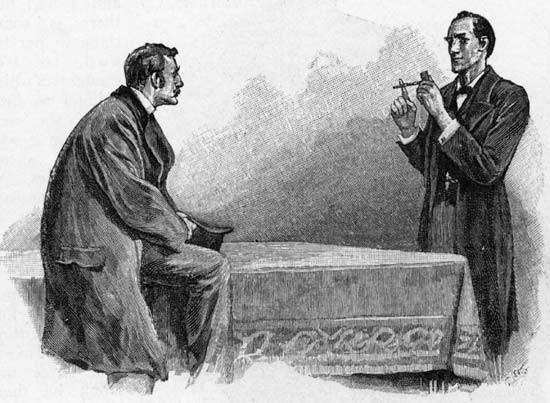
“Watson, I shall now relate the entire affair through Morse tapped pipe code and interpretative dance.”
While stoicism attracts criticism, understandably, because it doesn’t always consider the fundamentally human nature of humans, being prepared for the unforeseen is a vital part of any planning process. Self-regulation is not about drawing up a time table that allows you to fit in everything that you know about, it is about being able to handle your life and your work when things go wrong. Much as a car doesn’t need to be steered when it is going in a straight line and meeting our requirements, it is how we change direction when we know the road and when a kangaroo jumps out that are the true tests of our ability to manage our resources and ourselves.
Planning is not everything, as anyone who has read Helmuth von Moltke the Elder or von Clausewitz will know: “no plan survives contact with the enemy”. In this case, however, the enemy is not just those events that seek to confound us, it can be us as well! You can have the best plan in the world that relies upon you starting on Day X, and yet you don’t. You may have excellent reasons for this but, the fact remains, you have now introduced problems into your own process. You have met the enemy and it is you. This illustrates the critical importance of ensuring that we have an accurate assessment of our own philosophies – and we do have to be very honest.
There is no point in a student building an elaborate time management plan that relies upon them changing the habits of a lifetime in a week. But this puts the onus upon us as well: there is no point in us fabricating a set of expectations that a student cannot meet because they do not yet have a mature philosophy for understanding what is required. We don’t give up (of course!) but we must now think about how we can scaffold and encourage such change in a manageable way. I find reflection very handy, as I’ve said before, as watching students write things like “I planned for this but then I didn’t do it! WHY?” allows me to step in and discuss this at the point that the student realises that they have a problem.
I am not saying that a student who has a philosophy of “Maybe one day I will pass by accident” should be encouraged to maintain such lassitude, but we must be honest and realise that demanding that their timeliness and process maturity spring fully-formed from their foreheads is an act of conjuring reserved only for certain Greek Gods. (Even Caligula couldn’t manage it and he had far greater claim to this than most.) I like to think of this in terms of similarity of action. If anything I do is akin to walking up to someone and yelling “You should hand in on time, do better!” then I had better re-think my strategy.
The development of a personal philosophy, especially when you may not have ever been exposed to some of the great exemplars, is a fundamentally difficult task. You first need to understand that such a concept exists, then gain the vocabulary for discussing it, then interpret your current approach and see the value of change. Once you have performed all of those tasks, then we can start talking about getting from A to B. If you don’t know what I’m talking about or can’t understand why it’s important, or even discuss core concepts, then I’m yelling at you in the corridor and you’ll nod, compliantly, until I go away. Chances of you taking positive steps in the direction that I want? Very low. Probably, nil. And if it does happen, either it’s accidental or you didn’t actually need my help.
I try to be stoic but I must be honest and say that if Nero sentenced me to death, I’d nod, say “I expected that”, then put on some fast saxophone music and leg it up over the seven hills and far away. I don’t think I’d ever actually expect true stoicism from most of my students. but a simple incorporation of the fact that not everything works out as you think it will would be a definite improvement over the current everything will work out in my favour expectation that seems to be the hallmark of the more frequently disappointed and distressed among them. The trick is that I first have to make them realise that this is something that, with thought, they can not only fix but use to make a genuine, long-lasting and overwhelmingly positive change in their lives.
Surely, I can’t believe that I would have thought…
Posted: September 20, 2012 Filed under: Education | Tags: authenticity, collaboration, curriculum, education, educational problem, educational research, feedback, Generation Why, higher education, in the student's head, student perspective, teaching, teaching approaches, universal principles of design Leave a commentAnyone with students has become used to what I shall (extremely loosely) refer to as the argument of lazy denial, where a student uses one of the following in a sentence, when discussing a technical issue:
- Surely…
- I can’t believe…
- I would have thought…
Now, used rhetorically, where you place a deliberately short-term doubt in someone’s mind and then follow it up with the facts, there is no real problem with most of these. My problem is when a student uses this in order to dismiss an idea, based on an isolated opinion or a very limited understanding of the issues. As I joked recently on someone’s Facebook, I’ve told my students that starting any technical discussion question with “Surely…” is an indication that further research has to take place.
Yes, yes, I’m making a point and enough of my students know about it to occasionally rib me with its deliberate usage but this just emphasises that they’re thinking about things. It’s very easy to infer a comfortable denial to a situation based on limited experience. This could be covered as being a hasty generalisation, jumping to conclusions, appeal to incredulity or wishful thinking, but it’s really an excuse to express disbelief without having to provide any evidence other than “Nahhhh.” And, ultimately, because very little work is being done here, I’m just going to call it lazy denial.
My intention is not, of course, to stop people speaking naturally but it’s to help my students think about framing an argument, which requires knowing enough about the area to be able to construct, and respond to, an argument. Research usually consists of knowing enough to know what you don’t know, which can usually be explained far more succinctly than saying “Surely, someone would have carried out action <x>”. There are legitimate ways to express this sentiment, after you’ve done the reading. “I’ve looked through all of the literature I can find and it appears that no-one appears to have tried <x>.”
(Regrettably, as in all things scientific, not finding something doesn’t prove its non-existence. As exhaustive literature searches are becoming harder and harder with the growth of the data corpus, we have to be very circumspect about how we make statements such as “no-one has done this” because it is more than a little embarrassing when someone stands up at the end of your talk and says “Urm, we did”.)
Once we’ve gone looking and discussed the area, we’re all looking at the same problem in the same way. Rather than making sweeping statements that are, to be honest, often a little condescending because you’re speaking as if your opinion is so blindingly obvious that it must have been tried, we can really appreciate the discovery of a hole in the recorded knowledge: a place where we can make a contribution.
This is not to say that everything is this formal and there have been many fine semi-research discussions carried out that have used these terms but, when we’re sitting around trying to work towards a solution or my students are trying to work out their research direction, this starts to become important.
I suppose this reveals more about me than it does about my students…
A Puzzling Thought
Posted: September 19, 2012 Filed under: Education | Tags: advocacy, authenticity, card shouting, collaboration, curriculum, design, education, educational problem, educational research, ethics, feedback, higher education, in the student's head, measurement, principles of design, reflection, resources, student perspective, teaching, teaching approaches, thinking 4 CommentsToday I presented one of my favourite puzzles, the Monty Hall problem, to a group of Year 10 high school students. Probability is a very challenging area to teach because we humans seem to be so very, very bad at grasping it intuitively. I’ve written before about Card Shouting, where we appear to train cards to give us better results by yelling at them, and it becomes all too clear that many people have instinctive models of how the world work that are neither robust nor transferable. This wouldn’t be a problem except that:
- it makes it harder to understand science,
- the real models become hard to believe because they’re counter-intuttitve, and
- casinos make a lot of money out of people who don’t understand probability.
Monty Hall is simple. There are three doors and behind one is a great prize. You pick a door but it doesn’t get opened. The host, who knows where the prize is, opens one of the doors that you didn’t pick but the door that he/she opens is always going to be empty. So the host, in full knowledge, opens a known empty door, but it has to be one that you didn’t pick. You then have a choice to switch to the door that you didn’t pick and that hasn’t been opened, or you can stay with your original pick.

Based on a game show, Monty Hall was the name of the presenter.
Now let’s fast forward to the fact that you should always switch because you have a 2/3 chance of getting the prize if you do (no, not 50/50) so switching is the winning strategy. Going into today, what I expected was:
- Initially, most students would want to stay with their original choice, having decided that there was no benefit to switching or that it was a 50/50 deal so it didn’t make any sense.
- At least one student would actively reject the idea.
- With discussion and demonstration, I could get students thinking about this problem in the right way.
The correct mental framework for Monty Hall is essential. What are the chances, with 1 prize behind 3 doors, that you picked the right door initially. It’s 1/3, right? So the chances that you didn’t pick the correct door is 2/3. Now, if you just swapped randomly, there’d be no advantage but this is where you have to understand the problem. There are 2 doors that you didn’t pick and, by elimination, these 2 doors contain the prize 2/3 of the time. The host knows where the prize is so the host will never open a door and show you the prize, the host just removes a worthless door. Now you have two sets of doors – the one you picked (correct 1/3 of the time) and the remaining door from the unpicked pair (correct 2/3 of the time). So, given that there’s only one remaining door to pick in the unpicked pair, by switching you increase your chances of winning from 1/3 to 2/3.
Don’t believe me? Here’s an on-line simulator that you can run (Ignore what it says about Internet Explorer, it tends to run on most things.)
Still don’t believe me? Here’s some Processing code that you can run locally and see the rates converge to the expected results of 1/3 for staying and 2/3 for switching.
This is a challenging and counter-intuitive result, until you actually understand what’s happening, and this clearly illustrates one of those situations where you can ask students to plug numbers into equations for probability but, when you actually ask them to reason mathematically, you suddenly discover that they don’t have the correct mental models to explain what is going on. So how did I approach it?
Well, I used Peer Instruction techniques to get the class to think about the problem and then vote on it. As expected, about 60% of the class were stayers. Then I asked them to discuss this with a switcher and to try and convince each other of the rightness of their actions. Then I asked them to vote again.
No significant change. Dang.
So I wheeled out the on-line simulator to demonstrate it working and to ensure that everyone really understood the problem. Then I showed the Processing simulation showing the numbers converging as expected. Then I pulled out the big guns: the 100 door example. In this case, you select from 100 doors and Monty eliminates 98 (empty) doors that you didn’t choose.
Suddenly, when faced with the 100 doors, many students became switchers. (Not surprising.) I then pointed out that the two problems (3 doors and 100 doors) had reduced to the same problem, except that the remaining doors were the only door left standing from 2 and 99 doors respectively. And, suddenly, on the repeated vote, everyone’s a switcher. (I then ran the code on the 100 door example and had to apologise because the 99% ‘switch’ trace is so close to the top that it’s hard to see.)
Why didn’t the discussion phase change people’s minds? I think it’s because of the group itself, a junior group with very little vocabulary of probability. it would have been hard for the to articulate the reasons for change beyond much ‘gut feeling’ despite the obvious mathematical ability present. So, expecting this, I confirmed that they were understanding the correct problem by showing demonstration and extended simulation, which provided conflicting evidence to their previously held belief. Getting people to think about the 100 door model, which is a quite deliberate manipulation of the fact that 1/100 vs 99/100 is a far more convincing decision factor than 1/3 vs 2/3, allowed them to identify a situation where switching makes sense, validating what I presented in the demonstrations.
In these cases, I like to mull for a while to work out what I have and haven’t learned from this. I believe that the students had a lot of fun in the puzzle section and that most of them got what happened in Monty Hall, but I’d really like to come back to them in a year or two and see what they actually took away from today’s example.
More on Computer Science Education as a fundamentally challenging topic.
Posted: September 18, 2012 Filed under: Education | Tags: advocacy, authenticity, blogging, community, curriculum, education, educational problem, educational research, ethics, feedback, higher education, reflection, teaching, teaching approaches, thinking, threshold concepts, universal principles of design, vygotsky, workload Leave a comment“Homo sum, humani a me nihil alienum puto (I am a [human], nothing human is foreign to me)” , Terence, 163BC
While this is a majestic sentiment, we are constantly confronted by how many foreign ideas and concepts there are in our lives. In the educational field, Meyer and Land have identified threshold concepts as a set of concepts that are transformative once understood but troublesome and alien before they are comprehended. The existence of these, often counter-intuitive, concepts give the lie to Terence’s quote as it appears that certain concepts will be extremely foreign and hard to communicate or comprehend until we understand them. (I’ve discussed this before in my write-up of the ICER Keynote.)

“Terry” to his friends.
Reading across the fields of education, educational psychology and Computer Science education research, it rapidly becomes apparent that some ideas have been described repeatedly over decades, but have gained little traction. Dewey’s disgust at the prison-like school classroom was recorded in 1938, yet you can walk onto any campus in the world and find the same “cells”, arrayed in ranks. The lecture is still the dominant communication form in many institutions, despite research support for the far greater efficacy of different approaches. For example, the benefits of social constructivism, including the zone of proximal development, are well known and extensively studied, yet even where group work is employed, it is not necessarily designed or facilitated to provide the most effective outcomes. The majority of course design and implementation shows little influence of any of the research conducted in the last 20 years, let alone the cognitive development stages of Piaget, the reliance upon authority found in Perry or even the existence of threshold concepts themselves. Why?
From a personal perspective, I was almost completely ignorant of the theoretical underpinnings of educational practice until very recently and I still rate myself as a rank novice in the area. I write here to be informed, not to be seen as an expert, and I learn from thinking and writing about what I’m doing. I am also now heavily involved in a research group that focuses on this so I have the peer support and time to start learning in the fascinating area of Computer Science Education. Many people, however, do not, and it is easy to see why one would not confront or even question the orthodoxy when one is unaware of any other truth.
Of course, as we all know, it is far harder to see that anything needs fixing when, instead of considering that our approach may be wrong, we identify our students as the weak link in the chain. It’s easy to do and, because we are often not scrupulously scientific in our recollection of events (because we are human), our anecdotal evidence dominates our experience. “Good” students pass, “bad” students fail. If we then define a bad student as “someone who fails”, we have a neat (if circular) definition that shields us from any thoughts on changing what we do.
When I found out how much I had to learn, I initially felt very guilty about some of the crimes that I had perpetrated against my students in my ignorance. I had bribed them with marks, punished them for minor transgressions with no real basis, talked at them for 50 minutes and assumed that any who did not recall my words just weren’t paying attention. At the same time, I carried out my own tasks with no bribery, negotiated my own deadlines and conditions, and checked my mail whenever possible in any meetings in which I felt bored. The realisation that, even through ignorance and human frailty, you have let your students down is not a good feeling, especially when you realise that you have been a hypocrite.
I lament the active procrastinator, who does everything except the right work and thus fails anyway with a confused look on their face, and I feel a great sympathy for the caring educator who, through lack of exposure or training, has no idea that what they are doing is not the best thing for their students. This is especially true when the educators have been heavily acculturated by their elders and superiors, at a vulnerable developmental time, and now not only have to question their orthodoxy, they must challenge their mentors and friends.
Scholarship in Computer Science learning and teaching illuminates one’s teaching practice. Discovering tools, theories and methodologies that can explain the actions of our students is of great importance to the lecturer and transforms the way that one thinks about learning and teaching. But transformative and highly illuminative mechanisms often come at a substantial cost in terms of the learning curve and we believe that this explains why there is a great deal of resistance from those members of the community who have not yet embraced the scholarship of learning and teaching. Combine this with a culture where you may be telling esteemed and valued colleagues that they have been practising poorly for decades and the resistance becomes even more understandable. We must address the fact that resistance to acceptance in the field may stem from effects that we would carefully address in our students (their ongoing problems with threshold concepts) but that we expect our colleagues to just accept these alien, challenging and unsettling ideas merely because we are right.
The burden of proof does not, I believe, lie with us. We have 70 years of studies in education and over 100 years of study in work practices to establish the rightness of our view. However, I wonder how we can approach our colleagues who continue to question these strange, counter-inutitive and frightening new ideas and help them to understand and eventually adopt these new concepts?

 Nick Falkner