
Dealing with Plagiarism: Punishment or Remediation?
Posted: October 15, 2012 Filed under: Education | Tags: advocacy, community, curriculum, design, education, educational problem, educational research, ethics, feedback, Generation Why, higher education, in the student's head, learning, measurement, plagiarism, principles of design, reflection, student perspective, teaching, teaching approaches, thinking, tools, work/life balance 6 CommentsI have written previously about classifying plagiarists into three groups (accidental, panicked and systematic), trying to get the student to focus on the journey rather than the objective, and how overwork can produce situations in which human beings do very strange things. Recently, I was asked to sit in on another plagiarism hearing and, because I’ve been away from the role of Assessment Coordinator for a while, I was able to look at the process with an outsider’s eye, a slightly more critical view, to see how it measures up.
Our policy is now called an Academic Honesty Policy and is designed to support one of our graduate attributes: “An awareness of ethical, social and cultural issues within a global context and their importance in the exercise of professional skills and responsibilities”. The principles are pretty straight-forward for the policy:
- Assessment is an aid to learning and involves obligations on the part of students to make it effective.
- Academic honesty is an essential component of teaching, learning and research and is fundamental to the very nature of universities.
- Academic writing is evidence-based, and the ideas and work of others must be acknowledged and not claimed or presented as one’s own, either deliberately or unintentionally.
The policy goes on to describe what student responsibilities are, why they should do the right thing for maximum effect of the assessment and provides some handy links to our Writing Centre and applying for modified arrangements. There’s also a clear statement of what not to do, followed by lists of clarifications of various terms.
Sitting in on a hearing, looking at the process unfolding, I can review the overall thrust of this policy and be aware that it has been clearly identified to students that they must do their own work but, reading through the policy and its implementation guide, I don’t really see what it provides to sufficiently scaffold the process of retraining or re-educating students if they are detected doing the wrong thing.
There are many possible outcomes from the application of this policy, starting with “Oh, we detected something but we turned out to be wrong”, going through “Well, you apparently didn’t realise so we’ll record your name for next time, now submit something new ” (misunderstanding), “You knew what you were doing so we’re going to give you zero for the assignment and (will/won’t) let you resubmit it (with a possible mark cap)” (first offence), “You appear to make a habit of this so we’re giving you zero for the course” (second offence) and “It’s time to go.” (much later on in the process after several confirmed breaches).
Let me return to my discussions on load and the impact on people from those earlier posts. If you accept my contention that the majority of plagiarism cheating is minor omission or last minute ‘helmet fire’ thinking under pressure, then we have to look at what requiring students to resubmit will do. In the case of the ‘misunderstanding’, students may also be referred to relevant workshops or resources to attend in order to improve their practices. However, considering that this may have occurred because the student was under time pressure, we have just added more work and a possible requirement to go and attend extra training. There’s an old saying from Software Development called Brook’s Law:
“…adding manpower to a late software project makes it later.” (Brooks, Mythical Man Month, 1975)
In software it’s generally because there is ramp up time (the time required for people to become productive) and communication overheads (which increases with the square of the number of people again). There is time required for every assignment that we set which effectively stands in for the ramp-up and, as plagiarising/cheating students have probably not done the requisite work before (or could just have completed the assignment), we have just added extra ramp-up into their lives for any re-issued assignments and/or any additional improvement training. We have also greatly increased the communication burden because the communication between lecturers and peers has implicit context based on where we are in the semester. All of the student discussion (on-line or face-to-face) from points A to B will be based around the assignment work in that zone and all lecturing staff will also have that assignment in their heads. An significantly out-of-sequence assignment not only isolates the student from their community, it increases the level of context switching required by the staff, decreasing the amount of effective time that have with the student and increasing the amount of wall-clock time. Once again, we have increased the potential burden on a student that, we suspect, is already acting this way because of over-burdening or poor time management!
Later stages in the policy increase the burden on students by either increasing the requirement to perform at a higher level, due to the reduction of available marks through giving a zero, or by removing an entire course from their progress and, if they wish to complete the degree, requiring them to overload or spend an additional semester (at least) to complete their degree.
My question here is, as always, are any of these outcomes actually going to stop the student from cheating or do they risk increasing the likelihood of either the student cheating or the student dropping out? I complete agree with the principles and focus of our policy, and I also don’t believe that people should get marks for work that they haven’t done, but I don’t see how increasing burden is actually going to lead to the behaviour that we want. (Dan Pink on TED can tell you many interesting things about motivation, extrinsic factors and cognitive tasks, far more effectively than I can.)
This is, to many people, not an issue because this kind of policy is really treated as being punitive rather than remedial. There are some excellent parts in our policy that talk about helping students but, once we get beyond the misunderstanding, this language of support drops away and we head swiftly into the punitive with the possibility of controlled resubmission. The problem, however, is that we have evidence that light punishment is interpreted as a licence to repeat the action, because it doesn’t discourage. This does not surprise me because we have made such a risk/reward strategy framing with our current policy. We have resorted to a punishment modality and, as a result, we have people looking at the punishments to optimise their behaviour rather than changing their behaviour to achieve our actual goals.
This policy is a strange beast as there’s almost no way that I can take an action under the current approach without causing additional work to students at a time when it is their ability to handle pressure that is likely to have led them here. Even if it’s working, and it appears that it does, it does so by enforcing compliance rather than actually leading people to change the way that they think about their work.
My conjecture is that we cannot isolate the problems to just this policy. This spills over into our academic assessment policies, our staff training and our student support, and the key difference between teaching ethics and training students in ethical behaviour. There may not be a solution in this space that meets all of our requirements but if we are going to operate punitively then let us be honest about it and not over-burden the student with remedial work that they may not be supported for. If we are aiming for remediation then let us scaffold it properly. I think that our policy, as it stands, can actually support this but I’m not sure that I’ve seen the broad spread of policy and practice that is required to achieve this desirable, but incredibly challenging, goal of actually changing student behaviour because the students realise that it is detrimental to their learning.
Workshop report: ALTC Workshop “Assessing student learning against the Engineering Accreditation Competency Standards: A practical approach. Part 2.
Posted: October 13, 2012 Filed under: Education | Tags: community, curriculum, education, educational problem, educational research, Generation Why, higher education, in the student's head, jeff froyd, learning, learning outcome, measurement, reflection, research, resources, student perspective, teaching, teaching approaches, thinking, tools, wageeh boles, workload Leave a commentContinuing on from yesterday’s post, I was discussing the workshop that I went to and what I’d learned from it. I finished on the point that assessment of learning occurs when Lecturers:
- Use evidence of student learning
- to make judgements on student achievement
- against goals and standards
but we have so many other questions to ask at this stage. What were our initial learning objectives? What were we trying to achieve? The learning outcome is effectively a contract between educator and student so we plan to achieve them, but how they fit in the context of our accreditation and overall requirements? One of the things stressed in the workshop was that we need a range of assessment tasks to achieve our objectives:
- We need a wide variety
- These should be open-entry where students can begin the tasks from a range of previous learning levels and we cater for different learning preferences and interests
- They should be open-ended, where we don’t railroad the students towards a looming and monolithic single right answer, and multiple pathways or products are possible
- We should be building students’ capabilities by building on the standards
- Finally, we should provide space for student ownership and decision making.
Effectively, we need to be able to get to the solution in a variety of ways. If we straitjacket students into a fixed solution we risk stifling their ability to actually learn and, as I’ve mentioned before, we risk enforcing compliance to a doctrine rather than developing knowledgeable self-regulated learners. If we design these activities properly then we should find the result reduces student complaints about fairness or incorrect assumptions about their preparation. However, these sorts of changes take time and, a point so important that I’ll give it its own line:
You can’t expect to change all of your assessment in one semester!
The advice from Wageeh and Jeff was to focus on an aspect, monitor it, make your change, assess it, reflect and then extend what you’ve learned to other aspects. I like this because, of course, it sounds a lot like a methodical scientific approach to me. Because it is. As to which assessment methods you should choose, the presenters recognised that working out how to make a positive change to your assessment can be hard so they suggested generating a set of alternative approaches and then picking one. They then introduced Prus and Johnson’s 1994 paper “A critical review of Student Assessment Options” which provide twelve different assessment methods and their drawbacks and advantages. One of the best things about this paper is that there is no ‘must’ or ‘right’, there is always ‘plus’ and ‘minus’.
Want to mine archival data to look at student performance? As I’ve discussed before, archival data gives you detailed knowledge but at a time when it’s too late to do anything for that student or a particular cohort in that class. Archival data analysis is, however, a fantastic tool for checking to see if your prerequisites are set correctly. Does their grade in this course correlate with grades in the prereqs? Jeff mentioned a student where the students should have depended upon Physics and Maths but, while their Physics mark correlated with their final Statics mark, Mathematics didn’t. (A study at Baldwin-Wallace presented at SIGCSE 2012 asked the more general question: what are the actual dependencies if we carry out a Bayesian Network Analysis. I’m still meaning to do this for our courses as well.)
Other approaches, such as Surveys, are quick and immediate but are all perceptual. Asking a student how they did on a quiz should never be used as their actual mark! The availability of time will change the methods you choose. If you have a really big group then you can statistically sample to get an indication but this starts to make your design and tolerance for possible error very important.
Jeff stressed that, in all of this assessment, it was essential to never give students an opportunity to gain marks in areas that are not the core focus. (Regular readers know that this is one of my design and operational mantras, as it encourages bad behaviour, by which I mean incorrect optimisation.)
There were so many other things covered in this workshop and, sadly, we only had three hours. I suggested that the next time it was run that they allow more time because I believe I could happily have spent a day going through this. And I would still have had questions.
We discussed the issue of subjectivity and objectivity and the distinction between setting and assessment. Any way that I set a multiple choice quiz is going to be subjective, because I will choose the questions based on my perception of the course and assessment requirements, but it is scored completely objectively.
We also discussed data collection as well because there are so many options here. When will we collect the data? If we collect continuously, can we analyse and react continuously? What changes are we making in response? This is another important point:
If you collect data in order to determine which changes are to be made, tie your changes to your data driven reasons!
There’s little point in saying “We collected all student submission data for three years and then we went to multiple choice questions” unless you can provide a reason from the data, which will both validate your effort in collection and give you a better basis for change. When do I need data to see if someone is clearing the bar? If they’re not, what needs to be fixed? What do I, as a lecturer, need to collect during the process to see what needs to be fixed, rather than the data we collect at the end to determine if they’ve met the bar.
How do I, as a student, determine if I’m making progress along the way? Can I put all of the summative data onto one point? Can I evaluate everything on a two-hour final exam?
WHILE I’m teaching the course, are the students making progress, do they need something else, how do I (and should I) collect data throughout the course. A lot of what we actually collect is driven by the mechanisms that we already have. We need to work out what we actually require and this means that we may need to work beyond the systems that we have.
Again, a very enjoyable workshop! It’s always nice to be able to talk to people and get some really useful suggestions for improvement.
Workshop report: ALTC Workshop “Assessing student learning against the Engineering Accreditation Competency Standards: A practical approach”
Posted: October 12, 2012 Filed under: Education | Tags: assessment, community, curriculum, education, educational problem, educational research, feedback, Generation Why, higher education, jeff froyd, learning, principles of design, reflection, teaching, teaching approaches, thinking, time banking, tools, universal principles of design, wageeh boles Leave a commentI was fortunate to be able to attend a 3 hour workshop today presented by Professor Wageeh Boles, Queensland University of Technology, and Professor Jeffrey (Jeff) Froyd, Texas A&M, on how we could assess student learning against the accreditation competency standards in Engineering. I’ve seen Wageeh present before in his capacity as an Australian Learning and Teaching Council ALTC National Teaching Fellowship and greatly enjoyed it, so I was looking forward to today. (Note: the ALTC has been replaced with the Office for Learning and Teaching, OLT, but a number of schemes are still labelled under the old title. Fortunately, I speak acronym.)
Both Wageeh and Jeff spoke at length about why we were undertaking assessment and we started by looking at the big picture: University graduate capabilities and the Engineers Australia accreditation criteria. Like it or not, we live in a world where people expect our students to be able to achieve well-defined things and be able to demonstrate certain skills. To focus on the course, unit, teaching and learning objectives and assessment alone, without framing this in the national and University expectations is to risk not producing the students that are expected or desired. Ultimately if the high level and local requirements aren’t linked then they should be because otherwise we’re probably not pursuing the right objectives. (Is it too soon to mention pedagogical luck again?)
We then discussed three types of assessment:
- Assessment FOR Learning: Which is for teachers and allows them to determine the next steps in advancing learning.
- Assessment AS Learning: Which is for students and allows them to monitor and reflect upon their own progress (effectively formative).
- Assessment OF Learning: Which is used to assess what the students have learned and is most often characterised as summative learning.
But, after being asked about the formative/summative approach, this was recast into a decision making framework. We carry out assessment of all kinds to allow people to make better decisions and the people, in this situation, are Educators and Students. When we see the results of the summative assessment we, as teachers, can then ask “What decisions do we need to make for this class?” to improve the levels of knowledge demonstrated in the summative. When the students see the result of formative assessment, we then have the question “What decisions do students need to make” to improve their own understanding. The final aspect, Assessment FOR Learning, is going to cover those areas of assessment that help both educators and students to make better decisions by making changes to the overall course in response to what we’re seeing.
This is a powerful concept as it identifies assessment in terms of responsible groups: this assessment involves one group, the other or both and this is why you need to think about the results. (As an aside, this is why I strongly subscribe to the idea that formative assessment should never have an extrinsic motivating aspect, like empty or easy submission marks, because it stops the student focussing on the feedback, which will help their decisions, and makes it look summative, which suddenly starts to look like the educator’s problem.)
One point that came out repeatedly was that our assessment methods should be varied. If your entire assessment is based on a single exam, of one type of question, at the end of the semester then you really only have a single point of data. Anyone who has ever drawn a line on a graph knows that a single point tells you nothing about the shape of the line and, ultimately, the more points that yo can plot accurately, the more you can work out what is actually happening. However, varying assessment methods doesn’t mean replicating or proxying the exam, it means providing different assessment types, varying questions, changing assessment over time. (Yes, this was stressed: changing assessment from offering to offering is important and is much a part of varying assessment as any other component.)
All delightful music to my ears, which was just was well as we all worked very hard, talking, discussing and sharing ideas throughout the groups. We had a range of people who were mostly from within the Faculty and, while it was a small group and full of the usual faces, we all worked well, had an open discussion and there were some first-timers who obviously learned a lot.
What I found great about this was that it was very strongly practical. We worked on our own courses, looked for points for improvement and I took away four points of improvement that I’m currently working on: a fantastic result for a three-hour investment. Our students don’t need to just have done assessment that makes it look like they know their stuff, they have to actually know their stuff and be confident with it. Job ready. Able to stand up and demonstrate their skills. Ready for reality.
As was discussed in the workshop, assessment of learning occurs when Lecturers:
- Use evidence of student learning
- to make judgements on student achievement
- against goals and standards
And this identifies some of our key problems. We often gather all of the evidence, whether it’s final grades or Student Evaluations, at a point when the students have left, or are just about to leave, the course. How can we change this course for that student? We are always working one step in the past. Even if we do have the data, do we have the time and the knowledge to make the right judgement? If so, is it defensible, fair and meeting the standards that we should be meeting? We can’t apply standards from 20 years ago because that’s what we’re used to. The future, in Australia, is death by educational acronyms (AQF, TEQSA, EA, ACS, OLT…) but these are the standards by which we are accredited and these are the yardsticks by which our students will be judged. If we want to change those then, sure, we can argue this at the Government level but until then, these have to be taken into account, along with all of our discipline, faculty and University requirements.
I think that this will probably spill over in a second post but, in short, if you get a chance to see Wageeh and Jeff on the road with this workshop then, please, set aside the time to go and leave time for a chat afterwards. This is one of the most rewarding and useful activities that I’ve done this year – and I’ve had a very good year for thinking about CS Education.
Moral Luck and Voluntary Action: Is There a Corresponding Pedagogical Luck?
Posted: October 10, 2012 Filed under: Education | Tags: advocacy, blogging, community, curriculum, education, educational problem, educational research, ethics, higher education, in the student's head, reflection, teaching, teaching approaches, thinking, tools, universal principles of design Leave a commentMoral luck (sometimes described as moral accident) describes a situation where someone is assigned moral blame or praise for something happening, even though the person was either not in control of what was happening or could not affect its consequences. There are many examples, including the traffic accident scenario described in the Moral Luck link, and there are several different classifications of moral luck but let me focus on one: the situation where you either take no positive steps to address a situation, or actively take negative steps, yet the outcome is still positive. To a consequentialist, this is a beneficial outcome and constitutes an example of Resultant Moral Luck. One of the most extreme examples is that you randomly stick your foot out, hoping to trip someone in the street, and accidentally bring down a criminal being pursued by the police. The outcome is good, you are possibly a hero, but any assignation of a moral intention to your actions is deeply flawed: you weren’t in control of the situation, you did not intend the outcome and, in fact, you had hoped to cause harm. The voluntary action that you took was in no way intended to cause this outcome. Yet, you are a hero.
When we look at methods and practices of teaching, it quickly becomes apparent that there are many different approaches and, upon doing some reading, that these have different utilities and efficacies. Your choice of pedagogy is rarely a one-size-fits-all approach and, especially if your institution takes a relatively traditional approach, we have to start to wonder exactly which part of the evolutionary selection stage we are in. Have we, by chance and/or design, arrived at an elegant and efficient design years ago that cannot be improved upon by recent findings or are we ripe for new development, new directions and entirely different ways of teaching?
I would argue that, if we are not taking steps to confirm where we are in the developmental timeline or we are not taking steps to examine what we do with the intention of improving, then we are wandering in an area that we could call pedagogical luck, where any positive teaching outcomes that may arise cannot be attributed to our voluntary actions and intentions. Are we in the territory that Feynman was referring to when he quoted Gibbon:
“The power of instruction is seldom of much efficacy except in those happy dispositions where it is almost superfluous”?
The notion of pedagogical luck, much like moral luck, raises questions of responsibility and accountability. It also explains how we can misattribute blame, because we risk not having a clear ethical framework that can ascribe intention, action and outcome in a meaningful way. In moral luck two people can speed through the same red light, yet only one causes an accident because a child runs into an intersection and the other one may receive a fine for running the light. The outcomes could almost not be any more starkly different: in one a human is injured or killed, the other is a purely administrative outcome. We certainly will attribute more blame to the first driver than the second, despite the fact that both had no desire to kill, nor did they act any differently – the reason that this is resultant is because this is just the way things turned out.
If an academic works with a class and, as it happens, everyone passes, then we would usually assume some intention and voluntary action was involved on the part of that academic. The outcome, for the students and the academic, are both beneficial. It is… unlikely… that said academic would then walk around stating “I’m amazed that they all passed – I barely even showed up to class and I didn’t revise the notes.” However, where someone has done nothing (or has not taken a voluntary action to cause change) and all of the students fail, we can expect (with a reasonable certainty) that the usual statements of blame shifting may start to occur: the students were stupid, lazy, unprepared, insufficiently attentive, the material was pitched at the right level but the students didn’t work hard enough, et cetera. “I have kept the course the same, it is obviously the students who are at fault.” Of course, it’s easy to see why if we have not taken any active steps to change anything – why should we be held responsible for an action that has had either neutral or positive outcomes in the past? Why should we judge the killer-driver any more harshly than the red-light-runner? The outcome is a matter of luck.
This is highly undesirable behaviour so how can we avoid the issues involved in depending upon pedagogical luck? I’m tempted to delve into virtue ethics here and argue that, of all places, that if you can’t find a virtuous seeker of knowledge in a University then perhaps we should all go back to a simple agrarian existence and wait to die of some horrifically mutated bovine disease that we no longer have the wit or wisdom to cure. However, I suspect that we don’t need to all be virtuous, all the time, to adopt a simple maxim that commits us to seeking improvement in our learning and teaching, or to confirming that our approaches are still valid. Where possible, such endeavours should be public and shared widely, so that our lessons can be learned elsewhere. Yes, we’ve wandered fairly heavily into Kant because I’m effectively arguing good will as a stand-alone virtue, regardless of what is achieved. In the absence of a guarantee of virtuous people, and we all have bad days, then perhaps it is a commitment to scholarship, review and reflection that can allow us to take that fresh approach to pedagogical development and implementation that will cause us to be less susceptible to blame shifting where it is inappropriate and less likely to form cargo-cultish ideas as to why certain courses are succeeding or failing.
It is a simple idea: claiming beneficial outcomes as caused by us when we have done nothing is questionable, ethically, especially when we refuse to accept negative outcomes under the same scenario. By identifying that pedagogical luck is possible and readily identifiable in certain practices around the world, we clearly identify the need to avoid the situations where it can dominate.
Bad Writing, Bad Future?
Posted: October 5, 2012 Filed under: Education | Tags: advocacy, community, curriculum, design, education, educational problem, educational research, in the student's head, measurement, principles of design, student perspective, teaching, teaching approaches, thinking, tools, universal principles of design Leave a commentI was recently reading an article on New Dorp public high school on Staten Island. New Dorp had, until recently, a low graduation rate that was among the bottom 2,000 across the United States. (If you’re wondering, there were 98,817 public schools in the US in 2009-10, according to the National Center for Education Statistics, 65,840 being secondary. So New Dorp was in the bottom 2% across all schools and bottom 3% of secondary.) New Dorp’s primary intake is from poor and working-class families and, in 2006, 82% of the freshmen entered the school with a reading level lower than the required grade.
However, it was bad writing that was ultimately identified as the main obstacle to success: students couldn’t turn their thoughts into readable essays. Because this appeared to be the primary difference between successful and unsuccessful students, Deirdre DeAngelis (the principal) and the faculty decided that writing would become a focus. If nothing else, New Dorp’s students would learn to write well.
And, apparently, it has paid off. Pass rates are up, repeating rates have dropped, scores are higher than any previous class. Pre-college enrolments are up but, interestingly, the demographic makeup has remained the same and graduations rates have leapt from 63% to a projected 80% this Spring. (Yes, I know, projected data. I’ll try to check this again after it’s happened.)
The article, which I encourage you to read, goes on to discuss why this change of focus was so important. There was resistance – the usual response of “We’re doing our job, but the students aren’t smart enough (or are too lazy)” from certain groups of educators. Yet, students responded with increased participation and high attendance, rewarding efforts and silencing critics. What was interesting is that analysis of why students couldn’t write indicated that most could decipher the underlying texts and could comprehend sentences but had major deficiencies in the use of key parts of speech. Simple speeches were fine but compound sentences and sentences with dependent clauses were hard to decipher and very difficult to write. How can you use ‘although’ correctly when you don’t know what it means?
As understanding of speech grew, so did reading comprehension. Classroom discussion encouraged students to listen, think and speak more precisely, giving them something to repeat in their writing.
It’s an interesting article and I’m re-reading it at the moment to see exactly what I can extract for my own students and where I have to read to verify and expand upon the ideas. From a personal perspective, however, I think of one of the best reminders of what it is like to be a student who is confused or intimidated by writing.
I go to Hong Kong.
If you’ve been to Hong Kong, you’ll know that there is a vast amount of signage, some in Chinese characters and some in English, but there is really far more Chinese neon and it is all over the landscape. I can read some Chinese (duck, soup, daily yum cha, restaurant, men, exit – you get the gist) and I understand some Chinese so I can get a feeling for some of what is happening. But I have no grasp of any subtlety. I cannot create a sentence or write a character reliably. I am a very good communicator in my own language but in Chinese I sound ridiculous. I scrawl characters that good natured colleagues interpret very generously but it is the scribbling of a child.
In Hong Kong, unless I am speaking English, I appear illiterate. It is easy to say “Well, don’t feel bad, why would you have learned Cantonese in Australia” but let’s remember that when looking at the students of New Dorp. Why would anyone have encouraged them in creative writing, written expression and the development of sophisticated literary argument when a large percentage of their parents have English as a second language, effectively reduced access to schooling and, most likely, a very tight time budget to spend with their children due to overwork and job crowding?
A student who can’t write effectively, if we haven’t actually really tried to teach them how to write, is no more stupid or lazy than I am when I don’t try to learn all of Cantonese before going to Hong Kong. We have both been denied an opportunity. I am lucky in that I can choose when I go to Hong Kong. A student who can’t write has a much harder road because their future will be brighter and better if they can write, as evidenced by the increased success rates at New Dorp.
I look forward to seeing what New Dorp gets up to in the future and I take my hat off to them for this approach.
Banned Books Week: Time to Hit the Library!
Posted: October 3, 2012 Filed under: Education | Tags: advocacy, banned books, blogging, community, curriculum, education, educational problem, ethics, higher education, in the student's head, principles of design, reflection, resources, student perspective, teaching, teaching approaches, thinking, tools Leave a comment
It’s Banned Books Week until October the 6th so what better time to talk about the freedom to read and go off and subversively read some banned or challenged books? There’s a great link on the American Library Association’s site with the top 100 Banned/Challenged Books 2000-2009. Some of them are completely predictable and some of them are more surprising. The reasons given for withdrawing books are, in the words of the ALA site:
Books usually are challenged with the best intentions—to protect others, frequently children, from difficult ideas and information.
However, it is always easy to see where such noble intentions have been subverted and politics or other overtones have come into play. Let’s look at the Top 10 from 1990-1999 as an example:
- Scary Stories (series), by Alvin Schwartz (7)
- Daddy’s Roommate, by Michael Willhoite (-)
- I Know Why the Caged Bird Sings, by Maya Angelou (6)
- The Chocolate War, by Robert Cormier (3)
- The Adventures of Huckleberry Finn, by Mark Twain (14)
- Of Mice and Men, by John Steinbeck (5)
- Forever, by Judy Blume (16)
- Bridge to Terabithia, by Katherine Paterson (28)
- Heather Has Two Mommies, by Leslea Newman (-)
- The Catcher in the Rye, by J.D. Salinger (19)
Book 1 is scary and has gruesome illustrations. Book 2 deals with homosexual parents.Book 3 contains a rape involving an eight year old girl. Book 4 is about bullying and also contains a masturbation scene. Book 5 is … book 5 is Huckleberry Finn!!! Of course, HF is probably in here because of the fairly extensive use of racial pejoratives and stereotypes, even if argument can be made that the book itself is anti-racist. Book 6 is a magnificent book but, between the deaths and a dead puppy, it’s not exactly an easy book. Book 7 has teen sex in it but nowhere near the same tone or difficulty as some of the previous. Book 8 is a surprisingly depressing book that manages to balance a fantasy world with death and disappointment. Book 9, well, what a surprise, another book on homosexuality has made the list. Finally, we have Catcher, full of profanity and sexual depiction.
Looking at this list, we see sex, racism, homosexual relationships and death being the major themes. (Notably, to be banned for sex, depictions that range to the explicit are required for heterosexual activity, but it is merely the existence of the relationship that can suffice for homosexual relationships.) Those numbers at the end are, by the way, where they feature in the top 100 of 2000-2009. Let’s look at that to see what appals and is too complicated for children or library users in the first decade of the 21st Century, I’ve bolded the new entries:
1. Harry Potter (series), by J.K. Rowling
2. Alice series, by Phyllis Reynolds Naylor
3. The Chocolate War, by Robert Cormier
4. And Tango Makes Three, by Justin Richardson/Peter Parnell
5. Of Mice and Men, by John Steinbeck
6. I Know Why the Caged Bird Sings, by Maya Angelou
7. Scary Stories (series), by Alvin Schwartz
8. His Dark Materials (series), by Philip Pullman
9. ttyl; ttfn; l8r g8r (series), by Lauren Myracle
10. The Perks of Being a Wallflower, by Stephen Chbosky
I’ll come back to Harry Potter in a moment. Number 2, the Alice series, covers a wide range of topics, including our old friend sex, so it’s for the sexual content that it made the list – topping the list in 2003. Number 4 is a children’s book based on the observed behaviour of two male penguins who became a couple and raised a hatchling. (You can read about Roy and Silo here.) Number 8 has some nasty moments across the trilogy but, in the main, has drawn most of its criticism because of a negative portrayal of religion in general, and Christianity specifically. Number 9 is on the list because, from a Banned Books story in 2010, “Preoccupied with sex and college, the teen girls encounter realistic situations that feature foul language, drugs and alcohol in a less than casual way.” Finally, the new number 10 contains references to suicide and death, as well as the usual teen cocktail of drugs, alcohol and sex that guarantee requests for banning. Oh, and there’s also a gay friend and there is a reference to child molestation. But none of it is graphic and it’s written up as a series of letters to a friend.
So the themes are now sex, drugs, bad language, homosexual penguins (Penguin Lust!), discussion of real teenagers and… fantasy novels? Let me return to Harry Potter which contains teens who are so heavily plasticised that they appear to have no real functioning genitalia, never smoke drugs, don’t swear seriously even when being threatened with death and are laughably vanilla in so many ways that the dominant fantasy conceit of the HP universe is not the magic, it’s that teenagers would actually function this way! This, and the inclusion of His Dark Materials, appear to show the direction that book banning has taken over the last decade: removing a point of view for reasons that appear to have little to do with protecting children from difficult ideas and information, but to remove them from ideas that have been stated as unacceptable by some form of organised body.
I strongly suggest looking at both lists, side-by-side, so that you too can have the moments that I had of cocking your head to one side and thinking “why is that on there?” Then coming to the slow, and unpleasant realisation, that the answer is not “because it’s too dark or encourages drug use” but “because of an organised campaign by a group who are trying to orchestrate the removal of a book that, ultimately, is a fairy tale and of no more harm to children than any other”.
There are sometimes good reasons to restrict access, by age or maturity, to certain materials and, definitely, there are lines that you can’t cross and expect to show up on a public library on the shelves – this is a far cry from completely removing or destroying a work. But what appears to be happening now is that the political reasons for banning are starting to dominate, with Internet and local organisation allowing a majority to form that can request a book’s withdrawal. Fortunately, the Internet can bring books to anyone but, with existing models, e-Books may not be as widely available as we often think so the local and school library forms a valuable point for students. I read voraciously when I was younger and, despite reading many of the banned books on the lists, I don’t appear to have turned out too badly. (I know, I know, anecdotal existential evidence doesn’t count. But I can say that not everyone who reads The Chocolate War turns into a psychopath, so why is it always in the top 5? If anything, it made me aware that the adult advice on bullying was generally an empty mechanism that never dealt with the real problem: bullies are not always cowards, don’t fear the same type of repercussions and, sometimes, are in charge. I know – how subversive!)
Let me leave you with an example of how things have changed in the last two decades. One inclusion on the banned book list only showed up in the last decade, despite being published decades earlier, and it’s number 69 on the 2000-2009 list. I’m scared how high it will be driven in the 2010-2019 list and it is yet another example of why we have to be very careful about how we construct any list of books that we wish to treat differently. Or ‘sanction’. You might have heard of it.
It’s called Fahrenheit 451, by Ray Bradbury.
Six ‘Easy’ Pieces? Richard Feynman and the Undergraduate Lectures
Posted: September 30, 2012 Filed under: Education | Tags: advocacy, community, curriculum, education, educational problem, educational research, feedback, feynman, Generation Why, higher education, in the student's head, measurement, reflection, teaching, teaching approaches, thinking, tools, universal principles of design Leave a commentRichard P. Feynman was a Nobel prize winning theoretical physicist, who made great contributions to physics and the popularity of physics through his books and lectures. Among many other useful activities he developed Feynman diagrams, which provided a useful pictorial abstraction of the rather complicated mathematical expressions that govern the behaviour of subatomic particles.

Trust me when I tell you that this is easier to understand than the expressions.
This is a great tool in many ways because it makes the difficult more easy to understand, the abstract able to be represented in a (closer to) concrete manner and, above all, humans like pictures. Feynman was very interested in teaching as well because he felt that students could offer inspiration and because teaching could be a diversion when the well of theoretical physics creativity was running dry. He was an opponent of rote learning and any approach to teaching that put the form before the function. He loved to explain and felt a strong duty to explain things clearly and correctly, with an emphasis on a key principle that if he couldn’t explain it at the freshman level, then it wasn’t yet understood fully.
In the 60’s Feynman was asked, by Caltech, to reinvigorate the teaching of undergraduates and, three years later, he produced the Feynman Lectures on Physics. I’ve read these before (I used to study Physics – I know, I seem so nice!) and so have many other people – it’s estimated that more than 3 million copies have been sold in various languages. I picked up a copy of the ‘cut-down’ version of the lectures “Six Easy Pieces”, recently re-published in Penguin (AU$ 9.95! Hooray for cheap books!)
Reading the 1989 Special Preface to the original lectures, re-printed in “Six Easy Pieces”, a strange fact emerges, which is that Feynman’s lectures did not necessarily succeed for their target audience, the undergraduates, but instead served to inspire the teachers. As Goodstein and Neugebauer noted, while the class started with 180 undergraduate students, many of the students dreaded the class and, over time, dropped out. While the class remained full, it was because of the increased occupation by faculty and graduate students.
In the original preface, by Feynman, he appears to have noticed that something was amiss because he reflects on the fact that he didn’t think it was a great success. One problem was that there was no feedback from the students to him to tell him how he was doing, whether they were keeping up. (Feynman provided very little outline and all of the homework assignments were created by other professors sitting in the class, furiously noting what had been covered and then creating the other work for recitation.) Feynman’s aim was to challenge and interest the best and brightest, he sought to not only direct the lecture at the smartest in the room but to present work so that even the most brilliant in the room would be unable to cover it all. Feynman’s preface contains terms such as ‘sufficiently clever’, which may seem fine to some but to me indicate clearly that he, an astoundingly smart and still empathic human being, had at least an inkling that something had gone wrong between his vision and what happened in the classroom.
At the end of the preface, Feynman reflects, in a rather melancholy tone, “I don’t think I did very well by the students”. He is concerned that, based on the way that the the students handled the questions in the examination, that the system is a failure. A colleague points out that maybe 12-24 students appeared to really get it but you don’t have to be a very good mathematician to release that 24/180 (a nudge over 13%) is not the best rate of transfer. As Feynman gloomily responds (quoting Gibbon):
“The power of instruction is seldom of much efficacy except in those happy dispositions where it is almost superfluous”
Feynman finishes, with his characteristic insight, that the direct individual relationship between student and teacher is paramount, where the student discusses things and works with, and discusses, ideas. That it is impossible to learn very much by sitting in a lecture. But he sees himself torn between what he sees as the right way to proceed and the number of students that we have to teach.
And, 49 years later, we, the inheritors of Sisyphus, are still trying to push that same rock up the same educational hill. Richard Feynman, a grand communicator and superlative thinker and scientist, tried his hardest to make the lecture work and even he couldn’t do it. He had mountains of support and he was unhappy with the result. He is clearly articulating all of the ideas for which we now have so much evidence and, yet, here we still are with 1000-person lectures and students who might be able to plug some numbers into formulas but don’t necessarily know what it means to think inside our discipline or discuss ideas in a meaningful dialogue.
From a personal perspective, Feynman’s Lectures on Physics are one the reasons why I gave up physics. I was struggling to see how it all fitted together and I went to seek help. (I was also a terrible student in those days but this was one of the rare occasions when I tried to improve.) One of my lecturers told me that I should read Feynman’s lectures and because it was designed for undergrads, if I couldn’t get that, I wouldn’t be able to catch up – basically, I didn’t have the Physics brain. I read it. I didn’t get it. I sorted the world into “physicists” and “non-physicists”, with me in the second group. (This is probably not a bad outcome for the physics community and, years later, while I can now happily read Feynman, it certainly doesn’t excite me as much as what I’m doing now.) I imagine that Feynman himself, while not lamenting me leaving the field, would probably be at least mildly perturbed at such a weaponisation of his work. From reading about him, his books and prefaces, I believe that he expected a lot of his students but he never actually wanted to be unpleasant about it. His own prefaces record his unease with the course he produced. He has no doubts about the physics and the aim – but his implementation was not what he wanted and not what he believed to be the best approach.
So, when someone questions your educational research supported ideas for improving learning and teaching, grab a copy of “Six Easy Pieces” and get them to read all of the preface material. Feynman himself regarded a lot of areas in educational research as cargo cult science, which applies as well to any poorly constructed scientific experimentation, but it is quite obvious that on at least some of the most important issues regarding knowledge transfer, he had a deep understanding and commitment to improvement, because of his direct experience with undergraduates and his ability to openly criticise himself in order to improve.
Fragile Relationships: Networks and Support
Posted: September 29, 2012 Filed under: Education | Tags: advocacy, collaboration, community, curriculum, education, ethics, grand challenge, higher education, reflection, relationships, resources, tools Leave a commentI’ve been working with a large professional and technical network organisation for the past couple of days and, while I’m not going to go into too much detail, it’s an organisation that has been around for 28 years and, because of a major change in funding, is now having to look at what the future holds. What’s interesting about this organisation is that it doesn’t have a silo problem in terms of its membership across Australia and New Zealand, which makes it almost unique in terms of technology networks in this neck of the woods. There’s no division between academic and professional staff, there are representatives from both. Same for tech and non-tech, traditional and new Unis, big and small players. It’s a bizarrely egalitarian and functional organisation that has been developing for 28 pretty good years.
Now, for some quite understandable reasons, the original funds provider is withdrawing and we have to look at the future and decide what we’re going to do. I’ve been out talking to possible organisation sponsors or affiliates but, until we decide what form we’re going to take, I’m trying to sell a beast behind a curtain by offering a dowry. This is not a great foundation for a future direction. As it turns out, trying to find a parent organisation that will be a good host is challenging because there’s nothing quite like us in the region. So, we’re looking at other alternatives. I have, however, just moved on to the executive of the organisation to try and help steer it through the next couple of years and, with any luck, into a form that will be self-sustaining and continue to give the valuable contribution to the ANZ community that it has been making for so many years.
The problem is that it takes 28 years to produce a network this strong and, if we get it wrong, relationships are inherently fragile and the disintegration of a group is far easier (and requires zero effort) than the formation. I have one of those composite stone benches in my house and I often ponder the amount of work it took to produce it and get that particular shape up on my bench top.
And how easily it could be broken, irrevocably, with one strike of a sledgehammer.

Knock knock!
(This is why my wife won’t let me use the sledgehammer to cook with.)
Human networks don’t need a sledgehammer strike to fall apart, they just need neglect. There are many examples of good low-cost networks that manage to keep people linked up, regardless of their level of resource, and I often think of the computing education community in the US, made of the regional committees, the overarching groups like SIGCSE and how the regional groups provide sustenance and a focus point, with the large conference coming into town every so often to bring everyone together.
2012 is an interesting year in so many ways and, every time I turn around, there seems to be a new challenge, something to look at, something to review to see if it’s worth keeping and, in many cases, something new to steward or assist. But I suppose that it’s important to remember that all of these things take energy and, at some stage, I’m going to have to sit down and organise how all of these tasks will go together in a way that I can make this work effectively for 2013.
This Is Your Captain Speaking: Turn Off Your Gadgets
Posted: September 22, 2012 Filed under: Education | Tags: advocacy, authenticity, blogging, community, curriculum, design, education, educational problem, educational research, ethics, Generation Why, higher education, in the student's head, reflection, student perspective, teaching, teaching approaches, thinking, tools 1 Comment“Ladies and gentlemen, boys and girls,
This is your Captain speaking. Shortly,I’m going to push on a set of levers that will allow fuel to pour into the steel cylinders affixed to the side of the plane and, in the presence of well-engineered flame, create a series of small and controlled explosions that will allow us to lift roughly 400 tonnes of metal and flesh into the air and propel you towards your destination.
As part of this, when the plane heads down the runway, we will pass a threshold known as V1. Do you know what V1 means? V1 is the takeoff decision speed and is the speed at which we will try and take off, even if one engine fails. Basically, V1 is the speed at which we are travelling so fast that we are safest in the air – we are beyond the realm of air brakes or the rather amusingly useless brakes on the wheels. You know that mechanical brakes can evaporate on trucks when they’re going too fast, right? Think an even faster “pfft, bloooo” for planes.
Having gone through V1, we will reach V2. That is the speed at which, having committed to take-off, we will attempt to rotate the nose up and we will safely be able to take off, even if one engine is down. You know this speed. We trundle down the runway and you might miss V1 but the moment we rotate the nose up, that’s V2.
If I can’t easily find out when either of these speeds are, we’re stuffed. I need the read-outs in front of me to give me a reliable idea of these speeds or my co-pilots and I will be working on guesswork and you, seriously, do not want that.
There are two points when you are seriously vulnerable in an aircraft: takeoff and landing. During both of these moments, our proximity to the ground and reduced speed combine to form a major liability: any misjudgement at this point can lead to catastrophe because we have not got any time to recover from disaster. This, of course, is why we ask you to turn off every single possible source of interference to out aircraft systems, which includes phones, iPods, iPads, MP3 players, Kindles, Kobo readers, whatever. We want to have the best chance possible to let the plane tell us everything that it can.
Some of you don’t turn the gadgets off and, as your Captain, let me berate both you and the people who educated you. You, because you ignored the legal requirement to comply with my instructions and your teachers, because they failed to adequately instruct you in the importance of cause and effect, personal responsibility, and anecdotal evidence.
If you, as a person, opt to leave your gear on despite being asked not to, you are saying to the roughly 500 other passengers that your need to read a book in an electronic form, or watch a movie, trumps their fundamental right to personal safety. Now, we’re not 100% sure that this will cause a problem but, as we’re also not sure that it won’t interfere with our systems and we do need to know lots of stuff about the aeroplane at these critical times, we ask you to switch this gear off. Will it cause an accident? Probably not. Is it safe? We don’t know. Right now, you’re not demonstrating an adequate knowledge of cause and effect or personal responsibility.
Oh, so your Uncle Willie left his mobile on and nothing happened? Great! Fantastic! Was it this type of plane? Same avionics? Was there unforeseen confusion in the flight deck that no-one mentioned (Probably not but you don’t know.) Hey, I hear Uncle Willie drove through an intersection once against the red lights at 100 mph – why don’t you try that? Anecdotal evidence, especially one exceptional case, proves nothing.
Actions have repercussions but this doesn’t mean that there will always be a 1:1 match-up between them. If mobile phones always crashed planes, we’d search you and confiscate them. It’s the possible and unlikely interaction of plane and gadget that we’re worried about and this is why we sincerely hope that your teachers have managed to get this idea through to you, along with the fact that rationalisation doesn’t equal reason and one contrary exemplar does not state a uniform case.
Let me remind you that we will shortly be flying in a 400 tonne piece of metal that hurtles through the sky at 650 mph on top of 2-4 engines of burning flame.
Do you actually want to make it harder for me to control this?
Think about the possible impact of your actions, comply with crew directions and, for a few minutes at the start and end of the flight, do what I ask you to do and turn off your gadgets. It might not do anything, but it might give you a chance to be irritated by a similar announcement on a subsequent flight.
Thank you for your attention.”
The Philosophical Angle
Posted: September 21, 2012 Filed under: Education | Tags: advocacy, community, curriculum, education, educational problem, educational research, ethics, feedback, Generation Why, higher education, identity, in the student's head, learning, philosophy, reflection, resources, seneca, socrates, stoicism, student perspective, teaching, teaching approaches, thinking, universal principles of design Leave a commentSocrates drank hemlock after being found guilty of corrupting the minds of the youth of Athens, and impiety. Seneca submitted to the whims of Nero when the Emperor, inevitably, required that his old tutor die. Seneca’s stoicism was truly tested in this, given that he slashed his veins, took poison, jumped in a warm bath and finally had to be steamed to death before Nero’s edict that he kill himself was finally enacted. I, fortunately, expect no such demonstrations of stoic fortitude from my students but, if we are to think about their behaviour and development as self-regulating beings, then I think that a discussion of their personal philosophy becomes unavoidable. We have talked about the development state, their response to authority, their thoughts on their own thinking, but what of their philosophy?
If you are in a hurry and jump in your car, every red light between you and your destination risks becoming a personal affront, an enraging event that defies your expectation of an ‘all-green’ ride into town. There is no reason why you should expect such favours from the Universe, whatever your belief system, but the fact that this is infuriating to you remains. In the case of the unexpected traffic light, which sounds like the worst Sherlock Holmes story ever, the worst outcome is that you will be late, which may have a variety of repercussions. In preparing assignment work, however, a student may end up failing with far more dire and predictable results.
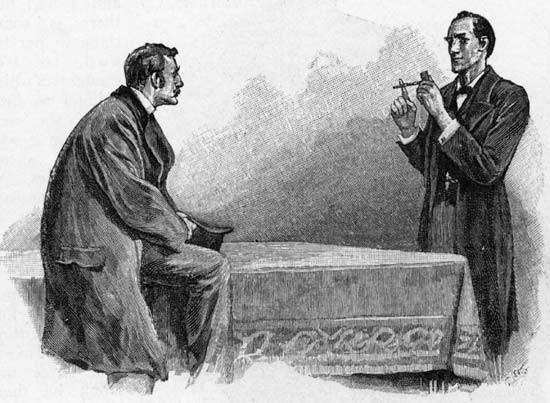
“Watson, I shall now relate the entire affair through Morse tapped pipe code and interpretative dance.”
While stoicism attracts criticism, understandably, because it doesn’t always consider the fundamentally human nature of humans, being prepared for the unforeseen is a vital part of any planning process. Self-regulation is not about drawing up a time table that allows you to fit in everything that you know about, it is about being able to handle your life and your work when things go wrong. Much as a car doesn’t need to be steered when it is going in a straight line and meeting our requirements, it is how we change direction when we know the road and when a kangaroo jumps out that are the true tests of our ability to manage our resources and ourselves.
Planning is not everything, as anyone who has read Helmuth von Moltke the Elder or von Clausewitz will know: “no plan survives contact with the enemy”. In this case, however, the enemy is not just those events that seek to confound us, it can be us as well! You can have the best plan in the world that relies upon you starting on Day X, and yet you don’t. You may have excellent reasons for this but, the fact remains, you have now introduced problems into your own process. You have met the enemy and it is you. This illustrates the critical importance of ensuring that we have an accurate assessment of our own philosophies – and we do have to be very honest.
There is no point in a student building an elaborate time management plan that relies upon them changing the habits of a lifetime in a week. But this puts the onus upon us as well: there is no point in us fabricating a set of expectations that a student cannot meet because they do not yet have a mature philosophy for understanding what is required. We don’t give up (of course!) but we must now think about how we can scaffold and encourage such change in a manageable way. I find reflection very handy, as I’ve said before, as watching students write things like “I planned for this but then I didn’t do it! WHY?” allows me to step in and discuss this at the point that the student realises that they have a problem.
I am not saying that a student who has a philosophy of “Maybe one day I will pass by accident” should be encouraged to maintain such lassitude, but we must be honest and realise that demanding that their timeliness and process maturity spring fully-formed from their foreheads is an act of conjuring reserved only for certain Greek Gods. (Even Caligula couldn’t manage it and he had far greater claim to this than most.) I like to think of this in terms of similarity of action. If anything I do is akin to walking up to someone and yelling “You should hand in on time, do better!” then I had better re-think my strategy.
The development of a personal philosophy, especially when you may not have ever been exposed to some of the great exemplars, is a fundamentally difficult task. You first need to understand that such a concept exists, then gain the vocabulary for discussing it, then interpret your current approach and see the value of change. Once you have performed all of those tasks, then we can start talking about getting from A to B. If you don’t know what I’m talking about or can’t understand why it’s important, or even discuss core concepts, then I’m yelling at you in the corridor and you’ll nod, compliantly, until I go away. Chances of you taking positive steps in the direction that I want? Very low. Probably, nil. And if it does happen, either it’s accidental or you didn’t actually need my help.
I try to be stoic but I must be honest and say that if Nero sentenced me to death, I’d nod, say “I expected that”, then put on some fast saxophone music and leg it up over the seven hills and far away. I don’t think I’d ever actually expect true stoicism from most of my students. but a simple incorporation of the fact that not everything works out as you think it will would be a definite improvement over the current everything will work out in my favour expectation that seems to be the hallmark of the more frequently disappointed and distressed among them. The trick is that I first have to make them realise that this is something that, with thought, they can not only fix but use to make a genuine, long-lasting and overwhelmingly positive change in their lives.

 Nick Falkner