
October Reflection: Planning for 2013
Posted: October 2, 2012 Filed under: Education | Tags: authenticity, blogging, cyberpunk, eat your own dog food, eating your own dog food, eating your own dogfood, education, educational problem, higher education, measurement, reflection, resources, teaching, teaching approaches, thinking, tools, universal principles of design, work/life balance, workload Leave a commentWhen I was younger, I used to play a science fiction role-playing game that was based in a near-ish future, where humans had widely adopted the use of electronic implants and computers were everywhere in a corporate-dominated world. The game was called “Cyberpunk 2013” and was heavily influenced by the work of William Gibson (“Neuromancer” and many other works), Bruce Sterling (“Mirrorshades” anthology and far too many to list), Walter Jon Williams (“Hardwired” among others) and many others who had written of a grim, depressing, and above all stylish near future. It was a product of the 80s and, much like other fashion crime of the time, some of the ideas that emerged were conceits rather than concepts, styles rather than structures. But, of course, back in the 1980s, setting it in 2013 made it far away and yet close enough. This was not a far future setting like Star Trek but it was just around the corner.

The game had some serious issues but was a great deal of fun. Don’t start me talking about it or we’ll be here all night.
And now it is here. My plans for the near future, the imminent and the inevitable, now include planning calendars for a year that was once a science fiction dream. In that dark dream, 2013 was a world of human/machine synthesis, of unfeeling and mercenary corporate control, of mindless pleasure and stylish control of a population that seeks to float as lotus eaters rather than continue to exist in the dirty and poor reality of their actual world.
Well, we haven’t yet got the cybernetics working… and, joking aside, the future is not perfect but it is far less gloomy and dramatic in the main that the authors envisioned. Yes, there are lots of places to fix but the majority of our culture is still working to the extent that it can be developed and bettered. The catastrophic failures and disasters of the world of 2013 has not yet occurred. We can’t relax, of course, and some things are looking bleak, but this is not the world of Night City.
In the middle of all of this musing on having caught up to the future that I envisioned as a boy, I am now faced with the mundane questions such as:
- What do I want to be doing in 2020 (the next Cyberpunk release was set in this year, incidentally)
- Therefore, what do I want to be doing in 2013 that will lead me towards 2020?
- What is the place of this blog in 2013?
I won’t bore you with the details of my career musings (if my boss is reading this, I’m planning to stay at work, okay?) but I had always planned that the beginning of October would be a good time to muse about the blog and work out what would happen once 2012 ended. I committed to writing the blog every day, focussed on learning and teaching to some extent, but it was always going to be for one year and then see what happened.
I encourage my students to reflect on what they’ve done but not in a ‘nostalgic’ manner (ah, what a great assignment) but in a way that the can identify what worked, what didn’t work and how they could improve. So let me once again trot out the dog food and the can opener and give it a try.
What has worked
I think my blog has been most successful when I’ve had a single point to make, I’ve covered it in depth and then I’ve ducked out. Presenting it with humour, humility, and an accurate assessment of the time that people have to read makes it better. I think some of my best blogs present information and then let people make up their own minds. The goal was always to present my thought processes, not harangue people.
What hasn’t worked
I’m very prone to being opinionated and, sometimes, I think I’ve blogged too much opinion and too little fact. I also think that there are tangents I’ve taken when I’ve become more editorial and I’m not sure that this is the blog for that. Any blog over about 1,100 words is probably too long for people to read and that’s why I strive to keep the blog at or under 1,000 words.
Having to blog every day has also been a real challenge. While it keeps a flow of information going, the requirement to come up with something every, single, day regardless of how I’m feeling or what is going on is always going to have an impact on quality. For example, I recently had a medical condition that required my doctor to prescribe some serious anti-inflammatory drugs and painkillers for weeks and this had a severe impact on me. I have spent the last 10 days shaking off the effects of these drugs that, among other effects, make me about half as fast at writing and reduce my ability to concentrate. The load of the blog on top of this has been pretty severe and I’m open about some of the mistakes that I’ve made during this time. Today is the first day that I feel pretty reasonable and, by my own standards, fit for fair, complex marking of large student submissions (which is my true gauge of my mental agility).
How to improve
Wow, good question. This is where the thinking process starts, not stops, after such an inventory. The assessment above indicates that I am mostly happy with what came out (and my readership/like figures indicate this as well) but that I really want to focus on quality over quantity and to give myself the ability to take a day off if I need to. But I should also be focused on solid, single issue, posts that address something useful and important in learning and teaching – and this requires more in-depth reading and work than I can often muster on a day-to-day basis.
In short, I’m looking to change my blog style for next year to a shorter and punchier version that gives more important depth, maintains an overall high standard, but allows me to get sick or put my feet up occasionally. What is the advice that I would give a student? Make a plan that includes space for the real world and that still allows you to do your best work. Content matters more than frequency, as long as you meet your real deadline. So, early notice for 2013, expect a little less regularity but a much more consistent output.
It’s a work in progress. More as I think of it.
Six ‘Easy’ Pieces? Richard Feynman and the Undergraduate Lectures
Posted: September 30, 2012 Filed under: Education | Tags: advocacy, community, curriculum, education, educational problem, educational research, feedback, feynman, Generation Why, higher education, in the student's head, measurement, reflection, teaching, teaching approaches, thinking, tools, universal principles of design Leave a commentRichard P. Feynman was a Nobel prize winning theoretical physicist, who made great contributions to physics and the popularity of physics through his books and lectures. Among many other useful activities he developed Feynman diagrams, which provided a useful pictorial abstraction of the rather complicated mathematical expressions that govern the behaviour of subatomic particles.

Trust me when I tell you that this is easier to understand than the expressions.
This is a great tool in many ways because it makes the difficult more easy to understand, the abstract able to be represented in a (closer to) concrete manner and, above all, humans like pictures. Feynman was very interested in teaching as well because he felt that students could offer inspiration and because teaching could be a diversion when the well of theoretical physics creativity was running dry. He was an opponent of rote learning and any approach to teaching that put the form before the function. He loved to explain and felt a strong duty to explain things clearly and correctly, with an emphasis on a key principle that if he couldn’t explain it at the freshman level, then it wasn’t yet understood fully.
In the 60’s Feynman was asked, by Caltech, to reinvigorate the teaching of undergraduates and, three years later, he produced the Feynman Lectures on Physics. I’ve read these before (I used to study Physics – I know, I seem so nice!) and so have many other people – it’s estimated that more than 3 million copies have been sold in various languages. I picked up a copy of the ‘cut-down’ version of the lectures “Six Easy Pieces”, recently re-published in Penguin (AU$ 9.95! Hooray for cheap books!)
Reading the 1989 Special Preface to the original lectures, re-printed in “Six Easy Pieces”, a strange fact emerges, which is that Feynman’s lectures did not necessarily succeed for their target audience, the undergraduates, but instead served to inspire the teachers. As Goodstein and Neugebauer noted, while the class started with 180 undergraduate students, many of the students dreaded the class and, over time, dropped out. While the class remained full, it was because of the increased occupation by faculty and graduate students.
In the original preface, by Feynman, he appears to have noticed that something was amiss because he reflects on the fact that he didn’t think it was a great success. One problem was that there was no feedback from the students to him to tell him how he was doing, whether they were keeping up. (Feynman provided very little outline and all of the homework assignments were created by other professors sitting in the class, furiously noting what had been covered and then creating the other work for recitation.) Feynman’s aim was to challenge and interest the best and brightest, he sought to not only direct the lecture at the smartest in the room but to present work so that even the most brilliant in the room would be unable to cover it all. Feynman’s preface contains terms such as ‘sufficiently clever’, which may seem fine to some but to me indicate clearly that he, an astoundingly smart and still empathic human being, had at least an inkling that something had gone wrong between his vision and what happened in the classroom.
At the end of the preface, Feynman reflects, in a rather melancholy tone, “I don’t think I did very well by the students”. He is concerned that, based on the way that the the students handled the questions in the examination, that the system is a failure. A colleague points out that maybe 12-24 students appeared to really get it but you don’t have to be a very good mathematician to release that 24/180 (a nudge over 13%) is not the best rate of transfer. As Feynman gloomily responds (quoting Gibbon):
“The power of instruction is seldom of much efficacy except in those happy dispositions where it is almost superfluous”
Feynman finishes, with his characteristic insight, that the direct individual relationship between student and teacher is paramount, where the student discusses things and works with, and discusses, ideas. That it is impossible to learn very much by sitting in a lecture. But he sees himself torn between what he sees as the right way to proceed and the number of students that we have to teach.
And, 49 years later, we, the inheritors of Sisyphus, are still trying to push that same rock up the same educational hill. Richard Feynman, a grand communicator and superlative thinker and scientist, tried his hardest to make the lecture work and even he couldn’t do it. He had mountains of support and he was unhappy with the result. He is clearly articulating all of the ideas for which we now have so much evidence and, yet, here we still are with 1000-person lectures and students who might be able to plug some numbers into formulas but don’t necessarily know what it means to think inside our discipline or discuss ideas in a meaningful dialogue.
From a personal perspective, Feynman’s Lectures on Physics are one the reasons why I gave up physics. I was struggling to see how it all fitted together and I went to seek help. (I was also a terrible student in those days but this was one of the rare occasions when I tried to improve.) One of my lecturers told me that I should read Feynman’s lectures and because it was designed for undergrads, if I couldn’t get that, I wouldn’t be able to catch up – basically, I didn’t have the Physics brain. I read it. I didn’t get it. I sorted the world into “physicists” and “non-physicists”, with me in the second group. (This is probably not a bad outcome for the physics community and, years later, while I can now happily read Feynman, it certainly doesn’t excite me as much as what I’m doing now.) I imagine that Feynman himself, while not lamenting me leaving the field, would probably be at least mildly perturbed at such a weaponisation of his work. From reading about him, his books and prefaces, I believe that he expected a lot of his students but he never actually wanted to be unpleasant about it. His own prefaces record his unease with the course he produced. He has no doubts about the physics and the aim – but his implementation was not what he wanted and not what he believed to be the best approach.
So, when someone questions your educational research supported ideas for improving learning and teaching, grab a copy of “Six Easy Pieces” and get them to read all of the preface material. Feynman himself regarded a lot of areas in educational research as cargo cult science, which applies as well to any poorly constructed scientific experimentation, but it is quite obvious that on at least some of the most important issues regarding knowledge transfer, he had a deep understanding and commitment to improvement, because of his direct experience with undergraduates and his ability to openly criticise himself in order to improve.
Our Obligations: Moral and Legal?
Posted: September 28, 2012 Filed under: Education | Tags: advocacy, authenticity, blogging, community, education, educational research, ethics, feedback, higher education, in the student's head, learning, principles of design, reflection, resources, student perspective, teaching, teaching approaches, thinking, tools, universal principles of design Leave a commentMark Guzdial raises an interesting point over at a BLOG@CACM article, namely that, if we don’t keep up to to date with contemporary practice in learning and teaching, can be considered unprofessional or even negligent or unethical? If we were surgeons who had not bothered to stay up to date then our patients, and certifying bodies, would be rightly upset. If we are teachers – then what?
The other issue Mark discusses is that of the legal requirement. The US has Title IX, which should extend the same participation rights to all genders for any education program or activity that attracts federal funding. If we do not construct activities that are inclusive (or we design activities that, by their nature, are exclusive) would we be liable under US law?
Mark’s final question is: If we know a better way to teach computing, are we professionally (and even legally) required to use it?
That is a spectacularly good question and, of course, it has no easy answer. Let me extend the idea of the surgeon by building on the doctors’ credo: primum non nocere (first, do no harm). Ultimately, it requires us to consider that all of our actions have outcomes and, in the case of medical intervention, we should be sure that we must always consider the harm that will be caused by this intervention.
Let us consider that there are two approaches that we could take in our pursuit of knowledge of learning and teaching: that of true scholarship of learning and teaching, and that of ignorance of new techniques of learning and teaching. (We’ll leave enthusiasm and ability to the side for the time being.) While this is falsely dichotomous, we can fix this by defining scholarship as starting at ‘knowing that other techniques exist and change might not kill you’, with everything else below that as ‘ignorance of new techniques’.
Now let us consider the impact of both of these bases, in terms of enthusiasm. If someone has any energy at all, then they will be able to apply techniques in the classroom. If they are more energetic then they will apply with more vigour and any effect will be amplified. If these are useful and evidentially supported techniques, then we would expect benefit. If these are folk pedagogies or traditions that have long been discredited then any vigour will be applied to an innately useless or destructive technique. In the case of an inert teacher, neither matters. It is obvious then that the minimum harm is to employ techniques that will reward vigour with sound outcomes: so we must either use validated techniques or explore new techniques that will work.
Now let us look at ability. If a teacher is ‘gifted’ (or profoundly experienced) then he or she will be more likely to carry the class, pretty much regardless. However, what if a teacher is not so much of a star? Then, in this case, we start to become dependent once again upon the strength of the underlying technique or pedagogy. Otherwise, we risk harming our students by applying bad technique because of insufficient ability to correct it. Again, do no harm requires us to provide techniques that will survive the average or worse-than-average teacher, which requires a consideration of load, development level, reliance upon authority and so on – for student and teacher.
I believe that this argues that, yes, we are professionally bound to confirm our techniques and approaches and, if a better approach is available, evaluate it and adopt it. To do anything else risks doing harm and we cannot do this and remain professional. We are intervening with our students all the time – if we didn’t feel that our approach had worth or would change lives then we wouldn’t be doing it. If intervention and guidance are at our core then we must adopt something like the first, do no harm maxim because it gives us a clear signpost on decisions that could affect a student for life.
One of the greatest problems we face is potentially those people who are highly enthused and deeply undereducated in key areas of modern developments of teaching. As Kurt von Hammerstein-Equord would have said:
One must beware of anyone who is [undereducated] and [very enthusiastic] — [s/he] must not be entrusted with any responsibility because [s/he] will always cause only mischief.
If your best volunteer is also your worst nightmare, how do you resolve this when doing so requires you to say “This is right but you are wrong.” Can you do so without causing enormous problems that may swamp the benefit of doing so?
What about the legal issues? Do we risk heading into the murky world of compliance if we add a legal layer – will an ethical argument be enough?
What do you think about it?
The Philosophical Angle
Posted: September 21, 2012 Filed under: Education | Tags: advocacy, community, curriculum, education, educational problem, educational research, ethics, feedback, Generation Why, higher education, identity, in the student's head, learning, philosophy, reflection, resources, seneca, socrates, stoicism, student perspective, teaching, teaching approaches, thinking, universal principles of design Leave a commentSocrates drank hemlock after being found guilty of corrupting the minds of the youth of Athens, and impiety. Seneca submitted to the whims of Nero when the Emperor, inevitably, required that his old tutor die. Seneca’s stoicism was truly tested in this, given that he slashed his veins, took poison, jumped in a warm bath and finally had to be steamed to death before Nero’s edict that he kill himself was finally enacted. I, fortunately, expect no such demonstrations of stoic fortitude from my students but, if we are to think about their behaviour and development as self-regulating beings, then I think that a discussion of their personal philosophy becomes unavoidable. We have talked about the development state, their response to authority, their thoughts on their own thinking, but what of their philosophy?
If you are in a hurry and jump in your car, every red light between you and your destination risks becoming a personal affront, an enraging event that defies your expectation of an ‘all-green’ ride into town. There is no reason why you should expect such favours from the Universe, whatever your belief system, but the fact that this is infuriating to you remains. In the case of the unexpected traffic light, which sounds like the worst Sherlock Holmes story ever, the worst outcome is that you will be late, which may have a variety of repercussions. In preparing assignment work, however, a student may end up failing with far more dire and predictable results.
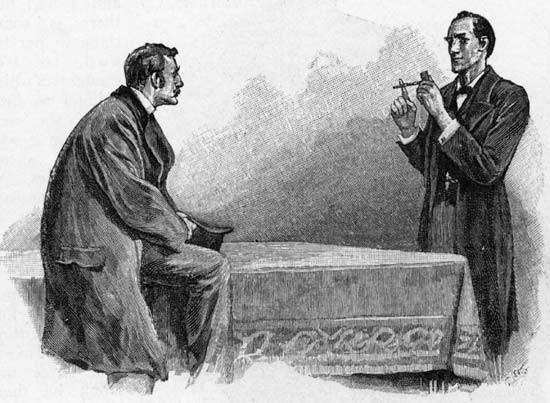
“Watson, I shall now relate the entire affair through Morse tapped pipe code and interpretative dance.”
While stoicism attracts criticism, understandably, because it doesn’t always consider the fundamentally human nature of humans, being prepared for the unforeseen is a vital part of any planning process. Self-regulation is not about drawing up a time table that allows you to fit in everything that you know about, it is about being able to handle your life and your work when things go wrong. Much as a car doesn’t need to be steered when it is going in a straight line and meeting our requirements, it is how we change direction when we know the road and when a kangaroo jumps out that are the true tests of our ability to manage our resources and ourselves.
Planning is not everything, as anyone who has read Helmuth von Moltke the Elder or von Clausewitz will know: “no plan survives contact with the enemy”. In this case, however, the enemy is not just those events that seek to confound us, it can be us as well! You can have the best plan in the world that relies upon you starting on Day X, and yet you don’t. You may have excellent reasons for this but, the fact remains, you have now introduced problems into your own process. You have met the enemy and it is you. This illustrates the critical importance of ensuring that we have an accurate assessment of our own philosophies – and we do have to be very honest.
There is no point in a student building an elaborate time management plan that relies upon them changing the habits of a lifetime in a week. But this puts the onus upon us as well: there is no point in us fabricating a set of expectations that a student cannot meet because they do not yet have a mature philosophy for understanding what is required. We don’t give up (of course!) but we must now think about how we can scaffold and encourage such change in a manageable way. I find reflection very handy, as I’ve said before, as watching students write things like “I planned for this but then I didn’t do it! WHY?” allows me to step in and discuss this at the point that the student realises that they have a problem.
I am not saying that a student who has a philosophy of “Maybe one day I will pass by accident” should be encouraged to maintain such lassitude, but we must be honest and realise that demanding that their timeliness and process maturity spring fully-formed from their foreheads is an act of conjuring reserved only for certain Greek Gods. (Even Caligula couldn’t manage it and he had far greater claim to this than most.) I like to think of this in terms of similarity of action. If anything I do is akin to walking up to someone and yelling “You should hand in on time, do better!” then I had better re-think my strategy.
The development of a personal philosophy, especially when you may not have ever been exposed to some of the great exemplars, is a fundamentally difficult task. You first need to understand that such a concept exists, then gain the vocabulary for discussing it, then interpret your current approach and see the value of change. Once you have performed all of those tasks, then we can start talking about getting from A to B. If you don’t know what I’m talking about or can’t understand why it’s important, or even discuss core concepts, then I’m yelling at you in the corridor and you’ll nod, compliantly, until I go away. Chances of you taking positive steps in the direction that I want? Very low. Probably, nil. And if it does happen, either it’s accidental or you didn’t actually need my help.
I try to be stoic but I must be honest and say that if Nero sentenced me to death, I’d nod, say “I expected that”, then put on some fast saxophone music and leg it up over the seven hills and far away. I don’t think I’d ever actually expect true stoicism from most of my students. but a simple incorporation of the fact that not everything works out as you think it will would be a definite improvement over the current everything will work out in my favour expectation that seems to be the hallmark of the more frequently disappointed and distressed among them. The trick is that I first have to make them realise that this is something that, with thought, they can not only fix but use to make a genuine, long-lasting and overwhelmingly positive change in their lives.
Surely, I can’t believe that I would have thought…
Posted: September 20, 2012 Filed under: Education | Tags: authenticity, collaboration, curriculum, education, educational problem, educational research, feedback, Generation Why, higher education, in the student's head, student perspective, teaching, teaching approaches, universal principles of design Leave a commentAnyone with students has become used to what I shall (extremely loosely) refer to as the argument of lazy denial, where a student uses one of the following in a sentence, when discussing a technical issue:
- Surely…
- I can’t believe…
- I would have thought…
Now, used rhetorically, where you place a deliberately short-term doubt in someone’s mind and then follow it up with the facts, there is no real problem with most of these. My problem is when a student uses this in order to dismiss an idea, based on an isolated opinion or a very limited understanding of the issues. As I joked recently on someone’s Facebook, I’ve told my students that starting any technical discussion question with “Surely…” is an indication that further research has to take place.
Yes, yes, I’m making a point and enough of my students know about it to occasionally rib me with its deliberate usage but this just emphasises that they’re thinking about things. It’s very easy to infer a comfortable denial to a situation based on limited experience. This could be covered as being a hasty generalisation, jumping to conclusions, appeal to incredulity or wishful thinking, but it’s really an excuse to express disbelief without having to provide any evidence other than “Nahhhh.” And, ultimately, because very little work is being done here, I’m just going to call it lazy denial.
My intention is not, of course, to stop people speaking naturally but it’s to help my students think about framing an argument, which requires knowing enough about the area to be able to construct, and respond to, an argument. Research usually consists of knowing enough to know what you don’t know, which can usually be explained far more succinctly than saying “Surely, someone would have carried out action <x>”. There are legitimate ways to express this sentiment, after you’ve done the reading. “I’ve looked through all of the literature I can find and it appears that no-one appears to have tried <x>.”
(Regrettably, as in all things scientific, not finding something doesn’t prove its non-existence. As exhaustive literature searches are becoming harder and harder with the growth of the data corpus, we have to be very circumspect about how we make statements such as “no-one has done this” because it is more than a little embarrassing when someone stands up at the end of your talk and says “Urm, we did”.)
Once we’ve gone looking and discussed the area, we’re all looking at the same problem in the same way. Rather than making sweeping statements that are, to be honest, often a little condescending because you’re speaking as if your opinion is so blindingly obvious that it must have been tried, we can really appreciate the discovery of a hole in the recorded knowledge: a place where we can make a contribution.
This is not to say that everything is this formal and there have been many fine semi-research discussions carried out that have used these terms but, when we’re sitting around trying to work towards a solution or my students are trying to work out their research direction, this starts to become important.
I suppose this reveals more about me than it does about my students…
More on Computer Science Education as a fundamentally challenging topic.
Posted: September 18, 2012 Filed under: Education | Tags: advocacy, authenticity, blogging, community, curriculum, education, educational problem, educational research, ethics, feedback, higher education, reflection, teaching, teaching approaches, thinking, threshold concepts, universal principles of design, vygotsky, workload Leave a comment“Homo sum, humani a me nihil alienum puto (I am a [human], nothing human is foreign to me)” , Terence, 163BC
While this is a majestic sentiment, we are constantly confronted by how many foreign ideas and concepts there are in our lives. In the educational field, Meyer and Land have identified threshold concepts as a set of concepts that are transformative once understood but troublesome and alien before they are comprehended. The existence of these, often counter-intuitive, concepts give the lie to Terence’s quote as it appears that certain concepts will be extremely foreign and hard to communicate or comprehend until we understand them. (I’ve discussed this before in my write-up of the ICER Keynote.)

“Terry” to his friends.
Reading across the fields of education, educational psychology and Computer Science education research, it rapidly becomes apparent that some ideas have been described repeatedly over decades, but have gained little traction. Dewey’s disgust at the prison-like school classroom was recorded in 1938, yet you can walk onto any campus in the world and find the same “cells”, arrayed in ranks. The lecture is still the dominant communication form in many institutions, despite research support for the far greater efficacy of different approaches. For example, the benefits of social constructivism, including the zone of proximal development, are well known and extensively studied, yet even where group work is employed, it is not necessarily designed or facilitated to provide the most effective outcomes. The majority of course design and implementation shows little influence of any of the research conducted in the last 20 years, let alone the cognitive development stages of Piaget, the reliance upon authority found in Perry or even the existence of threshold concepts themselves. Why?
From a personal perspective, I was almost completely ignorant of the theoretical underpinnings of educational practice until very recently and I still rate myself as a rank novice in the area. I write here to be informed, not to be seen as an expert, and I learn from thinking and writing about what I’m doing. I am also now heavily involved in a research group that focuses on this so I have the peer support and time to start learning in the fascinating area of Computer Science Education. Many people, however, do not, and it is easy to see why one would not confront or even question the orthodoxy when one is unaware of any other truth.
Of course, as we all know, it is far harder to see that anything needs fixing when, instead of considering that our approach may be wrong, we identify our students as the weak link in the chain. It’s easy to do and, because we are often not scrupulously scientific in our recollection of events (because we are human), our anecdotal evidence dominates our experience. “Good” students pass, “bad” students fail. If we then define a bad student as “someone who fails”, we have a neat (if circular) definition that shields us from any thoughts on changing what we do.
When I found out how much I had to learn, I initially felt very guilty about some of the crimes that I had perpetrated against my students in my ignorance. I had bribed them with marks, punished them for minor transgressions with no real basis, talked at them for 50 minutes and assumed that any who did not recall my words just weren’t paying attention. At the same time, I carried out my own tasks with no bribery, negotiated my own deadlines and conditions, and checked my mail whenever possible in any meetings in which I felt bored. The realisation that, even through ignorance and human frailty, you have let your students down is not a good feeling, especially when you realise that you have been a hypocrite.
I lament the active procrastinator, who does everything except the right work and thus fails anyway with a confused look on their face, and I feel a great sympathy for the caring educator who, through lack of exposure or training, has no idea that what they are doing is not the best thing for their students. This is especially true when the educators have been heavily acculturated by their elders and superiors, at a vulnerable developmental time, and now not only have to question their orthodoxy, they must challenge their mentors and friends.
Scholarship in Computer Science learning and teaching illuminates one’s teaching practice. Discovering tools, theories and methodologies that can explain the actions of our students is of great importance to the lecturer and transforms the way that one thinks about learning and teaching. But transformative and highly illuminative mechanisms often come at a substantial cost in terms of the learning curve and we believe that this explains why there is a great deal of resistance from those members of the community who have not yet embraced the scholarship of learning and teaching. Combine this with a culture where you may be telling esteemed and valued colleagues that they have been practising poorly for decades and the resistance becomes even more understandable. We must address the fact that resistance to acceptance in the field may stem from effects that we would carefully address in our students (their ongoing problems with threshold concepts) but that we expect our colleagues to just accept these alien, challenging and unsettling ideas merely because we are right.
The burden of proof does not, I believe, lie with us. We have 70 years of studies in education and over 100 years of study in work practices to establish the rightness of our view. However, I wonder how we can approach our colleagues who continue to question these strange, counter-inutitive and frightening new ideas and help them to understand and eventually adopt these new concepts?
ICER 2012 Day 3 Research Paper Session 5
Posted: September 15, 2012 Filed under: Education | Tags: advocacy, authenticity, community, education, educational research, ethics, Generation Why, higher education, icer, icer 2012, icer2012, in the student's head, learning, negative perceptions, teaching, teaching approaches, tools, universal principles of design Leave a commentThe last of the research paper sessions and, dear reader, I am sure that you are as glad as I that we are here. Reading about an interesting conference that you didn’t attend is a bit like receiving a message from a friend talking about how he kissed the person that you always loved from afar. Thanks for the information but I would rather have been there myself.
This session opened with “Toward a Validated Computing Attitudes Survey” (Allison Elliott Tew, Brian Dorn and Oliver Schneider), where the problems with negative perceptions of the field and hostile classroom environments, combined with people thinking that they would be no good at CS, conspire to prevent students coming in to, or selecting, our discipline. The Computing Attitudes Survey was built, with major modification, from the Colorado Learning Attitudes about Science Survey (CLASS, pronounced C-LASS). To adapt the original survey, some material was just copied across with a word change (computer science replacing physics), some terminology was changed (algorithm for formula) and some discipline specific statements were added. Having established an expert opinion basis for the discipline specific content, students can now see how much they agree with the experts.
There is, as always, the rip of contentious issues. “You have to know maths to be able to program” was a three-way split within the expert group as to who agreed, disagreed or was neutral. What was interesting, and what I’ll be looking at in future, is the evidence of self-defeating thought in many answers (no, not questions. The questions weren’t self-defeatist but the answers often were.) What was also interesting is that attitudes seem to get worse in the CLASS instrument after you take the course!
Confidence, as simple as “I think I can do this”, plays a fundamental part in determining how students will act. Given the incredibly difficult decisions that a student faces when selecting their degree or concentration, it is no surprise that anyone who thinks “Computing is too hard for me” or “Computing is no use to me” will choose to do something else.
The authors are looking for volunteers where they can run these trials again so, after you’ve read their paper, if you’re interested, you should probably e-mail them.
“A Statewide Survey on Computing Education Pathways and Influences: Factors in Broadening Participation in Computing” (Mark Guzdial, Barbara Ericson, Tom McKlin and Shelly Engelman)
The final research paper in the conference dealt with the final evaluation of the Georgia Computes! initiative, which had run from October 2006 to August of this year. This multi-year project cannot be contained in my nervous babbling but I can talk about the instrument that was presented. Having run summer camps, weekend workshops, competitions, teacher workshops, a teachers’ lending library, first year engagement and seeded first-year summer camps (whew!), the question was: What had been the impact of Georgia Computes! ? What factors influence undergrad enrolment into intro CS courses?
There were many questions and results presented but I’d like to focus on the top four reasons given, from survey, as to why students weren’t going to undertake a CS Major or Minor:
- I don’t want to do the type of work
- Little interest in the subject matter
- Don’t enjoy Computing Courses
- Don’t have confidence that I would succeed.
Looking at those points, after a state-wide and highly successful campaign over 6 years has finished, it is very, very sobering for me. What these students are saying is that they cannot see the field as attractive, interesting, enjoyable or that they are capable. But these are all aspects that we can work on, although some of these will require a lot of work.
Two further things that Barb said really struck me. Firstly, that if you take into account encouragement and ability, that men will tend to be satisfied and continue on if they receive either or both – the factors are not separable for men – but that women and minorities need encouragement in order to feel satisfied and to convince them to keep going. Secondly, when it comes to giving encouragement, male professors are just as effective as female professors in terms of giving encouragement to women.
As a male lecturer, who is very, very clearly aware of the demographic disgrace that is the under-representation of women in CS, this first fact gives me a partial strategy to increase retention (and reinforces a believe I have held anecdotally for some time) but the second fact gives me the agency to assist in this process, as well as greater hope for a steadily increasing female cohort over time.
Overall, a very positive note on which to finish the session papers!
ICER 2012 Day 2 Research Session 3
Posted: September 15, 2012 Filed under: Education | Tags: collaboration, community, education, educational problem, educational research, feedback, higher education, icer, icer 2012, icer2012, in the student's head, shotgun debugging, teaching, teaching approaches, tools, universal principles of design Leave a commentThe session kicked off with “The Abstraction Transition Taxonomy: Developing Desired Learning Outcomes through the Lens of Situated Cognition”, (Quintin Cutts (presenting), Sarah Esper, Marlena Fecho, Stephen Foster and Beth Simon) and the initial question: “Do our learning outcomes for programming classes match what we actually do as computational thinkers and programmers?” To answer this question, we looked Eric Mazur’s Peer Instruction, an analysis of PU questions as applied to a CS principles pilot course, and then applied the Abstraction Transition Taxonomy (ATT) to published exams, with a wrap of observations and ‘where to from here’.
Physicists have, some time ago, noticed that their students can plug numbers into equations (turn the handle, so to speak) but couldn’t necessarily demonstrate that they understood things: they couldn’t demonstrate that that they thought as physicists should. (The Force Concept Inventory was mentioned here and, if you’re not familiar, it’s a very interesting thing to look up.) To try and get students who thought as physicists, Mazur developed Peer Instruction (PI), which had pre-class prep work, in-class questions, followed by voting, discussion and re-voting, with an instructor leading class-wide discussion. These activities prime the students to engage with the correct explanations – that is, the way that physicists think about and explain problems.
Looking at Computer Science, many CS people use the delivery of a working program as a measure of the correct understanding and appropriate use of programming techniques.
Given that generating a program is no guarantee of understanding, which is sad but true given the existence of the internet, other students and books. We could try and force a situation where students are isolated from these support factors but this then leads us back to permutation programming, voodoo code and shotgun debugging unless the students actually understand the task and how to solve it using our tools. In other words, unless they think as Computer Scientists.
UCSD had a CS Principles Pilot course that used programming to foster computational thinking that was aimed at acculturation into the CS ‘way’ rather than trying to create programmers. The full PI implementation asked students to reason about their programs, through exploratory homework and a PI classroom, with some limited time traditional labs as well. While this showed a very positive response, the fear was that this may have been an effect of the lecturers themselves so analysis was required!
By analysing the PI questions, a taxonomy was developed that identified abstraction levels and the programming concepts within them. The abstraction levels were “English”, “Computer Science Speak” and “Code”. The taxonomy was extended with the transitions between these levels (turning an English question into code for example is a 1-3 transition, if English is abstraction level 1 and Code 3. Similarly, explain this code in English is 3-1). Finally, they considered mechanism (how does something work) and rationale (why did we do it this way)?
Analysing the assignment and assessment questions to determine what was being asked, in terms of abstraction level and transitions, and whether it was mechanism or rationale, revealed that 21% of the in-class multiple choice questions were ‘Why?’ questions but there actually very few ‘Why?’ questions in the exam. Unsurprisingly, almost every question asked in the PI framework is a ‘Why?’ question, so there should be room for improvement in the corresponding examinations. PI emphasises the culture of the discipline through the ‘Why?’ framing because it requires acculturation and contextualisation to get yourself into the mental space where a Rationale becomes logical.
The next paper “Subgoal-Labeled Instructional Material Improves Performance and Transfer in Learning to Develop Mobile Applications”, Lauren Margulieux, Mark Guzdial and Richard Catrambone, dealt with mental models and how the cognitive representation of an action will affect both the problem state and how well we make predictions. Students have so much to think about – how do they choose?
The problem with just waiting for a student to figure it out is high cognitive load, which I’ve referred to before as helmet fire. If students become overwhelmed they learn nothing, so we can explicitly tell students and/or provide worked examples. If we clearly label the subgoals in a worked example, students remember the subgoals and the transition from one to another. The example given here was an Android App Inventor worked example, one example of which had no labels, the other of which had subgoal labels added as overlay callouts to the movie as the only alteration. The subgoal points were identified by task analysis – so this was a very precise attempt to get students to identify the important steps required to understand and complete the task.
(As an aside, I found this discussion very useful. It’s a bit like telling a student that they need comments and so every line has things like “x=3; //x is set to 3” whereas this structured and deliberate approach to subgoal definition shows students the key steps.)
In the first experiment that was run, the students with the subgoals (and recall that this was the ONLY difference in the material) had attempted more, achieved more and done it in less time. A week later, they still got things right more often. In the second experiment, a talk-aloud experiment, the students with the subgoals discussed the subgoals more, tried random solution strategies less and wasted less effort than the other group. This is an interesting point. App Inventor allows you to manipulate blocks of code and the subgoal group were less likely to drag out a useless block to solve the problem. The question, of course, is why. Was it the video? Was it the written aspects? Was it both?
Students appear to be remembering and using the subgoals and, as was presented, if performance is improving, perhaps the exact detail of why it’s happening is something that we wish to pursue but, in the short term, we can still use the approach. However, we do have to be careful with how many labels we use as overloading visual cues can lead to confusion, thwarting any benefit.
The final paper in the session was “Using collaboration to overcome disparities in Java experience”, Colleen Lewis (presenting), Nathaniel Titterton and Michael Clancy. This presented the transformation of a a standard 3 Lecture, 2 hours of lab and 1 discussion hour course into a 1 x 1 hour lecture with 2 x 3 hour labs, with the labs now holding the core of the pedagogy. Students are provided feedback through targeted tutoring, using on-line multiple choices for the students to give feedback and assist the TAs. Pair programming gives you someone to talk to before you talk to the TA but the TA can monitor the MCQ space and see if everyone is having a problem with a particular problem.
This was addressing a problem in a dual speed entry course, where some students had AP CS and some didn’t, therefore the second year course was either a review for those students who had Java (from AP CS) or was brand new. Collaboration and targeted support was aimed at reducing the differences between the cohorts and eliminate disadvantage.
Now, the paper has a lot of detail on the different cohorts, by intake, by gender, by retention pattern, but the upshot is that the introduction of the new program reduced the differences between those students who did and did not have previous Java experience. In other words, whether you started at UCB in CS 1 (with no AP CS) or CS 1.5 (with AP CS), the gap between your cohorts shrank – which is an excellent result. Once this high level of collaboration was introduced, the only factor that retained any significant difference was the first exam, but this effect disappeared throughout the course as students received more exposure to collaboration.
I strongly recommend reading all three of these papers!
The Narrative Hunger: Stories That Meet a Need
Posted: September 15, 2012 Filed under: Education | Tags: authenticity, collaboration, community, curriculum, design, education, educational research, feedback, Generation Why, higher education, in the student's head, learning, principles of design, resources, student perspective, teaching, teaching approaches, tools, universal principles of design Leave a commentI have been involved in on-line communities for over 20 years now and, apparently, people are rarely surprised when they meet me. “Oh, you talk just like you type.” is the effective statement and I’m quite happy with this. While some people adopt completely different personae on-line, for a range of reasons, I seem to be the same. It then comes as little surprise that I am as much of storyteller in person as I am online. I love facts, revel in truth, but I greatly enjoying putting them together into a narrative that conveys the information in a way that is neither dry nor dull. (This is not to say that the absence of a story guarantees that things must be dry and dull but, without a focus on those elements of narrative that appeal to common human experience, we always risk this outcome.)
One of Katrina’s recent posts referred to the use of story telling in education. As she says, this can be contentious because:
stories can be used to entertain students, to have them enjoy your lectures, but are not necessarily educational.
The shibboleth of questionable educational research is often a vaguely assembled study, supported by the conjecture that the “students loved it”, and it is very easy to see how story telling could fall into this. However, we as humans are fascinated by stories. We understand the common forms even where we have not read Greek drama or “The Hero With a Thousand Faces”. We know when stories ring true and when they fall flat. Searching the mental engines of our species for the sweet spots that resonate across all of us is one way to convey knowledge in a more effective and memorable way. Starting from this focus, we must then observe our due diligence in making sure that our story framework contains a worthy payload.

Not all stories are of the same value.
I love story telling and I try to weave together a narrative in most of my lectures, even down to leaving in sections where deliberate and tangential diversion becomes part of the teaching, to allow me to contrast a point or illuminate it further by stripping it of its formal context and placing it elsewhere. After all, an elephant next to elephants is hardly memorable but an elephant in a green suit, as King of a country, tends to stick in the mind.
The power of the narrative is that it involves the reader or listener in the story. A well-constructed narrative leads the reader to wonder about what is going to happen next and this is model formation. Very few of us read in a way where the story unfolds with us completely distant from it – in fact, maintaining distance from a story is a sign of a poor narrative. When the right story is told, or the right person is telling it, you are on the edge of your seat, hungry to know more. When it is told poorly, then you stifle a yawn and smile politely, discreetly peering at your watch as you attempt to work out the time at which you can escape.
Of course, this highlights the value of narrative for us in teaching but it also reinforces that requirement that it be more than an assemblage of rambling anecdotes, it must be a constructed narration that weaves through points in a recognisable way and giving us the ability to conjecture on its direction. O. Henry endings, the classic twist endings, make no sense unless you have constructed a mental model that can be shaken by the revelations of the last paragraphs. Harry Potter book 7 makes even less sense unless one has a model of the world in which the events of the book can be situated.
As always, this stresses the importance of educational design, where each story, each fact, each activity, is woven into the greater whole with a defined purpose and in full knowledge of how it will be used. There is nothing more distracting than someone who rambles during a lecture about things that not only seem irrelevant, but are irrelevant. Whereas a musing on something that, on first glance, appears irrelevant can lead to exploration of the narrative by students. Suddenly, they are within a Choose Your Own Adventure book and trying to work out where each step will take them.
Stories are an excellent way to link knowledge and problems. They excite, engage and educate, when used correctly. We are all hungry for stories: we are players within our own stories, observers of those of the people around us and, eventually, will form part of the greater narrative by the deeds for which we are written up in the records to come. It makes sense to use this deep and very human aspect of our intellect to try and assist with the transfer of knowledge.
ICER 2012 Day 1: Discussion Papers Session 1
Posted: September 11, 2012 Filed under: Education | Tags: blogging, community, education, educational research, higher education, icer, icer2012, measurement, principles of design, student perspective, teaching approaches, tools, universal principles of design Leave a commentICER contains a variety of sessions: research papers, discussion papers, lightning talks and elevator pitches. The discussion papers allow people to present ideas and early work in order to get the feedback of the community. This is a very vocal community so opening yourself up to discussion is going to be a bit like drinking from the firehouse: sometimes you quench your thirst for knowledge and sometimes you’re being water-cannonned.
Web-scale Data Gathering with BlueJ
Ian Utting, Neil Brown, Michael Kölling, Davin McCall and Philip Stevens
BlueJ is a very long-lived and widely used Java programming environment with a development environment designed to assist with the learning and teaching of object-oriented programming, as well as Java. The BlueJ project is now adding automated instrumentation to every single BlueJ installation and students can opt-in to a data reporting mechanism that will allow the collection and formation of a giant data repository: Project Blackbox. (As a note, that’s a bit of a super villain name, guys.)
Evaluating an Early Software Engineering Course with Projects and Tools from Open Source Software
Robert McCartney, Swapna Gokhale and Therese Smith
We tend to give Software Engineering students a project that requires them to undertake design and then, as a group, produce a large software artefact from scratch. In this talk, Robert discussed using existing projects that use a range of skills that are directly relevant to one of the most common activities our students will carray out in industry: maintenance and evolution.
Under a model of developing new features in an open-source system, the instructors provide a pre-selected set of projects and then the 2 person team:
- picks a project
- learns to comprehend code
- proposes enhancements
- describes and documents
- implements and presents
A Case Study of Environmental Factors Influencing Teaching Assistant Job Satisfaction
Elizabeth Patitsas
Elizabeth presented some interesting work on the impact of lecture theatres on what our TAs do. If the layout is hard to work with then, unsurprisingly, the TAs are less inclined to walk around and more inclined to disengage, sitting down the front checking e-mail. When we say ‘less inclined’, we mean that in closed lab layouts TAs spend 40% of the their time interacting with students, versus 76% in an open layout. However, these effects are also seen in windowless spaces: make a space unpleasant and you reduce the time that people spend answering questions and engaging.
The value of a pair of TAs was stressed: a pair gives you a backup but doesn’t lead to decision problems when coming to consensus. However, the importance of training was also stressed, as already clearly identified in the literature.
Education and Research: Evidence of a Dual Life
Joe Mirõ Julia, David López and Ricardo Alberich

 Nick Falkner