
Seriously? Victimising Other Students is Not Letting Your Hair Down
Posted: November 10, 2012 Filed under: Education, Opinion | Tags: advocacy, authenticity, blogging, community, education, ethics, Generation Why, higher education, in the student's head, reflection, resources, student perspective, teaching, thinking 3 CommentsThe Sun-Herald newspaper has a column called “The Loaded Dog” that allows readers to explore the controversial (‘explosive’) issues of the week. Given that scandal that is still ongoing involving St John’s college, this is their question:
Does the university college system need a complete overhaul or should young people be allowed to be let their hair down in peace?
For the love of all that is good and educational, could there be a more disingenuous framing of a serious incident that has had and continues to have a major impact on young people? This is an ugly and false dichotomy that is yet more of the nonsensical victim blaming that is often used by bullies and their supporters. “Can’t you take a joke?” “I didn’t mean anything by it.” “You’ve got no sense of humour (,love)” “They’re just letting off steam.” and, my favourite piece of rank and festering non-contribution to any discussion that involves the male gender acting atrociously:
“Boys will be boys.”
No, rapists will be rapists. Thugs will be thugs. Bullies need victims but, of course, many people who are bullies don’t like to be called bullies and, especially when their own glittering futures may be at stake, they most certainly don’t want it recorded anywhere that their actions may be down to anything other than “they were asking for it” or, perhaps, “we’ve always done it this way.” Don’t say “Boys will be boys” to excuse the bad behaviour of yourself, your friends or your relatives. It’s a lie that we need to leave behind.
There is nothing about what happened at St John’s College that was even vaguely on the scale of “letting one’s hair down”. If an individual student drank too much and threw up on a tram – eh. It’s not attractive but that’s a dumb thing people do. If two students are caught having consensual sex on the statue of the (insert statue’s name here), well I hope that they practised safe sex, but that’s pretty much their business when they’re of age.
When over 30 students stand around kneeling people and coerce them into drinking something that is deliberately disgusting, to punish them, we are seeing abuse. When furniture is burned on campus, it is a message of defiant and repellant strength – tyranny signalled by flaming Ikea. This is about the victimisation of the weak. People do not “let their hair down” by organising gang rape or the Jonestown massacre. “Letting your hair down” is about you, not how you abuse other people.
Let’s not forget that the victims, like most abused, are more likely to inflict the same thing on the people that they gain control over. For the rest of their lives. This is never what we want for our children, our students or our citizens. Let’s be honest about violence, intimidation and thuggery. Let’s stop blaming the victims. ‘Let their hair down in peace?’ – for shame, Kate Cox, to put your name to such weasel words. Let me rewrite the sentence for you:
“Does the university college system need a complete overhaul or are the actions allegedly carried out at St John’s College an acceptable and expected part of University Life?”
I cannot quite believe how much writing I’ve managed to do on something that should have been a complete no-brainer. Students were identified as taking part in a heinous act, part of a series, that nearly killed someone. Why are we still talking about this in terms other than “the matter has been addressed, the victims are safe and we have changed the situation so that this cannot happen again.” I’ve got to the stage where I’ve realised that claiming that you can’t make punishments stick because you can’t identify the ringleader is very, very weak beer as an argument.
You lead when you step up and take control of a situation. If you hang back when something bad is happening and you could have acted to stop it, or withdrawn your participation, then you are complicit. If you were bullied or coerced into doing something then I have sympathy for you (obviously, or my anti-bullying stance makes no sense) but the students who have continued the acts of vandalism and anti-social behaviour at St John’s, and are proudly wearing t-shirts celebrating their acts, are either some of the most effectively brainwashed people on the planet or they are active participants.
The Vice Chancellor the University associated with St John’s has already taken the slightly unprecedented step of contacting all of the students to reassure them and ask if any of them need help. Well, that’s nice and obviously well worth while but how could a College so closely associated with the University have been allowed to get to the point of this year’s activities in the first place? If I genuinely thought a student was at risk, you’d have a difficult time shutting me up. My academic freedom comes with a cost, that it must be exercised in the interests of my students, my colleagues and the truth. Let’s hope that this is the last that I have to write on this except for solid positive developments in the near future.
Traditions, Bad Behaviour and A Reasonable Expectation.
Posted: November 6, 2012 Filed under: Education, Opinion | Tags: advocacy, authenticity, cardinal george pell, community, education, ethics, Generation Why, higher education, in the student's head, roman catholic archbishop, student perspective, teaching, teaching approaches, thinking 1 Comment(Note: this is an evoking situation and I am heavily dependent upon the press for information. This story may evolve rapidly and I will update my posts as matters change.)
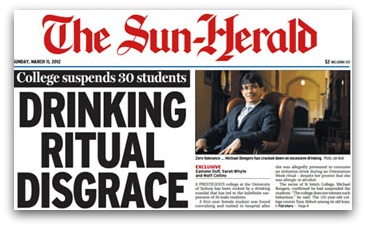
A subtly phrased headline from the Sun-Herald.
There is a lot of discussion in the New South Wales press regarding the behaviour of some students at St John’s College, a residential College within the University of Sydney. A tradition for ‘hazing’ now appears to have deteriorated to a culture of bastardisation that has led to some unpleasant incidents, including the hospitalisation of a young woman who was coerced into drinking a concoction of materials that were either not for human consumption or beyond the point of consumption. When disciplinary actions were applied by the new Rector, the actions of a group of old scholars and the parents of the students rapidly overturned the majority of punishments and the ‘guilty’ students reacted as one might expect. Freed of the outcomes of their actions, matters have deteriorated to the point that the Roman Catholic Archbishop of Sydney, Cardinal George Pell (who holds an official role to the College as its Visitor), has stated that the loutish behaviour must stop or he may involve the police. That word beloved of the more excitable print media, ‘anarchy’, is being thrown around in a non-complimentary manner.
Do I have the guaranteed and final truth of all of this? No. All of this should be read in the context of an ongoing investigation where the final statements on what did and did not happen will take some time to uncover. Regrettably, comment from old Johnsmen who control parts of the College does not really inspire much confidence, with statements along the lines of ”Some of the fellows feel that certain traditions are to be protected and that protection means the rector must go.”
When the traditions involve 30+ people from higher years standing around a kneeling young woman, ‘encouraging’ her to drink, I think that we see a tradition that makes a great deal of sense to those who stand in control – but very little to anyone who would prefer it that our students not be viciously and systematically intimidated into carrying out potentially dangerous actions. Of course, now would be the time for a true voice of the students who are, supposedly, being victimised to come forward and tell us that it is all media beat-up. And Georgie did just that on a television interview. Georgie’s statements included quotes such as:
“I’m a fresher there and, like, I’ve never been intimidated or forced into drinking anything as they say. Like, all the rituals have been ruled out and all that kind of stuff. Like, the leaders of this college, like, they always sit us down, they’re like ‘you’re never forced into anything and all that kinda stuff.’’ (via SMH.com.au, link below)
Which would be great, if Georgie were not a third year student who is part of the house committee that looks after day-to-day matters in the college. So, to add to the excreting in public spaces, setting fire to furniture outside the Rector’s office and forcing young students to consume (under great peer pressure) stomach turning concoctions, we have the committee that is charged with dealing with these matters presenting a false public presence (at least according to the Sydney Morning Herald). The truth is unpalatable or has been brought into the open? Lie about it! What a splendid lesson for some of the future leaders of the 21st Century. (The current leader of the Federal Opposition and his finance spokesman are both former men of the College. It is not hyperbole to place the current students at the scalable foot of the ladder to the top.)
Things are, fairly obviously, pretty dire and the Vice-Chancellor for the University of Sydney had this to say:
“If I was reading these newspaper reports I would have serious questions about sending my children to a college at the University of Sydney at the moment.”
Well, yes. A culture of thuggery and bastardisation such as this is, of course, completely at odds with the notion of how we should generally treat our students. With everything that is currently coming out of this scandal, it requires only a fraction of it to be true to make St John’s College a massive liability to USyd.
Dealing with students is pretty straight forward. Don’t lie to them. Don’t bully them. Don’t have sex with them. Try to educate them. Finally, protect them from any elements in your own system that can’t follow these simple rules. I don’t want broken students in my classes, press-ganged into hierarchical conformance. I don’t want bullies and people who think that rules basically apply to everyone except them. This way sociopathy lies. While the actions of Georgie are the action of an individual, if this is indicative of the way that thought runs in the College, then it will be hard to see any remorse (if that is ever shown) as anything other than a cynical exercise in presenting a new version of the truth for a suddenly observant public.
Not all traditions are good traditions, and bad behaviour of many sorts is often excused with statements along the lines of “but we’ve always done it this way”. Students should have a reasonable expectation that an organisation with any connection at all to a University should adhere to similar standards of behaviour. The College is an independent college but it is still at the University of Sydney. I do not envy the University this situation, as it does raise questions of pastoral care and ongoing support and affiliation.
Any student deserves to live and work in an environment that neither allows this to happen to the victims, nor encourages or in any way rewards students in becoming the kind of people who would take such an unpleasant approach to fellow humans. When you send your son or daughter to one of a nation’s most prestigious University-aligned or affiliated institutions, you would expect them to be safe, valued and to be in a community designed to foster their successful advancement in terms of their own merits, rather than anything approaching what is currently coming out in the media regarding this college. It is, quite simply, a reasonable expectation.
369 (+2)
Posted: November 3, 2012 Filed under: Education, Opinion | Tags: advocacy, authenticity, blogging, community, data visualisation, design, education, educational problem, ethics, feedback, Generation Why, higher education, in the student's head, resources, student perspective, teaching, teaching approaches 1 Comment
( +2 )
The post before my previous post was my 369th post. I only saw because I’m in manual posting mode at the moment and it’s funny how my brain immediately started to pull the number apart. It’s the first three powers of 3, of course, 3, 6, 9, but it’s also 123 x 3 (and I almost always notice 1,2,3). It’s divisible by 9 (because the digits add up to 9), which means it’s also divisible by 3 (which give us 123 as I said earlier). So it’s non-prime (no surprises there). Some people will trigger on the 36x part because of the 365/366 number of days in the year.
That’s pretty much where I stop on this, and no doubt there will be much more in the comments from more mathematical folk than I, but numbers almost always pop out at me. Like some people (certainly not all) in the fields of Science Technology Engineering and Mathematics, numbers and facts fascinate me. However, I know many fine Computer Scientists who do not notice these things at all – and this is one of those great examples where the stereotypes fall down. Our discipline, like all the others, has mathematical people, some of whom are also artists, musicians, poets, jugglers, juggalos, but it also has people who are not as mathematical. This is one of the problems when we try to establish who might be good at what we do or who might enjoy it. We try to come up with a simple identification scheme that we can apply – the risk being, of course, that if we get it wrong we risk excluding more people than we include.
So many students tell me that they can’t do computing/programming because they’re no good at maths. Point 1, you’re probably better at maths than you think, but Point 2, you don’t have to be good at maths to program unless you’re doing some serious formal and proof work, algorithmic efficiencies or mathematical scientific programming. You can get by on a reasonable understanding of the basics, and yes, I do mean algebra here but very, very low level, and focus as you need to. Yes, certain things will make more sense if your mind is trained in a certain way, but this comes with training and practice.
It’s too easy to put people in a box when they like or remember numbers, and forget that half the population (at one stage) could bellow out 8675309 if they were singing along to the radio. Or recite their own phone number from the house they lived in when they were 10, for that matter. We’re all good for about 7 digit numbers, and a few of these slots, although the introduction of smart phones has reduced the number of numbers we have to remember.
So in this 369(+2)th post, let me speak to everyone out there who ever thought that the door to programming was closed because they couldn’t get through math, or really didn’t enjoy it. Programming is all about solving problems, only some of which are mathematical. Do you like solving problems? Did you successfully dress yourself today?
Did you, at any stage in the past month, run across an unfamiliar door handle and find yourself able to open it, based on applying previous principles, to the extent that you successfully traversed the door? Congratulations, human, you have the requisite skills to solve problems. Programming can give you a set of tools to apply that skill to bigger problems, for your own enjoyment or to the benefit of more people.
A Troubling Reflection: The Fall of Jonah Lehrer
Posted: November 2, 2012 Filed under: Education, Opinion | Tags: advocacy, authenticity, blogging, community, education, educational research, ethics, feedback, higher education, reflection, thinking Leave a comment
Image from http://www.ericgarland.co/
Jonah Lehrer was, until recently, a wildly successful writer, blogger and lecturer, who wrote about many things involving neuroscience. However, as it transpires, a lot of what he published in books and blogs and other locations was shoddy science, insight-driven pattern fitting, unattributed or outright stolen. You can read about it here at the NYMag website.
This made me think about my own blog and whether I’m meeting the standards that I would like to. (Except in terms of ending sentences with prepositions.) I’m very honest about not presenting anything here as being the double-blind passed rock-solid research reports of an expert, although there’s a big chunk of the empirical and some of my research interests do creep in. I’m also committed to citing the original authors, giving credit where credit is due and quoting correctly. If you want to see what my actual research looks like, you can find my papers on the Internet, having gone through peer review and then public presentation. This is where I think, share my thoughts and work on that elusive animal, community.
But is what I write here actually good science or do I spend too much time going “A-ha!” and then searching for supporters, or is my insight reflecting the amount of reading that I’m doing? I do read a lot of papers and references, I have to as I’m reading into a new area, but I look at Jonah’s critics and I wonder how much of what I write here is adding to the works that I discuss, or clarifying issues in a valid and reproducible way? What is anyone, including me, learning from this?
I’m neither looking for, or wanting, supporting comment or reassurance here, so I’m happy for the comments to stay tumbleweeds. This is a rhetorical question to allow me to link you to a sad tale of a young man overreaching himself, to his great and probably lasting detriment, and then to think about how I can use this to improve what I write here.
It is very easy to look at feedback in terms of “number of students who stayed in lecture” or “positive comments from the 10% of students who bothered to hand in their evaluations”, but the former could be an accident of cold weather, late class and bus timetables, while the latter is most likely a statistical anomaly. Feedback is the thing that you can use to help you improve and it doesn’t really matter where that comes from. The feedback that someone else gets, the places that are identified as where they are lacking, is also something that I can learn from. I don’t have formal teachers anymore. I have mentors, guides, students, peers, friends, partners and … the rest of the world.
I’m not sure how much good science I’ve been putting in here but I am aware that I am falling into what I shall refer to as the Pratchett/Vetinari Newspaper Conundrum a little too often. From my recollection, in “The Truth” by Terry Pratchett, the tyrant of Ankh-Morkpork (Lord Vetinari) notes how convenient it is that the paper always contains enough news to fill the pages. The implication being that the truth is being cut to fit the cloth, not the other way around. I am required to fill one post a day, somewhere between 500-1000 words, and I always seem to find a convenient research issue, story, anecdote or review to hold that space.
What would I do if I actually had nothing to say? Do I write a short piece on the trigger subjects of the gutter press, as they would, or do I publish nothing? I suspect that there have been times when my ‘insight’ posts have been fluff, with little substance, although I would hope that they are still enjoyable to read.
Let me, therefore, commit to maintaining the science/enjoyment separation and making it very clear when and where I am being rigorous and when I am not. And let me also commit to something that may have helped Jonah Lehrer. If I actually find one day that I have nothing to say, then I will try my hardest to say nothing. And I hope that, on that day, you’ll understand why.
Educating about Evil
Posted: October 1, 2012 Filed under: Education, Opinion | Tags: advocacy, authenticity, blogging, community, education, educational problem, ethics, feedback, higher education, in the student's head, racism, student perspective, teaching, teaching approaches, thinking, tools Leave a commentWhile we focus on our discipline areas for education, we can never lose sight of the important role that teachers have in a student’s life. As I’ve said (in ones way or another) repeatedly, we have large footprints and a deep shadow: thinking that we are only obliged to worry about mathematics or the correct location of the comma is to risk taking actions that have a far greater impact than intended.
This is why I have no time for educators who sleep with their students, because they have reduced anything positive or supportive that they ever said to the student into a part of the seduction and it contaminates the relationship that the student will have with authority, possibly for the rest of their life. In the strongest terms I condemn this, not the least because it is almost always illegal, immoral and wrong, but because it is, at its heart, unscholarly, unthinking and anti-educational. If you want to teach, then you’ve put yourself in a position where your voice is going to carry more weight – and this brings responsibilities. Naively enough, one of the key responsibilities for me is that we must think carefully about our actions so that, by our thoughtless action or inaction, we do not facilitate evil.
I do not have a belief system that gives me a convenient Devil so, for me, evil is a concept that is very abstract, but no less real for not having a trident and cloven hooves. I know it when I see it. I know it when I see its hand at work and it is the shape of evil’s hand that I generally discuss with my students. Let me show you.

Elizabeth Eckford, girl in dark sunglasses, attempting to enter Central High in the Little Rock School District. (Photo: Will Counts)
Can you see it? Let me show you from another angle.

The girl screaming racist abuse is Hazel Massery. The year is 1957. (Photo: Will Counts)
That’s a 15 year old girl standing at the front who is, under established legal precedent, trying to enter a previously all-white school. The girl behind her, about the same age, is yelling this: “Go home, n____! Go back to Africa.” Those soldiers you see are national guardsman, stationed not to help an isolated 15 year old girl but, instead, to keep her and the other 8 students who haven’t shown up today, from bringing their black selves into this white classroom.
I see the hand of evil all over this incident but, via these photographs, but I see it most with its scaly digits clutched around Hazel Massery’s mouth. She had a family with troubles and a background entrenched racism, and Hazel was a troubled girl but, in this moment, she was a hysterical, screaming puppet, baying for the blood of a 15-year old girl who was just another human being. The people around Elizabeth are yelling “Lynch her!” “Drag her away!” Women who look like your grandma are spitting on her. But look at Hazel Massery. It’s hard to find a more spectacular example of the evil of the mob than this?
Fifty-five years ago this month, nine students tried to make it into the school and, finally, after being turned away three times by National Guardsman, they managed to enter, escorted by soldiers of the 101st Airborne. Some of the people in that crowd, smiling, chuckling, taking pictures – they are teachers. Elizabeth’s ongoing problems at school, and they were many, included one teacher who would not even take anything directly from Elizabeth’s hands because of the colour of Elizabeth’s skin. Elizabeth was systematically abused, isolated and bullied up until the time that the school got closed and she had to try and complete her studies by herself.
After months of abuse, one entry from Elizabeth’s experience reads: “She said that except for some broken glass thrown at her during lunch, she really had had a wonderful day.”
When I was a teenager, I attended a talk where a minister said that he had always expected the test of his faith and integrity to be a suave man with horns and a tail, wearing a good suit, who offered him a dollar to smoke a cigarette and spit on the Bible. As he got older, he realised that evil, in many forms, was much harder to recognise and, of course, that sometimes doing nothing counted as evil, if you didn’t take the opportunity to do good. (As I later realised, in the style of Edmund Burke!)
You know, I don’t expect that much of a lot of people, if no-one has gone to the trouble to actually educate them and shake those xenophobic beliefs that seem to accumulate when we’re in small, scared bands and huddled in the dark. But I do expect a great deal of anyone who takes up the role of educator. I expect them to stand up for the truth. To go looking for the light if they realise that they’re in the dark. To treat all students as what they could be rather than what they have been assumed to be.
But, base level, in any activity regarding students and mobs, formed from stupidity and bigotry, I expect the teachers to be in a circle around the students and facing out, standing between the mob and their charges, certainly not facing in and taking part in the discrimination.
There’s a Vanity Fair article where you can read more about this. We have, I am thankful to say, come a very long way but it is quite obvious that there is still some way to go. The VF article talks a lot about the good people of the community, who stood up, who helped up, who realised that this was wrong and you should read it because it is a story of hope. But let us never lose sight of what evil looks like, because I need to train my students to see it so that they can stamp on it.
Push it back into the darkness where it belongs and blind it with truth, facts, science, reasoning, enlightenment and goodness. In 100 years time I want someone who sees that picture to not even be able to understand why this would have happened. I want cute kids to cock their heads to one side and look confused – because they can see an obviously visual difference but not inequality or divide, and hence not establish it as in immutable categorical statement of worth or ability. I think we’re all part of the glorious pathway that will lead to that great and wonderful time. Naive? Yes. But we have to start somewhere and, fifty-five years ago, Elizabeth and eight other brave young people did just that. We’re just carrying it on.
Post 300 – 2012, the Year of the Plague
Posted: September 9, 2012 Filed under: Education, Opinion | Tags: 300, advocacy, authenticity, community, education, ethics, higher education, measurement, teaching approaches, vaccination Leave a commentAs it turns out, this is post 300 and I’m going to use it to make a far more opinionated point than usual. I’m currently in Auckland, New Zealand, and there is a warning up on the wall about a severe outbreak of measles. This is one of the most outrageously stupid signs to see on a wall, anywhere, given that we have had a solid vaccine since 1971 and, despite ill-informed and unscientific studies that try to contradict this, the overall impact of the MMR vaccine is overwhelmingly positive. There is no reasonable excuse for the outbreak of an infectious, dangerous disease 40 years after the development of a reliable (and overwhelmingly safe) vaccine.

Is this really what we want?
My fear is that, rather than celebrating the elimination of measles and polio (under 200 cases this year so far according to the records I’ve seen) in the same way that we eradicated smallpox, we will be seeing more and more of these signs identifying outbreaks of eradicable and controllable diseases, because ignorance is holding sway.
Be in no doubt, if we keep going down this path, the risk increases rapidly that a disease will finish us off because we will not have the correct mental framing and scientific support to quickly respond to a lethal outbreak or mutation. The risk we take is that, one day, our cities lie empty with signs like this up all over the place, doors sealed with crosses on them, a quiet end to a considerable civilisation. All attributable to a rejection of solid scientific evidence and the triumph of ignorance. We have survived massive outbreaks before, even those with high lethality, but we have been, for want of a better word, lucky. We live in much denser environments and are far more connected than we were before. I can step around the world in a day and, with every step, a disease can follow my footsteps.
One of my students recently plotted 2009 Flu cases relative to air routes. While disease used to rely upon true geographical contiguity, we now connect the world with the false adjacency of the air route. Outbreaks in isolated parts of the world map beautifully to the air hubs and their importance and utilisation: more people, higher disease.
So, in short, it’s not just the way that we control the controllable diseases that is important, it is accepting that the lower risk of vaccination is justifiable in the light of the much greater risk of infection and pandemic. This fights the human tendency to completely misunderstand probability, our susceptibility to fallacious thinking, and our desperate desire to do no harm to our children. I get this but we have to be a little bit smarter or we are putting ourselves at a much higher risk – regrettably, this is a future risk so temporal discounting gets thrown into the mix to make it ever harder for people to make a good decision.
Here’s what the Smallpox Wikipedia page says: “Smallpox was an infectious disease unique to humans” (emphasis mine). This is one of the most amazing things that we have achieved. Let’s do it again!
I talk a lot about education, in terms of my thoughts on learning and teaching, but we must never forget why we educate. It’s to enlighten, to inform, to allow us to direct our considerable resources to solving the considerable problems that beset us. It’s helping people to make good decisions. It’s being aware of why people find it so hard to accept scientific evidence: because they’re scared, because someone lied to them, because no-one has gone to the trouble to actually try and explain it to them properly. Ignorance of a subject is the state that we occupy before we become informed and knowledgable. It’s not a permanent state!
That sign made me angry. But it underlined the importance of what it is that we do.
Vale, Neil Armstrong (or, What Happened to my Moon Base?)
Posted: August 27, 2012 Filed under: Education, Opinion | Tags: advocacy, armstrong, blogging, education, educational problem, grand challenge, higher education, in the student's head, moon, nasa, reflection, teaching, teaching approaches, thinking, work/life balance Leave a commentNeil Alden Armstrong, the first human to set foot on the Moon, has left us at the age of 82. I don’t remember the moonwalk although, as a baby, I was placed in front of the television to ‘watch’ as, on July 21st, we walked on another world. Growing up, of course, it quickly became apparent that we didn’t go to the Moon anymore, the last walk being when I was 4ish. Apollo 17, the last mission, was in December, 1972, and the planned Apollos (out to 20) were scrubbed. Yes, we got Skylab up into orbit and that was really exciting, as were the docking missions, but it wasn’t THE MOON.
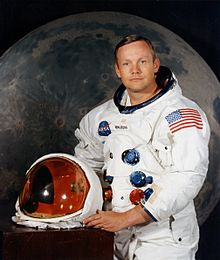
(The Silence are standing behind the large Moon to the rear.)
But we were still in space! After all, it was only 8 years later that we all watched as the Space Shuttles started to go into the sky. Well, we were in space. It was obvious that other countries were doing things as well (for those who didn’t grow up with this, it’s fair to say that the USA and USSR didn’t get on for a while so information sharing was limited and often heavily propagandised by both parties) but that glorious shuttle, climbing up into the sky, had taken the baton and we even (finally) managed to get a space station in orbit that was bigger than a breadbox. But, by Moon shot comparisons, it wasn’t quite in the same league.
Now, I’m not for a moment suggesting that space travel has been the best use of our time and money but, goodness, has it been inspirational! We’ve developed some amazing things along the way and we’ve learned a great deal about ourselves – one of which, sadly, is that the future that I am living is not the future that I thought I would inhabit.
Growing up, I made a number of assumptions, based on the talk of the time and the books I read (a lot of which were science fiction) and, looking back on it now, these ideas were very inspirational. Growing up in the England of the early-mid 70s (a cold, lean and unpleasant place) having heroes from space was an important thing for me to have. The messages from the real-life stories of achievement (we went to the Moon! We’re getting rid of smallpox! We’re pushing back disease!) were, and still are, an important part of me. Even where we had dystopia presented to us, it was in order to learn. (The Earth has finite resources, for example, so perhaps we should be living within our means a little better – this is the message of so many works from the mid-late 20th century.)

An Eagle Transporter from the UK television series Space:1999. Note almost complete lack of aerodynamic features, including wing-based control surfaces, because (wait for it) there is no air on the Moon!
But, of course, we have no moon base. We have carried out an incredible and technologically staggering feat to gently drop the new Mars explorer on Mars – but there are no people there. I’m not sure how many times we’ll go back there and my fear is that, within 10 years, we abandon that too. But we aren’t just losing space. A number of our achievements in the face of disease and social equality, for example, are being undermined by deliberate dissemination of disinformation and the shameful exploitation of fear and ignorance.
Sadly, at least some of the people who read this will scoff at the idea that we even went to the Moon. “You rube,” they’re thinking, “Everyone knows it was a giant hoax and cover-up.” The same thing applies to vaccines, where the human failing regarding probability and modelling comes to the fore and the fearful and anecdotal are treasured over the science. Don’t even get me started on the climate change denial movement.
Is this our fault? As scientists did we presume too much in our certainty and, after so many mistakes, have we earned this distrust? Frankly, while scientists have been responsible for some shameful acts of wilful destruction or negligence, I don’t think we deserve to be viewed in such a harsh light. What I believe we’re seeing is the snake oil merchant at its finest – preying on the weak, undermining reality for their own ends, looking into the near term future of the wallet rather than the long term future of us all.
What scares me is that we may be losing our knowledge. That the simplest of ideas in science, that you collect and observe evidence in order to allow you to confirm or contradict your hypotheses, is being overrun by a mad dash towards a certainty based on wilful ignorance where you only see the evidence that agrees with your hypothesis, after the fact, and truth be damned. Should we be spending the money required to go back to the Moon? Perhaps not as it is a lot of money and, goodness knows, we have things to spend it on. But if our reason for not going back to the Moon is that we lack the drive, the imagination, the tenacity or the vision to achieve it – then we are in serious trouble.
People sometimes ask me how many students I need to have in my classroom in order to deliver a lecture. I like to have 80-95%, of course, but my answer is always the same: one. I will not consider it a waste of my time if I spend an hour with a student discussing the ideas and sharing knowledge with them. I want my students to be imaginative, driven, to be able to hang on like a terrier as they search for the truth and to understand that the search for knowledge is important – so I have to try to live that. I have to live it all the time because, all too often, there are too many examples of people ignoring the truth for a comfortable lie, for being famous for being famous, for being famous for being thoughtlessly reactive (shock jock, anyone), for changing their minds for political expediency, for outright lying, and for only valuing quantities and dollars rather than people and knowledge.
What gets me out of bed in the morning is my own set of heroes: my wife, my friends, those in my family who have overcome adversity, the real educators who do their job because they have to and because of their deep and enduring relationship with knowledge, the stars in my firmament. I looked to my own heroes growing up and those heroes wouldn’t have let the world resemble “Silent Running”, “Soylent Green” or “The Omega Man” – they, like me, wanted our children to grow up in a better world. Those films of the 60s and 70s were the product of SF writers looking forward and saying “We don’t want this.” In the absence of vision, in the attack upon science and in the minimisation of majestic and inspirational events, we get ever closer to these stinking, diseased, dying worlds that should only ever exist in our nightmares.
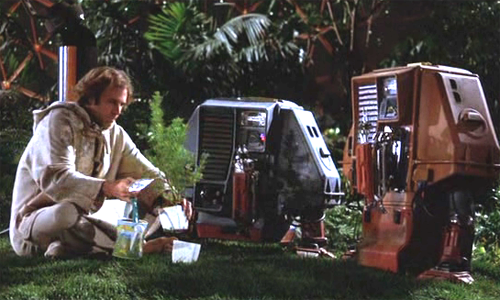
The green in this still from Silent Running is, in theory, almost all of what is left of Earth’s greenery. Not very large, is it?
I grew up thinking that “Silent Running”, a movie where companies ordered the destruction the last of Earth’s biomass because it was too expensive to keep, was hyperbole – at most a cautionary tale. Now, every day, I get out of bed to try and educate a new generation of scientists so that we don’t accidentally or deliberately end up going over exactly that precipice. Thought is the greatest tool that we have and, like any tool, it can work for us and against us. Guiding thought along constructive paths is challenging and it always helps to have a large and visible goal to aim for: navigators need stars or ships get lost.
We need champions. We need champions so large that even our other champions look to them – we need ideas so beautiful and so huge and so captivating that the vast majority of people, when exposed to them, roll up their sleeves and say “I can help.” We need people for your children to aspire to be, because of what they did, not who they are. However, while we have many champions, the giant blazing comets that I had growing up are all dying or dead and it makes me very sad. Yes, there is incredible achievement going on and there are many, many great stories but what does the future look like to someone growing up now?
My future was full of moon bases, flying cars, leisure time, robots, everyone well fed, no war, gender and race equality – what’s our scorecard looking like?
Soon there will be no-one left who walked on the moon. After 2099, there will probably be no-one alive when we did walk on the moon. What happens to the accounts of the Moon then? How long before it becomes a myth? How long before the real footage gets mixed up with Hollywood movies – or the MTV Logo becomes the 22nd century’s view of what happened on the Moon?

Of course, there is no real need to go back to the Moon. There are many other things that we can usefully do with that money and, ethically, we probably should. In terms of inspiration, it’s hard to beat, but that just makes it a challenge to find a problem that is equally big and put it together in a way that we can all see the rightness of it.
If you’ve read this far, thank you, but I have an additional favour to ask of you. This week, if possible, I’d like you to find an extra something, somewhere, that puts an extra champion into your life or into the life of someone else. It doesn’t have to be a person, it just has to be a star to set a course by. Something to look up to in high seas to know why you’re going where you’re going and that the risk is worth it. Have you told one of your living champions how much they mean to you? Have you made the time to share your (I know, precious) time and knowledge with someone else? Can you pin a picture of Hypatia to your pinboard? Rosa Parks? Jon Snow? Curie? Lister? Brunel? da Vinci? The SS Great Britain? Euler? Gauss? Florey? The Wrights? The 1902 Glider or the Wright Flyer 1? Crick/Watson/Franklin (bonus points if you have them in a wrestling ring wearing Luchador masks)? A Crab Canon? Telemann? Steve Kardynal?
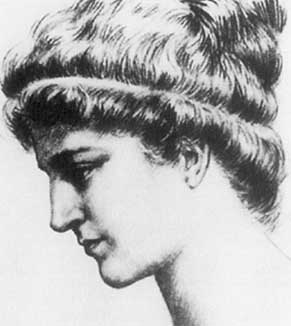
“Reserve your right to think, for even to think wrongly is better than not to think at all,” Hypatia of Alexandria.
Have you taken your champion out of your head and told everyone else about them? When we landed on the Moon a vast number of us looked up and, for one moment, we all shared the same vision.
Neil Armstrong lived a good life, one that was useful and surprisingly humble given what he achieved and the position in which he found himself, but he’s gone now and we need more people and inspiration to fill the gap that he left. We need to look up once more.
More Thoughts on Partnership: Teacher/Student
Posted: August 23, 2012 Filed under: Education, Opinion | Tags: authenticity, blogging, education, educational problem, educational research, feedback, Generation Why, grand challenge, higher education, in the student's head, measurement, teaching, teaching approaches, thinking, time banking, universal principles of design Leave a commentI’ve just received some feedback on an abstract piece that is going into a local educational research conference. I talked about the issues with arbitrary allocation of deadlines outside of the framing of sound educational design and about how it fundamentally undermines any notion of partnership between teacher and student. The responses were very positive although I’m always wary when people staring using phrases like “should generate vigorous debate around expectations of academics” and “It may be controversial, but [probably] in a good way”. What interests me is how I got to the point of presenting something that might be considered heretical – I started by just looking at the data and, as I uncovered unexpected features, I started to ask ‘why’ and that’s how I got here.
When the data doesn’t fit your hypothesis, it’s time to look at your data collection, your analysis, your hypothesis and the body of evidence supporting your hypothesis. Fortunately, Bayes’ Theorem nicely sums it up for us: your belief in your hypothesis after you collect your evidence is proportional to how strongly your hypothesis was originally supported, modified by the chances of seeing what you did given the existing hypothesis. If your data cannot be supported under your hypothesis – something is wrong. We, of course, should never just ignore the evidence as it is in the exploration that we are truly scientists. Similarly, it is in the exploration of our learning and teaching, and thinking about and working on our relationship with our students, that I feel that we are truly teachers.

All your Bayes are belong to us. (Sorry.)
Once I accepted that I wasn’t in competition with my students and that my role was not to guard the world from them, but to prepare them for the world, my job got easier in many ways and infinitely more enjoyable. However, I am well aware that any decisions I make in terms of changing how I teach, what I teach or why I teach have to be based in sound evidence and not just any warm and fuzzy feelings about partnership. Partnership, of course, implies negotiation from both sides – if I want to turn out students who will be able to work without me, I have to teach them how and when to negotiate. When can we discuss terms and when do we just have to do things?
My concern with the phrase “everything is negotiable” is that it, to me, subsumes the notions that “everything is equivalent” and “every notion is of equal worth”, neither of which I hold to be true from a scientific or educational perspective. I believe that many things that we hold to be non-negotiable, for reasons of convenience, are actually negotiable but it’s an inaccurate slippery slope argument to assume that this means that we must immediately then devolve to an “everything is acceptable” mode.
Once again we return to authenticity. There’s no point in someone saying “we value your feedback” if it never shows up in final documents or isn’t recorded. There’s no point in me talking about partnership if what I mean is that you are a partner to me but I am a boss to you – this asymmetry immediately reveals the lack of depth in my commitment. And, be in no doubt, a partnership is a commitment, whether it’s 1:1 or 1:360. It requires effort, maintenance, mutual respect, understanding and a commitment from both sides. For me, it makes my life easier because my students are less likely to frame me in a way that gets in the way of the teaching process and, more importantly, allows them to believe that their role is not just as passive receivers of what I deign to transmit. This, I hope, will allow them to continue their transition to self-regulation more easily and will make them less dependent on just trying to make me happy – because I want them to focus on their own learning and development, not what pleases me!
One of the best definitions of science for me is that it doesn’t just explain, it predicts. Post-hoc explanation, with no predictive power, has questionable value as there is no requirement for an evidentiary standard or framing ontology to give us logical consistency. Seeing the data that set me on this course made me realise that I could come up with many explanations but I needed a solid framework for the discussion, one that would give me enough to be able to construct the next set of analyses or experiments that would start to give me a ‘why’ and, therefore, a ‘what will happen next’ aspect.
Putting it all together – discussing curriculum with students
Posted: August 15, 2012 Filed under: Education, Opinion | Tags: advocacy, authenticity, collaboration, community, curriculum, education, educational problem, educational research, ethics, grand challenge, higher education, in the student's head, popeye, principles of design, reflection, resources, student perspective, teaching, teaching approaches, thinking, tools, wimpy, workload Leave a commentOne of the nice things about my new grand challenges course is that the lecture slots are a pre-reading based discussion of the grand challenges in my discipline (Computer Science), based on the National Science Foundation’s Taskforce report. Talking through this with students allows us to identify the strengths of the document and, perhaps more interestingly, some of its shortfalls. For example, there is much discussion on inter-disciplinary and international collaboration as being vital, followed by statements along the lines of “We must regain the ascendancy in the discipline that we invented!” because the NSF is, first and foremost, a US-funded organisation. There’s talk about providing the funds for sustainability and then identifying the NSF as the organisation giving the money, and hence calling the shots.
The areas of challenge are clearly laid out, as are the often conflicting issues surrounding the administration of these kinds of initiative. Too often, we see people talking about some amazing international initiative – only to see it fail because nobody wants to go first, or no country/government wants to put money up that other people can draw on until everyone does it at the same time.
In essence, this is a timing and trust problem. If we may quote Wimpy from the Popeye cartoons:

Via theawl.com. Click on the link for a very long discussion of Popeye and Wimpy related issues.
The NSF document lays bare the problem we always have: those who have the hamburgers are happy to talk about sharing the meal but there are bills to be paid. The person who owns the hamburger stand is going to have words with you if you give everything away with nothing to show in return except a promise of payment on Tuesday.
Having covered what the NSF considered important in terms of preparing us for the heavily computerised and computational future, my students finished with a discussion of educational issues and virtual organisations. The educational issues were extremely interesting because, having looked at the NSF Taskforce report, we then looked at the ACM/IEEE 2013 Computer Science Strawman curriculum to see how many areas overlapped with the task force report. Then we looked at the current curriculum of our school, which is undergoing review at the moment but was last updated for the 2008 ACM/IEEE Curriculum.
What was pleasing was, rom the range of students, how many of the areas were being addressed throughout our course and how much overlap there was between the highlighted areas of the NSF Report and the Strawman. However, one of the key issues from the task force report was the notion of greater depth and breadth – an incredible challenge in the time-constrained curriculum implementations of the 21st century. Adding a new Knowledge Area (KA) to the Strawman of ‘Platform Dependant Computing’ reflects the rise of the embedded and mobile device yet, as the Strawman authors immediately admit, we start to make it harder and harder to fit everything into one course. Combine this with the NSF requirement for greater breadth, including scientific and mathematical aspects that have traditionally been outside of Computing, and their parallel requirement for the development of depth… and it’s not easy.
The lecture slot where we discussed this had no specific outcomes associated with it – it was a place to discuss the issues arising but also to explain to the students why their curriculum looks the way that it does. Yes, we’d love to bring in Aspect X but where does it fit? My GC students were looking at the Ethics aspects of the Strawman and wondered if we could fit Ethics into its own 3-unit course. (I suspect that’s at least partially my influence although I certainly didn’t suggest anything along these lines.) “That’s fine,” I said, “But what do we lose?”
In my discussions with these students, they’ve identified one of the core reasons that we changed teaching languages, but I’ve also been able to talk to them about how we think as we construct courses – they’ve also started to see the many drivers that we consider, which I believe helps them in working out how to give feedback that is the most useful form for us to turn their needs and wants into improvements or developments in the course. I don’t expect the students to understand the details and practice of pedagogy but, unless I given them a good framework, it’s going to be hard for them to communicate with me in a way that leads most directly to an improved result for both of us.
I’ve really enjoyed this process of discussion and it’s been highly rewarding, again I hope for both sides of the group, to be able to discuss things without the usual level of reactive and (often) selfish thinking that characterises these exchanges. I hope this means that we’re on the right track for this course and this program.
Access to Education Considered Against Depth of Wallet.
Posted: August 14, 2012 Filed under: Education, Opinion | Tags: advocacy, blogging, education, higher education 2 CommentsI’ve posted a bit recently about proposals to increase the cost of education in Australia and, coincidentally, I have to deal with the loss of some students for what amount to purely financial reasons. To maintain student privacy, I won’t go into any detail but the bottom line is… well, the bottom line. Over the years I’ve lost students because they had to take up full-time work to cover sick family members, to pay bills that were running out of control and to pay for the many costs of a delayed-cost education that is never actually free.
Today, I lost another student because they could no longer afford to stay at Uni – that’s disheartening and irritating (for me, that is, I can only imagine that it is devastating to the student).
However, this pales in comparison with recent changes to the American college system in states such as California, where slashed state budgets are causing an economically based decision to recruit international and out-of-state applicants, as the fees paid are at least triple that of in-state students. The in-state students used to receive a state subsidy, but this is now disappearing or is no longer actually being paid. What has, of course, happened, is that now in-state students are becoming the out-of-state students of other states – if they can afford it – as places are given to more financially rewarding students locally.
But what happens to California’s local production of students who will actually stay in the state after graduation and contribute to the local economy? Of course, this is a problem that will start to get worse over time, not better, if the graduates that would retire the economy take their expertise back to their home state or country.
One of my major arguments with the recent report that suggested increasing fees in Australia was that it failed to recognise the public and ongoing benefit of a more educated population. Education changes lives, lifts us higher, allows us to see to the horizon and then over it. Vast quantities of educated people improve the areas in which they work. Yes, we make more money on average. But we also contribute in many and varied ways. Education transforms and provides opportunity – to everybody involved, not just those who are directly educated.
One of the things I welcome in the new discussions on distance and discontinuous education is that we can bring education to people who are outside of our bricks and mortar. We can accommodate and keep connected to the people who are having to study at the rate of 1 course/year because they can’t afford any more. But this requires us to think about what it really means to have to walk away from your one chance of getting out, because you have to work to keep yourself or your family alive. Yes, people can value our degrees and education without showing up every day – maybe they have to choose between doing that and eating? I’m not saying “pass people who don’t do the work”, I’m saying “how can we make the work available for people to do?”
I think that, reflecting on this, we should be thinking about flexibility, compassion and understanding. We can’t fix everything at the Uni level, but we can make it easier for people to come back and, when they leave, let them know that we will take them back when they have the opportunity to return. It is the least that we can offer and, at the same time, one of the best things we can do to help people who are faced with an awful choice.
However, as we have seen in California, things could be much worse – but it’s important to remember that before we make any longterm decisions that bring us closer to such a deep and potentially inescapable maelstrom.

 Nick Falkner