
The Philosophical Angle
Posted: September 21, 2012 Filed under: Education | Tags: advocacy, community, curriculum, education, educational problem, educational research, ethics, feedback, Generation Why, higher education, identity, in the student's head, learning, philosophy, reflection, resources, seneca, socrates, stoicism, student perspective, teaching, teaching approaches, thinking, universal principles of design Leave a commentSocrates drank hemlock after being found guilty of corrupting the minds of the youth of Athens, and impiety. Seneca submitted to the whims of Nero when the Emperor, inevitably, required that his old tutor die. Seneca’s stoicism was truly tested in this, given that he slashed his veins, took poison, jumped in a warm bath and finally had to be steamed to death before Nero’s edict that he kill himself was finally enacted. I, fortunately, expect no such demonstrations of stoic fortitude from my students but, if we are to think about their behaviour and development as self-regulating beings, then I think that a discussion of their personal philosophy becomes unavoidable. We have talked about the development state, their response to authority, their thoughts on their own thinking, but what of their philosophy?
If you are in a hurry and jump in your car, every red light between you and your destination risks becoming a personal affront, an enraging event that defies your expectation of an ‘all-green’ ride into town. There is no reason why you should expect such favours from the Universe, whatever your belief system, but the fact that this is infuriating to you remains. In the case of the unexpected traffic light, which sounds like the worst Sherlock Holmes story ever, the worst outcome is that you will be late, which may have a variety of repercussions. In preparing assignment work, however, a student may end up failing with far more dire and predictable results.
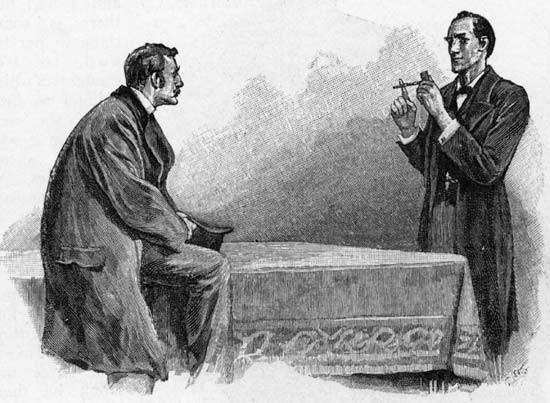
“Watson, I shall now relate the entire affair through Morse tapped pipe code and interpretative dance.”
While stoicism attracts criticism, understandably, because it doesn’t always consider the fundamentally human nature of humans, being prepared for the unforeseen is a vital part of any planning process. Self-regulation is not about drawing up a time table that allows you to fit in everything that you know about, it is about being able to handle your life and your work when things go wrong. Much as a car doesn’t need to be steered when it is going in a straight line and meeting our requirements, it is how we change direction when we know the road and when a kangaroo jumps out that are the true tests of our ability to manage our resources and ourselves.
Planning is not everything, as anyone who has read Helmuth von Moltke the Elder or von Clausewitz will know: “no plan survives contact with the enemy”. In this case, however, the enemy is not just those events that seek to confound us, it can be us as well! You can have the best plan in the world that relies upon you starting on Day X, and yet you don’t. You may have excellent reasons for this but, the fact remains, you have now introduced problems into your own process. You have met the enemy and it is you. This illustrates the critical importance of ensuring that we have an accurate assessment of our own philosophies – and we do have to be very honest.
There is no point in a student building an elaborate time management plan that relies upon them changing the habits of a lifetime in a week. But this puts the onus upon us as well: there is no point in us fabricating a set of expectations that a student cannot meet because they do not yet have a mature philosophy for understanding what is required. We don’t give up (of course!) but we must now think about how we can scaffold and encourage such change in a manageable way. I find reflection very handy, as I’ve said before, as watching students write things like “I planned for this but then I didn’t do it! WHY?” allows me to step in and discuss this at the point that the student realises that they have a problem.
I am not saying that a student who has a philosophy of “Maybe one day I will pass by accident” should be encouraged to maintain such lassitude, but we must be honest and realise that demanding that their timeliness and process maturity spring fully-formed from their foreheads is an act of conjuring reserved only for certain Greek Gods. (Even Caligula couldn’t manage it and he had far greater claim to this than most.) I like to think of this in terms of similarity of action. If anything I do is akin to walking up to someone and yelling “You should hand in on time, do better!” then I had better re-think my strategy.
The development of a personal philosophy, especially when you may not have ever been exposed to some of the great exemplars, is a fundamentally difficult task. You first need to understand that such a concept exists, then gain the vocabulary for discussing it, then interpret your current approach and see the value of change. Once you have performed all of those tasks, then we can start talking about getting from A to B. If you don’t know what I’m talking about or can’t understand why it’s important, or even discuss core concepts, then I’m yelling at you in the corridor and you’ll nod, compliantly, until I go away. Chances of you taking positive steps in the direction that I want? Very low. Probably, nil. And if it does happen, either it’s accidental or you didn’t actually need my help.
I try to be stoic but I must be honest and say that if Nero sentenced me to death, I’d nod, say “I expected that”, then put on some fast saxophone music and leg it up over the seven hills and far away. I don’t think I’d ever actually expect true stoicism from most of my students. but a simple incorporation of the fact that not everything works out as you think it will would be a definite improvement over the current everything will work out in my favour expectation that seems to be the hallmark of the more frequently disappointed and distressed among them. The trick is that I first have to make them realise that this is something that, with thought, they can not only fix but use to make a genuine, long-lasting and overwhelmingly positive change in their lives.
Surely, I can’t believe that I would have thought…
Posted: September 20, 2012 Filed under: Education | Tags: authenticity, collaboration, curriculum, education, educational problem, educational research, feedback, Generation Why, higher education, in the student's head, student perspective, teaching, teaching approaches, universal principles of design Leave a commentAnyone with students has become used to what I shall (extremely loosely) refer to as the argument of lazy denial, where a student uses one of the following in a sentence, when discussing a technical issue:
- Surely…
- I can’t believe…
- I would have thought…
Now, used rhetorically, where you place a deliberately short-term doubt in someone’s mind and then follow it up with the facts, there is no real problem with most of these. My problem is when a student uses this in order to dismiss an idea, based on an isolated opinion or a very limited understanding of the issues. As I joked recently on someone’s Facebook, I’ve told my students that starting any technical discussion question with “Surely…” is an indication that further research has to take place.
Yes, yes, I’m making a point and enough of my students know about it to occasionally rib me with its deliberate usage but this just emphasises that they’re thinking about things. It’s very easy to infer a comfortable denial to a situation based on limited experience. This could be covered as being a hasty generalisation, jumping to conclusions, appeal to incredulity or wishful thinking, but it’s really an excuse to express disbelief without having to provide any evidence other than “Nahhhh.” And, ultimately, because very little work is being done here, I’m just going to call it lazy denial.
My intention is not, of course, to stop people speaking naturally but it’s to help my students think about framing an argument, which requires knowing enough about the area to be able to construct, and respond to, an argument. Research usually consists of knowing enough to know what you don’t know, which can usually be explained far more succinctly than saying “Surely, someone would have carried out action <x>”. There are legitimate ways to express this sentiment, after you’ve done the reading. “I’ve looked through all of the literature I can find and it appears that no-one appears to have tried <x>.”
(Regrettably, as in all things scientific, not finding something doesn’t prove its non-existence. As exhaustive literature searches are becoming harder and harder with the growth of the data corpus, we have to be very circumspect about how we make statements such as “no-one has done this” because it is more than a little embarrassing when someone stands up at the end of your talk and says “Urm, we did”.)
Once we’ve gone looking and discussed the area, we’re all looking at the same problem in the same way. Rather than making sweeping statements that are, to be honest, often a little condescending because you’re speaking as if your opinion is so blindingly obvious that it must have been tried, we can really appreciate the discovery of a hole in the recorded knowledge: a place where we can make a contribution.
This is not to say that everything is this formal and there have been many fine semi-research discussions carried out that have used these terms but, when we’re sitting around trying to work towards a solution or my students are trying to work out their research direction, this starts to become important.
I suppose this reveals more about me than it does about my students…
A Puzzling Thought
Posted: September 19, 2012 Filed under: Education | Tags: advocacy, authenticity, card shouting, collaboration, curriculum, design, education, educational problem, educational research, ethics, feedback, higher education, in the student's head, measurement, principles of design, reflection, resources, student perspective, teaching, teaching approaches, thinking 4 CommentsToday I presented one of my favourite puzzles, the Monty Hall problem, to a group of Year 10 high school students. Probability is a very challenging area to teach because we humans seem to be so very, very bad at grasping it intuitively. I’ve written before about Card Shouting, where we appear to train cards to give us better results by yelling at them, and it becomes all too clear that many people have instinctive models of how the world work that are neither robust nor transferable. This wouldn’t be a problem except that:
- it makes it harder to understand science,
- the real models become hard to believe because they’re counter-intuttitve, and
- casinos make a lot of money out of people who don’t understand probability.
Monty Hall is simple. There are three doors and behind one is a great prize. You pick a door but it doesn’t get opened. The host, who knows where the prize is, opens one of the doors that you didn’t pick but the door that he/she opens is always going to be empty. So the host, in full knowledge, opens a known empty door, but it has to be one that you didn’t pick. You then have a choice to switch to the door that you didn’t pick and that hasn’t been opened, or you can stay with your original pick.

Based on a game show, Monty Hall was the name of the presenter.
Now let’s fast forward to the fact that you should always switch because you have a 2/3 chance of getting the prize if you do (no, not 50/50) so switching is the winning strategy. Going into today, what I expected was:
- Initially, most students would want to stay with their original choice, having decided that there was no benefit to switching or that it was a 50/50 deal so it didn’t make any sense.
- At least one student would actively reject the idea.
- With discussion and demonstration, I could get students thinking about this problem in the right way.
The correct mental framework for Monty Hall is essential. What are the chances, with 1 prize behind 3 doors, that you picked the right door initially. It’s 1/3, right? So the chances that you didn’t pick the correct door is 2/3. Now, if you just swapped randomly, there’d be no advantage but this is where you have to understand the problem. There are 2 doors that you didn’t pick and, by elimination, these 2 doors contain the prize 2/3 of the time. The host knows where the prize is so the host will never open a door and show you the prize, the host just removes a worthless door. Now you have two sets of doors – the one you picked (correct 1/3 of the time) and the remaining door from the unpicked pair (correct 2/3 of the time). So, given that there’s only one remaining door to pick in the unpicked pair, by switching you increase your chances of winning from 1/3 to 2/3.
Don’t believe me? Here’s an on-line simulator that you can run (Ignore what it says about Internet Explorer, it tends to run on most things.)
Still don’t believe me? Here’s some Processing code that you can run locally and see the rates converge to the expected results of 1/3 for staying and 2/3 for switching.
This is a challenging and counter-intuitive result, until you actually understand what’s happening, and this clearly illustrates one of those situations where you can ask students to plug numbers into equations for probability but, when you actually ask them to reason mathematically, you suddenly discover that they don’t have the correct mental models to explain what is going on. So how did I approach it?
Well, I used Peer Instruction techniques to get the class to think about the problem and then vote on it. As expected, about 60% of the class were stayers. Then I asked them to discuss this with a switcher and to try and convince each other of the rightness of their actions. Then I asked them to vote again.
No significant change. Dang.
So I wheeled out the on-line simulator to demonstrate it working and to ensure that everyone really understood the problem. Then I showed the Processing simulation showing the numbers converging as expected. Then I pulled out the big guns: the 100 door example. In this case, you select from 100 doors and Monty eliminates 98 (empty) doors that you didn’t choose.
Suddenly, when faced with the 100 doors, many students became switchers. (Not surprising.) I then pointed out that the two problems (3 doors and 100 doors) had reduced to the same problem, except that the remaining doors were the only door left standing from 2 and 99 doors respectively. And, suddenly, on the repeated vote, everyone’s a switcher. (I then ran the code on the 100 door example and had to apologise because the 99% ‘switch’ trace is so close to the top that it’s hard to see.)
Why didn’t the discussion phase change people’s minds? I think it’s because of the group itself, a junior group with very little vocabulary of probability. it would have been hard for the to articulate the reasons for change beyond much ‘gut feeling’ despite the obvious mathematical ability present. So, expecting this, I confirmed that they were understanding the correct problem by showing demonstration and extended simulation, which provided conflicting evidence to their previously held belief. Getting people to think about the 100 door model, which is a quite deliberate manipulation of the fact that 1/100 vs 99/100 is a far more convincing decision factor than 1/3 vs 2/3, allowed them to identify a situation where switching makes sense, validating what I presented in the demonstrations.
In these cases, I like to mull for a while to work out what I have and haven’t learned from this. I believe that the students had a lot of fun in the puzzle section and that most of them got what happened in Monty Hall, but I’d really like to come back to them in a year or two and see what they actually took away from today’s example.
Howdy, Partner
Posted: September 17, 2012 Filed under: Education | Tags: advocacy, authenticity, collaboration, community, curriculum, design, education, educational problem, educational research, ethics, feedback, Generation Why, higher education, in the student's head, measurement, principles of design, student perspective, teaching, teaching approaches, thinking, time banking Leave a comment
I am giving a talk on Friday about the partnership relationship between teacher and student and, in my opinion, why we often accidentally attack this through a less-than-optimal approach to assessment and deadlines. I’ve spoken before about how an arbitrary deadline that is convenient for administrative reasons is effectively pedagogically and ethically indefensible. For all that we disparage our students, if we do, for focusing on marks and sometimes resorting to cheating rather than focusing on educational goals, we leave ourselves open to valid accusations of hypocrisy if we have the same ‘ends justify the means’ approach to setting deadlines.
Consistency and authenticity are vital if we are going to build solid relationships, but let me go further. We’re not just building a relationship, we’re building an expectation of continuity over time. If students know that their interests are being considered, that what we are teaching is necessary and that we will always try to deal with them fairly, they are far more likely to invest the effort that we wish them to invest and develop the knowledge. More importantly, a good relationship is resilient, in that the occasional hiccup doesn’t destroy the whole thing. If we have been consistent and fair, and forces beyond our control affect something that we’ve tried to do, my experience is that students tolerate it quite well. If, however, you have been arbitrary, unprepared, inconsistent and indifferent, then you will (fairly or not) be blamed for anything else that goes wrong.
We cannot apply one rule to ourselves and a different one to our students and expect them to take us seriously. If you accept no work if it’s over 1 second late and keep showing up to lectures late and unprepared, then your students have every right to roll their eyes and not take you seriously. This doesn’t excuse them if they cheat, however, but you have certainly not laid the groundwork for a solid partnership. Why partnership? Because the students in higher education should graduate as your professional peers, even if they are not yet your peers in academia. I do not teach in the school system and I do not have to deal with developmental stages of the child (although I’m up to my armpits in neo-Piagetian development in the knowledge areas, of course).
We return to the scaffolding argument again. Much as I should be able to remove the supports for their coding and writing development over their degree, I should also be able to remove the supports for their professional skills, team-based activities and deadlines because, in a few short months, they will be out in the work force and they will need these skills! If I take a strictly hierarchical approach where a student is innately subordinate to me, I do not prepare them for a number of their work experiences and I risk limiting their development. If I combine my expertise and my oversight requirements with a notion of partnership, then I can work with the student for some things and prepare the student for a realistic workplace. Yes, there are rules and genuine deadlines but the majority experience in the professional workplace relies upon autonomy and self-regulation, if we are to get useful and creative output from these new graduates.
If I demand compliance, I may achieve it, but we are more than well aware that extrinsic motivating factors stifle creativity and it is only at those jobs where almost no cognitive function is required that the carrot and the stick show any impact. Partnership requires me to explain what I want and why I need it – why it’s useful. This, in turn, requires me to actually know this and to have designed a course where I can give a genuine answer that illustrates these points!
“Because I said so,” is the last resort of the tired parent and it shouldn’t be the backbone of an entire deadline methodology. Yes, there are deadlines and they are important but this does not mean that every single requirement falls into the same category or should be treated in the same way. By being honest about this, by allowing for exchange at the peer-level where possible and appropriate, and by trying to be consistent about the application of necessary rules to both parties, rather than applying them arbitrarily, we actually are making our students work harder but for a more personal benefit. It is easy to react to blind authority and be resentful, to excuse bad behaviour because you’re attending a ‘bad course’. It is much harder for the student to come up with comfortable false rationalisations when they have a more equal say, when they are informed in advance as to what is and what is not important, and when the deadlines are set by necessity rather than fiat.
I think a lot of people miss one of the key aspects of fixing assessment: we’re not trying to give students an easier ride, we’re trying to get them to do better work. Better work usually requires more effort but this additional effort is now directed along the lines that should develop better knowledge. Partnership is not some way for students to negotiate their way out of submissions, it’s a way that, among other things, allows me to get students to recognise how much work they actually have to do in order to achieve useful things.
If I can’t answer the question “Why do my students have to do this?” when I ask it of myself, I should immediately revisit the activity and learning design to fix things so that I either have an answer or I have a brand new piece of work for them to do.
De Profundis – or de-profounding?
Posted: September 16, 2012 Filed under: Education | Tags: advocacy, authenticity, collaboration, community, curriculum, design, education, educational problem, ethics, feedback, Generation Why, higher education, in the student's head, oscar wilde, principles of design, reflection, resources, student perspective, teaching, teaching approaches, thinking Leave a comment“It is common to assume that we are dealing with a highly intelligent book when we cease to understand it.” (de Botton, The Consolations of Philosophy, p157)
The notion of a lack of comprehension being a fundamental and innate fault of the reader, rather than the writer, is a mistake made, in many different and yet equally irritating ways, throughout the higher educational sector. A high pass rate may be seen as indicative of an easy course or a weak marker. A high failure rate may be attributed to the innate difficulty of the work or the inferior stuff of which the students are made. As I have written before, under such a presumption, I could fail all of my students and strut around, the smartest man in my University, for none have been able to understand the depths and subtlety of my area of knowledge.
Yet, if the real reason is that I have brought my students to a point where their abilities fail them and, either through ignorance or design, I do not strive to address this honestly and openly, then it doesn’t matter how many of them ultimately pass – I will be the biggest failure in the class. I know a great number of very interesting and intelligent educators but, were you to ask me if any of them could teach, I would have to answer that I did not know, unless I had actually seen them do so. For all of our pressure on students to contain the innate ability to persevere, to understand our discipline or to be (sorry, Ray) natural programmers, the notion that teaching itself might not be something that everyone is capable of is sometimes regarded as a great heresy. (The notion or insistence that developing as a teacher may require scholarship and, help us all, practise, is apostasy – our heresy leading us into exile.) Teaching revolves around imparting knowledge efficiently and effectively so that students may learn. The cornerstone of this activity is successful and continuing communication. Wisdom may be wisdom but it rapidly becomes hard to locate or learn from when it is swaddled in enough unnecessary baggage.
I have been, mostly thanks to the re-issue of cheap Penguins, undertaking a great deal of reading recently and I have revisited Marcus Aurelius, Seneca, de Botton and Wilde. The books that are the most influential upon me remain those books that, while profound, maintain their accessibility. Let me illustrate this with an example. For those who do not know what De Profundis means, it is a biblical reference to Psalm 130, appropriated by the ever humble Oscar Wilde as the title of his autobiographical letter to his former lover, from the prison in which he was housed because of that love.
But what it means is “From the depths”. In the original psalm, the first line is:
De profundis clamavi ad te, Domine;
From the depths, I have cried out to you, O Lord;
And in this reading, we see the measure of Wilde’s despair. Having been sentenced to hard labour, and having had his ability to write confiscated, his ability to read curtailed, and his reputation in tatters, he cries out from the depths to his Bosie, Lord Douglas.
De profundis [clamavi ad te, Bosie;]
If you have the context for this, then this immediately prepares you for the letter but, as it is, the number of people who are reading Wilde is shrinking, let alone the number of people who are reading a Latin Bible. Does this title still assist in the framing of the work, through its heavy dependence upon the anguish captured in Psalm 130, or is it time to retitle it “From the depths, I have cried out to you!” to capture both the translation and the sense. The message, the emotion and the hard-earned wisdom contained in the letter are still valuable but are we hurting the ability of people to discover and enjoy it by continuing to use a form of expression that may harm understanding?

Les Très Riches Heures du duc de Berry, Folio 70r – De Profundis the Musée Condé, Chantilly. (Another form of expression of this Psalm.)
Now, don’t worry, I’m not planning to rewrite Wilde but this raises a point in terms of the occasionally unhappy union of the language of profundity and the wisdom that it seeks to impart. You will note the irony that I am using a heavily structured, formal English, to write this and that there is very little use of slang here. This is deliberate because I am trying to be precise while still being evocative and, at the same time, illustrating that accurate use of more ornate language can obscure one’s point. (Let me rephrase that. The unnecessary use of long words and complex grammar gets in the way of understanding.)
When Her Majesty the Queen told the Commonwealth of her terrible year, her words were:
“1992 is not a year on which I shall look back with undiluted pleasure. In the words of one of my more sympathetic correspondents, it has turned out to be an Annus Horribilis.”
and I have difficulty thinking of a more complicated way of saying “1992 was a bad year” than to combine a complicated grammatical construction with a Latin term that is not going to be on the lips of the people who are listening to the speech. Let me try: “Looking back on 1992, it has been, in the words of one of my friends, a terrible year.” Same content. Same level of imparted knowledge. Much less getting in the way. (The professional tip here is to never use the letters “a”, “n”, “s” and “u” in one short word unless you are absolutely sure of your audience. “What did she say about… nahhh” is not the response you want from your loyal subjects.) [And there goes the Knighthood.]
I love language. I love reading. I am very lucky that, having had a very broad and classically based education, I can read just about anything and not be intimidated or confused by the language forms – providing that the author is writing in one of the languages that I read, of course! To assume that everyone is like me or, worse, to judge people on their ability because they find long and unfamiliar words confusing, or have never had the opportunity to use these skills before, is to leap towards the same problem outlined in the quote at the top. If we seek to label people unintelligent when they have not yet been exposed to something that is familiar to us, then this is just as bad as lauding someone’s intelligence because you don’t understand what they’re talking about.
If my students need to know something then I have to either ensure that they already do so, by clearly stating my need and being aware of the educational preparation in my locale, or I have to teach it to them in forms that they can understand and that will allow them to succeed. I may love language, classical works and big words, but I am paid to teach the students of 2012 to become the graduates, achievers and academics of the future. I have to understand, respect and incorporate their context, while also meeting the pedagogical and knowledge requirements of the courses that I teach.
No-one said it was going to be easy!
ICER 2012 Day Research Paper Session 4
Posted: September 15, 2012 Filed under: Education | Tags: education, educational research, feedback, Generation Why, higher education, icer, icer 2012, icer2012, in the student's head, reflection, student perspective, teaching, teaching approaches, thinking, tools Leave a commentThis session kicked off with “Ability to ‘Explain in Plain English’ Linked to Proficiency in Computer-based Programming”, (Laurie Murphy, Sue Fitzgerald, Raymond Lister and Renee McCauley (presenting)). I had seen a presentation along these lines at SIGCSE and this is an excellent example of international collaboration, if you look at the authors list. Does the ability to explain code in plain English correlate with ability to solve programming problems? The correlation appears to be there, whether or not we train students in Explaining in Plain English or not, but is this causation?
This raises a core question, addressed in the talk: Do we need to learn to read (trace) code before we learn to write code or vice versa? The early reaction of the Leeds group was that reading code didn’t amount to testing whether students could actually write code. Is there some unknown factor that must be achieved before either or both of these? This is a vexing question as it raises the spectre of whether we need to factor in some measure of general intelligence, which has not been used as a moderating factor.
Worse, we now return to that dreadful hypothesis of “programming as an innate characteristics”, where you were either born to program or not. Ray (unsurprisingly) believes that all of the skills in this area (EIPE/programming) are not innate and can be taught. This then raises the question of what the most pedagogically efficient way is to do this!
How Do Students Solve Parsons Programming Problems? — An Analysis of Interaction Traces
Juha Helminen (presenting), Petri Ihantola, Ville Karavirta and Lauri Malmi
This presentation was of particular interest to me because I am currently tearing apart my 1,900 student data corpus to try and determine the point at which students will give up on an activity, in terms of mark benefit, time expended and some other factors. This talk, which looked at how students solved problems, also recorded the steps and efforts that they took in order to try and solve them, which gave me some very interesting insights.
A Parsons problem is one where, given code fragments a student selects, arranges and composes a program in response to a question. Not all code fragments present will be required in the final solution. Adding to the difficulty, the fragments require different indentation to assert their execution order as part of block structure. For those whose eyes just glazed over, this means that it’s more than selecting a line to go somewhere, you have to associate it explicitly with other lines as a group. Juha presented a graph-based representation of the students’ traversals of the possible solutions for their Parsons problem. Students could ask for feedback immediately to find out how their programs were working and, unsurprisingly, some opted for a lot of “Am I there yet” querying. Some students queried feedback as much as 62 times for only 7 features, indicative of permutation programming, with very short inter-query intervals. (Are we there yet? No. Are we there yet? No. Are we there yet? No. Are we there yet? No.)
The primary code pattern of development was linear, with block structures forming the first development stages, but there were a lot of variations. Cycles (returning to the same point) also occurred in the development cycle but it was hard to tell if this was a deliberate reset pattern or a one where permutation programming had accidentally returned the programmer to the same state. (Asking the students “WHY” this had occurred would be an interesting survey question.)
There were some good comments from the audience, including the suggestion of correlating good and bad states with good and bad outcomes, using Markov chain analysis to look for patterns. Another improvement suggested was recording the time taken for the first move, to record the impact (possible impact) of cognition on the process. Were students starting from a ‘trial and error’ approach or only after things went wrong?
Tracking Program State: A Key Challenge in Learning to Program
Colleen Lewis (presenting, although you probably could have guessed that)
This paper won the Chairs’ Award for the best paper at the Conference and it was easy to see why. Colleen presented a beautifully explored case study of an 11 year old boy working on a problem in the Scratch programming language and trying to work out why he couldn’t draw a wall of bricks. By capturing Kevin’s actions, in code, his thoughts, from his spoken comments, we are exposed to the thought processes of a high achieving young man who cannot fathom why something isn’t working.
I cannot do justice to this talk by writing about something that was primarily visual, but Colleen’s hypothesis was that Kevin’s attention to the state (variables and environmental settings over which the program acts) within the problem is the determining factor in the debugging process. Once Kevin’s attention was focused on the correct problem, he solved it very quickly because the problem was easy to solve. Locating the correct problem required him to work through and determine which part of the state was at fault.
Kevin has a pile of ideas in his head but, as put by duSessa and Sherin (98), learning is about reliably using the right ideas in the correct context. Which of Kevin’s ideas are being used correctly at any one time? The discussion that followed talked about a lot of the problems that students have with computers, in that many students do not see computers as actually being deterministic. Many students, on encountering a problem, will try exactly the same thing again to see if the error occurs again – this requires a mental model that we expect a different set of outcomes with the same inputs and process, which is a loose definition of either insanity or nondeterminism. (Possibly both.)
I greatly enjoyed this session but the final exemplar, taking apart a short but incredibly semantically rich sequence and presenting it with a very good eye for detail, made it unsurprising that this paper won the award. Congratulations again, Colleen!
ICER 2012 Day 2 Discussion Papers Session 2
Posted: September 15, 2012 Filed under: Education | Tags: authenticity, education, educational research, hawthorne effect, higher education, icer, icer 2012, icer2012, student perspective, teaching, teaching approaches, tools Leave a commentThis is a brief note on this session as these papers are presented to the community with the intention of sparking discussion and, in this case, one of the most interesting issues that arose was the use for reference of the first of a pair of papers, where the first paper asserted a finding and the second then retracted it. This is not to say that the actual papers presented themselves weren’t interesting (far from it) but you can read about them in the proceedings and this particular session raised yet another reason to come to ICER: because this is where a lot of the authors are.
In this case, one of the authors on the retraction paper very politely identified himself and then pointed out why the paper in question that the presenting authors were referring to had then been followed-up with a paper that illustrated some of the problems in the original work. (I am trying quite hard to avoid potentially embarrassing anyone so please excuse how circumspect I am being.)
The reception of the actual discussion paper was, unsurprisingly, framed in the revelation that a supporting paper had been undermined and the questions revolved around issues with metrics and how the authors had addressed the (so-called) possible Hawthorne effect issues.
But this is exactly what these kind of paper sessions are for. This is a place to present ideas for the community and now the authors can go back, rework their approach on stronger soil and come back with something stronger. Yes, there is no doubt that they would much rather have not built upon that paper but imagine how much worse it would have been had this made it (undetected) to the journal stage!
The Narrative Hunger: Stories That Meet a Need
Posted: September 15, 2012 Filed under: Education | Tags: authenticity, collaboration, community, curriculum, design, education, educational research, feedback, Generation Why, higher education, in the student's head, learning, principles of design, resources, student perspective, teaching, teaching approaches, tools, universal principles of design Leave a commentI have been involved in on-line communities for over 20 years now and, apparently, people are rarely surprised when they meet me. “Oh, you talk just like you type.” is the effective statement and I’m quite happy with this. While some people adopt completely different personae on-line, for a range of reasons, I seem to be the same. It then comes as little surprise that I am as much of storyteller in person as I am online. I love facts, revel in truth, but I greatly enjoying putting them together into a narrative that conveys the information in a way that is neither dry nor dull. (This is not to say that the absence of a story guarantees that things must be dry and dull but, without a focus on those elements of narrative that appeal to common human experience, we always risk this outcome.)
One of Katrina’s recent posts referred to the use of story telling in education. As she says, this can be contentious because:
stories can be used to entertain students, to have them enjoy your lectures, but are not necessarily educational.
The shibboleth of questionable educational research is often a vaguely assembled study, supported by the conjecture that the “students loved it”, and it is very easy to see how story telling could fall into this. However, we as humans are fascinated by stories. We understand the common forms even where we have not read Greek drama or “The Hero With a Thousand Faces”. We know when stories ring true and when they fall flat. Searching the mental engines of our species for the sweet spots that resonate across all of us is one way to convey knowledge in a more effective and memorable way. Starting from this focus, we must then observe our due diligence in making sure that our story framework contains a worthy payload.

Not all stories are of the same value.
I love story telling and I try to weave together a narrative in most of my lectures, even down to leaving in sections where deliberate and tangential diversion becomes part of the teaching, to allow me to contrast a point or illuminate it further by stripping it of its formal context and placing it elsewhere. After all, an elephant next to elephants is hardly memorable but an elephant in a green suit, as King of a country, tends to stick in the mind.
The power of the narrative is that it involves the reader or listener in the story. A well-constructed narrative leads the reader to wonder about what is going to happen next and this is model formation. Very few of us read in a way where the story unfolds with us completely distant from it – in fact, maintaining distance from a story is a sign of a poor narrative. When the right story is told, or the right person is telling it, you are on the edge of your seat, hungry to know more. When it is told poorly, then you stifle a yawn and smile politely, discreetly peering at your watch as you attempt to work out the time at which you can escape.
Of course, this highlights the value of narrative for us in teaching but it also reinforces that requirement that it be more than an assemblage of rambling anecdotes, it must be a constructed narration that weaves through points in a recognisable way and giving us the ability to conjecture on its direction. O. Henry endings, the classic twist endings, make no sense unless you have constructed a mental model that can be shaken by the revelations of the last paragraphs. Harry Potter book 7 makes even less sense unless one has a model of the world in which the events of the book can be situated.
As always, this stresses the importance of educational design, where each story, each fact, each activity, is woven into the greater whole with a defined purpose and in full knowledge of how it will be used. There is nothing more distracting than someone who rambles during a lecture about things that not only seem irrelevant, but are irrelevant. Whereas a musing on something that, on first glance, appears irrelevant can lead to exploration of the narrative by students. Suddenly, they are within a Choose Your Own Adventure book and trying to work out where each step will take them.
Stories are an excellent way to link knowledge and problems. They excite, engage and educate, when used correctly. We are all hungry for stories: we are players within our own stories, observers of those of the people around us and, eventually, will form part of the greater narrative by the deeds for which we are written up in the records to come. It makes sense to use this deep and very human aspect of our intellect to try and assist with the transfer of knowledge.
Our Influence: Prejudice As Predictor
Posted: September 14, 2012 Filed under: Education | Tags: advocacy, authenticity, community, education, educational problem, educational research, higher education, in the student's head, learning, measurement, principles of design, reflection, student perspective, teaching, teaching approaches, thinking Leave a comment
If you want to see Raymond Lister get upset, tell him that students fall into two categories: those who can program and those who can’t. If you’ve been reading much (anything) of what I’ve been writing recently, you’ll realise that I’ve been talking about things like cognitive development, self-regulation, dependence on authority, all of which have one thing in common in that students can be at different stages when they reach us. There is no guarantee that students will be self-reliant, cognitively mature and completely capable of making reasoned decisions at the most independent level.
There was a question raised several times during the conference and it’s the antithesis of the infamous “double hump conjecture”, that students divide into two groups naturally and irrevocably because of some innate characteristic. The question is “Do our students demonstrate their proficiency because of what we do or in spite of what we do?” If the innate characteristic conjecture is correct, and this is a frequently raised folk pedagogy, then our role has no real bearing on whether a student will learn to program or not.
If we accept that students come to us at different stages in their development, and that these development stages will completely influence their ability to learn and form mental models, then the innate characteristic hypothesis withers and dies almost immediately. A student who does not have their abilities ready to display can no more demonstrate their ability to program than a three-year old child can write Shakespeare – they are not yet ready to be able to learn, assemble, reassemble or demonstrate the requisite concepts and related skills.
However, a prejudicial perspective that students who cannot demonstrate the requisite ability are innately and permanently lacking that skill will, unpleasantly, viciously and unnecessarily, cause that particular future to lock in. Of course a derisive attitude to these ‘stupid’ or ‘slow’ students will make them withdraw or undermine their confidence! As I will note from the conference, confidence and support have a crucial impact on students. Undermining a student’s confidence is worse than not teaching them at all. Walking in with the mental model that separates the world into programmers and non-programmers forces that model into being.
Since I’ve entered the area of educational research, I’ve been exposed to things that I can separate into the following categories:
- Fascinating knowledge and new views of the world, based on solid research and valid experience.
- Nonsense
- Damned nonsense
- Rank stupidity
Where most of the latter come from other educators who react, our of fear or ignorance, to the lessons from educational research with disbelief, derision and resentment. “I don’t care what you say, or what that paper says, you’re wrong” says the voice of “experience”.
There is no doubt that genuine and thoughtful experience is, has been, and will always be a strong and necessary sibling to the educational and psychological theory that is the foundation of educational research. However, shallow experience can often be built up into something that it is not, when it is combined with fallacious thinking, cherry picking, confirmation bias and any other permutation of fear, resentment and inertia. The influence of folk pedagogies, lessons claimed from tea room mutterings and the projection of a comfortable non-reality that mysteriously never requires the proponent to ever expend any additional effort or change what they do, is a malign shadow over the illumination of good learning and teaching practice.
The best educators explain their successes with solid theory, strive to find a solution to the problems that lead to failure, and listen to all sources in order to construct a better practice and experience for their students. I hope, one day, to achieve this level- but I do know that doubting everything new is not the path forward for me.
I am pleased to say that the knowledge and joy of this (to me) new field far outstrips most of the other things that I have seen but I cannot stress any more how important it is that we choose our perspectives carefully. We, as educators, have disproportionally high influence: large shadows and big feet. Reading further into this discipline illustrates that we must very carefully consider the way that we think, the way that our students think and the capability that we actually have in the students for reasoning and knowledge accumulation before we make any rash or prejudicial statements about the innate capabilities of that most mythical of entities: the standard student.
ICER 2012 Day 1: Discussion Papers Session 1
Posted: September 11, 2012 Filed under: Education | Tags: blogging, community, education, educational research, higher education, icer, icer2012, measurement, principles of design, student perspective, teaching approaches, tools, universal principles of design Leave a commentICER contains a variety of sessions: research papers, discussion papers, lightning talks and elevator pitches. The discussion papers allow people to present ideas and early work in order to get the feedback of the community. This is a very vocal community so opening yourself up to discussion is going to be a bit like drinking from the firehouse: sometimes you quench your thirst for knowledge and sometimes you’re being water-cannonned.
Web-scale Data Gathering with BlueJ
Ian Utting, Neil Brown, Michael Kölling, Davin McCall and Philip Stevens
BlueJ is a very long-lived and widely used Java programming environment with a development environment designed to assist with the learning and teaching of object-oriented programming, as well as Java. The BlueJ project is now adding automated instrumentation to every single BlueJ installation and students can opt-in to a data reporting mechanism that will allow the collection and formation of a giant data repository: Project Blackbox. (As a note, that’s a bit of a super villain name, guys.)
Evaluating an Early Software Engineering Course with Projects and Tools from Open Source Software
Robert McCartney, Swapna Gokhale and Therese Smith
We tend to give Software Engineering students a project that requires them to undertake design and then, as a group, produce a large software artefact from scratch. In this talk, Robert discussed using existing projects that use a range of skills that are directly relevant to one of the most common activities our students will carray out in industry: maintenance and evolution.
Under a model of developing new features in an open-source system, the instructors provide a pre-selected set of projects and then the 2 person team:
- picks a project
- learns to comprehend code
- proposes enhancements
- describes and documents
- implements and presents
A Case Study of Environmental Factors Influencing Teaching Assistant Job Satisfaction
Elizabeth Patitsas
Elizabeth presented some interesting work on the impact of lecture theatres on what our TAs do. If the layout is hard to work with then, unsurprisingly, the TAs are less inclined to walk around and more inclined to disengage, sitting down the front checking e-mail. When we say ‘less inclined’, we mean that in closed lab layouts TAs spend 40% of the their time interacting with students, versus 76% in an open layout. However, these effects are also seen in windowless spaces: make a space unpleasant and you reduce the time that people spend answering questions and engaging.
The value of a pair of TAs was stressed: a pair gives you a backup but doesn’t lead to decision problems when coming to consensus. However, the importance of training was also stressed, as already clearly identified in the literature.
Education and Research: Evidence of a Dual Life
Joe Mirõ Julia, David López and Ricardo Alberich

 Nick Falkner