
The Confusing Message: Sourcing Student Feedback
Posted: May 26, 2012 Filed under: Education | Tags: authenticity, education, educational problem, feedback, Generation Why, higher education, learning, measurement, MIKE, reflection, resources, student perspective, teaching, teaching approaches Leave a commentOnce, for a course which we shall label ‘an introduction to X and Y’, I saw some feedback from a student that went as follows. A single student, on the same feedback form, and in adjacent text boxes, gave these answers:
What do you like most about this course: the X
What would you like to see happen to improve the course: less X, more Y!
Now, of course, this not inherently contradictory but, honestly, it’s really hard to get the message here. You think that X is great but less useful than Y, although you like X more? You’re a secret masochist and you like to remove pleasure from your life?
As (almost) always, the problem here is that we these two questions, asked in adjacent text boxes, are asking completely different things. Survey construction is an art, a dark and mysterious art, and a well-constructed survey will probably not answer a question once, in one way. It will ask the same question in multiple ways, sometimes in the negative, to see if the “X” and “not ( not (X))” scores line up for each area of interest. This, of course, assumes that you have people who are willing to fill out long surveys and give you reliable answers. This is a big assumption. Most of the surveys that I work with have to fit into short time frames and are Likert-based with text boxes. Not quite yes/no tick/flick but not much more and very little opportunity for mutually interacting questions.

The Red Tick of Courage!
Our student experience surveys are about 10 questions long with two text boxes and are about the length that we can fit into the end of a lecture and have the majority of students fill out and return. From experience, if I construct larger surveys, or have special ‘survey-only’ sessions, I get poor participation. (Hey, I might just be doing it wrong. Tips and help in the comments, please!)
Of course, being Mr Measurement, I often measure things as side effects of the main activity. Today, I held a quiz in class and while everyone was writing away, I was actually getting a count of attendees because they were about to hand up cards for marking. This gives me an indicator of attendance and, as it happens, two weeks away from the end of the course, we’re still getting good attendance. (So, I’m happy.) I can also see how the students are doing with fundamental concepts so I can monitor that too.
I’m fascinated by what students think about their experience but I need to know what they need based on their performance, so that I can improve their performance without having to work out what they mean. The original example would give me no real insight into what to do and how to improve – so I can’t really do anything with any certainty. If the student had said “I love X but I feel that we spent too much time on it and it could be just as good with a little less.” then I know what I can do.
I also sometimes just ask for direct feedback in assignments, or in class, because then I’ll get the things that are really bugging or exciting people. That also gives me the ability to adapt to what I hear and ask more directed questions.
Student opinion and feedback can be a vital indicator of our teaching efficacy, assuming that we can find out what people think rather than just getting some short and glib answers to questions that don’t really probe in the right ways, where we never get a real indication of their thoughts. To do this requires us to form a relationship, to monitor, to show the value of feedback and to listen. Sadly, that takes a lot more work than throwing out a standard form once a semester, so it’s not surprising that it’s occasionally overlooked.
Teaching: Now That You’ve Got The Lion Up the Wall
Posted: May 25, 2012 Filed under: Education | Tags: advocacy, authenticity, design, education, find your lion, higher education, lion, reflection, student perspective, teaching, teaching approaches, thrilldrome, wall of death Leave a commentApparently, years ago, the infamous Walls of Death were a big thing – people would ride motorcycles, cars, you name it around inside a walled enclosure and pick up enough speed to be able to move up onto the wall. (There’s some great Physics here, of course, discussions of centripetal and centrifugal force and all that.) It was also a spectator sport, of course, because there’s nothing human beings seem to like more than the threat of imminent death and a good crash.
I stumbled across this image and immediately thought about teaching.
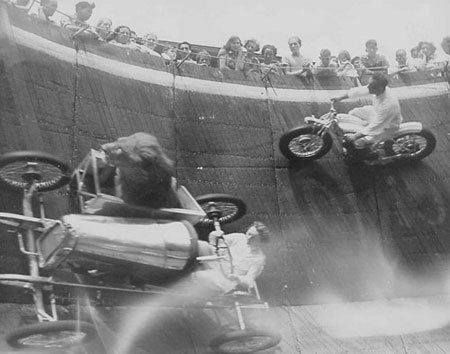
Take that, dogs – this is the ultimate “head out of the window” experience.
Apparently, women riding with lions in the sidecar or passenger seat was a big thing because… well, I’m guessing that no-one had invented the Internet yet. More seriously, look at this picture. This is an excellent example of keeping everything up in the air as long as you keep the balance right.
To get to this stage, someone had to:
- Find a lion.
- Train the lion to deal with the noise and rush of cars (or find an appropriate lion sedative).
- Find a woman who liked driving along walls.
- Convince her that it’s ok that she’s riding next to a large wild animal that could fall on her if it all went wrong and would either crush her or maul her.
- Find a stalker crazy enough for the woman that he would learn to ride on a wall so he could sashay behind her nonchalantly as she went on her lion date.
- Hire Vidal Sassoon to style the lion’s mane because, seriously, check out that ‘do’. That lion is owning the ‘drome.
Of course, one mistake, one miscommunication, one problem with the track, and those keen people looking over the sides at the world’s smallest NASCAR track will get what they secretly want, which is a sudden and unpleasant fusion of human, metal and lion. With extra fuel poured over it.
Teaching a large class, or a smart class, or a large and smart class, is a really challenging activity. You can’t prepare for the exact questions that students will ask and this gives you two options: don’t take questions or get good at rolling with it and staying on your feet. Keeping the momentum going in class is crucial. Once you have the class with you, you have to keep moving, heading in different directions, taking what they say and integrating it. Basically, good teaching with a good class is like trying to write a coherent screenplay for a movie that is being filmed now, except that they keep changing the actors and the plot on you as you go. How do we prepare someone for this?
To get to this stage, you have to:
- Work out if you have the ability or the desire to teach. (First, find your lion…)
- Train yourself to deal with difficult questions, active classes, changing techniques and methodologies, often by working from an excellent background in theory and practice. (Or find an appropriate stimulant. Like coffee. 🙂 )
- Find a class that needs a teacher like this or turn your existing classes into that class.
- Prepare your students for the fact that asking questions isn’t going to hurt them, that appearing wrong is part of learning and that their learning experience doesn’t have to be scary or dull.
- Find some other teachers, or support staff, who think the same way as you do and get them together.
- Style your materials to match your teaching, your students and your environment. (Fix your ‘do’ but in the teaching materials sense.)
You need to have an excellent preparation strategy to be able to look like you’re just handling things on the fly. The amount of work, practice and preparation that must have gone into that “lion” picture says it all. Each participant trained for this and, most of the time, nothing went wrong. Like pilots, who train for the moment when they have to really earn their money, a lot of teaching is somewhat routine.
In class, with live students, with evolving situations and lots of questions – it can seem pretty intimidating but that’s when the preparation comes in.
Plus you have to remember that very few poorly answered questions are going to leave you lying in a pit of motorcycle parts, covered in fuel, while a lion wakes up beside you and looks at you. Comparatively, it’s really not that scary at all!
Proscription and Prescription: Bitter Medicine for Teachers
Posted: May 24, 2012 Filed under: Education | Tags: advocacy, blogging, curriculum, design, education, educational problem, higher education, learning, measurement, principles of design, reflection, resources, teaching, teaching approaches, tools, universal principles of design, workload Leave a commentAustralia is a big country. A very big country. Despite being the size of the continental USA, it has only 22,000,000 people, scattered across the country and concentrated in large cities. This allows for a great deal of regional variation in terms of local culture, accents (yes, there is more than one Australian accent) and local industry requirements. Because of this, despite having national educational standards and shared ideas of what constitutes acceptable entry levels for University, there are understandable regional differences in the primary, secondary and tertiary studies.
Maintaining standards is hard, especially when you start to consider regional issues – whose standards are you maintaining. How do you set these standards? Are they prescriptions (a list of things that you must do) or proscriptions (a list of things that you mustn’t do)? There’s a big difference in course and program definition depending upon how you do this. If you prescribe a set textbook then everyone has to use it to teach with but can bring in other materials. If you proscribe unauthorised textbooks then you have suddenly reduced the amount of initiative and independence that can be displayed by your staff.

Excuse me, Doctor, you appear to be writing in invisible ink…
As always, I’m going to draw an analogue with our students to think about how we guide them. Do we tell them what we want and identify those aspects that we want them to use, or do we tell them what not to do, limit their options and then look surprised when they don’t explore the space and hand in something that conforms in a dull and lifeless manner?
I’m a big fan of combining prescription, in terms of desirable characteristics, and proscription, in terms of pitfalls and traps, but in an oversight model that presents the desirable aspects first and monitors the situation to see if behaviour is straying towards the proscribed. Having said that, the frequent flyers of the proscription world, plagiarism and cheating, always get mentioned up front – but as the weak twin of the appropriate techniques of independent research, thoughtful summarisation, correct attribution and doing your own work. Rather than just saying “DO NOT CHEAT”, I try to frame it in terms of what the correct behaviour is and how we classify it if someone goes off that path.
However, any compulsory inclusions or unarguable exclusions must be justified for the situation at hand – and should be both defensible and absolutely necessary. When we start looking at a higher level, above the individual school to the district, to the region, to the state, to the country, any complex set of prescriptions and proscriptions is very likely to start causing regional problems. Why? Because not all regions are the same. Because not all districts have the money to meet your prescriptions. Because not all cultures may agree with your proscriptions.
This post was triggered by a post from a great teacher I know, to whom I am also related, who talked about having to take everything unofficial out of her class. Her frustration with this, the way it made her feel, the way it would restrict her – an award winning teacher – made me realise how privileged I am to work in a place where nobody really ever tells me what to do or how to teach. While it’s good for me to remember that I am privileged in this regard, perhaps it’s also good to think about the constant clash between state, bureaucracy and education that exist in some other places.
If You’re Stuck In Slow-Moving or Stopped Traffic – Should You Be?
Posted: May 23, 2012 Filed under: Education | Tags: education, higher education, hurdles, prerequisites, reflection, stuck in traffic, teaching, teaching approaches Leave a commentOn the way home tonight, we encountered substantial delays – 40 minutes to get out of the carpark due to a broken down car (not ours), a further 50 minutes to crawl the 5km home. Yes, that’s 90 minutes for 5km… (we drove today to save time. 🙂 )
I’ve spoken before about hurdles (activities or assignments that must be met before proceeding) and we had an interesting discussion in and around the comments regarding the potential fear factor associated with hurdles but also that hurdles must be chosen well. Pre-requisite courses function as hurdles – you must complete course A to attempt course B. In terms of course design, therefore, we must make sure that we set up our hurdles so that they are framed in a way that they are neither frustrating or fear-inducing. However, they must also be seen as necessary, which (of course) means that they must actually be necessary.

Go! Stop! About Turn! Walk Left! Stop! Radiate!
We can underestimate the importance of sharing information with our students so that they understand the reasons behind what we have asked them to do. If we don’t, we run the risk of the students trying to work out why we’re doing what we’re doing and, if they get it wrong, then they may take actions based on intentions that we don’t have. Worse, if uninformed, unengaged and under performing, then a sufficiently frustrated student will just slip away and leave our course.
Today, on the drive home, I only managed to find out what had happened in the car park just as I left. After spending 40 minutes crawling down 1.5 floors, having to negotiate to back out, having no idea what was happening and while I was watching a fuel gauge that was not giving me reassuringly full signs. Then, thinking I’d dealt with that hurdle, I leapt out into traffic, started moving again and then hit a patch of road that crawled for the next 40 minutes.
What’s interesting about this is that I can see notionally live traffic updates on my maps overlay on my phone (or, because I was driving, my wife could see it on her phone). Now this would have been great, except that it was completely and utterly inaccurate for the bad patch of road I was on. “Green! No obstacles!” So I could not depend upon the map application to give me guidance because what it was saying was quite obviously not reflecting the situation I was experiencing.
This is exactly what some of our students feel like – trapped along a path that they have to follow, not knowing where and when they can make change, not necessarily getting the information that they need to make an informed choice. If, like me, they were also watching the gas needle head towards Empty (as both a measure of their resources or their dedication), then they may have had to make a choice to turn off the path and come back later.
Except, as we know, a University career is easier to walk away from than a car – despite costing several times more!
Today, after an international flight home yesterday, and a longish day, I spent 1.5 hours in a car for reasons that I don’t understand, powerless, uninformed and arriving home none the wiser as to why it all happened. Tomorrow, although I was going to drive, I’m now going to walk because, unless I break a leg, I will only take an hour in either direction. Today, too much frustration is leading me to question the utility of driving – fairly or not – because I have a very dim view of the drive home at the moment.
Today, the hurdles were set too hard, opaquely and were of no use to me. So, tomorrow, I won’t repeat the activity. That’s a pretty simple lesson.
Matters of Scale
Posted: May 20, 2012 Filed under: Education | Tags: advocacy, captain jack harkness, captan jack, education, educational problem, higher education, learning, reflection, teaching, teaching approaches, torchwood, university 20XX, workload Leave a commentI wrote about how important it is to get people properly involved in new learning and teaching approaches – students and staff – based on the the whole condemnation, complaint, compliance and commitment model. But let me be absolutely clear as to why compliance is not enough.
Compliance doesn’t scale.
If you have a lot of people who are just doing what they’re told, but aren’t committed to it, then they’re not going to be willing explorers in the space. They’re not going to create new opportunities. Why? Because they don’t really believe in it, they’ve just reached the rather depressing stage of shuffling along, not complaining, just doing what they’re told. When we don’t explain to people, or we don’t manage to communicate, the importance of what we’re doing, then how can they commit to it?
I’m fortunate to be at a meeting full of people who have done amazing things. I’m really only here as a communicator of some great stuff going on at my Uni and in Australia, I’m a proxy for amazing things. But being around these people is really inspiring. They know why they’re doing it, they’ve heard all of the complaints, fought off the underminers and, in some cases, had to make some very hard calls to drive forward positive agendas for change. (Goodness, such phrases…) But they also know that they need other people to make it happen.
We need commitment, we need passion and we need people to scale up our solutions to the national and international level.
The Higher Educational world is changing – there’s no doubt about that. Some people look at things like Khan Academy and think “Oh no, the death of traditional education.” Most of the discussions I’ve had here, and I agree with this, are more along the lines of “Ok, how can we use this to go further?” Universities are all about knowledge and the development/discovery of more knowledge. If we have people out there with good on-line courses that cover the basics in disciplines, why not use them to allow us to go further? The gap between what I teach my undergraduates and what I do in my research is vast – just about anything I can do to get my students to develop skill and knowledge mastery is a good thing.
Ok, we are going to have to sort out quality issues, maybe certification or credit recording, work out if someone has done certain courses: there’s a lot of organisation to do here if we want to go down this path. But, most importantly, I don’t see this as the death of the University – I see this as an amazing opportunity to go further, do better things, allowing students and staff to get much, much more out of the educational system.
So everyone has learnt to program by the time that they’re 12? FANTASTIC! Now, we can start looking at actual Computer Science and putting trained algorithmicists out there along with extremely well-trained software engineers. We can finally start to really push out the boundaries of education and get people working smarter, sooner.
Are there risks and threats? Of course. But, no matter what happens, the University of the 21st Century is not the University of the previous millennium. Change is coming. Change is here. We may as well try to be as constructive as possible as we try to imagine the shape of the University of tomorrow. We’re not talking about University 2100, we’re talking 20XX, where XX is probably closer than many of us think.
To quote Captain Jack Harkness:
“The 21st century is when everything changes. And we have to be ready.”
Picking Your Posts Carefully
Posted: May 18, 2012 Filed under: Education | Tags: blogging, education, higher education, reflection, vygotsky Leave a commentOf course, when you’re attending an important meeting where people will find out about your blog, it generally helps if the top blog post is not a semi-humorous post about learning teaching lessons from your cats.
Time your Vygotsky posts correctly!
Hurdles and Hang-ups: Identifying Those Things That Trip Up a Student
Posted: May 13, 2012 Filed under: Education | Tags: curriculum, design, education, educational problem, feedback, Generation Why, higher education, learning, measurement, reflection, teaching, teaching approaches 2 CommentsMost of the courses I teach have a number of guidelines in place that allow a student to, with relative ease and fairly early on, identify if they are meeting the requirements of the course. Some of these are based around their running assessment percentages, where a student knows their mark and can use this to estimate how they’re travelling. We use a minimum performance requirement that says that a student must achieve at least 40% in every component (where a component is “the examination” or “the aggregate mark across the whole of their programming assignments”) and 50% overall in order to pass. If a student doesn’t meet this, but would otherwise pass, we can look at targeted remedial (replacement) assessment in order to address the concern.

Bazinga! (With apologies to the Austrian athlete involved, who suffered no more injury than some cuts to his lower lip and jaw.)
One of the things we use is often referred to as a hurdle assessment, an assessment item that is compulsory and must be passed in order to pass the course. One of the good things about hurdle assessments is that you can take something that you consider to be a crucial skill and require a demonstration of adequate performance in that skill – well before the final examination and, often, in a way that is more practically oriented. Because of this we have practical programming exams early on in our course, to resolve the issues of students who can write about programming but can’t actually program yet.
It would be easy to think of these as barriers to progress, but the term hurdle is far more apt in this case, because if you visualise athletic training for the hurdles, you will see a sequence of hurdles leading to a goal. If you fall at one, then you require more training and then can attempt it again. This is another strong component of our guidelines – if we present hurdles, we must offer opportunities for learning and then reassessment.
Of course, this is the goal, role and burden of the educator: not the cheering on of the naturally gifted, but the encouragement, development and picking up of those who fall occasionally.
Picked correctly, hurdles identify a lack of ability or development in a core skill that is an absolute pre-requisite for further achievement. Picked poorly, it encourages misdirected effort, rote learning or eye-rolling by students as they undertake compulsory make-work.
I spend a lot to time trying to frame what is happening in the course so that my students can keep an eye on their own progress. A lot of what affects a student is nothing to do with academic ability and everything to do with their youth, their problems, their lives and their hang-ups. If I can provide some framing that tells them what is important and when it is important for it to be important, then I hope to provide a set of guides against which students can assess their own abilities and prioritise their efforts in order to achieve success.
Students have enough problems these days, with so many of them working or studying part-time or changing degrees or … well… 21st Century, really, without me adding to it by making the course a black box where no feedback or indicators reach them until I stamp a big red F on their paperwork and tell them to come back next year. If they can still afford it.
Rule 0: Read Your Sources Before You Cite Them
Posted: May 12, 2012 Filed under: Education, Opinion | Tags: authenticity, blogging, education, ethics, higher education, knuth, plagiarism, reflection, teaching, teaching approaches 1 Comment(This, once again, is a little more opinion/political but it does touch on some important teaching points and might be useful for a class in ethics. However, some of you might find my editorial stance disagrees with your perspective.)
Some of you will have seen that the Chronicle of Higher Education recently fired one of their blogging staff because she “did not meet The Chronicle’s basic editorial standards for reporting and fairness in opinion articles”. You can find the story in a number of places, and there’s a reasonable summary here, but, despite people trying to turn this into a debate on “left-wing victimisation clap trap” versus “freedom of speech” versus any number of the quite offensive straw men that were put up in the original blog, Naomi Schaefer Riley committed the cardinal sin.
She published work that made a claim which could not be substantiated by the references.
The title of her blog was “The Most Persuasive Case for Eliminating Black Studies? Just Read the Dissertations.” but, as it turned out, she hadn’t. The dissertations weren’t available to read so she wrote a scathing, dismissive and quite unpleasant article on incomplete knowledge. Then, when called on it, she claimed that she didn’t need to read them to write a 500 word blog post.
Regardless of everything else in the post, regardless of who is right, this is just not acceptable. Had she started from a position of assessing the abstracts, drawing a long bow and then saying “But, of course, we have to see the dissertations”, I suspect she’d still have her job. Journalists do this all the time. However, like scientists, there comes a point where you have to be able to pick up the grain of truth that you’re standing on and point to it. If it turns out that you’ve, effectively, made something up or, worse, misrepresented what you’ve read, then that’s unacceptable and in this case, quite rightly, the Chronicle asked her to go.

A book by Donald Knuth (which I won’t be speaking about today but there are not that many good Knuth shots. Don’t Google Image Search for him at work, because you’ll get an underwear model as well. [WHO IS NOT DONALD KNUTH, I HASTEN TO ADD.])
Of course, you know that I discovered that people had done this. How? The survey paper, to avoid plagiarising Knuth, had rephrased one of the clear and concise explanations – and they had introduced a distinctive way of representing the problem. (I still found the original much clearer.) It got to the stage that I could tell who had read the original or the survey from which twist they had in their framing paragraph for a key point, without having to spend time looking at the references.
Why had people done this? Because Knuth wasn’t readily available. Being in a 1965 publication meant that many libraries had shunted these ‘old books’ to stores as newer volumes came in and it required a week or two to get it back, sometimes longer. Sometimes these volumes were lost forever. (These days, I’m happy to say, there are many on-line sources for this paper. So there’s no excuse, if you’re in CS, you go off now and read yourself some Knuth.) The survey paper was easy to find and was pretty well written. It was just unfortunate that a wrinkle had crept in that allowed us to tell Knuth from Knuth-prime.
It’s still no excuse. It’s a pretty basic rule for us – if you’ve only read the abstract, you haven’t read the paper. If you haven’t read the paper, you can’t cite the paper. If you’ve read a survey, then you can cite the survey but not one of the surveyed papers. But, categorically and set in stone, if you haven’t read the paper then you can’t criticise the paper.
Personally, I think that Naomi Schaefer Riley’s article was pretty badly written, unnecessarily vicious and was the kind of article I’d describe as “written by the food critic before they entered the restaurant”. But that’s only my opinion of the worth of the article. For that, should she lose her job? No, of course not – we differ, that’s life. But for writing an article that insinuated in the text, and stated in the heading, that she had read something, upon which she based a vitriolic criticism, which she then recanted, claiming she didn’t have enough time?
I could lose my job for that. I could even lose my PhD for that.
My Vice Chancellor could lose his job for that.
It’s a bit of a shame that it took some community nudging for the Chronicle to do something here, but I think they did the right thing. If you want to write about our world and our standards, then I think you pretty much have to exemplify them yourselves. It’s all about authenticity. Fairness. Ethics. Something that I hope Naomi Schaefer Riley can think about and learn from. I hope she’s had a chance to think about this and go forward constructively from it sometime in the future. Maybe no-one has every called her on it before? Either way, the next time she shows up, I’ll happily read what she’s written – but I will be checking her references.
Deadlines and Decisions – an Introduction to Time Banking
Posted: May 9, 2012 Filed under: Education | Tags: education, higher education, learning, measurement, perry, reflection, resources, teaching, teaching approaches, time banking, time management, tools 3 CommentsI’m working on a new project, as part of my educational research, to change the way that students think about deadlines and time estimation. The concept’s called Time Banking and it’s pretty simple. Some schools already give students some ‘slack time’, free extension time that the students manage to allow them to manage their own deadlines. Stanford offers 2 days up front so, at any time in the course, you can claim some extra time and give yourself an extension.
The idea behind Time Banking is that you get extra hours if you hand up your work (to a certain standard) early. These hours can be used later as free extensions for assignment, up to some maximum number of days. This makes deadlines flexible and personalised per student.
Now I know that some of you already have your “Time is Money, Jones!” hats on and may even be waggling a finger. Here’s a picture of what that looks like, if you’re not a-waggling.

“Deadlines are fixed for a reason!”
“We use deadlines to teach professional conduct!”
“This is going to make marking impossible.”
“That’s not the right way to tie a bow tie!”
“It’s the end of civilisation as we know it!” (Sorry, that’s a little hyperbolic)
Of course, some deadlines are fixed. However, looking back over my own activities during the past quarter, I have far more negotiable and mutable deadlines than I do fixed ones. Knowing how to assess my own use of time in the face of a combination of fixed and mutable deadlines is a skill that I refine every year.
If I had up late, telling me to hand up on time or start earlier doesn’t really involve me in the process that’s required: making a decision as to how I’m going to manage all of my commitments over time, rather than panicking when I run into a deadline.
I can’t help thinking that forcing students to treat every assignment deadline as fixed, whether it needs to be or not, doesn’t deal with the student in the way that we try to in every other sphere. It makes them depend upon the deadline from an authority, rather than forcing them to look at their assignment work across a whole semester and plan inside that larger context. How can we produce students who are able to work at the multiplicity or commitment level, sorry, Perry again, if we force them to be authority-dependent dualists in their time management?
Now, before you think I’ve gone mad, there are some guidelines for all of this, as well as the requirement to have a good basis in evidence.
- We must be addressing an existing behavioural problem. (More on this later.)
- Some deadlines are immutable. This includes weekly dependencies, assignments where the solutions are revealed post submission, and ‘end of semester’ close-off dates.
- The assessment of ‘early and satisfactory’ must be low effort for the teacher. We don’t want to encourage handing up empty assignments a week ahead. We want to encourage meeting a certain standard, preferably automatically assessed, to bring student activity forward.
- We have limits on the amount you can bank or spend, to keep assessment of the submitted materials inside the realm of possibility and, again, to reduce unnecessary load on the staff,
- We don’t tolerate bad behaviour. Cheating or system fiddling immediately removes the system from the scheme.
- We provide up-front hours to give all students a base line of extension.
- We integrate this with our existing ‘system problem’ and ‘medical/compassionate problem’ extension systems.
Now, if students don’t have a problem, there’s nothing to fix. If our existing fixed deadline system encouraged students to start their work at the right time and finish in a timely fashion, then by final year, we wouldn’t need anything like this. However, my data from our web submission system clearly indicates the existence of ‘persistently’ late students and, in fact, rather than getting better, we actually start to see some students getting later in second, third and honours years. So, while this isn’t concrete, we’re not seeing the “Nope, no problem here” behaviour that we’d like. So that’s point 1 dealt with – it looks like we have a problem.
Most of the points are technical issues or components of an economic model, but 6 and 7 address a more important issue: equity. Right now, if your on-line submission systems crash the day before the assignment is due, what happens? Everyone who handed in their work has done the right thing but, because you have to grant a one day extension, they actually prioritised their work too early. Not a huge deal in many ways, because students who get their work in early probably march to a different drum anyway, but it makes a mockery of the whole fixed deadline thing. Either the deadline is fixed or it isn’t – by allowing extension on a broad scale for any reason, you’re admitting that your deadline was arbitrary.
We’re trying to make them think harder than that.
How about, instead, you hand out 24 hours of time in the bank. Now the students who handed up early have 24 hours to spend later on and the students who didn’t get it in before the crash have a fair chance to get their work in on time. Student gets sick, your medical extensions are now just managed as time in the bank, reflecting the fact that knock on effects can be far greater than just getting an extension for a single assignment.
But we don’t go crazy. My current thoughts are that we’d limit the students to only starting to count early about 2 days before the assignment is due, and allow a maximum of 3 days extension (greater for medical or compassionate). This keeps it in our marking boundary and also, assuming that you’ve placed your assignments in the context of the appropriate knowledge delivery, keeps the assignments roughly in the same location as the work – not doing the assignment at the beginning of the term and then forgetting the knowledge.
So, cards on the table, I’m writing a paper on this, identifying exactly what I need to look at in order to demonstrate if this is a problem, the literature that supports my approach, the objections to it and the obstacles. I also have to spec the technical system that would support it and , yes, identify the range of assignments for which it would work. It won’t work for everything/everyone or every course. But I suspect it might work very well for some areas.
Could we allow team banking? Course banking? Social sharing? Community involvement (donation to charity for so many hours in the bank at the end of the course)? What could we do by involving students in the elastic management of their own time?
There’s a lot more but I’d love to hear some thoughts on it. I look forward to the discussion!
Heroes
Posted: May 7, 2012 Filed under: Education | Tags: advocacy, alan turing, Arland D Williams, Arland Williams, bruno schulz, education, heroes, higher education, inspiring students, learning, reflection, teaching, teaching approaches, turing, work/life balance 1 Comment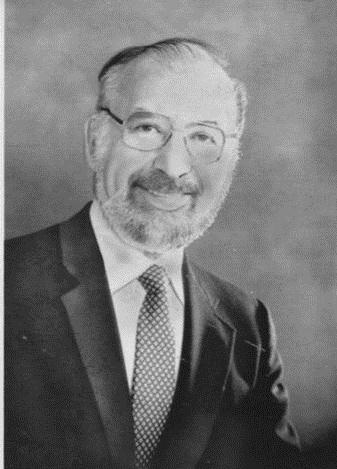
Arland D. Williams, Jr (1935 – 1982)
I know that I learn best when I’m inspired and engaged, so I regularly look for things around me that I can bring into the classroom that go beyond “program this” or “design that”. Our students are surrounded by the real world and, unfortunately, it’s easy to understand why they might be influenced by things that are less than inspirational. I don’t want to be negative, but there are so many examples of bad behaviour on the national and international stage that, sometimes, you really wonder why you bother.
So, today, I’m going to talk about four people. Regrettably, three of them some of you won’t be able to talk about because of personal convictions, political considerations or the ages of your class, but I hope that most of you will either have learned something new or remembered something important by the time I’m finished. Are these people actually heroes, given the title of my post? Well, one is a professional inspiration to me, one is an artistic inspiration to me (and reminder of the importance of what I’m doing), one is generally inspiring in the area of democracy and dedication, and the other… well, the other, I can barely look at his picture without wondering if I could ever approach the level of selflessness and heroism that he demonstrated. But I’ll talk about him last.

Alan Turing (1912-1954)
This is Alan Turing, the most likely candidate for the term “Father of Computer Science”. Witty, well-educated, highly intelligent and thoughtful, he was leader in cryptanalysis at Bletchley Park, providing statistical and mathematical genius to breaking codes including the design of the bombe, the machine that attacked Enigma. Importantly, for me as a Computer Scientist, he developed Turing Machines, effectively providing the foundations of studies in the theory of computation. He provided the first detailed design of a computer that used a stored program, very different from the electrical calculators of the day. He defined some of the key terms that we still use in Artificial Intelligence. (There’s so much more but it wouldn’t mean much to you outside the discipline, but he’s well worth looking up.)
Of course, some of you can’t mention Turing to your students, because he was a known homosexual, with a conviction for gross indecency in 1952 after admitting to a consensual homosexual relationship. He had a choice between imprisonment or chemical castration (he chose the latter) and his security clearance was revoked and he was barred from continuing with his security work. He was found dead in 1954, having (most likely) committed suicide.
There is no doubt that the field I am in is the better (or even exists) for Turing having lived and worked in this field. We are poorer for his early loss and, personally, I’m ashamed that persecution based on his sexual orientation may have led to the premature self-administered death of a genius.
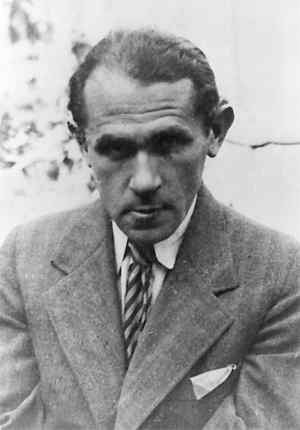
Bruno Schulz (1892 – 1942)
Meet Bruno Schulz, author, artist and critic. Schulz wrote some incredible works, contributed murals and was, despite his somewhat hermitic nature, an influential contributor to the arts. Schulz was born and lived, for most of his life, in Drohobych, Galicia. His contributions, although limited by his early death, include the highly influential works “Sanatorium Under the Sign of the Hourglass” and “The Street of Crocodiles”. In 1938, he was awarded the Polish Academy’s Golden Laurel award for his works and translations.
I am currently writing a series of stories that were inspired, in part, by the “Sanatorium” with its dreamlike qualities, stories interweaving with unreliable narration and innate and unexpected metamorphoses. Schulz is a fascinating counterpoint to Borges for me, woven with the immersion in Jewish culture I would expect from Singer, but with a different tone that comes from through, even in the English translations I have to read.
We have no more works from Schulz, not even the fragments of the book he was working on at the time of his death “The Messiah”. Why was Schulz killed? After the German invasion of the Soviet Union in the Second World War, Drohobych was occupied and, for a time, Schulz (who was Jewish) was protected by a Gestapo officer who admired his artistic work. Unfortunately, another Gestapo officer, a rival of the first, decided to kill this “personal Jew” and shot Schulz on the way home. You will excuse me for being confusing by referring to neither officer by name.

Fang Lizhi (1936 – 2012)
This person you may have heard of. Fang Lizhi died very recently, a Chinese Astrophysicist who lived in exile for over 22 years, after a life spent trying to pursue science despite being politically persona non grata and, for many years, not being able to publish under his own name. He survived hard labour during his re-education by the worker class during the cultural revolution but continued to fight against what he saw as severe obstacles to the pursuit of his scientific aims, including proscriptive ideological opposition to some of the key ideas required to be a successful astrophysicist or cosmologist.
In 1989, he was highly instrumental in the movement that occupied Tiananmen Square, despite not being directly involved in the protest and, once those protests had been dealt with, he decided that, with his wife, his safety was no longer ensured and he sought refuge at the US Embassy. He remained in the embassy for over a year, while diplomatic negotiations continued. Eventually he was allowed to leave and had an international career in his discipline, as well as speaking regularly on human rights and social responsibility. Of all the people on this list, Professor Fang died of old age, at 76, having managed to escape from the situation in which he found himself.
We talk a lot about academic freedom, or the entitlement to academic freedom, but we often forget that there is a harsh and heavy price imposed for it, depending upon the laws and the governments in which we find ourselves. That is a hard and heavy lesson.
Some of you will not be able to talk about Alan Turing, because he was gay. Some of you may have difficulty discussing Bruno Schulz, because of the involvement of Nazis or because he was a Jew. Some of you have may have stopped reading the moment you saw the picture of Fang Lizhi, because you didn’t want to get into trouble. Please keep reading.
So let me give you the story of the first man on this page. Let me tell you about a man who was a bank investigator. Recently divorced, with a youngest child of 17. I want to tell you about him because his story is the simplest and the most complex. He has no giant academic backstory, no grand contribution to literature, no oppression to fight. He just choose to be good.
In 1982, Arland D. Williams, Jr, was a passenger on board a plane from Washington DC to Florida, Air Florida Flight 90, that took off in freezing weather, iced up, failed to gain altitude and slammed into the 14th Street Bridge across the Potomac. The crash killed four motorists and the plane slid forward, down into the Potomac, with the tail breaking off as it did so. There were 79 people on board. Only 6 made it up and onto the tail, which was still floating.
When the rescue helicopter got there, they started recovering people from the tail section, dropping rescue ropes. Williams caught the rescue ropes multiple times and, instead of using them for himself, he handed them to the other passengers.
Life vests were dropped. Rescue balls. He handed them on.
The helicopter, overloaded and struggling with the conditions, got every other survivor back to shore, sometimes having to pick up the weak survivors multiple times. But Williams made sure that everyone else got helped before he did.
Sadly, tragically, by the time the helicopter came back for him, the tail section had shifted and sank, taking him with it. As it happened, Williams had made so little fuss about himself during his actions that his identity had to be determined after the fact.
It would be easy, and cynical, to describe human beings in terms of animals, given some of the awful things we do. Taking away a man’s livelihood (maybe even killing him) because of who he’s in love with? Killing someone because you have an argument with someone else? Persecuting someone for trying to pursue science or democracy?
Yet their stories survive, and we learn. Slowly, sometimes, but we learn.
It would be easy to assume that everyone, when desperate enough, would scrabble like rats to survive. (Except, of course, that not even rats do that. We just tell ourselves they do because we can’t sometimes recognise that this is just a paltry excuse for human evil.)
Here is your counter example – Arland Williams. Here is your existential proof that revokes the “WE ARE ALL LIKE THIS” Myth. There are so many more. Go back to the top of the page and look at that ordinary, middle-aged man. Look at someone who looked down at the freezing water around him and decided to do something great, something amazing, something heroic.

 Nick Falkner