
Let’s Turn Down the Stupid (Ignorance is Our Enemy)
Posted: June 11, 2012 Filed under: Education, Opinion | Tags: education, educational problem, Generation Why, in the student's head, learning, student perspective, thinking 1 Comment(This is a longish opinion piece that has very little educational discussion. I leave it you as to whether you wish to read it or not.)
I realise that a number of you may read my blog posts and think “Well, how nice for him. He has tenure in a ‘good’ University, has none of his own kids to worry about and is obviously socially mobile and affluent.” Some of you may even have looked up my public record salary when I talk about underpaying teachers and wondered why I don’t just shut up and enjoy my life, rather than blathering on here. It would be easy to cast me as some kind of Mr Happy/Pollyanna figure, always seeing the positive and rushing out onto the sports field with a rousing “We’re all winners, children” attitude.
Nothing could be further from the truth. I get up every day knowing that the chances are that I will not make a difference, that all of my work will be undone by a scare campaign in a newspaper, that I may catch a completely preventable disease because too few people got vaccinated, that I and my family may not have enough food or lose my house because people ignore science, that anti-scientific behaviour is clawing back many of the victories that we have already achieved.
I’m no Pollyanna. I get up every day ready to fight ignorance and try to bring knowledge to places where ignorance reigns. Sometimes I manage it – those are good days. But I can’t just talk to my own students, I have to reach out into the community because I see such a small percentage of a small percentage as my students. If I want lasting change, and I believe that most educators are all trying to change the world for the better, then I have to deal with the fact that my message, and my students, have to be able to be seen outside of our very small and isolated community.
This morning, while out running, we had gone a bit over 14 kilometres (about 9 miles) when I saw a cyclist up ahead off us, stopped on a little wooden ramp that went under one of the bridges. He heard us coming and waved us down, very quickly.
Someone had strung fishing line across the path, carefully anchored on both sides, at around mid-chest height for adult runners and walkers, or neck/head height for children.
Of course, the moment we realised this we looked around for the utter idiots who were no doubt waiting to film this or watch it but they showed a modicum of sense in that we couldn’t see them. (Of course, what could we have done even if we had seen them. They were most likely children and the police aren’t likely to get involved for a ‘fishing line’ related incident.) What irritated me most about this was that I was running with someone who was worried about the future and I was solemnly telling her that I had great hope for the future, that the problems could be solved if we worked at it and this is what I always tried to get across to my students.
And then we nearly got garrotted by an utterly thoughtless act of stupidity. Even a second’s thought would lead you to the understanding that this was more than a joke, it was potentially deadly. And yet, the people who put this up, who I have no doubt waited to watch or film it, were incapable of doing this. I can only hope that they were too young, or too mentally incapacitated, to know better. Because when someone knowingly does this, it takes them from ignorance to evil. Fortunately, the number of truly evil people, people who do these things in full knowledge and delight, are small. At least, that’s what I tell myself to get myself to sleep at night. We must always be watchful for evil but in the same way that we watch for the infrequently bad storm – when we see the signs, we batten down, but we don’t live our lives in the storm cellar. Ignorance, for me, is far more prevalent and influential than evil – and often has very similar effects as it can take people from us, by killing or injuring them or by placing them into so much mental or physical pain that they can no longer do what they could have done with their lives.
The biggest obstacle we face is ignorance and acts taken in ignorance, whether accidentally or wilfully so. There’s no point me training up the greatest mind in the history of the world, only for that person to be killed by someone throwing a rock off a bridge for fun. Today, I could easily have been seriously injured because someone thought it was funny to watch people run into an obstacle at speed. Yes, the line probably would have broken and I was unlikely to have suffered too much harm. Unless it didn’t. Unless it took out an eye.
But I’m not giving up. I say, mostly joking, when I run across things like this “This is why we fight.” and I mean it. This is exactly why education is important. This is why teachers are important. This is why knowledge is important. Because, without all of these, ignorance will win and it will eventually kill us.
I am sick of stupid, ignorant and evil people. I’m sick of grown men getting away with disgraceful behaviour because “boys will be boys”. I’m sick of any ignorant or thoughtless act being tolerated with “Oh well, these things happen”. However, me being sick of this does nothing unless I act to stop it. Me acting to stop it may do nothing. Me doing nothing to stop it definitely does nothing.
What are the Fiction and Non-Fiction Equivalents of Computer Science?
Posted: June 9, 2012 Filed under: Education, Opinion | Tags: data visualisation, design, education, educational problem, herdsa, higher education, icer, learning, principles of design, reflection, student perspective, teaching, teaching approaches, thinking, universal principles of design 2 CommentsI commented yesterday that I wanted to talk about something covered in Mark’s blog, namely if it was possible to create an analogy between Common Core standards in different disciplines with English Language Arts and CS as the two exemplars. In particular, Mark pondered, and I quote him verbatim:
”Students should read as much nonfiction as fiction.” What does that mean in terms of the notations of computing? Students should read as many program proofs as programs? Students should read as much code as comments?
This a great question and I’m not sure that I have much of an answer but I’ve been enjoying thinking about it. We bandy the terms syntax and semantics around in Computer Science a lot: the legal structures of the programs we write and the meanings of the components and the programs. Is it even meaningful to talk about fiction and non-fiction in these terms and where do these fit? I’ve gone in a slightly different direction from Mark but I hope to bring it back to his suggestions later on.
I’m not an English specialist, so please forgive me or provide constructive guidance as you need to, but both fiction and non-fiction rely upon the same syntactic elements and the same semantic elements in linguistic terms – so the fact that we must have legal programs with well-defined syntax and semantics pose no obstacle to a fictional/non-fictional interpretation.
Forgive me as I go to Wikipedia for definitions for fiction and non-fiction for a moment:
“Non-fiction (or nonfiction) is the form of any narrative, account, or other communicative work whose assertions and descriptions are understood to be factual.” (Warning, embedded Wikipedia links)
“Fiction is the form of any narrative or informative work that deals, in part or in whole, with information or events that are not factual, but rather, imaginary—that is, invented by the author” (Again, beware Wikipedia).
Now here we can start to see something that we can get our teeth into. Many computer programs model reality and are computerised representation of concrete systems, while others may have no physical analogue at all or model a system that has never or may never exist. Are our simulations and emulations of large-scale system non-fiction? If so, is a virtual reality fictional because it has never existed or non-fictional because we are simulating realistic gravity? (But, of course, fiction is often written in a real world setting but with imaginary elements.)
From a software engineering perspective, I can see an advantage to making statements regarding abstract representations and concrete analogues, much as I can see a separation in graphics and game design between narrative/event engine construction and the physics engine underneath.
Is this enough of a separation? Mark’s comments on proof versus program is an interesting one: if we had an idea (an author’s creation) then it is a fiction until we can determine that it exists, but proof or implementation provides this proof of existence. In my mind, a proof and a program are both non-fiction in terms of their reification, but the idea that they span may still be fictional. Comments versus code is also very interesting – comments do not change the behaviour of code but explain, from the author’s mind, what has happened. (Given some student code and comment combinations, I can happily see a code as non-fiction, comment as fiction modality – or even comment as magical reality!)
Of course, this is all an enjoyable mental exercise, but what can I take from this and use in my teaching. Is there a particular set of code or comments that students should read for maximum benefit and can we make a separation that, even if not partitioned so neatly across two sets, gives us the idea of what constitutes a balanced diet of the products of our discipline?
I’d love to see some discussion on this but, if nothing here, then I’m happy to buy the first round of drinks at HERDSA or ICER to start a really good conversation going!
Thoughts from the house of enquiry.
Posted: June 1, 2012 Filed under: Education, Opinion | Tags: advocacy, authenticity, education, ethics, higher education, identity, Ingkarni Wardli, james mcwha, peter dowd, principles, reflection, student perspective, teaching, teaching approaches 1 CommentToday we renamed the building that is at the heart of the Faculty of Engineering, Computer and Mathematical Sciences. The new name for our new eight-storey, highly efficient and environmentally sustainable building, only 18 months old, is Ingkarni Wardli. This name comes from the original custodians of the land upon which the University is built, the Kaurna people, one of the indigenous people of Australia. The name means “place of learning or enquiry” but another reading of the name is “house of enquiry“, which is my favourite.

Ingkarni Wardli
The University of Adelaide
At today’s ceremony, there were the usual speeches that ones would expect at an event of this nature but the big difference for me was the sincerity and genuine recognition that accompanied the renaming. The Kaurna people are extremely pleased to have a building named in this way, and that it is this building, because they value education and enquiry and place a strong emphasis in local cultural and educational leadership. Our Executive Dean, Professor Peter Dowd, has been strongly committed to this for some time and, to do it properly, it has taken some time. (Our Vice Chancellor, Professor James McWha, has made our reconciliation week events, recognising the custodianship and contribution of the indigenous communities, a significant part of our University culture for over a decade, and has also been strongly supportive of this initiative.)
Why did it take time? Because it would have been easy to do it quickly and get it wrong. The unthinking or uninformed use of words from another language are the source of much derision on the Internet and there are even web sites devoted to it. (Don’t even ask about that unfortunate town in Europe whose name is an obscenity in English.) It would have been easy to drag together a few smatterings of language from various peoples across the region, or from the larger groups in the East of Australia, and jam this name on to the building.
Of course, it would have been a meaningless and empty gesture – potentially even insulting in its ignorance – while giving a number of people that nice warm feeling that they had used a ‘native’ name.
I work at a University. Knowledge is our business. To be more precise, the correct use of knowledge is our business. For us, this would have been far worse than launching a Nova car in a Spanish speaking country – this would have revealed us to be shallow and insular, uncaring and insensitive. Ignorant.
So it took a while. We approached the Kaurna community and quickly discovered that our original suggestion was a word that made no sense by itself – it had to be combined with another word to become a sensible phrase. Approval was sought and granted. Plans were made. Signage was changed. Today, however, the building’s name actually changed. From now on, it is Ingkarni Wardli.
I felt privileged to be a part, even in a very minor way, in today’s ceremony. The Dean’s speech emphasised the importance of the name, why we had chosen it and how it brought our cultures together. He made a point that there are many synonyms for recognition but that the two most common antonyms are ignorance and forgetfulness. By recognising the Kaurna people and asking them for a name, to work with us on providing a name, we show our awareness, our remembrance and our knowledge of their presence in the past and in the present. The representatives of the Kaurna, among them a senior Kaurna elder who gave a wonderful speech, and other peoples present clearly felt recognised, acknowledged and remembered and this cemented the importance of the ceremony. This was not a segregated event – it was all of us together, bound by our love of learning and knowledge. Seekers all, together.
I have, with some regret, seen people sniping at the name, pulling faces, making comment about how long it took, even suggesting that no-one would use the name. To them, I say, grow up. Our students learn from us (the good and the bad things we do) and we have no time for such facile and, ultimately, useless gestures. If you genuinely want to change the name, state your case, make a stand and work to change it. If not, then start using it without the eye-rolling or deliberate mis-pronunciation. Names change all the time, for far less significant reasons than this. To snipe at a name just because of the race of the people it came from? I’m sure that there’s a word for that – and it’s not one that I would ever want to see associated with someone involved in the formation of new people and the development of emerging thinkers.
There are great divides between many cultures and it is rare to be able to find a bridge that connects two disparate cultures in a way that aligns their most treasured characteristics. The naming of our new building is a bridge between the learning culture that we all value at our University and the learning culture so valued, and recognised, by the Kaurna people.
This is a good name. I look forward to using it.
Students and the New Content Models – What Would We Have Done?
Posted: May 14, 2012 Filed under: Education, Opinion | Tags: advocacy, authenticity, copying, copyright, education, higher education, identity, learning, piracy, plagiarism, quit, resources, teaching, teaching approaches, tools 1 CommentI’m heading over to Cupertino this week to talk at Apple’s Education branch about institutional support for iPads used in teaching. As it turns out, there are some good ways and not-so-good ways to get a large rollout of tablet devices into a University and we’ve, well the Faculty of Sciences, have managed to have a very successful roll-out. To support this, they now have an all-electronic textbook model so that students no longer have to lug 30kg (66lbs) of textbooks around with them.
This is bad for physiotherapists but great for the students. Well, for those who buy the books.
We’ve seen the purchasing of textbooks drop dramatically over recent time. There are a lot of factors at play here: changing demography so that more students have to work and have to decide what to spend their money on, a return to charging students for study (even as part of a long-term loan scheme), the fact that books have a limited resale value because new editions (and associated electronic resources) are released annually for most texts… There’s a lot going on. The fact that books are heavy and hard to lug around is just one more part of it.
Now the whole secondhand market brings me to an interesting point. Students appear, small scale and informal survey here so this is bordering on anecdata, to favour buying the physical text and the electronic version. That way they get something large and clunky to read at home, the satisfaction of the physical book that never needs charging, while having the convenience of a searchable reference that is always available as long as they have their gadget with them.
But students aren’t silly about these things. They will ask you, up front, which textbook they actually need, which is a fair question. We have reduced our own dependency on textbooks quite a lot because (a) many students won’t buy it anyway and (b) we can put a few into the library and they will function quite well in reference mode instead. However, it goes beyond a “what do I buy”, it also comes down to a “what can I use that will meet my requirements”?
A real book is an amazing thing but, ultimately, if someone hasn’t indexed it properly, you’ll quickly find that you have to dangle page markers out the side, start annotating, and read the whole thing cover to cover.
You can only do this with an eBook (on whatever format) if someone has given you the ability to do so. There are a number of electronic books that my students won’t buy because they have restricted search abilities, or constrain the way you can label pages.
Worse, there are a number of textbooks that students won’t touch with a bargepole because they have limited licence lifespans or have been shown to be unreliable in their availability. All it takes is a hiccup in an on-line verification server and suddenly a book that you paid $50 for is now inaccessible. Of course, this also quite explicitly gives you no resale or secondhand value as well, if the authentication is locked to your identity or the ID of your device.
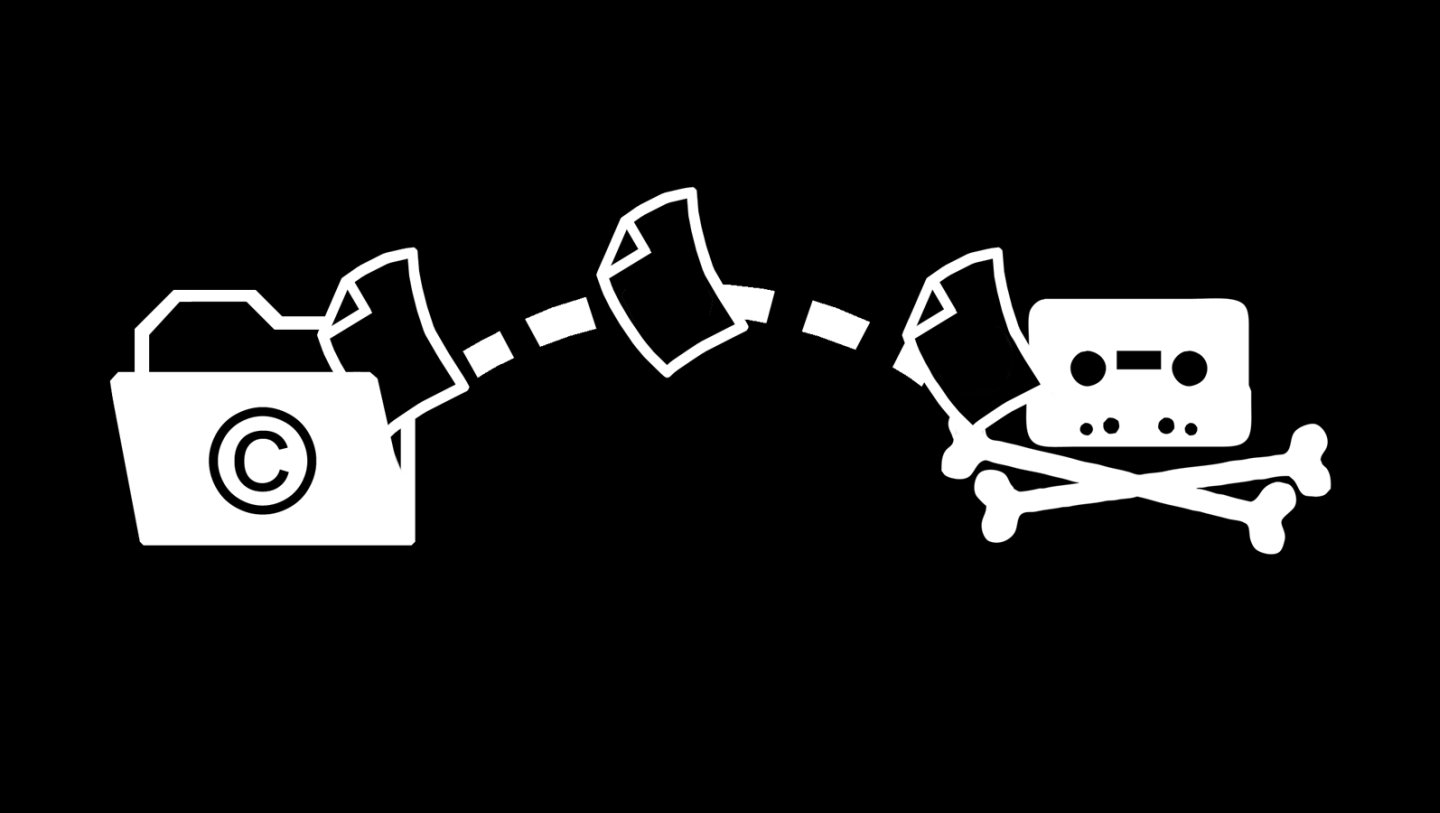
It is no surprise that a model that has been creeping into gaming is now seeping into textbooks. You buy the legitimate copy and then download the pirate version because the pirate version either doesn’t have the irritating levels of Digital Rights Management (DRM) that reduces your usage or it provides an additional set of features by removing arbitrary restrictions. Of course, I cannot condone this in any sense – because it supports piracy and the number of people who would use the pirate copy without buying a licence will, most likely, outstrip the number of people who buy a licence and then have a second copy. Seriously, I’ve never done it, don’t think that it’s ethically defensible but, more importantly, it reduces the need to solve the actual problem. Rather than try and get some change going that will move us to a point where we don’t have to do this, you reduce the incentive to change because you just work around it. Don’t like Apple’s Walled Garden? Then don’t use an iPhone or start advocating for change – but don’t jailbreak your phone because you’re not addressing the root cause. Vote with your wallet, advocate, try to support good models and encourage positive change.
This is why I strongly support models like O’Reilly and Associates, where you can buy physical + digital, or just digital, and it arrives in a multiplicity of formats, DRM free and yours to pass on, as long as only one copy is in existence and use at any time. Immediately, this reduces the need to go to the pirate feeds. This brings back secondhand value. This reduces the impact of device loss or identity crash. Yes, someone can put their copy on a pirate feed, of course, but there are always going to be thieves and receivers of stolen goods. Rather than dealing with the minority who will do it anyway, I support O’Reilly because they make it easier for the majority who wish to make legitimate purchases.
When it comes to book piracy (even with a legitimate licence purchase in parallel), it is easy to say “Well, students shouldn’t be doing that” and, of course, I wish that they weren’t, and I completely agree that they shouldn’t be doing it. But can I understand why they’re doing it when the products that are strongly limited and restricted actually provide a less attractive option than the physical book, especially when the book can be snatched out of your hands through a software error! I also understand, and completely agree, that rights holders should be rewarded for their efforts and want to find a mechanism that allows people to use items that they have purchased as they wish, while still allowing the rights handling and money issues to proceed in a way that has, as its primary affordance, a legitimate and rewarding experience for all participants. I think that O’Reilly (and the other providers who are following them) have set up the right way of doing it – set your price correctly, place your product into that slot in an attractive way and the vast majority of your interactions will be positive.
I was fortunate enough to see the time before photocopying became cheap and widespread and, as a result, I was able to see how book use changed. Initially, almost all of us bought textbooks for our courses, if we could afford to. We had to, because photocopying wasn’t that cheap and the library copies always ran out. Without PowerPoint slides and photocopies of slides, you depended upon your handwritten notes and the textbook. Demographically, almost none of us worked and most were supported by their parents, who also bought the books. Then PowerPoint crept in, along with photocopied notes. Reliance on the textbook started to slip. Then photocopiers became faster, more reliable and cheaper. Suddenly people were carrying entire photocopies of the book, because the cost and time involved had become manageable. The second-hand book market, once a valuable commodity, started to slip as the photocopy price/time/availability started to move – but also because improvements in desktop publishing and electronic production meant that new versions could come out annually rather than ever 2-4 years. Suddenly, rather than finding a recent edition or current edition, you could be looking at something that was 4 generations old. This was compounded by the inclusion of “free access” to supporting web sites or code testing environments – which had a fixed lifespan and didn’t transfer with the book.
I left traditional study in 2001 (returning in 2004 for a PhD but that’s a different textbook relationship) and bandwidth was increasing, download limits were increasing and the time/cost metric for finding and downloading books was starting to reach the attractive point. And that’s where we are today – a new mechanism for grabbing stuff has reached the cheap enough point. It’s a new content mode but it’s the same old problem. We can talk about what we want students to do and not to do but, historically, they’ve always done the maths. It’s good to see that O’Reilly and people like that are also doing the maths and making it easier for people to act legitimately and do the right thing by the rights holders, without forcing them to bend over backwards to pay for things the right way and get what they actually wanted in the first place.
E-Library: Electronic or Ephemeral?
Posted: May 13, 2012 Filed under: Education, Opinion | Tags: advocacy, blogging, design, eBook, education, educational problem, ephemeral library, ethics, Generation Why, higher education, resources, teaching, teaching approaches Leave a commentMy technical and professional library is a strange beast. Part Computer Science, part graphic design, part fiction, it’s made up of new books, books I had in Uni, books that I have inherited from other academics and books that I salvaged from libraries before they disappeared. But, of course, there is a new and growing section of my library, which you can’t see on the shelves – my E-Library. I realised that, this week, I now have started an E-Library collection that grows on a monthly basis as I add more content. I shall use the term eBooks for the rest of this post, but I’m not referring to a specific format – it’s just the digitised and electronically transferable image of a book that I’m concerned with.
Why am I buying eBooks? Because they arrive within minutes. I talk about this from a student perspective in tomorrow’s main post but, for me, I buy physical+electronic where I can because I will end up with a copy that I can use right now and a copy that I can add to my physical library.

Ephemeral Library X, © Krystyna Ziach
http://ny.artslant.com/global/artists/show/213982-krystyna-ziach?tab=ARTWORKS&user_id=209460
When I am gone, or when I retire, my professional library will be stripped for those things that will be kept, by me or my wife, and the rest will go out into the corridor, onto a table, for the rest of my colleagues and students to pick through. The remainder will probably be offered to a school, as the main library is not really interested in my 1950s Engineering texts. But what of texts that only exist in the Ephemeral Library? There are so many questions about this form of my library:
- Will I even be able to transfer all of my books? I buy mostly from suppliers who allow me to legitimately transfer the electronic copies but there are some of my books that are locked to my identity or my machine.
- How will I advertise them? Put up a webpage with a download link? That immediately breaches most publishers restrictions. Asking people to register their interest and then provide it to them takes effort and, most likely, means that it will be a low priority.
- Will the formats that I am buying today be a working format in 30 years time? We have a tendency to think in the now, forgetting that 78s are gone, 8-track is gone, cassette is mostly gone and vinyl is more fringe oriented than mainstream these days. Beta is buried deep in the ground with VHS buried just above it. The physical formats are being obliterated in the face of the relentless march of digitised containers but, remember, standards change and, worse, standards evolve within the standards themselves. At some stage BluRay X will break BluRay 1.2, most likely. In the same way, PDF 22 may lose the ability to handle earlier versions. Backwards compatibility is a grand goal but, time and again, we have eventually abandoned it on the argument that it is no longer necessary.
- Will I maintain the burden of updating my media to make sure that 3 doesn’t happen? How much spare time do you have?
- Finally, what happens when I die? I don’t think I’m allowed to transfer my iTunes account details to my wife – so over 260 songs will, at some stage, disappear from our shared iPods. The same for my library. Suddenly, books disappear. Possibly books that have not been published for years and will never be published again. Gutenberg dies and all of his Bibles spontaneously combust? Not the most robust model.
Obviously, part of the whole management process that will have to be recognised is the difference between renting, leasing and owning a digital property. If we are actually going to own things, and most people think that they own things but would be surprised if they read the fine print, we have to come up with a form of identity management that allows transfer of property to occur across legally recognisable lines. One can only hope that we’ve sorted out the simple things like child rearing, marriage, hospital visitation and social security access before we attempt to push through a global, trans-corportate, persistent rights management system that allows us to keep our collections together, even after we die.
Rule 0: Read Your Sources Before You Cite Them
Posted: May 12, 2012 Filed under: Education, Opinion | Tags: authenticity, blogging, education, ethics, higher education, knuth, plagiarism, reflection, teaching, teaching approaches 1 Comment(This, once again, is a little more opinion/political but it does touch on some important teaching points and might be useful for a class in ethics. However, some of you might find my editorial stance disagrees with your perspective.)
Some of you will have seen that the Chronicle of Higher Education recently fired one of their blogging staff because she “did not meet The Chronicle’s basic editorial standards for reporting and fairness in opinion articles”. You can find the story in a number of places, and there’s a reasonable summary here, but, despite people trying to turn this into a debate on “left-wing victimisation clap trap” versus “freedom of speech” versus any number of the quite offensive straw men that were put up in the original blog, Naomi Schaefer Riley committed the cardinal sin.
She published work that made a claim which could not be substantiated by the references.
The title of her blog was “The Most Persuasive Case for Eliminating Black Studies? Just Read the Dissertations.” but, as it turned out, she hadn’t. The dissertations weren’t available to read so she wrote a scathing, dismissive and quite unpleasant article on incomplete knowledge. Then, when called on it, she claimed that she didn’t need to read them to write a 500 word blog post.
Regardless of everything else in the post, regardless of who is right, this is just not acceptable. Had she started from a position of assessing the abstracts, drawing a long bow and then saying “But, of course, we have to see the dissertations”, I suspect she’d still have her job. Journalists do this all the time. However, like scientists, there comes a point where you have to be able to pick up the grain of truth that you’re standing on and point to it. If it turns out that you’ve, effectively, made something up or, worse, misrepresented what you’ve read, then that’s unacceptable and in this case, quite rightly, the Chronicle asked her to go.

A book by Donald Knuth (which I won’t be speaking about today but there are not that many good Knuth shots. Don’t Google Image Search for him at work, because you’ll get an underwear model as well. [WHO IS NOT DONALD KNUTH, I HASTEN TO ADD.])
Of course, you know that I discovered that people had done this. How? The survey paper, to avoid plagiarising Knuth, had rephrased one of the clear and concise explanations – and they had introduced a distinctive way of representing the problem. (I still found the original much clearer.) It got to the stage that I could tell who had read the original or the survey from which twist they had in their framing paragraph for a key point, without having to spend time looking at the references.
Why had people done this? Because Knuth wasn’t readily available. Being in a 1965 publication meant that many libraries had shunted these ‘old books’ to stores as newer volumes came in and it required a week or two to get it back, sometimes longer. Sometimes these volumes were lost forever. (These days, I’m happy to say, there are many on-line sources for this paper. So there’s no excuse, if you’re in CS, you go off now and read yourself some Knuth.) The survey paper was easy to find and was pretty well written. It was just unfortunate that a wrinkle had crept in that allowed us to tell Knuth from Knuth-prime.
It’s still no excuse. It’s a pretty basic rule for us – if you’ve only read the abstract, you haven’t read the paper. If you haven’t read the paper, you can’t cite the paper. If you’ve read a survey, then you can cite the survey but not one of the surveyed papers. But, categorically and set in stone, if you haven’t read the paper then you can’t criticise the paper.
Personally, I think that Naomi Schaefer Riley’s article was pretty badly written, unnecessarily vicious and was the kind of article I’d describe as “written by the food critic before they entered the restaurant”. But that’s only my opinion of the worth of the article. For that, should she lose her job? No, of course not – we differ, that’s life. But for writing an article that insinuated in the text, and stated in the heading, that she had read something, upon which she based a vitriolic criticism, which she then recanted, claiming she didn’t have enough time?
I could lose my job for that. I could even lose my PhD for that.
My Vice Chancellor could lose his job for that.
It’s a bit of a shame that it took some community nudging for the Chronicle to do something here, but I think they did the right thing. If you want to write about our world and our standards, then I think you pretty much have to exemplify them yourselves. It’s all about authenticity. Fairness. Ethics. Something that I hope Naomi Schaefer Riley can think about and learn from. I hope she’s had a chance to think about this and go forward constructively from it sometime in the future. Maybe no-one has every called her on it before? Either way, the next time she shows up, I’ll happily read what she’s written – but I will be checking her references.
100 Killer Words (Pleas Reed Allowed)
Posted: May 6, 2012 Filed under: Education, Opinion | Tags: authenticity, blogging, education, higher education, identity, ivory tower, killer words, learning, lighthouse, reflection, teaching Leave a comment
Writing over 100,000 words in a year has an impact on a lot of things. It affects the way that you think about whatever it is that you’re writing on. It affects the way that you manage your time, because you have to put aside 30-60 minutes a day. It affects the way that you think about your contact with the world because, when you have a daily deadline, you have to find something interesting every single day.
I have always read a lot. I read quickly and I enjoy it a great deal. But, until recently, apart from technical writing, my reading wasn’t important enough to keep track of. I surfed some pages over there? Oh, that’s nice. But now? Now, if I read something and there’s a germ of an idea, I have to keep track of it because I will need that to put together a post, most often late at night or on weekends. My gadgets and browsers are full of half-ideas, links, open pages, sketches. It changes you, writing and thinking this much in such a short time.
Let me, briefly, tell you how I’ve changed this year. I don’t know what to call this year because it’s most certainly not “The Year of Living Dangerously” or “The Year My Voice Broke” and it’s most certainly not “The Year of Living Biblically”. But let’s leave that for the moment. Let me tell you how I’ve changed.
- I have never used my brain so much, for such an extended period. My day is now full of stories and influences, connections and images, thinking, analysing, preparing and presenting. This is changing me as a person – giving me depth, making me more able to discuss issues, drawing out a lot of the frustration and anger I’ve wrestled with for years.
- I now try to construct working solutions from what I have, rather than excise non-working components. If reading and thinking this much about education has taught me anything, it’s that there is no perfect system and there are no perfect people. Saying that your system would work if only people were better is not achieving anything. You have to build with what you’ve got. People are building amazing systems from ordinary people, inspiration and not much else. No matter how you draw up your standards, setting a perfection bar, which is very different from a quality bar, will just lead to failure, frustration and negativity.
- I can see the possibility of improvement. People, governments, companies, systems – they often disappoint me. I have had the luxury of reading across the world and writing a small fraction of it. For every cruel, vicious, and stupid person, there are so many more other people out there. I have long wondered whether our world will outlast me by much. Am I sure that it will? No. Am I more optimistic that it will? Yes.
But it’s not all beer and skittles. I also work far too much. Along the way, my workaholism has been severely re-engaged. I worked a full (long) week last week and yet, here I am, 5 hours work on Saturday and somewhere along the lines of 8-10 hours on Sunday. That’s not a good change and I have to work out how I can keep all the positive aspects – because the positives are magnificent – without getting drawn down into the maelstrom.
I would like to describe this year as “The Year of Living” because, in many ways, I’ve never felt so alive, so aware, so informed and so capable of changing things in a constructive way. But, until I nail the overwork thing, it doesn’t get that title.
For now, because I’ve written 100,000 words or, 100 kiloWords, I’m going to call it “The Year of Killer Words” and hope that, homophones aside, that there’s some truth to that – that some of my words have brought light into the shadows and killed some monsters. Rather idealistically, that’s how I think of the job that we do – we bring light into dark places. Yes, a University can look like an ivory tower sometimes, and sometimes it is, but lighthouses look much the same – it’s the intention and the function that makes one an elitist nightmare and gives the other its worth and nobility.
That image, up the top? That’s what I think we’re doing when we do it right.
Let’s get out of the geek box – professional pride is what we’re after.
Posted: April 23, 2012 Filed under: Education, Opinion | Tags: advocacy, education, educational problem, Generation Why, higher education, teaching, teaching approaches Leave a commentAs a member of the Information and Communication Technology (ICT) education community, I deal with a lot of students and, believe me, they come in all shapes, sizes and types. Could I pick one of my students out of a crowd by type alone? No. Could I pick a Science, Technology, Engineering and Mathematics (STEM) class from looking at who is sitting in the seats? Sadly, yes, but probably more from gender representation than anything else – and that is something that we’re very much trying to change.

Can you spot the ICT student?
I’m not a big fan of ‘Geek pride’ or attempting to ‘reclaim’ pejorative terms such as dork or nerd. I don’t see why we have to try and turn these terms around, much less put up with them. I have lots of interests – if I paint in oil, I’m an artist, if I sketch on an iPad, I’m a nerd? What? If I can discuss David Foster Wallace or Margaret Atwood’s books at length I’m educated but if I do the same thing with Science Fiction, I’m a geek? Huh? I work a lot in information classification so you can understand that (a) this doesn’t make much sense to me and (b) highlights the problem that accepting the term, in any sense, might eventually give us ownership but it still allows people to put us in the geek box. Let’s get out of the geek box and reclaim a far more useful form of identify – professional pride in doing a job well, with a job that is worth doing.
Let me be more blunt – being good at my job and the interests I have outside of my job may have some relationship but it’s never going to be an ironclad correlation. Stereotypes aren’t useful in any area and, despite the popular stereotype of ICT and scientists on television and in other media, my community is made up many, many different kinds of people. Like any other community.
Forcing us to identify as geeks, dorks or nerds; requiring people to have an all-consuming love of certain TV shows; resorting to a ‘geek shibboleth’ of unpopular or obscure information to confirm membership? This are ways to create a fragmented set of sub-communities that are divided, diminished and able to be ignored. It also provides a barrier to entry because people assume that they must pass these membership tests to join the community when this is not true at all. I don’t want people to ignore our stream of education and the profession because of their incorrect perception of what is required to be a member.
(If you want to watch Buffy, watch Buffy! But don’t feel that you can’t be a programmer because you prefer Ginsberg to Giles.)
I am not a geek. Or a dork. Or a nerd. I am interested in everything – like so many of my students and like so many other people! I want to communicate to my students that they don’t need to be in a box to play in the world. And they shouldn’t put other people in there, either.
Here are my rather loose thoughts but I’d really like to get some dialogue going in the comments if possible, to help me get a handle on it so that I can communicate these things with my students.
- My interests and my job have some connection but one does not completely define the other.
I am an educator, a computer scientist, a programmer, a systems designer – none of these need to be apologised for, tolerated by other people or somehow seen as beneath any other discipline. (This applies to all lines of work – a job done well is a matter of pride and should be respected, assuming that the job in question isn’t inherently unethical or evil.) I can do these jobs well. I also happen to be a painter, a writer, a singer, a guitar player and an amateur long distance runner. If I had listed these terms first, how would you have classed me? What are my job interests and what are my real interests? As it happens, I enjoy the works of Borges, Singer, and Stoppard – but I also enjoy le Guin, Banks, Dick, Moorcock, Tiptree and Steven King.
If I take professional pride in doing my job well, and I then do perform it well, my interests, or the stereotypes associated with my interests, are irrelevant. Feel free to question my taste, but don’t use it to tell me who I am, what I can do and how my work should be appreciated. - All professions have jargon or, more precisely, all professions have a specific set of terms that are used to precisely convey information between practitioners. This is not cause for mockery or derision.
Watched “House” recently? When was the last time you went to the Doctor and called him or her a geek, even out of earshot, for referring to the abdomen instead of tummy? We’re all exposed to tech jargon because the tech is everywhere – when I use certain terms, I’m doing so to make sure that I’m referring to the right thing. We don’t want to turn tech talk into a shibboleth (a means of identifying the same religious group) but we want it to remain an accurate and concise way of discussing things in a professional sense. But, as a profession, this comes with an obligation… - As a profession, communication with other people is worthy of attention because it is important.
When the pilots are flying your plane, they’ll try and communicate with you in a combination of pilot-specific language and normal human communication. ICT people have to do that all the time and, admittedly, sometimes we succeed more than others. Some people in my profession try to confound other people when speaking for a whole lot of reasons that aren’t really that important – please don’t do it. It’s divisive and it’s unnecessary. If people don’t know what you’re talking about, educate them. Use the right words to do your job and the right words to communicate with other people. We don’t want to turn ourselves into some kind of exclusive club because, ultimately, it’s going to work against us. And it is working against us. - It’s time to grow up
Sometimes this all seems so… schoolyard. People called other people names and it caused group formation and division. Now, in an ongoing battle of “geek” versus “anti-geek” we revisit the playground and try and put people into boxes. It’s time to move away from that and accept that stereotypes are often untrue, although convenient, and that we don’t need to put people into these boxes. That applies to people outside the ICT community and to people inside the community. Every community has a range of people – you will always find people to support loose stereotypes but, look carefully, and you’ll always find people who don’t fit. - We’re not smarter and our field isn’t so hard that only amazing people can do it
When some people go and talk to students they say things like “It’s hard but you get so much out of it”. What students hear is “It’s hard.” That saying “It’s hard” is worn like a badge of honour – that you have to be worthy enough to do somethings because they’re difficult.Rubbish.There are as many degrees of work difficulty as there are pieces of work and challenges range from easy to impossible – like any other discipline. It’s nice to feel smart, it’s nice to think you’ve conquered something but, being honest, you don’t need to be really smart to do these things although you do need to dedicate some time and thought to most of the activities. Yes, at the top end, there are scarily smart people. I’m not one of them but I admire those who have those skills and use them well. The really bright people are often some of the nicest and most humble. It’s another division that we don’t need.I’m a great believer that we should tell students the truth, in the context of other professions. We have less memorisation than medicine but more freedom to create and innovate. In ICT we have fewer theorems than maths but more large programs where we try to string things together. We have fewer people pass out from fumes than Organic Chemistry but that’s a positive and a negative (Yes, I’m joking). We get to do amazing things but, like all amazing things, this requires study and work. It is completely achievable by the vast majority of students who qualify for University. We don’t need to be exclusive and divided – we want more people and we want our community to grow.
We have some seriously difficult challenges to solve in the coming decades. We’re not going to get anywhere by splintering communities, making false barriers to entry and trying to pretend that our schoolyard view is even vaguely indicative of reality.
The Soft Marking Myth
Posted: April 19, 2012 Filed under: Education, Opinion | Tags: advocacy, education, higher education, reflection, teaching, teaching approaches Leave a commentI was reading the Australian, a national newspaper, and found a story about an investigation into a school of Journalism where, it was alleged, soft marking had taken place or had been requested to the benefit of two students with poor English language skills. I have no idea how often this actually happens in Australian universities but I know how many times people have insinuated to me that we must be practising this given how many international students we have – and it’s not a small number. (I must look shifty or something) It irritates me that in 2012, in a multi-cultural society dominated by the immigration waves of the last 200 years, we are still having this discussion!
Well, on the record, not only have I never done that, nor would I ever do that, but I have never had it insinuated, suggested, implied or stated that this is something I should even consider doing – on, off, around or through the record. Yes, I have guideline pass and fail rates but these are over entire courses, not for individual students and they are just that – guidelines. Why did I bring this up? Because I generally don’t really know someones intention when they ask this so I’m usually relatively neutral and polite in my reply. I suspect that I rarely state how offensive, discriminatory and wrong these allegations are, when made across a group as a blanket statement. Some people just repeat stuff they’ve heard in the media or bring things up because it suits their thinking pattern – and that’s necessarily part of a bigger agenda. So, sometimes, I answer the question and let it slide but here’s what I really think
Before I go into detail let me say that, yes, I believe that targeted soft marking can and does happen but, again, I have never seen it practised, heard it spoken of or seen evidence of it within my school – and I have access to one of the most comprehensive and detailed sets of student performance data in the Southern Hemisphere. So let me return to addressing what bothers me.
- It’s offensive to staff because it paints us as having no integrity, being (at best) mercenary and having no commitment to academic standards and professional ethics. When anyone says “Oh, you must give those Chinese/Malay/African kids an easier time because they’re paying” they may not realise it, but they’re very close to saying “… because you’ll do anything for cash, won’t you?”
- It’s offensive to students because it is inherently discriminatory and a wider generalisation would be hard to find. One instance does not define a class and the behaviour of a group does not allow complete prediction of an individual. This kind of accusation almost always falls along cultural or gender lines and seeks to diminish the achievements or standing of a group.
- It’s wrong to assume that it is something that happens at every institution or something that must occur if we are to retain our profile in the international educational market. It’s a short-sighted and destructive practice that would quickly erode the value of the degree if it was an incredibly widespread practice. Yes, I imagine some institutions may undertake it but a University’s testamur (the parchment) is supported by the reputation of the institution. Somewhere that gets known as easy marking or low quality will quickly lose reputation. Get a rep for easy marking for cash and you may never climb out of the hole. The graduates of the program will be of a lower professional quality – and word gets around if your CS graduates can’t program or your engineers’ bridges keep falling down.
My greatest problem is not having to explain this, it’s knowing that at least some of the people reading this will be thinking things like “Really?” or “Can we believe that given where he is?”or “Well, he’d say that wouldn’t he.” – and, at that point, I’d address you to point 1, except now you’re calling me a liar as well. 🙂
There many anecdotes out there about this and, yes, subversive behaviour often has concealed evidence trails, but many anecdotes do not produce anecdata – especially when so many are the same story retold and retold. Yes, it’s happening somewhere, no doubt, for monetary or similar reasons. Yes, it is a gross violation of the compact between University and student and makes a sham of academic integrity. You would be hard pressed to find someone who would campaign harder against unethical activities such as this than me. If I thought it was happening right here, in my school? I’d be working to eradicate and leave if it didn’t go away – but, in a school full of diversity, I can’t see it. And, yes, I have my eyes wide open.
To me, sadly, while there may be basis in some places, and I’ll wait to see the outcome of the article in the paper, it always looks more like a mask for racism. Yes, we always do have and almost always will have cultural differences across our campuses but different doesn’t mean bad or, far more importantly, mean that you can use lazy thinking to project racism out and disguise it as a concern over marking integrity.
Your Mission, Should You…
Posted: April 14, 2012 Filed under: Education, Opinion | Tags: advocacy, ALTA, education, educational problem, higher education, improving perception, learning, perception, reflection, teaching Leave a commentThe ALTA meeting of the last two days has been really interesting. My role as an ALTA Fellow has been much better defined after a lot of discussions between the Fellows, the executive and the membership of ALTA. Effectively, if you’re at a University in Australia and reading this, and you’re interested in finding out about what’s going on in our planning for Information and Communications Technology (ICT) Learning and Teaching, contact me and I’ll come out to talk to your school, faculty or University. I’m concentrating on engagement and dissemination – trying to bring the diverse groups in ICT education in Australia (38 organisations, 686 separate ICT-related programs) into a more cohesive group so that we can achieve great things.
To say that this is going to be exciting is an understatement. To omit the words ‘challenging’ and ‘slightly frightening’ would also be an understatement. But I always love a slightly frightening and exciting challenge – that’s why I eat durian.
ICT education in Australia does not have the best image at the moment. That information is already out there. A lot of people have no idea what we even mean by ICT. But let’s be inclusive. It’s Computer Science, Computing, Information Systems, Information Science, Communications Science, Information Technology… everything else where we would be stronger standing together than apart.
There are important questions to be answered. Are we a profession or professions? Are we like engineering (core competencies with school-based variation) or more like science (core concepts and very different disciplines)? How do we improve the way that people see us? How do we make 13 year olds realise that they are suited for our profession – and that our profession is more than typing on a keyboard?
How do we change the world’s perception so that the first picture that people put on an article about computing does not feature someone who is supposed to be perceived as unattractive, socially inept, badly dressed and generally socially unacceptable?
If you are at an Australian University and want to talk about this, get in touch with me. My e-mail address is available by looking for my name at The University of Adelaide – sorry, spambots. If you’re from overseas and would like to offer suggestions or ask questions, our community can be global and, in many respects, it should be global. I learn so much from my brief meetings with overseas experts. As an example, I’ll link you off to Mark Guzdial’s blog here because he’s a good writer, an inspiring academic and educator, and he links to lots of other interesting stuff. I welcome the chance to work with other people whenever I can because, yes, my focus is Australia but my primary focus is “Excellence in ICT education”. That’s a global concern. My dream is that we get so many students interested in this that we look at ways to link up and get synergies for dealing with the vast numbers that we have.
The world is running on computers, generates vast quantities of data, and needs our profession more than ever. Its time to accept the mission and try to raise educational standards, perceptions and expectations across the bar so that ICT Education (or whatever we end up calling it) becomes associated with the terms ‘world-leading’, ‘innovative’, ‘inspiring’ and ‘successful’. And our students don’t have to hide between their brave adoption of semi-pejorative isolating terms or put up with people being proud that they don’t know anything about computers, as if that knowledge is something to be ashamed of.
We need change. Helping to make that happen is now part of my mission. I’m looking for people to help me.

 Nick Falkner