
Big Data, Big Problems
Posted: April 26, 2012 Filed under: Education | Tags: education, higher education, learning, PhD, reflection, teaching, teaching approaches Leave a commentMy new PhD student joined our research group on Monday last week (Hi, T) and we’ve already tried to explode his brain by discussing every possible idea that we’ve had about his project area – that we’ve developed over the last year, but that we’ve presented to him in the past week.
He’s still coming to meetings, which is good, because it means that he’s not dead yet. The ideas that we’re dealing with are fairly interesting and build upon some work that I’ve spoken about earlier, where we’ve looked at student data that we happen to have to see if we can determine other behaviours, predict GPA, or get an idea of the likelihood of the student completing their studies.
Our pilot research study is almost written up for submission this Sunday but, like all studies that are conducted after the collection time, we only have the data that was collected rather than the ideal set of data that we would like to collect. That’s one of the things that we’ve given T to think about – what is the complete set of student data that we could collect if we could collect everything?
If we could collect everything, what would be useful? What is duplicated within the collection set? Which of these factors has an impact on things that we care about, like student participation, engagement, level of achievement and development of discipline skills? How can I collect them and store them so that I not only can look at the data in light of today’s thinking but that, twenty years from now, I can completely re-evaluate the data set in different frameworks?
There’s a lot of data out there, there are many ways of collecting, and there are lots of projects in operation. But there are also lots and lots of problems: correlations to find, factors to exclude, privacy and ethical considerations to take into account, storage systems to wrestle with and, at the end of the day, a giant validation issue to make sure that what we’re doing is fundamentally accurate and useful.
I’ve written before about the data deluge but, even when we restrict our data crawling to one small area, it’s sometimes easy to lose track of how complicated our world is and how many pieces of data we can collect.
Fortunately, or unfortunately, for T, there are many good and bad examples to look at, many studies that didn’t quite achieve what was wanted, and a lot of space for him to explore and define his own research. Now if I could only put aside that much time for my own research.
Got Vygotsky?
Posted: April 25, 2012 Filed under: Education | Tags: Csíkszentmihályi, curriculum, design, education, flow, games, higher education, learning, principles of design, resources, teaching, teaching approaches, tools, vygotsky, Zone of proximal development, ZPD 4 CommentsOne of my colleagues drew my attention to an article in a recent Communications of the ACM, May 2012, vol 55, no 5, (Education: “Programming Goes to School” by Alexander Repenning) discussing how we can broaden participation of women and minorities in CS by integrating game design into middle school curricula (Thanks, Jocelyn!). The article itself is really interesting because it draws on a number of important theories in education and CS education but puts it together with a strong practical framework.
There’s a great diagram in it that shows Challenge versus Skills, and clearly illustrates that if you don’t get the challenge high enough, you get boredom. Set it too high, you get anxiety. In between the two, you have Flow (from Csíkszentmihályi’ s definition, where this indicates being fully immersed, feeling involved and successful) and the zone of proximal development (ZPD).

Extract of Figure from A. Repenning, "Programming Goes to School", CACM, 55, 5, May, 2012.
Which brings me to Vygotsky. Vgotsky’s conceptualisation of the zone of proximal development is designed to capture that continuum between the things that a learner can do with help, and the things that a learner can do without help. Looking at the diagram above, we can now see how learners can move from bored (when their skills exceed their challenges) into the Flow zone (where everything is in balance) but are can easily move into a space where they will need some help.
Most importantly, if we move upwards and out of the ZPD by increasing the challenge too soon, we reach the point where students start to realise that they are well beyond their comfort zone. What I like about the diagram above is that transition arrow from A to B that indicates the increase of skill and challenge that naturally traverses the ZPD but under control and in the expectation that we will return to the Flow zone again. Look at the red arrows – if we wait too long to give challenge on top of a dry skills base, the students get bored. It’s a nice way of putting together the knowledge that most of us already have – let’s do cool things sooner!
That’s one of the key aspects of educational activities – not they are all described in terms educational psychology but they show clear evidence of good design, with the clear vision of keeping students in an acceptably tolerable zone, even as we ramp up the challenges.
One the key quotes from the paper is:
The ability to create a playable game is essential if students are to reach a profound, personally changing “Wow, I can do this” realization.
If we’re looking to make our students think “I can do this”, then it’s essential to avoid the zone of anxiety where their positivity collapses under the weight of “I have no idea how anyone can even begin to help me to do this.” I like this short article and I really like the diagram – because it makes it very clear when we overburden with challenge, rather than building up skill and challenge in a matched way.
The Unhappiest Bartender in Australia
Posted: April 24, 2012 Filed under: Education | Tags: advocacy, authenticity, education, higher education, reflection, teaching, teaching approaches Leave a comment
I’m not talking about students for this one, I’m talking about the scientific community. On reading yet more articles about the growing rate of retraction, on top of the inability to replicate key studies, it appears that we are at risk of losing our way. I need to be able to train my students for the world that they will work in – so I’m going to briefly discuss my beliefs and interview myself to talk about my fears of what happens when scientific integrity is trumped by mercenary and short-sighted values.
The executive summary is “Do science properly or do something else.” If you’re already practising science at a high level, with integrity, please leave work early and enjoy a beverage of your choice, at your own expense. I salute you! Come back and read this once you are refreshed. (This is a bit more opinionated than usual, so if you want to focus on my Learning and Teaching posts, you might want to read some of my previous posts or come back tomorrow. I welcome you to stay, however.)
I understand, to an extent, why people are taking questionable approaches to their work in order to achieve publication in the same that I understand why students cheat sometimes. But comprehending the rationalisation does not mean that I condone the actions – far from it. In another blog I commented on the fact that some people change their behaviour when they drink. If they are aware that this is going to happen, then the excuse “I was drunk” is not an excuse. Getting drunk was an enabling step. If your choices, as a scientist, are leading you down dark paths then you have to look at the end of that path to see where you’re going. “That was where my path naturally led” isn’t valid when you know that you’re on the wrong road.
I’m pretty worried by some of the behaviour that people are practising to get ahead. But don’t think that I’m in a strong enough position that I’m immune to the lure of the dark path – I want to keep my job, make good progress, get promoted, get grants, have an impact. Like everyone else, I want to change the world. The question is “What are you prepared to compromise in order to get to that stage?”
Do I feel pressure to publish? Yes! Am I willing to fabricate data to do so? No. Am I willing to cite ‘suggested papers’ that all appear to be from the editor of the special edition or a select group of friends? No. Am I willing to run an experiment 100 times and write up the single time it worked as if this was a general case? No!
But, wait, if you don’t meet your publication targets, doesn’t that have an impact on your career? Yes, possibly. I’m expected to publish at a very high level on a regular basis.
And if you don’t? Well, I can demonstrate my worth in other ways but research turns into publications, publications support grants, grants bring in people, people do research. Not publishing will have a serious impact on my ability to produce research.
So you’d bend a little because it’s in the greater interest for your work to be published because your research is valuable. Nice try, but no. I’d prefer to leave my job than compromise my principles in this regard.
Well, it’s really nice that you’ve got that level of agency but, hey, your wife has a stable income and the wolf isn’t at your door. Aren’t you just making an argument from privilege? Hmmm.
Well, that’s a good question. My response would normally be that there are many, many jobs that use some of what I have that don’t require me to have a strong set of scientific and personal ethics. I could teach computing courses and never have to worry about research ethics. I could write code as a small cog in a large company and not have to worry as much about experimental replication. I could tend bar, I guess, or maybe work in a shop, if jobs like that still exist in 10 years time and they’ll hire a 50 year old. But, again, this assumes a level of skill transferability and agency that does presume a basis of privilege if I’m going to walk away from science and do something else.
But this assumes that you went in to be a scientist thinking that this kind of bad behaviour is just what scientists did, that ethics were optional, that publication by any means was acceptable – that reality was mutable when deadlines were tight. Let’s break this thinking now because I don’t want any students to come to my program thinking like that.
I believe that if you want to be a scientist, you have to accept that this comes with a package of ethical behaviours that are not optional.
Science has impact! Building on bad science gives you more bad science. This bad behaviour in science could be, and probably is, killing people. We’re potentially setting back scientific progress because of time wasted trying to build on experiments that don’t work. We are in the middle of a data deluge and picking from the many correct things is hard enough, without adding deceitful or misleading publications as well.
What concerns me, reading about increasing retraction rates and dodgy surveys, is that the questionable path to success may become the norm. People are already questioning perfectly good science, because of a growing mistrust fuelled by bad scientific behaviour, and “Well, I don’t know” is a de rigeur rejoinder in certain parts of the blogosphere.
I always talk about authenticity because it’s the backbone of my teaching. I have to believe it, or know it, or it just won’t work with the students. The day I think that our community is lost, I’ll no longer be able to train students to go to the fantasy land that I naively thought was reality and I’ll quit.
Come and find me, if I do, I’ll probably be working in a bar – and looking really unhappy.
Let’s get out of the geek box – professional pride is what we’re after.
Posted: April 23, 2012 Filed under: Education, Opinion | Tags: advocacy, education, educational problem, Generation Why, higher education, teaching, teaching approaches Leave a commentAs a member of the Information and Communication Technology (ICT) education community, I deal with a lot of students and, believe me, they come in all shapes, sizes and types. Could I pick one of my students out of a crowd by type alone? No. Could I pick a Science, Technology, Engineering and Mathematics (STEM) class from looking at who is sitting in the seats? Sadly, yes, but probably more from gender representation than anything else – and that is something that we’re very much trying to change.

Can you spot the ICT student?
I’m not a big fan of ‘Geek pride’ or attempting to ‘reclaim’ pejorative terms such as dork or nerd. I don’t see why we have to try and turn these terms around, much less put up with them. I have lots of interests – if I paint in oil, I’m an artist, if I sketch on an iPad, I’m a nerd? What? If I can discuss David Foster Wallace or Margaret Atwood’s books at length I’m educated but if I do the same thing with Science Fiction, I’m a geek? Huh? I work a lot in information classification so you can understand that (a) this doesn’t make much sense to me and (b) highlights the problem that accepting the term, in any sense, might eventually give us ownership but it still allows people to put us in the geek box. Let’s get out of the geek box and reclaim a far more useful form of identify – professional pride in doing a job well, with a job that is worth doing.
Let me be more blunt – being good at my job and the interests I have outside of my job may have some relationship but it’s never going to be an ironclad correlation. Stereotypes aren’t useful in any area and, despite the popular stereotype of ICT and scientists on television and in other media, my community is made up many, many different kinds of people. Like any other community.
Forcing us to identify as geeks, dorks or nerds; requiring people to have an all-consuming love of certain TV shows; resorting to a ‘geek shibboleth’ of unpopular or obscure information to confirm membership? This are ways to create a fragmented set of sub-communities that are divided, diminished and able to be ignored. It also provides a barrier to entry because people assume that they must pass these membership tests to join the community when this is not true at all. I don’t want people to ignore our stream of education and the profession because of their incorrect perception of what is required to be a member.
(If you want to watch Buffy, watch Buffy! But don’t feel that you can’t be a programmer because you prefer Ginsberg to Giles.)
I am not a geek. Or a dork. Or a nerd. I am interested in everything – like so many of my students and like so many other people! I want to communicate to my students that they don’t need to be in a box to play in the world. And they shouldn’t put other people in there, either.
Here are my rather loose thoughts but I’d really like to get some dialogue going in the comments if possible, to help me get a handle on it so that I can communicate these things with my students.
- My interests and my job have some connection but one does not completely define the other.
I am an educator, a computer scientist, a programmer, a systems designer – none of these need to be apologised for, tolerated by other people or somehow seen as beneath any other discipline. (This applies to all lines of work – a job done well is a matter of pride and should be respected, assuming that the job in question isn’t inherently unethical or evil.) I can do these jobs well. I also happen to be a painter, a writer, a singer, a guitar player and an amateur long distance runner. If I had listed these terms first, how would you have classed me? What are my job interests and what are my real interests? As it happens, I enjoy the works of Borges, Singer, and Stoppard – but I also enjoy le Guin, Banks, Dick, Moorcock, Tiptree and Steven King.
If I take professional pride in doing my job well, and I then do perform it well, my interests, or the stereotypes associated with my interests, are irrelevant. Feel free to question my taste, but don’t use it to tell me who I am, what I can do and how my work should be appreciated. - All professions have jargon or, more precisely, all professions have a specific set of terms that are used to precisely convey information between practitioners. This is not cause for mockery or derision.
Watched “House” recently? When was the last time you went to the Doctor and called him or her a geek, even out of earshot, for referring to the abdomen instead of tummy? We’re all exposed to tech jargon because the tech is everywhere – when I use certain terms, I’m doing so to make sure that I’m referring to the right thing. We don’t want to turn tech talk into a shibboleth (a means of identifying the same religious group) but we want it to remain an accurate and concise way of discussing things in a professional sense. But, as a profession, this comes with an obligation… - As a profession, communication with other people is worthy of attention because it is important.
When the pilots are flying your plane, they’ll try and communicate with you in a combination of pilot-specific language and normal human communication. ICT people have to do that all the time and, admittedly, sometimes we succeed more than others. Some people in my profession try to confound other people when speaking for a whole lot of reasons that aren’t really that important – please don’t do it. It’s divisive and it’s unnecessary. If people don’t know what you’re talking about, educate them. Use the right words to do your job and the right words to communicate with other people. We don’t want to turn ourselves into some kind of exclusive club because, ultimately, it’s going to work against us. And it is working against us. - It’s time to grow up
Sometimes this all seems so… schoolyard. People called other people names and it caused group formation and division. Now, in an ongoing battle of “geek” versus “anti-geek” we revisit the playground and try and put people into boxes. It’s time to move away from that and accept that stereotypes are often untrue, although convenient, and that we don’t need to put people into these boxes. That applies to people outside the ICT community and to people inside the community. Every community has a range of people – you will always find people to support loose stereotypes but, look carefully, and you’ll always find people who don’t fit. - We’re not smarter and our field isn’t so hard that only amazing people can do it
When some people go and talk to students they say things like “It’s hard but you get so much out of it”. What students hear is “It’s hard.” That saying “It’s hard” is worn like a badge of honour – that you have to be worthy enough to do somethings because they’re difficult.Rubbish.There are as many degrees of work difficulty as there are pieces of work and challenges range from easy to impossible – like any other discipline. It’s nice to feel smart, it’s nice to think you’ve conquered something but, being honest, you don’t need to be really smart to do these things although you do need to dedicate some time and thought to most of the activities. Yes, at the top end, there are scarily smart people. I’m not one of them but I admire those who have those skills and use them well. The really bright people are often some of the nicest and most humble. It’s another division that we don’t need.I’m a great believer that we should tell students the truth, in the context of other professions. We have less memorisation than medicine but more freedom to create and innovate. In ICT we have fewer theorems than maths but more large programs where we try to string things together. We have fewer people pass out from fumes than Organic Chemistry but that’s a positive and a negative (Yes, I’m joking). We get to do amazing things but, like all amazing things, this requires study and work. It is completely achievable by the vast majority of students who qualify for University. We don’t need to be exclusive and divided – we want more people and we want our community to grow.
We have some seriously difficult challenges to solve in the coming decades. We’re not going to get anywhere by splintering communities, making false barriers to entry and trying to pretend that our schoolyard view is even vaguely indicative of reality.
This Is What You Want, This Is What You Get
Posted: April 22, 2012 Filed under: Education | Tags: curriculum, education, higher education, learning, reflection, teaching, teaching approaches Leave a comment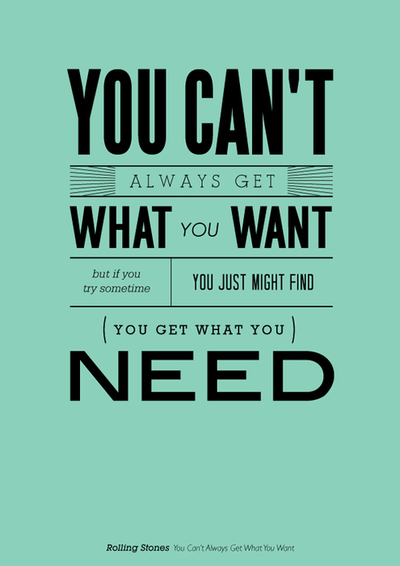
Midnight Mojo
One of the discussions that we seem to be having a lot is how the University will change in response to what students want, as we gain more flexibility in delivery and move away from face-to-face (bricks and mortar) to more blended approaches, possibly over distance learning. I’ve blogged a lot about this recently as I think about it but it’s always a lot more interesting to see what my colleagues think about it.
Some of my colleagues are, much like me, expecting things to be relatively similar after everything settles down. Books didn’t destroy academia, libraries didn’t remove the need for the lecturer, the tape recorder only goes so far. Yes, things may change, but we expect something familiar to remain. We’ll be able to reach more people because our learning offerings will accommodate more people.
Then there are people who seem to think that meeting student desire immediately means throwing all standards out the window. Somehow, there’s no halfway point between ‘no choice’ and ‘please take a degree as you leave’.
Of course, I’m presenting a straw man to discuss a straw man, but it’s a straw man that looks a lot like some that I’ve seen on campus. People who are designing their courses and systems to deal with the 0.1% of trouble makers rather than the vast majority of willing and able students.
There’s a point at which student desire can’t override our requirement for academic rigour and integrity. Frankly, there are many institutions out there that will sell you a degree but, of course, few people buy them expecting anything from them because everyone knows what kind of institutions they are. It boggles the mind that the few bad apples who show up at an accredited and ethical academy think that, somehow, only they will get the special treatment that they want and institutional quality will persist.
I have to work out what my students need from me and my University – based on what we told them we could do, what we can actually do (which is usually more than that) and what the student has the potential to do (which is usually more than they think they can do, once we’ve made them think about things a bit). There are many things that a student might want us to do, and we’ll have more flexibility for doing that in the future, but what they want isn’t always what they get. Sometimes, you get what you need.
(If you don’t have the Stones in your head right now, it’s time to go and buy some records.)
Are you succeeding?
Posted: April 21, 2012 Filed under: Education | Tags: agency for change, awareness, education, higher education, measurement, MIKE, mythical man month, process awareness, SWEDE, teaching, teaching approaches, workload Leave a commentMy wife sent me a link to this image, created by Alex Koplin and David Meiklejohn.

The message is (naively) simple – if you don’t like where you are, change something. This, of course, assumes that you have the capacity for change and the freedom to change. There are lots of times where this isn’t true but, in academia, we often have far more resources to hand to help people if they assess where they are going and don’t like the direction.
I talk a lot about process awareness – making students of what they are doing to ensure that they can identify the steps that they take and the impact that those steps have. My first-years have their first process awareness assignment to complete next week where I want them to look at their coding history in terms of difficulty and timeliness. What did they do that had a big impact on their chances of success? Being honest with themselves, were they lucky to get the work in on time? What I really want my students to understand is that they have to know enough about themselves and their capabilities that their work processes are:
- Predictable: They can estimate the time required to complete a task and the obstacles that they will encounter, and be reasonably accurate.
- Reconfigurable: They can take apart their process to add new elements for new skills and re-use elements in new workflows.
- Well-defined and understood: Above all, they know what they are doing, why they are doing it and can explain it to other people.
Looking back at the diagram above, the most important step is change something if you don’t like where you are. By introducing early process awareness, before we ramp up programming difficulty and complexity, I’m trying to make my students understand the building blocks that they are using and, with this fundamental understanding, I hope that this helps them to be able to see what they could change, or even that change could be possible, if they need to try a different approach to achieve success.
Remember MIKE and SWEDE? Even a good student, who can usually pull off good work in a short time, may eventually be swamped by the scale of all the work that they have to do – without understanding which of their workflow components have to be altered, they’re guessing. Measurement of what works first requires understanding the individual elements. This are early days and I don’t expect anyone to be fully process aware yet, but I like the diagram, as it reminds me of why I’m teaching my students about all of this in the first place – to enable them to be active participants in the educational process and have the agency for change and the knowledge to change constructively and productively.
Why Do Students Plagiarise?
Posted: April 20, 2012 Filed under: Education | Tags: education, educational problem, feedback, higher education, plagiarism, teaching, teaching approaches, turnitin 2 CommentsFor those who don’t know, Turnitin is automated plagiarism detection software that scans submitted documents and looks to see if there are matches to text found inside its databases. And, it should be noted, Turnitin’s databases are large. It’s a great tool, although it can be pricey to access, because you use it as a verification and detection tool, the obvious use, and as a teaching tool, where students submit their own work to see how much cut-and-paste and unattributed work they have included. Taking the latter approach allows students to improve their work and then you can get them to submit their work AND their Turnitin report for the final submission. This makes the student an active participant in their own development – a very good thing.
I’m on the Turnitin mailing list so I receive regular updates and the one that came through today had a really nice graphic that I’m going to share here today, although I note that it is associated with the Turnitin webcast “Why Students Plagiarize?” by Jason Stephens. Here, he summarises the three common motivational factors.

I love this diagram. It gets to the core of the problem and, unsurprisingly as I’ve linked it here, completely agrees with my thinking and experience on this. Let’s go through these points. (I haven’t watched the talk, I just liked the graphic. I’m planning to watch the talk next week and I hope to have something to share here from that.)
- Under-interested
If a student isn’t engaged, they won’t take the work seriously and they won’t really care about allocating enough time to do it – or to do it properly. Worse, if the assignment is seen (fairly or not) as make work or if the educator is seen to be under-interested, then the lack of value associated with the assignment may allow some students to rationalise a decision to grab someone else’s work, put a quick gloss on it and then hand it up. No interest, no engagement, no pride – no worth. Students have to be shown that the work is valuable and that we are interested – which means that we have to be interested and the work has to be worthwhile doing! - Under Pressure
Students tend to allocate their effort based on proximity of deadlines. Wait, let me correct that. People tend to allocate their effort based on proximity of deadlines. Given that students are not yet mature in many of their professional skills, their ability to estimate how long a task will take is also not guaranteed to be mature. As a result, many of our students are under a cascade of time pressures. This is never a justification for plagiarism but it is often the foundation of a rationalisation for plagiarism. “I’m in a hurry and I really need to get this done so I’ll take shortcuts.” Training students to improve their time management and encouragement to start and submit work early are the best ways to help fight this, in conjunction with plagiarism awareness. - Unable
Students who don’t have the skills can’t do the work themselves. To complete assignments without having the understanding yourself, you have to use the work of other people. For us, this means that we have to quickly identify when students don’t have the knowledge to proceed and try to remedy it, while still maintaining out academic standards and keeping our pass bars form and at the right level. Sometimes this is just a perception, rather than the truth, and guidance and encouragement can help. Sometimes we need remedial work, pre-testing and hurdles to make sure that students are at the right level to proceed. It’s a complex juggling act that forms the basis of what we do – catering to everyone across the range of abilities.
The main reason that I like this diagram so much is that it doesn’t say anything about where the student comes from, or who they are, it talks about the characteristics that are common to most students who plagiarise. Let’s give up the demonisation and work on the problems.
The Soft Marking Myth
Posted: April 19, 2012 Filed under: Education, Opinion | Tags: advocacy, education, higher education, reflection, teaching, teaching approaches Leave a commentI was reading the Australian, a national newspaper, and found a story about an investigation into a school of Journalism where, it was alleged, soft marking had taken place or had been requested to the benefit of two students with poor English language skills. I have no idea how often this actually happens in Australian universities but I know how many times people have insinuated to me that we must be practising this given how many international students we have – and it’s not a small number. (I must look shifty or something) It irritates me that in 2012, in a multi-cultural society dominated by the immigration waves of the last 200 years, we are still having this discussion!
Well, on the record, not only have I never done that, nor would I ever do that, but I have never had it insinuated, suggested, implied or stated that this is something I should even consider doing – on, off, around or through the record. Yes, I have guideline pass and fail rates but these are over entire courses, not for individual students and they are just that – guidelines. Why did I bring this up? Because I generally don’t really know someones intention when they ask this so I’m usually relatively neutral and polite in my reply. I suspect that I rarely state how offensive, discriminatory and wrong these allegations are, when made across a group as a blanket statement. Some people just repeat stuff they’ve heard in the media or bring things up because it suits their thinking pattern – and that’s necessarily part of a bigger agenda. So, sometimes, I answer the question and let it slide but here’s what I really think
Before I go into detail let me say that, yes, I believe that targeted soft marking can and does happen but, again, I have never seen it practised, heard it spoken of or seen evidence of it within my school – and I have access to one of the most comprehensive and detailed sets of student performance data in the Southern Hemisphere. So let me return to addressing what bothers me.
- It’s offensive to staff because it paints us as having no integrity, being (at best) mercenary and having no commitment to academic standards and professional ethics. When anyone says “Oh, you must give those Chinese/Malay/African kids an easier time because they’re paying” they may not realise it, but they’re very close to saying “… because you’ll do anything for cash, won’t you?”
- It’s offensive to students because it is inherently discriminatory and a wider generalisation would be hard to find. One instance does not define a class and the behaviour of a group does not allow complete prediction of an individual. This kind of accusation almost always falls along cultural or gender lines and seeks to diminish the achievements or standing of a group.
- It’s wrong to assume that it is something that happens at every institution or something that must occur if we are to retain our profile in the international educational market. It’s a short-sighted and destructive practice that would quickly erode the value of the degree if it was an incredibly widespread practice. Yes, I imagine some institutions may undertake it but a University’s testamur (the parchment) is supported by the reputation of the institution. Somewhere that gets known as easy marking or low quality will quickly lose reputation. Get a rep for easy marking for cash and you may never climb out of the hole. The graduates of the program will be of a lower professional quality – and word gets around if your CS graduates can’t program or your engineers’ bridges keep falling down.
My greatest problem is not having to explain this, it’s knowing that at least some of the people reading this will be thinking things like “Really?” or “Can we believe that given where he is?”or “Well, he’d say that wouldn’t he.” – and, at that point, I’d address you to point 1, except now you’re calling me a liar as well. 🙂
There many anecdotes out there about this and, yes, subversive behaviour often has concealed evidence trails, but many anecdotes do not produce anecdata – especially when so many are the same story retold and retold. Yes, it’s happening somewhere, no doubt, for monetary or similar reasons. Yes, it is a gross violation of the compact between University and student and makes a sham of academic integrity. You would be hard pressed to find someone who would campaign harder against unethical activities such as this than me. If I thought it was happening right here, in my school? I’d be working to eradicate and leave if it didn’t go away – but, in a school full of diversity, I can’t see it. And, yes, I have my eyes wide open.
To me, sadly, while there may be basis in some places, and I’ll wait to see the outcome of the article in the paper, it always looks more like a mask for racism. Yes, we always do have and almost always will have cultural differences across our campuses but different doesn’t mean bad or, far more importantly, mean that you can use lazy thinking to project racism out and disguise it as a concern over marking integrity.
Back in the Saddle: Getting Students Talking.
Posted: April 18, 2012 Filed under: Education | Tags: collaboration, education, Generation Why, higher education, reflection, teaching, teaching approaches Leave a commentI gave my first “non-intensive mode” lecture in weeks on Monday and it was a blast. I’ve already mentioned that it was on Ethics and I do enjoy teaching that. I regularly throw to the class with “Hey, what do you think about this – 1 minute, give me an answer, talk to your neighbour. Go!” and then wander about. While I’m wandering, I’m not worried about the students who are all talking – that’s what I want – I’m looking for the students who are sitting by themselves.

Generally, where possible, I’ll try and nudge the geographically isolated students together – you know, when one is sitting in row 3, then there’s a huge gap and there’s another in row 7 – but I try to do this before the lecture gets going. Once you’ve got all of our gear out, you don’t want to move and, if you do, you drop stuff and – well, it’s a mess.
Some people, of course, just don’t want to play. They won’t sit with other people, they won’t talk, they won’t interact unless I address them directly and then stand and wait for them to answer. Now this has to be done very carefully because you don’t want to get into a staring match or an intimidation play with a student, so it has to stay light but it has to be obvious that you’re not going away. Now, I’m sure some of you are thinking “why is he picking on the introverts” and, frankly, that’s a valid concern for all of us. I watch body language like a hawk and I know the difference between “not really wanting to play” and “about to bolt”. If someone answers me in any way, I’ll build that into what I’m talking about. If someone can’t make eye contact or is making serious avoidance signals at me, I’ll back off and cover it by flicking to a neighbour who looks keen. At that point, everyone gets (rightly) concerned I’m going to flick to them and I’ve taken the heat right off my original student. Humour, injected generically and NEVER directed at the student, can sometimes defuse the situation. It’s more risky than not, in my opinion, so unless you know that you’re a comedy genius and you have major awards for your empathetic handling of hostage situations, best stick to redirecting class attention in other ways.
I don’t see many really shy or introverted people who won’t take part at all in my lectures but, then again, I’m really keen on setting up a non-judgemental and constructive environment where everyone can have their say, without fear of being ridiculed. I’ve only rarely had to deal with unpleasant students but I’ll do it – and I think my students know that they can depend upon that.
My real concern is always with communication ability and the desire to communicate. Before anyone thinks I’m having a go at International students, I’m not. The range of linguistic ability, social awareness and skill in communication rungs the gamut across all of my student groups, regardless of origin. Yes, students with English as a second language can struggle a bit but I provide recordings of my lectures and I have become much more adept at understanding accented English – remember: their English is far better than my Farsi/Urdu/Mandarin/Hokkien/Bahaya/German/… Yes, there can be cultural barriers to participation but, then again, that’s true of mature age students not wanting to look silly in front of the young ‘uns. Or person X in front of person Y, for almost all values of X and Y, including X==Y! (The ultimate generalisation, you saw it here first.)
What I find helps is to provide the following structure to assist, encourage and sustain participation in lectures:
- Provide a clear context
Let the students know the area in which the activity, questions or whatever will be taking place. Give them hooks to hang their answers on. You want their first answers to be in the ballpark of right, so you can lead them closer. In sufficient context will give you answers that don’t really lead anywhere and that makes your job much harder. - Start simple
Start with short phrases, show of hands, yes/no. Once the class is warm, get longer, get discursive, write things on paper. Walking in and, first thing, asking a question that needs a two-minute answer may not work with most classes. - Build constructively
Almost any answer can lead somewhere good, assuming you’ve got point 1 down. Take it and run with it. A lot of students already think that they’re wrong and we want them to confident, and accurately confident, about being right so we try and build a massive structure of beautiful knowledge out of an enormous set of tolerably reasonable bricks. Encouraging students to feel values makes spaces friendly, supportive and collaborative. You can get a great collaboration going in a terrible space if you have the right environment. The best lecture theatre or collar suite in the world is going to be silent if you say “No, try again.” whenever a student says anything. - Activate damage control
Having said that, sometimes you need to lead people back to the righteous path. Sometimes you need to stop discussions. Religion, politics, gender issues, etc cannot be injected – unless that’s what you’re talking about. Even in my ethics course I deliberately framed it as a non-judgemental environment, where I wasn’t testing moral compasses, I was assessing thinking. Any sniff of heated argument and I would have been in there, redirecting, repurposing and juggling like mad. If things are going really, really badly – stop the activity. It helps to have something up your sleeve but you’re always better to stop before someone says or does something that really screws up their lives. We’re not in loco parentis but we still have that role of pastoral care. - Take a risk or two
Students love seeing us out on the edge. Whether it’s solving an unseen problem or trying an in-class activity that might go wrong – the fact that you’re willing to try stuff goes a long way to encourage students to try stuff, too. I think there’s an aspect of mutual confidence that develops there. Having said that, PREPARE YOUR STUFF. 🙂 There’s a world of difference between a touch of risk and trying to run the whole course on a scrap of paper. The latter is not effective. (Unless you’re very, very good and I’ve never met anyone who could actually pull that off – although several thought that they could.)
This is what works for me – what works for you?
Why Teach Grand Challenges in ICT?
Posted: April 17, 2012 Filed under: Education | Tags: curriculum, education, grand challenge, higher education, reflection, teaching, teaching approaches 2 CommentsI don’t normally drop in huge bits of texts from previous posts, but there are the NSF Committee for Cyberinfrastructure Task Force Grand Challenges, and their translation.
- Advanced Computational Methods and Algorithms
- High Performance Computing
- Software Infrastructure
- Data and Visualisation
- Education, Training and Workforce Development
- Grand Challenge Communities.
The same list in simpler, discipline free, terms:
- Better methods for solving hard problems.
- Big machines for solving hard problems.
- Good systems to run on the big machines, to support the better methods.
- Ways to see what results we have – people can see the results to make better decisions.
- Training people to make steps 1-4 work.
- Bring people together to make 1-5 work better with greater efficiency.
Why teach our students about these? Because they form the goals that we, as a discipline, will be striving for over the next few decades. Most of the items on this list are really, really hard to achieve. In explaining what we do, why we’re doing it, in tying our teaching into our professional practices and in giving authenticity to our entire educational approach – we need something large to aim at.
As an educator, knowing about the grand challenges in your own discipline shapes your ‘essential’ reading, gives you a hook to hang your lessons on and gives you, if we’re really waxing lyrical, a star to steer by. We all have something like this in our respective fields and it helps to show the overall direction and intention of our field.
This context shapes the things that you teach, the way that you teach and helps to ground students inside the professional aspects of what you’re talking about. It also helps you address those “Yes, but what use is this?” questions that beset us all.
It also sets our eyes up and out towards the horizon, to where the clouds, the sea, the sun and the sky fuse together and give us fantastic visions of what could be.

 Nick Falkner