
Fred Brooks: Building Student Projects That Work For Us, For Them and For Their Clients
Posted: March 3, 2012 Filed under: Education | Tags: authenticity, curriculum, design, education, fred brooks, higher education, mythical man month, principles of design, project, reflection, resources, software engineering, teaching, teaching approaches, universal principles of design 3 CommentsIn the Thursday keynote, Professor Brooks discussed a couple of project approaches that he thought were useful, based on his extensive experience. Once again, if you’re not in ICT, don’t switch off – I’m sure that there’s something that you can use if you want to put projects into your courses. Long-term group projects are very challenging and, while you find them everywhere, that’s no guarantee that they’re being managed properly. I’ll introduce Professor Brooks points and then finish with a brief discussion on the use of projects in the curriculum.
Firstly, Brooks described a course that you might find in a computer architecture course. The key aspect of this project is that modern computer architecture is very complex and, in many ways, fully realistic general purpose machines are well beyond the scope of time and ability that we have until very late undergraduate study. Brooks works with a special-purpose unit but this drives other requirements, as we’ll see. Fred’s guidelines for this kind of project are:
- Have milestones with early delivery.
Application Description
Students must provide a detailed application description which is the most precise statement that the students can manage. A precise guess is considered better here than a vague fact, because the explicit assumption can be questioned and corrected, where handwaving may leave holes in the specification that will need to be fixed later. Students should be aware of how sensitive the application is to each assumption – this allows people to invest effort accordingly. The special-purpose nature of the architecture that they’re constructing means that the application description has to be very, very accurate or you risk building the wrong machine.Programming Manual (End of the first month as a draft)
Another early deliverable is a programming manual – for a piece of software that hasn’t been written yet. Students are encouraged to put something specific down because, even if it’s wrong, it encourages thought and an early precision of thought. - Then the manual is intensely critiqued – students get the chance to re-do it.
- The actual project is then handed in well before the final days of semester.
- Once again the complete project goes through a very intense critique.
- Students get the chance to incorporate the changes from the critique. Students will pay attention to the critique because it is criticism on a live document where they can act to improve their performance.
The next project described is a classic Software Engineering project – team-based software production using strong SE principles. This is a typical project found in CS at the University level but is time-intensive to manage and easy to get wrong. Fred shared his ideas on how it could be done well, based on running it over 22 years since 1966. Here are his thoughts:
- You should have real projects for real clients.
Advertise on the web for software that can be achieved by 3-5 people during a single semester, which would be useful BUT (and it’s an important BUT) you can live without. There must be the possibility that the students can fail, which means that clients have to be ready to get nothing, after having invested meeting time throughout the project.
- Teams should be 3-5, ideally 4.
With 3 people you tend to get two against one. With five, things can get too diffuse in terms of role allocation. Four is, according to Fred, just right.
- There should be lots of project choices, to allow teams choice and they can provide a selection of those that they want.
- Teams must be allowed to fail.
Not every team will fail, or needs to fail, but students need to know that it’s possible.
- Roles should be separated.
Get clear role separations and stick to them. One will look after the schedule, using the pitchfork of motivation, obtaining resources and handling management one level up. One will be chief designer of technical content. Other jobs will be split out but it should be considered a full-time job.
- Get the client requirements and get them right.
The client generally doesn’t really know what they want. You need to talk to them and refine their requirements over time. Build a prototype because it allows someone to say “That’s not what I want!” Invest time early to get these requirements right!
- Meet the teams weekly.
Weekly coaching is labour intensive and is mostly made up of listening, coaching and offering suggestions – but it takes time. Meeting each week makes something happen each week. When a student explains – they are going to have to think.
- Early deliverable to clients, with feedback.
Deadlines make things happen.
- Get something (anything) running early.
The joy of getting anything running is a spur to further success. It boosts morale and increases effort. Whatever you build can be simple but it should have built-in stubs or points where the extension to complexity can easily occur . You don’t want to have to completely reengineer at every iteration!
- Make the students present publicly.
Software Engineers have to be able to communicate what they are doing, what they have done and what they are planning to do – to their bosses, to their clients, to their staff. It’s a vital skill in the industry.
- Final grade is composed of a Team Grade (relatively easy to assess) AND an Individual Grade (harder)
Don’t multiple one by the other! If effort has been expended, some sort of mark should result. The Team Grade can come from the documentation, the presentation and an assessment of functionality – time consuming but relatively easy. The Individual Grade has to be fair to everyone and either you or the group may give a false indication of a person’s value. Have an idea of how you think everyone is going and then compare that to the group’s impression – they’ll often be the same. Fred suggested giving everyone 10 points that they allocated to everyone ELSE in the group. In his experience, these tallies usually agreed with his impression – except on the rare occasion when he had been fooled by a “mighty fast talker”
This is a pretty demanding list. How do you do tasks for people at the risk of wasting their time for six months? If failure is possible, then failure is inevitable at some stage and it’s always going to hurt to some extent. A project is going to be a deep drilling exercise and, by its nature, cannot be the only thing that students do because they’ll miss out on essential breadth. But the above suggestions will help to make sure that, when the students do go drilling, they have a reasonable chance of striking oil.
SIGCSE Oh, oh, oh, it’s magic!
Posted: March 3, 2012 Filed under: Education | Tags: design, education, educational problem, fiero, higher education, magic, puzzles, reflection, sigcse, teaching, teaching approaches, tools Leave a commentIf you’re at SIGCSE, then you’re probably one of the 1,000,000 people who jammed into the pretty amazing Wednesday session, Demystifying Computing with Magic, with Dan Garcia and David Ginat. Dan and David coped very well with a room that seemed to hold more and more people – in keeping with a magic show, we were all apparently trapped in a magic box.
The key ideas behind this session was that Dan and David would show us five tricks that would teach or introduce important computing notions, such as discrete maths, problem representation, algorithmic patterns and, the catch-all, general notions. Drawing on Silver’s 1997 paper, Fostering Creativity Through Instruction Rich In Mathematical Problem Solving and Problem Posing (It’s better in German, trust me), they focused on the notions of fluence (diverse directions for exploration), flexibility (adaptation to the task at hand – synonymous with cognitive flexibility), originality (unfamiliar utilisation of familiar notation), and awareness (being aware of the possible fixations[?] – to be honest, I didn’t quite get this and am still looking at this concept).
The tricks themselves were all fun and had a strong basis in the classical conceit of the stage magician that everything is as it seems, while being underpinned by a rigorous computational framework that explained the trick but in a way that inspired the Gardernesque a-ha! One trick guaranteed that three people could, without knowing the colour of their own hats, be able to guess their own hat colour, based on observing the two other hats, and it would be guaranteed that at least one person would get it right. There were card tricks – showing the important of encoding and the importance of preparation – modular arithmetic, algorithms, correctness proofs and, amusingly, error handling.
Overall, a great session, as evidenced by the level of participation and the number of people stacked three-high by the door. I had so many people sitting near my feet I began to wonder if I’d started a cult.
The final trick, Fitch Cheney’s Five Card Trick was very well done and my only minor irritation is that we were planning to use it in our Puzzle Based Learning workshop on Saturday – but if it’s going to be done by someone else, then all you can ask is that they do it well and it was performed well and explained very clearly. It even had 8 A-Ha’s! That’s enough to produce 2.66 Norwegian pop bands! If you have a chance to see this session anywhere else, I strongly recommend it.
(A useful website, http://www.cs4fn.org/magic, was mentioned at the end, with lots of resources and explanation for those of you looking to insert a little mathemagic into your teaching.)
SIGCSE Need A Teaching Framework: Hire a Science Fiction Author?
Posted: March 3, 2012 Filed under: Education | Tags: design, education, higher education, sigcse, teaching approaches, tools 1 CommentJust following up on the Science Fiction panel that I mention earlier, I had the opportunity to listen to, and later share excellent Japanese food with, Mike Richards from the Open University, UK. One of the things he mentioned at the SF panel was that they had used an SF writer, Cory Doctorow, to write a story that incorporated exactly the kind of elements that they wanted into a story. This was used for, correct me if I’m wrong, Mike, “TU100: MY Digital Life”, with a paper that you can find on Mike’s webpage.
I think this is both novel and exciting. We can all see the value of having an engaging framework, but how many of us would think about retaining a creator from this particular discipline in order to produce exactly the right material from the start? (Of course, we’ve already seen examples of customised musical work and video with support materials from the CS Unplugged people, so what I’m really saying is that I hadn’t mapped this in this way. Wake up, Brain!)
Another way of thinking and another tool to add to the box – this is proving to be a great conference
SIGCSE: I, Robot? Using Science Fiction in Computer Science Education
Posted: March 3, 2012 Filed under: Education | Tags: design, education, higher education, sigcse, teaching, teaching approaches 1 CommentOne of Thursday’s panel discussions was “Using Science Fiction in Computer Science Education”, with 5 panellists who, rather fittingly, had 3 physical panellists and 2 virtual – Rebecca Bates, Judy Goldsmith, Nanette Veilleux, Valerie Summet and Rosalyn Berge.
How do we engage our students? How can we get them to understand the vitality and important of current directions in CS, as well as giving students a context for the future directions- well, form this panel: why not Science Fiction? We’re all familiar with the idea of using familiar story frames to provide a context for information but, in this case, the stories we use are well-know Science Fiction stories. But this raises an important question – what is well-known? Does membership in our community implicitly include an understanding of the number 42, the fact that Han Shot First (don’t test me here) or the mutual incomprehension of the stultifying beauty of 2001?
Discussions across this panel covered a range of different areas, from using robotic stories to discuss the nature if intelligence and whether algorithms were emotions, to the teaching of ethics with a level of visibility into the problem that we’d normally never have – stories are a free source of ideas and what-ifs that we can use, and Science Fiction is the logical choice for our community, given the basis.
Did HAL die? Did HAL commit murder? Was Deckard a garbageman, an assassin, an executioner or a traitor? What does this mean to us as Computer Scientists? How can we use these ideas in our teaching? What do we think our students should learn from the aspects of SF that we enjoy, and which stories would we also like them to know? Movies provide an excellent way to expose people to ideas, in a way that most people are receptive to. It was raised in the panel that 2001 was often a big ask for the students – I proposed the excellent Moon as an alternative, which worked slightly better in the contemporary framework. Apparently, students find it easier to handle old books than old films or television – the special effects can get in the way. Fortunately, there is no shortage of old written material – I, Robot is a rich source by itself.
This is certainly an idea that I want to try out in my own teaching and look forward to think about – once I get back home. 🙂
SIGCSE, Curriculum 2013 – the Strawman Cometh
Posted: March 2, 2012 Filed under: Education | Tags: curriculum, design, education, higher education, reflection, sigcse, teaching 4 CommentsIt may come as a surprise to some, but the curriculum for Computer Science is regularly revised and, in recent times, we have see a new curriculum in 2001 and 2008. You can find all of this information at the CS2013 website. The 2013 revision has recently been published for the first time as a Strawman – something that you can attack and, traditionally, how we expose new things in CS to wider comment. Once everyone has hacked away at the Strawman, we examine the cuts and the weak points, patch it up, produce a new draft (the Ironman) and see how this stronger version fares against the slings and arrows of our peers.
This year, I had the chance to sit in on the steering committee panel from the ACM and IEEE-CS who had started the ball rolling. In order to produce a curriculum that is deemed (informally) to be a CS degree that meets the standards of the professional bodies, you have to have Core elements and a selection of Elective elements. Well, that was until now. Today’s big reveal, which was already known to anybody who read the earlier document released in February, was that Core was now Core Tier 1 and Core Tier 2. Instead of having 290 hours of ‘essential’ core material, we now had 163 hours of Tier 1 and up to 142 hours of Tier 2. On top of this, there’s a heap of ‘optional’ Elective elements.
So what makes up a CS degree? Well, if you use all of Tier 1 and at least 80% of Tier 2 and then fill in the cracks with Electives – that’s meeting the curriculum requirements and you have a CS degree. You’ll note however that the number of hours required for all of core has crept up by 15 hours since 2008 – this reflects the addition of new hours to reflect areas being introduced such as Information Assurance and Security, and Parallel and Distributed Computing. The curriculum does change over time but things tend to move rather than disappear. Adding things, however, requires more hours and this is always a problem – what do we take out? (A humorous suggestion was made that we ignore all other courses and ONLY teach CS. Not going to happen anytime soon.)
The depth of knowledge that is required is now described in a degenerate Bloom-derived taxonomy: knowledge (need to know what a concept means), application (can apply the concept) and evaluation (can compare/contrast/select appropriate method/strategy for different situations). My first thought, which needs review, is “Where is synthesis?” but I need to think about this – this would be the Creating step in Bloom’s revised taxonomy and it’s missing here. If it really bothers me, I’ll have to raise it as a consultative point.
We’re at an early stage of the process here, the Strawman consultation goes on for several months and then we get to attack Ironman. When I get back, I’m going to need to look across all my areas of curriculum responsibility and work out what to do – especially as my area “Net-Centric Computing” has now been changed in name and time, and split across two areas! Looks like it will be a busy few months.
Some audience members seemed to get caught up with how they could validate their curricula, which is missing the point in some respects. A country’s professional accreditation body, such as the ACS in Australia, will be a vital part of stating whether you have a CS degree or not. As one of the panelists said “To quote Pirates of the Caribbean, these are more along the lines of guidelines” and, thinking about this, it makes sense because it leaves the academic authority in the hands of the institutions while still allowing a discussion of internationally consistent framing for what it means to graduate in Computer Science.
SIGCSE, Keynote #1, Fred Brooks. (Yes, THAT Fred Brooks.)
Posted: March 2, 2012 Filed under: Education | Tags: authenticity, curriculum, design, education, higher education, reflection, sigcse, teaching, teaching approaches 5 CommentsFrederick P. Brooks, Jr is a pretty well-know figure in Computer Science. Even if you only vaguely heard of one of his most famous books “The Mythical Man Month“, you’ll know that his impact on how we think about projects, and software engineering projects in general, is significant and he’s been having this impact for several decades. He’s spent a lot of time trying to get student Software Engineering projects into a useful and effective teaching form – but don’t turn off because you think this is only about ICT. There’s a lot for everyone in what follows.
His keynote on Thursday morning was on “The Teacher’s Job is to Design Learning Experiences; not Primarily to Impart Information” and he covered a range of topics, including some general principles and a lot of exemplars. He raised the old question: why do we still lecture? He started from a discussion of teaching before printing, following the development of the printed word and into the modern big availability, teleprocessed world of today.
His main thesis is that it’s up to the teacher to design a learning experience, not just deliver information – and as this is one my maxims, I’m not going to disagree with him here!
Professor Brooks things that we should consider:
- Learning not teaching
- The student not the teacher
- Experience not just the written word
- developing skills in preference to inserting or providing information
- designing a learning experience, rather than just delivering a lecture
His follow-up to this, which I wish I’d thought of, is that Computer Science professionals all have to be designers, at least to a degree, so linking this with an educational design pathway is a good fit. CS people should be good at designing good CS education materials!
He argues that CS Educational content falls into four basic categories: the background information (like number systems), theory (like complexity mathematics), description of practice (How people HAVE done it) and skills for practice (how YOU WILL do it). In CS we develop a number of these skills through critiqued practice – do it, it gets critiqued and then we do it again.
He then spent some time discussing exemplars, including innovative assignments, the flipped classroom, projects and a large number of examples, which I hope to commit to another post.
Looking at this critically, it’s hard to disagree with any of the points presented except that we stayed at a fairly abstract level and, as the man himself said, he’s a radical over-simplifier. But there was a lot of very useful information that would encourage good behaviour in CS education – it’s more than just picking up a book and it’s also more than just handing out a programming assignment. Often, when people disagree with ‘ivory tower’ approaches, they don’t design the alternative any better. A poorly-designed industry-focused, project-heavy course is just as bad as a boring death0by-lecture theoretical course.
Bad design is bad design. “No design” is almost guaranteed to be bad design.
I’ll post a follow-up going in to more detail over what he said about projects some time soon because I think it’s pretty interesting.
It was a great pleasure to hear such an influential figure and, as always, it wasn’t surprising to see why he’s had so much impact – he can express himself well and, overall, it’s a good message.
SIGCSE First night, Workshop: CS Unplugged!
Posted: March 2, 2012 Filed under: Education | Tags: design, education, games, higher education, sigcse, teaching, teaching approaches, tools 1 CommentGot back from the first workshop a couple of hours ago, Workshop 9: Computer Science Unplugged, Robotics and Research Activities, Tim Bell, Daniela Marghitu and Lynn Lambert. Daniela couldn’t make it this evening so her place was expertly filled by another pair from Auburn. I’ve talked about CS Unplugged before but it was fascinating to see the experts talking about their experiences and giving us all the experience of what it’s like to be in an Unplugged classroom. I took some photos which will probably capture the immersive and enjoyable sense of this hands-on experience.
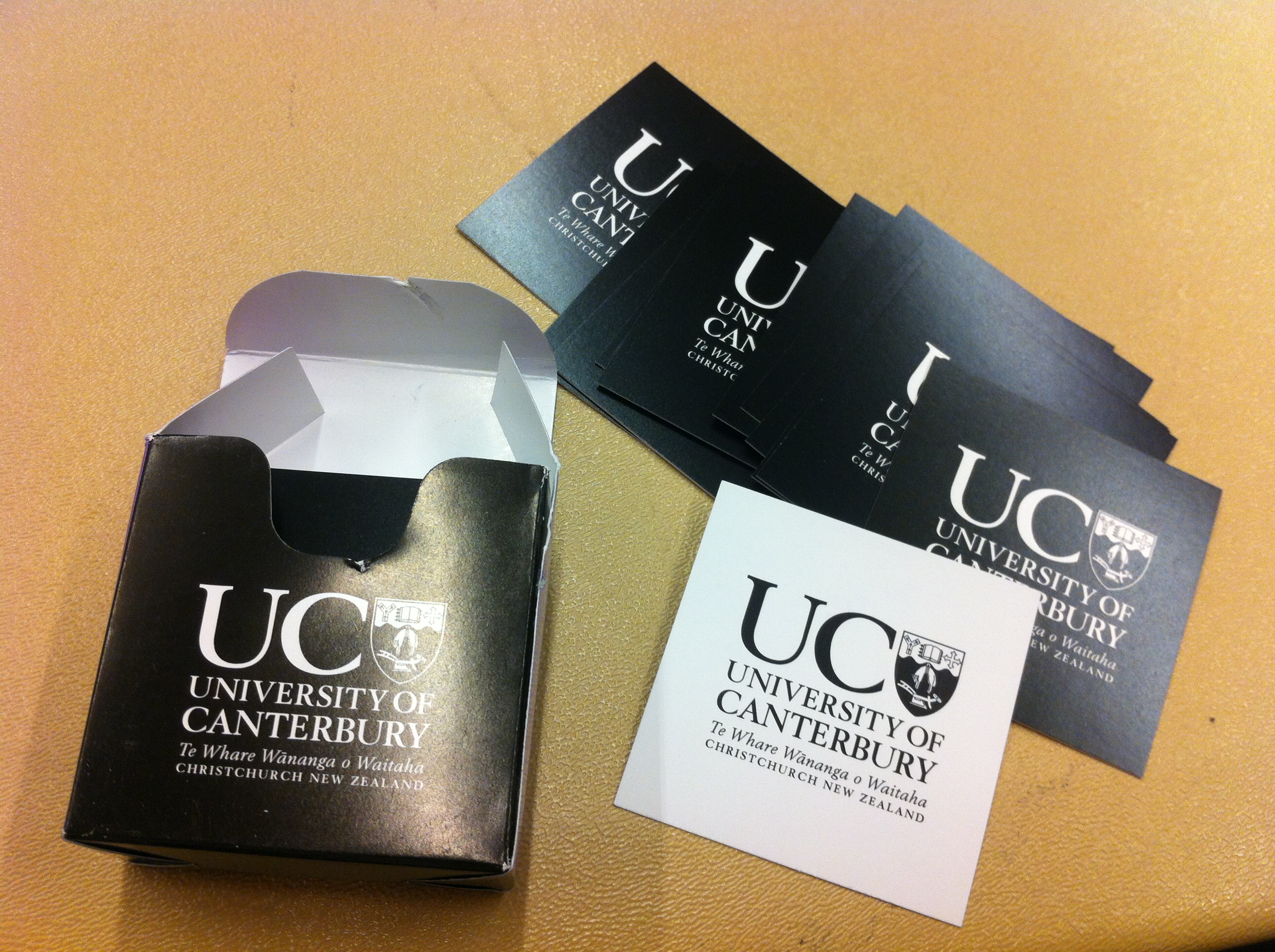
Here are some of the double-sided cards that can be used to show the 2D parity trick, where students are drawn into constructing the use and checking of parity with a simple 5×5 (or 9×9) grid of cards. Basically, once drawn up the student can flip any of the cards and the instructor can walk in from outside and legitimately pick the flipped card.
These are Tim’s, from the University of Canterbury, and they are both a handy tool for CS Unplugged and a cool way to give people a calling card of who gave you the talk.
Tim and Lynn were very honest about the degree of knowledge that could be conveyed to elementary school students – we’re not talking about getting all of the CS completely accurate but, in a setting where we can get lost in the cracks, the students would remember that CS people came to their school and it was interesting and engaging. (And, for me, the CS is pretty close. 🙂 )
The next picture is of a Pirate’s Treasure puzzle, where students have to pick A or B and, depending on what they choose, they hop to different islands. This introduces several key computing concepts: Finite State Automata,  Complexity but, for me, it also makes students think about exploring a space in order to be able to improve their decision and thinking processes.

The next picture is slightly curious and, rather than being an activity, it’s a diagram showing all the states that a VCR could end up in when you’re setting the clock – and the number of different pathways between them. Is it any wonder that these devices give us trouble? Building on what students had learned about the different islands (states) that you could catch a ship to (transition to) – it suddenly explains why human interface design is so incredibly important.
Overall, this was a great workshop. We had many participatory activities – I was the bit representing ‘4’ for a very happy 10 minutes – and an excellent display of robotics and how they could be used with students in camp activities. Also, somewhat counterintuitively, how robots could be used to teach CS Unplugged.
From a theoretical perspective, CS Unplugged is heavily constructivist. In informal terms, constructivists assert that the generation of knowledge and meaning in humans comes from an interaction between what they experience and the frameworks that they have in their head. In this case, CS Unplugged, the basic goal is to present something with which a student can interact, but in its affordance and its goals, it drives them towards forming the correct knowledge of an area of CS, even without us explaining anything. To give an example, the student in the picture had learned quick sort enough to demonstrate it, despite never being explicitly told what quick sort was. She’s 12. The numbers in the pictures show the number of steps for a student using a simple sorting technique, and the one that she used. Yes, she’s shaved over half the steps off.

We had many examples like this – students who learned to count in binary from observation and interaction, without anyone having to formally discuss powers of two or underlying mathematics.
To be honest, I can’t do a three-hour workshop justice in 700 words, and I’d like to get some sleep before tomorrow’s keynote. However, if you haven’t checked out the CS Unplugged website yet, then I strongly recommend it. If you get the chance to see these presenters at work, then I strongly suggest that, too.
Another month, another milestone!
Posted: March 1, 2012 Filed under: Education, Opinion | Tags: blogging, education, higher education, reflection Leave a commentThat’s another month of blogging down. At some stage, I plan to measure what my output has been and try to come up with some indication of how I can improve my content. I’ll probably try to make things tighter, add some picture, but have separate longer essays occasionally.
Only 10 more months of 1 post / day to keep to my original goal!
Thanks for reading – if you’re new, you can start at Jan 1 and work forward, if you’re a long-time reader, thanks for sticking around.
I wanted to put a picture of success or winning here but, frankly, there are only so many pictures of grumpy babies and Charlie Sheen that anybody needs. So enjoy the rapturous and simplistic text. I’ll see you tomorrow.
Familiarity: Breeding Contempt or Just Contextually Sensitive?
Posted: March 1, 2012 Filed under: Education, Opinion | Tags: authenticity, education, familiarity breeds contempt, higher education, reflection, teaching, teaching approaches 1 CommentOne of the strangest homilies I know is “Familiarity breeds contempt”. Supposedly, in one reading, the more we know someone, the easier it is to find fault. In another, very English, reading of it, allowing someone to be too familiar with you reduces the barriers between you and allows for contempt. (It’s worth noting that being over-familiar with someone and using their first name or a diminutive ahead of an often unstated social timeframe was a major gaffe in society. Please, call me Nick. 🙂 )
What a strange thought that is – that we must maintain an artificial distance lest we be found to be human. There’s a world of behaviour between maintaining professionalism and being stand-offish – one allows you to maintain integrity and do things like provide an objective mark, the other drives a wedge between you and your students. This is a very hard line to handle when you’re teaching K-12, because the winnowing hasn’t occurred yet. In the Higher Ed sector, as I’ve noted before, everyone who couldn’t concentrate or acted up is probably already gone. I have the polite ones, the ones who passed, the ones who didn’t sit there and cut pieces off people’s hair or be generally anti-social.
I have to walk a careful line on this one when I teach in Singapore, because it is a more formal society. Business cards are presented formally, business relationships have more structure and my students prefer to call me Sir or Dr Nick (Hi, everybody!). Now, I’m happy for them to call me Nick but, here’s the tricky thing, not if that means that they have moved me into the box of people that they don’t respect. That’s a cultural thing and, by being aware of it, I manage the relationship better. Down in Australia, I expect my students to call me Nick, because we don’t have as heavily formalised a society and I feel that I can manage my objectivity and relationships without the strictures of being Dr Falkner. But I have a lot of international students and sometimes it just makes them happier to call me Dr Falkner or Sir.
Ultimately, as part of this juggling act, it’s not my view of what is and what is not formal that matters – it’s how the student wants to address me that they feel that I am their teacher, and that they are getting the right kind of education. This then allows us both to work together, happily. If someone calling me Nick is going to put fingernails down the blackboard of their soul, then me insisting upon informality is inappropriate.
When I’m in the US, I take the trouble to explain that I have a PhD and am a tenured Assistant Professor in US parlance, a Lecturer Level B in Australian jargon, because it helps people to put me into the right mental box. This is the other trick of familiarity – you have to make sure that your level of being familiar is contextually correct. It bugs me slightly that I have given talks where people’s attitudes towards me and my material change when they find out I’m tenured and a Doctor, but it’s always my job to work out how to communicate with my audience. If I presume that every audience is the same then I risk being over and under-familiar – and, because I haven’t done my research as to how to deliver my message to that audience , that’s when I risk breeding contempt.
Another Airport Land Speed Record: Can My Students Make Their Connections?
Posted: February 29, 2012 Filed under: Education, Opinion | Tags: curriculum, design, education, higher education, principles of design, reflection, universal principles of design, workload 2 CommentsAs I was running through San Francisco Airport last week, I was thinking many things. Among them were:
- Why am I running through yet another airport?
- How long will it be before my bad knee gives out? (Surgery last November)
- Is my wife still behind me?
- Do I ever do this to my students?

The reason that I was, once again, running through an airport was that delightfully evil concept – the legal connection. This is the minimum connection time estimated for your incoming and outgoing flights, through a given airport. When your travel organiser goes to make flights, they plug all of your destinations and restrictions into their computer, add some seriously manual machinations, and then receive a set of results that all meet the legal connection limits. These are connections that the airlines say are legitimate and, if you miss a flight, they will assist you in making another one. There’s only one problem with the so-called legal connection. Any variances to the schedules, caused by weather, delay in customs, late arrival of other planes, maintenance or unexpected construction in the airport, can make it hard to impossible to make your (so-called) legal connection. Hence, I run a lot in airports. I very rarely miss planes but I run past a lot of people who do – people who don’t know that there’s only one bus every 40 minutes between the international and domestic terminals. People who don’t know where the bus is or that it’s more reliable to catch a cab. People who don’t know which way to go and there isn’t enough signage to assist – Frankfurt Airport, with your sign that says ‘Terminal X this way” and a sign that points in both directions, I’m looking at you.
On this occasion, my knee held out and my wife WAS behind me, which is just as well as the hotel is booked in her name. But it really made me think about the layout and structure of STEM curricula. We set up pathways through our courses that are designed to develop knowledge and produce a graduate with the right combination of skill and knowledge. But what else do we assume? If we have provided bridging to bypass a pre-requisite, are we secretly assuming that the student will have aced the bridging or just passed the bridging? Do we introduce Boolean algebra in second year because “almost every student will have enrolled in Logic I” even though it’s not formally part of our course progression?
We can look at our programs as being legal connections, but with that comes all of the darker aspects that this entails. We’ve recently redesigned our curriculum, just in time for curriculum 2013, and part of this was removing some of the implicit assumptions and making them explicit. Providing pathways for the less-experienced. Matching expectations so that a Pass in a pre-req was sufficient for the next course – you didn’t need 60. We build giant pyramids of knowledge throughout our courses but, of course, a pyramid only works one way up and is far less stable if we don’t have all of the supports. If too many of these building blocks are assumed, and not explicit, then our legal connection is next to impossible to make. And we all know what the cost of that is.
I don’t want to run through anymore airports, and I strongly suspect that when we ask our students to do so, we lose a fair few of them on wrong turns or leave them stranded somewhere along the way, without ever making their destination.

 Nick Falkner