
Beating the Blank
Posted: February 5, 2012 Filed under: Education | Tags: education, higher education, reflection, teaching approaches 1 CommentI’m currently running one of my favourite teaching activities, the collaborative practical. My students are split into groups and are, as individual groups, trying to solve a small set of problems. The answers matter, but the process and group discussion is what I’m after.
Already, the person who has resisted all of my attempts to open up (for the last three days) is actively taking part, engaged and is contributing to their group. Other groups are discussing system aspects and, at times, having polite but intense arguments about interpretation.
Right now, I’ve stepped back to let them have a think, consolidate their ideas and let them start putting their notions down, to submit to me later.
Every student is currently engaged, everyone is contributing. There were some blank faces by the end of a 16 hour intensive weekend – all of those blank faces are gone.
Why am I here?
Posted: February 5, 2012 Filed under: Education, Opinion | Tags: education, higher education, reflection, teaching, teaching approaches 1 CommentI’m currently in Singapore, teaching an intensive course as 3 hours Friday night, 6 hours Saturday and 7 hours Sunday. Obviously a course like this poses challenges for both staff and students, given the intensive nature, so I try to make it very interactive, full of peer activity and very little ‘just listening to Nick speak’. (Sometimes I succeed better than others.)
On Friday night, I wrote two lines up on the board:
“Why are you here?”
“Why am I here?”
My first discussion with the class, at 7pm on a Friday night after they’d been at work all day, was on these questions. As always, initial participation was guarded. Most students are in classes to meet requirements, pass exams and get pieces of paper – asking questions about this can cause some soul searching. So I switched to a discussion about why I was there.
Pause. Then a cautious suggestion.
“Money?” (Class laughter)
This gave me a more relaxed class to talk to and the chance to talk about all the reasons I could be there. After a minute or two’s (guided) discussion, I heard:
“You’re here to share your knowledge?”
Which then guided us to the next stage of the intro discussion – the important bit. The fact that if they know the work then passing the exam will be relatively easy. The fact that I care about what they know and that, when they leave, they should be able to practise their art with confidence.
The whole activity took about 5 minutes and set the tone for highly engaged discussion in and around 28 people, late on a Friday night, that happened to include a lot of information on Distributed Systems. It’s an ice breaker, a warm-up and it also tells the students what I need them to know: that I need them to know.
False praise but I love your journal (random number)
Posted: February 4, 2012 Filed under: Education, Opinion | Tags: education, higher education, reflection, teaching, teaching approaches 1 CommentYou’ll excuse me writing a post that is reaction to my comment spam but a recent spate of spam reminded me of something important.
False or insincere praise is worse than no praise at all.
I use WordPress’s ARMY OF AUTOMATION to detect and corral my spam comments into an area where I can inspect them and delete them, without all of you having to read about false Google page rank updates, or notes saying things like “Wow, I loved this, keep it up 782346”. Things designed to take you to trap blogs or URLs to give some person somewhere some money. But I still manually review the spam to ensure that some poor ‘fan’ hasn’t written something that tipped the false positive scale. What this all reminded me of was my disappointment when I realised that something that I thought was personalised praise was actually automated nonsense, designed to suck me in. It’s deflating.
Some years ago, when I was just starting out, I received an e-mail from the chair of a relatively highly ranked conference inviting me to be on the program committee. Given that I’d published a bit in the area, I thought it was personal recognition and was really chuffed until my wife, very, VERY delicately, pointed out that it had gone to a giant mailing list called DBWORLD. (Yes, I should have noticed, but in those days I read the content before author and subject. These days, I do a lot more pre-filtering.) Every single person on that list had received that e-mail. This was a not a personal e-mail in recognition of any achievement on my part, it was a seat-filling exercise that had hit me as part of a wave.
There is a big difference between addressing small groups of people within the large, while openly admitting that you’re speaking in the large, and sending something that appears to be personal, but is secretly in the large. If you’re sending out messages of congratulations to the top performers in your class, why not spend the extra effort to send each person a message? They probably are going to talk about it and may notice how similar your message is – some may not care, of course, but some might. People who aren’t showing up? You can probably use blind carbon copy to send out the initial reminder, because it’s not SUCH a personalised message, and then personalise as they respond, or you can start personal, if you can manage it.
If you have a group of top students, but each one has nailed down a specific aspect of the course, noting the specific achievement as part of genuine and personal praise is, I suspect, going to have a far greater effect than a blanket e-mail saying “You’ve all done well”. “You’ve all done well” means I sorted the marks, selected the top 5 and pasted their e-mail into a mail merger. Specific praise, to reinforce that you have read it, you do know it, and you know at least some of that student’s mind, is going to reinforce the reality that you did mark it, what was submitted was noted, the work that went into it mattered.
This is what we’re saying when we produce genuine praise: “what you did mattered and it was good”
That’s why all feedback should be genuine and grounded in the work. Even if you’re giving general feedback to a class, I think it’s really helpful to find as much ‘resonant truth’ as possible – the feedback that everyone nods along to and goes ‘yes’. I could talk about authenticity and the importance of being genuine for hours but, once again, that’s another post.
Don’t get me wrong. Genuine praise and follow-up on the mass scale is better than none at all. If you have the time and resources, then we can probably all agree that personalised is better than general.
However, false praise, or insincere or misdirected praise, is counter-productive and really doesn’t have much place in our practices. It’s false and, ultimately, we’re about truth.
Everything can convey a message
Posted: February 3, 2012 Filed under: Education | Tags: education, higher education, reflection, teaching approaches Leave a commentWhile reviewing my blog, I noticed that the ‘site visitor’ graphics on the top left looked a little like a city skyline.
I don’t know which city is represented in a tiny set of pixels but I have the urge to click across it and explore it. To see what pops up.
Of course, the visual I see is not tied to the information overlay that I have placed upon it… but what a curious idea.
A tiny idea, visually engaging, to drag someone off into a world of information.
You Can’t Believe You Did So Badly?
Posted: February 3, 2012 Filed under: Education, Opinion | Tags: education, higher education, reflection, teaching, teaching approaches 1 CommentA common e-mail comment I’ve had from students who didn’t get the mark that they were expecting is often “I can’t believe I did so badly” or words to that effect. “I knew I did well in the exam.” “I answered all of the questions correctly.” All of these are the same and, expect for the rare occasion when we have made an administrative error in assembling the mark, it usually indicates one thing.
The student doesn’t have enough knowledge to be able to assess their level of knowledge.
It would be glib to talk about Dunning-Kruger here, so I suspect it would be even more glib to mention it in passing and not discuss it! The Dunning-Kruger effect is a bias in your thinking that leads people with lower skill level to have an artificially high assessment of their own skills. The converse is that the highly skilled often underrate their ability.
When these students look at their exam scripts or assessments again, as I encourage them to do, the illusory has to confront reality. They see where I drew a red line across a page to indicate that they didn’t answer, say, question 2 at all, which cost them up to 30 marks. They see the places where I asked them to explain an unlabelled diagram, or to give me the detail underneath their broad brush statements. Sometimes, it’s seeing where I’ve written ‘sorry, no’ beside where they’ve answered both true and false to the same question. Without explanation. Then again, some students look at what I’ve said and try to find any possible wriggle room to get extra marks. Where it’s trying it on, it won’t get them anywhere, but I understand it. Where it’s a genuine lack of understanding as to why what they’ve provided is not a complete answer? That’s sadder, because they’re now functioning at a level where, until they advance, they will fail and not understand why they’re failing.
Worse, they may not realise even that they need help, or what kind it will take, to improve their skills. They’re fine – it’s the rest of the world, including me, that’s wrong.
You only have to speak to some students who have been around a little too long, or who left without their degrees, to realise that among those who have genuine problems, but are aware of them and striving to fix them, there are those who have equally genuine problems but assume that it’s nothing they can fix because it’s not their fault.
Does anyone out there have suggestions as to how we can help or approach these students, dealing with the delicate matter of their feelings as well as the cognitive bias? Please share them!
Failures of Politeness: Write Down Your Rules!
Posted: February 2, 2012 Filed under: Education, Opinion | Tags: education, higher education, reflection, teaching approaches Leave a commentBeing a University-level educator has some major advantages. One of the most significant is the degree to which the educators before me, in the school system, have shouldered the load of disruptive students, violent students – the students who didn’t manage to make it through the educational system and get into Uni. My heartfelt thanks, as always, for the effort and patience that it must take!
This gives me, 99% of the time, a very polite classroom. There’s always the impersonal indifference of late teen-age years (I remember how many other really important things I had to do, as well) but that’s usually fairly easily managed. It all runs like a large-ish dinner party with strangers most of the time. People pass the mustard when asked, generally share the food and no-one does anything diabolical. That’s why it’s surprising when you run across someone who breaks through that fragile and informal social compact. Let’s face it, you snatch the bread at home and someone’s going to have words with you. Steal the host’s fork and he or she will look at you with surprise, grab another one and, depending on what you do next, possibly etch your name into the ‘do not invite again’ column. Now that kind of ‘transgression’ is an obvious one – someone’s being rude, for whatever reason.
But let’s talk about finger bowls. A finger bowl is a bowl full of warm water with a squeeze of lemon in it. It’s used to wash your fingers when eating certain messy courses that must be handled manually. If that shows up on the table and you don’t know what it is, chances are you’re going to think it’s weak soup. There’s an etiquette in using these but any decent host is going to work out (a) if their guests know what these things are and clearly illustrate their use or (b) serve something else. Putting people in a situation where they accidentally break rules in ignorance doesn’t do anything other than upset people.
Community discussion, such as public forums or debates, can be confusing for some students, especially when they don’t understand the implicit social compact in play. When unwritten rules do get broken, people’s feelings get hurt on both sides and it’s hard to know what to do. If someone stood up and shouted in one of my lectures, I’d eventually call security most likely but the disruption has happened and the damage is done. If you have to forcibly march someone out of a computer lab because they’re causing trouble, the lesson is shot for the next 10-15 minutes, no matter how much everyone present agrees with the action. We deal with most of the ‘extreme’ actions with a well-publicised list of acceptable behaviours, but what about the implicit ones? The subtle ones?
This is why I support writing all of the rules down. When you set up an electronic forum, I think it’s really helpful to have a list of (mostly) DOs and (a few) DON’Ts. (My pet theory is that people remember verbs, not modifiers. Hence PLEASE WALK is better than DON’T RUN because it puts the right action in your head. No doubt someone has proven or disprove this. Comments welcome!) If someone hits one of the rules, you can moderate in a transparent and fair fashion. You don’t set up trip lines for people to stumble into because then people will wonder where they can and can’t step – restricting motion when you want them to be embracing opportunity! Do you have in-class discussions? A simple set of guidelines can be put on a forum, or an A4 sheet, or as part of the moderator’s kit and everyone can be briefed.
Unwritten rules, like the arbitrary finer detail of politeness, can be confusing, divisive and, in an educational setting, are a hindrance rather than a help. You don’t know all of the details of your students’ background and, in an ideal world, everyone would be able to come here. So rather than depending on everyone in the world knowing the unwritten rules, let’s write it all down and avoid these unnecessary failures of politeness.
Achievement Unlocked: First Month
Posted: February 1, 2012 Filed under: Education, Opinion | Tags: education, higher education, reflection 1 CommentWhen I decided to start a new blog, I committed to posting something every day. As I got busier, that got harder. Some of the things I noted in this blog were because WordPress’s encouragement mechanisms didn’t gel with my idea of what I thought encouragement should look like. I realised that I had to give a year to this to see how it panned out and, when I realised this, it was a very intimidating thought. How can I make it a whole year? 366 comments as a minimum? Süskind’s Perfume is only 100,000 characters long and I could accidentally write that in a year on this blog!
And, yet, here we are on the 1st of February and I’ve posted at least one post a day for the whole of January.
Now it seems manageable. Of course, this gives me insight as to how I can help my students to see how big projects can be managed, how intensive workload can be shouldered – how things can be achieved.
I’m always learning. I think that’s why I strive to get better as a teacher.
Thank you for reading, following, liking and commenting!
Has it been easy? No. Worth it? Yes!
Those Dang Kids and Their Phones, Computers and iPads.
Posted: January 30, 2012 Filed under: Education, Opinion | Tags: education, higher education, reflection, teaching, teaching approaches 1 CommentSome my students use computers in my lectures and, while I’m sure that a number of them are writing notes or looking at the notes, I’m sure that many are ‘multi-tasking’ with social media or the like. They’re not playing games, because I know what they looks and sounds like (wwwwwwwddaaaaa*click**click*wwww *DAMN*) but these mobile platforms are more powerful and more pervasive so this will happen a lot. Now, despite the presence of computers, I can usually get the students with gadgets to participate, answer questions and do all of those good things. If I have a question, I don’t have to repeat the previous 5 minutes of speaking to get an answer. They’re mostly listening. But, whenever the gadgets are out, there’s always a worry that those dang kids are surfing the internet rather than listening to you.
Now, I’m sure that some of you have very strong opinions about this. Why do students do this given they’ve bothered to show up?
I have, in recent experience, attended meetings which had an obligatory nature to them and, among my colleagues, seen a lot of iPads, notebooks, laptops and phones in use during these meetings. Now you’d expect that someone would be most active on this mobile reference and presentation platform when it was their turn to talk or be talked to, but generally it seemed to be when the person in question wasn’t required to do anything. In fact, these gadgets get the most workout when the person holding them hasn’t done anything in the meeting nor is expected to. Armed with a gadget, these people (who may have been colleagues) had tuned out because the major reason that they were in the meeting was because someone had told them that they had to be. If they didn’t have gadgets they’d probably be sleeping (quietly), doodling or talking to the person next to them.
Every time someone complains about students who focus on the gadgets rather than the lecture, I think about those meetings where I’ve checked my mail during a dull patch in a meeting. Or done some other (useful and real) work that had nothing to do with the event that I was in.
I know, I’m a terrible human being with a short atten… what? But the thing is, give me a reason that I should be somewhere and a reason to participate, interact and listen? I’ll be there, armed with my knowledge and my supporting fleet of tech. THEN, the gadgets are only used as they should be. I don’t doodle. I stay focused. No doubt everyone reading this has a better attention span than I do and has never, ever been bored in a compulsory meeting on new OH&S standards for refrigerator cleanliness or has tuned out while trying to listen to someone reading tiny-font info-dense slides to you, regarding new research standards.
Hmmm.
We want our students to be like us. In many ways they already are. Yes, some students are very hard to engage but, for most of them, if they have a reason to be there and a reason to listen and take part, chances are they will.
Never Put The Roof Up First
Posted: January 29, 2012 Filed under: Education, Opinion | Tags: education, higher education, reflection, teaching, teaching approaches 1 CommentI had a great coffee meeting on Friday with a friend and colleague (who will be feeling self-conscious if he’s reading this now) and we were talking about a number of things, some education related, some research, some relating to the fact that the coffee shop was closing early. He reminded me, however, of some of the most important lessons I learned last year when I finally got the chance to produce a new Computer Science course from the ground-up, with no previous offerings at our Uni. So, with thanks to Jono, here are the things I learned about how to build a course, in a building metaphor to allow me to draw pretty pictures:
- Buildings Don’t Just Happen
Fortunately for the building industry, bricks do not spontaneous leap together to form load-bearing structures. Resources need to be identified, plans need to be drawn, tasks need to be allocated. The fundamental requirement is that you know what kind of building you’re trying to construct!
Similarly, for my course, I had to work out what I wanted to teach by looking at the curriculum to determine the scope and area. I had to figure out what students already knew by looking at previous courses and performance. I had to work out what people expected my students to know in terms of overall degree, courses that used mine as assumed knowledge and pre-requisites, and in terms of how much more each area would be taught. Once I knew that, I had my overall goal in my head and I had a much better idea of what I was supposed to be doing.
Yes, I could have just put together a course on advanced C++ programming with some data structures but any meeting of the goals I was supposed to have been achieving would have been accidental. You don’t ask a builder just to build you ‘a house’.
- Never Put The Roof Up First
You can’t put the roof on a building until there are enough supporting structures. Same process in a course. You can’t build to advanced concepts without fundamentals. You can’t generalise in a meaningful manner without knowing when to use specifics. For me, having determined my goals, sketching out all of the concepts in turn allowed me to think about how I was going to relate them. How I would move from one to the other. We can generally all agree on what the key concepts are but there are some ways of ordering them which are better than others. Ultimately, don’t start with the capstones! Things without support fall down.
- Think About The Occupant
A well-designed and well-built building is a fantastic thing. Everything is in the right place, everything works. When all of the resources and plans have been assembled and used in a way that the final realisation is optimal for the occupant, happiness ensues. We’ve already talked about our goals and concept building – is this now set up in a way that works for your students? Are you building for one cohort or all of them? Is there space for different academic levels in the student body (because they will be there) or will people pass “if they’re smart enough”. Who will be in your course? Are your course features going to be appreciated as features? Are they even, being brutally honest with yourself, features… or rationalisations?
- Get It In Writing
The builder does not pass on instructions via psychic powers. Apart from anything else, there are too many people to talk to, some of whom may not even be on site. Your carpenters, plumbers, brick layers, electricians, inspectors… the list goes on and, if you had to constantly check every little thing every time, your building will never get built. Good, and large-scale, builders not only have plans, they have specific plans for specific jobs so that everyone who works for them knows what they need to do as part of the bigger picture, with the spotlight on their area of expertise. Once you know concepts, relationships and targets, you can put together a plan that anyone can follow, assuming that they have the skills, to build you the house (or the course) of your dreams.
Your overall plan could include your examination scheme (what’s in it? what form does it take? how long is it?) which assesses all of your target concepts. Built around these are the details of examinations, assessments, exercises and the lectures and content required to pass all of this on. Do you need a course provided in Blackboard or Moodle? Any special requirements? You can spin off a sub-section and get it to the right person so that, instead of waiting until the beginning of term and doing it in a flat panic WHEN they can find you, the relevant people can create what you want from your plan. Got TAs? A good design and plan will show them what they are lecturing, when and what you expect them to highlight. Yes, you’ll still need management meetings along the way most likely, but this will save you a heap of work later.
Time spent now will almost always save you more time later and make your life easier.
Think about it. What happens if you get really sick and someone needs to sub in? What would you prefer? A phone call during your prostate surgery that screams “Your course is on C++, what do they know?” or an e-mail that says “I’ve got all of your notes and plan. I’ll run that in-class quiz from the scratchies you prepared. Did you want me to cover anything else?” (Hey, I know, chances are you’re going to get called anyway because people are people but good preparation and planning will make the call shorter. 🙂 )
- Sometimes Things Go Wrong
Builders are lovely people but, from my experience, if one told me that the work was going to be done tomorrow, I still wouldn’t buy the champagne until a week from now. Complex assemblies of things are prone to interruption – whether big builds or entire semesters of new content. You can’t expect everything to go to plan. You have to allow yourself some flexibility to cover those situations that will occur in a new course. You won’t necessarily pitch the course at exactly the right speed. Do you have additional activities if you get through lectures more quickly? Do you have a disposable slot in case you need to extend a lecture. Or you get sick. Knowing what your core material is allows you to quickly refactor the course and keep the good stuff in (which you’ve already identified and is already in the exam, maybe) and get rid of some fluff.
What? No fluff? It’s ALL core? It’s going to be a long exam then! More seriously, can you move lecture content to tutorial, or extend an assignment a little, or put up a podcast, or arrange an extra session? If the answer to all of these is ‘No’ then you want to know this before you waste days of your time trying to make it happen. Sometimes things go wrong. A plan can help.



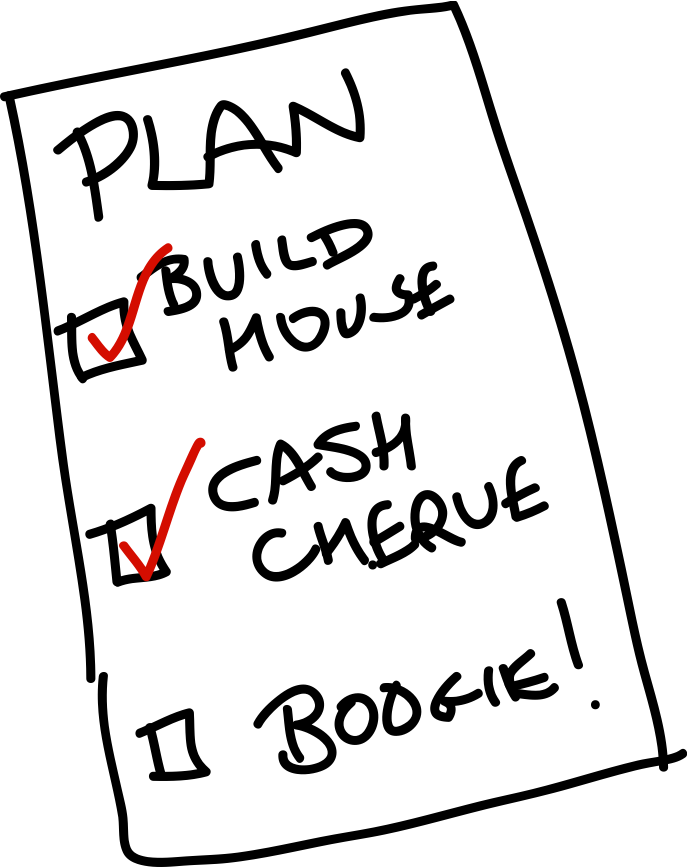

This is, most definitely, not the definitive list of things you should know but it’s certainly at least some of them! It was a fascinating process to go through. Next time I hope to make my attempts to live up to my own goals even better. Fingers crossed. 🙂
Short and sweet
Posted: January 28, 2012 Filed under: Education, Opinion | Tags: education, higher education, reflection, teaching approaches Leave a commentOne of my favourite lines from “Good Will Hunting” is the one that Robin Williams uses, and Matt Damon borrows, to explain why they’ve had to make certain decisions. As Matt Damon’s character, Will, puts it:
“Sean, if the Professor calls about that job, just tell him, sorry, I have to go see about a girl.”
It’s easy to talk about some of the objective aspects of teaching: curricula, concepts, relationships, abstractions, taxonomies, lesson plans, objectives… (it’s harder to do things with them but we all understand that) It’s harder when we think about the overall support, mentorship and influence that we’re going to have on our students, our colleagues and the world. Will’s quote is borrowed from a story that Sean (Robin Williams) told him earlier, how he made a choice that he never regretted to pursue his (future) wife.
A bad teacher will probably more influence, in many ways, than a good one. The things we say will be remembered in one way or another but, given that very few of us have scriptwriters, we may never get memorable or Oscar-winning quotes out. The negative things we say? If we ever belittle someone? You know that’s going to be remembered. Anything we do that’s unfair? That makes people seethe? Probably going to be remembered. That is, of course, why we should never say things like that or do things like that. I’d rather be forgotten than infamous.
We are, above everything else, people. We have strengths, weaknesses, good days and bad. We strive to excel, we succeed when we can, we learn from our mistakes if possible and then we do it all again.
Now of course, lecturing ICT is not just C++, Java, data structures and databases. It’s professionalism and ethics and dealing with subtleties… For me, the most important aspect is consistency. Every student should get the same Nick, the same amount of time, the same attention and, more importantly, I try to apply my teaching philosophies uniformly. One of the things I encourage is that my students tell me what’s going on so that I can help them or be ready for it. So that other people can plan around it. It should never be an excuse for laziness but it should be a sign of forethought, planning and honesty. So, in the spirit of reflexively applied consistency, here’s what’s happening for the next week or so. I’ll still be blogging daily but the posts may be a bit shorter, hopefully combining that with being a bit tighter at the same time.
Tomorrow there will be a long post with lots of graphics that I spent some time on and I hope you enjoy – it’s a bit of fun with (I hope) something useful. The rest of the week is going to be a series of short and sweet posts, the first of which is already in the queue. My usual long ramblings will return soon enough.

 Nick Falkner